The Heavy Weight of Uncertainty in Modern Medicine
Imagine sitting in a cold, quiet waiting room. You are waiting for news about a loved one, or perhaps your own health. The air feels thick with worry.
Doctors are doing their best, but they are human. They look at charts, run tests, and use their experience to guess what might happen next. Sometimes, they are right.
Other times, symptoms appear too late. By the time a problem is found, the fight is much harder. This is the reality many families face every single day.
It is a scary feeling to know that a hidden danger might be growing inside the body. We often feel like we are always one step behind the disease. This struggle creates deep stress and steals our peace of mind.
We want answers before the pain starts. We want a way to see into the future of our health. This is where the old way of doing things is failing us.
Traditional medicine often reacts to problems instead of stopping them. This "wait and see" approach is what causes so much heartbreak and loss. We need a system that acts as a shield, not just a bandage.
Turning the Tide with Smart Data Patterns
The good news is that the way we look at health is changing. We are moving away from guessing and moving toward knowing. This shift is happening because of machine learning.
Machine learning is like a very smart assistant that never sleeps. It looks at millions of pieces of health data in seconds. It sees patterns that a human eye would simply miss.
Think of it like a weather report for your body. Just as we know a storm is coming before the first raindrop falls, we can now see health issues coming. This gives doctors a head start that they never had before.
Why Data is the New Medicine
In the past, medical records were just papers in a folder. They sat there and collected dust. Now, those records are becoming active tools for saving lives.
Machine learning takes your history, your habits, and your biology to build a map. This map shows where your health is likely going. It changes the focus from treating a sick person to keeping a person healthy.
Identifying Risks Long Before They Appear
One of the best things about this technology is early detection. Let’s look at heart health as an example. Often, a heart attack feels like a sudden event.
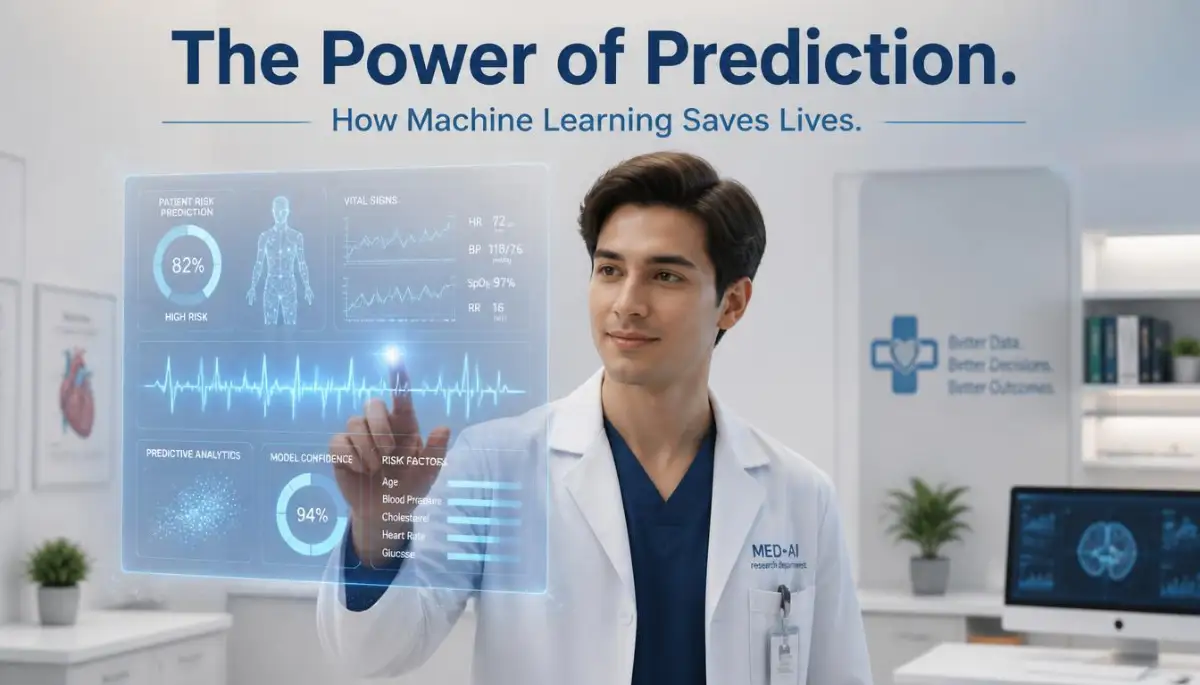
But the body usually leaves breadcrumbs before it happens. Machine learning can find those breadcrumbs in your blood pressure, sleep patterns, and diet. It can warn a doctor months before a crisis occurs.
Myth vs. Reality: Machine Learning in Clinics
Practical Ways Machine Learning Changes Your Care
You might wonder how this actually helps you when you visit a clinic. It is not just about big computers in a basement. It shows up in very practical ways.
Smarter Sorting in Emergency Rooms
We all know the frustration of waiting hours in an ER. Machine learning helps hospitals figure out who needs help the most urgent. It looks at patient data the moment they walk in.
This means people with life-threatening issues get seen faster. It reduces the chaos and helps the staff stay focused on saving lives. It makes the whole system run smoother for everyone.
Personalized Treatment Plans Just for You
Every body is different. A medicine that works for your neighbor might not work for you. In the old days, doctors used a "trial and error" method.
Now, algorithms can predict how you will react to a specific drug. They look at your genetic makeup and past health history. This leads to treatments that are safer and much more effective.
Pro Tip from the Field:
If your hospital uses digital health portals, make sure your profile is updated. The more accurate your data, the better these smart systems can help your doctor protect you.
Seeing the Unseen Through Better Imaging
When you get an X-ray or an MRI, a specialist looks at the picture. They are looking for tiny spots or shadows. Sometimes, these spots are smaller than a grain of sand.
Machine learning software can scan these images with incredible detail. It can spot a growing tumor long before it is visible to the human eye. This is a game-changer for cancer care.
When we find these things early, the chance of a full recovery goes up. It takes the "luck" out of the equation. We are now using math and logic to beat the odds.
Predicting Hospital Stay Lengths
Hospitals are often crowded. If a hospital knows exactly how long a patient will need a bed, they can manage their space better. Machine learning models predict recovery times with high accuracy.
This might sound like a small thing, but it is not. It means beds are ready for new patients who need them. It keeps the healthcare system from getting overwhelmed during flu seasons or busy times.
How Machine Learning Learns from the Past
The word "learning" is used because these systems get better over time. Every time a new patient is treated, the system gets a little smarter. It remembers what worked and what didn't.
Building a Global Knowledge Base
A doctor in a small town can now benefit from the knowledge of a thousand specialists. The machine learning model acts as a bridge. it brings the best medical wisdom to every single patient.
You are no longer just getting the opinion of one person. You are getting the power of a global data network. This makes high-quality care available to more people, regardless of where they live.
The Role of Wearable Devices
Many of us wear smartwatches or fitness trackers. These devices are constant sources of data. They track your heart rate, your steps, and even your oxygen levels.
Machine learning connects this "live" data to your medical records. If your heart rate starts acting strange while you sleep, the system can flag it. Your doctor might call you before you even know something is wrong.
Expert Insight:
The integration of wearable tech and predictive models is the biggest shift in preventive care. It moves healthcare out of the doctor's office and into your daily life.
Solving the Problem of Human Error
We all make mistakes when we are tired or stressed. Doctors and nurses work long hours and face huge pressure. Machine learning acts as a safety net.
It can double-check prescriptions to make sure there are no bad drug interactions. It can flag a lab result that looks slightly off. This "second pair of eyes" reduces mistakes and keeps patients safe.
Making Health Insurance More Fair
Predictive analytics also helps in managing the costs of care. By predicting who is at risk for chronic diseases, insurance providers can offer wellness programs.
These programs help people stay healthy, which lowers the cost of care for everyone. It shifts the goal from paying for sickness to investing in health. This makes the whole system more sustainable for the future.
Breaking Down the Steps to a Smarter Future
To really benefit from these systems, the healthcare world follows a clear path. It is not magic; it is a step-by-step process of building trust and accuracy.
Step 1: Gathering Clean and Honest Data
The first step is making sure the information is correct. This includes your age, weight, history, and lifestyle. Without good data, the machine cannot make good predictions.
Step 2: Finding the "Signals" in the Noise
The world is full of "noise" or unimportant information. Machine learning is great at ignoring the noise. It focuses only on the signals that truly matter for your health.
Step 3: Giving Doctors Clear Advice
The final step is turning complex math into a simple suggestion. A doctor doesn't need to see the code. They just need to see a alert that says, "This patient has a high risk of diabetes."
This allows the doctor to have a real conversation with you. They can talk about changing your diet or starting a simple habit to stop the disease. It puts the power back into your hands.
Staying Human in a Digital World
Some people worry that technology will make healthcare feel cold. They fear that a computer will decide their fate. But the opposite is actually true.
When machine learning handles the data, doctors have more time. They don't have to spend hours typing into a computer. They can spend that time looking you in the eye and listening to your concerns.
The goal of this technology is to make healthcare more human, not less. It removes the busy work so the healing can begin. It gives us the tools to be proactive, stay healthy, and live without the constant fear of the unknown.
By using these smart systems, we are building a world where diseases are caught early. A world where treatments are made for the individual. And most importantly, a world where we have more time with the people we love.
Maximizing the Power of Predictive Health Tools
To get the most out of machine learning in your healthcare journey, you need to understand how to interact with these systems. It is not just about the software doing the work. You play a huge role in making sure the predictions are accurate and helpful for your long-term wellness.
One of the most effective ways to help these systems is by maintaining a consistent digital health footprint. This means using tools that track your daily habits accurately over long periods. When a machine learning model has years of data rather than just weeks, it can spot tiny shifts in your health that would otherwise go unnoticed.
You should think of your data as the fuel for a very high-tech engine. If the fuel is clean and steady, the engine runs perfectly. This is very similar to how generative AI is changing the way developers write code, where high-quality input leads to much better and safer results.
Building a Bridge Between Human Intuition and Machine Logic
Expert doctors recommend a "hybrid" approach to medical decisions. Never rely solely on an automated alert or a software-generated risk score. Instead, use that score as a conversation starter with your medical team.
If an algorithm says you have a high risk for a certain condition, ask your doctor to explain the "why" behind it. Most modern healthcare systems now use "Explainable AI." This means the software can show which specific factors, like your sleep or your family history, caused the high-risk alert.
When you understand these factors, you can make targeted lifestyle changes. This moves you from a place of fear to a place of informed action. It is much easier to stay motivated when you see exactly what you need to change to lower your risk score.
The Feedback Loop: Your Most Powerful Tool
A pro-level secret in medical machine learning is the "feedback loop." These systems learn when they are wrong just as much as when they are right. If a wearable device gives you a false heart rate alert, you should report that within the app or to your provider.
By correcting the machine, you are teaching it to understand your specific body better. This personalized tuning makes the software much more reliable for you over time. It transforms a general tool into a personalized health guardian that knows your unique baseline.
This level of personalization is also seen in other areas of health science. For example, why your gut bacteria holds the secret to a stronger immune system shows how individual biology changes the way we process health data. Machine learning is the only way to track these millions of tiny biological changes at once.
Planning for Longevity with Predictive Insights
To hold onto good health results for the long term, you must view predictive analytics as a lifelong partner. It is not a one-time test like a traditional blood draw. It is a continuous stream of information that helps you adjust your life as you age.
High-authority sources like the National Institutes of Health (NIH) emphasize that proactive monitoring is the key to managing chronic diseases before they become severe. By using predictive tools, you are essentially buying yourself more "health span"—the years you live in a fit and active state.
You can compare this long-term health planning to your finances. Just as you might focus on how to rebuild your credit score after a major financial disaster to secure your future, using health analytics secures your physical future. Both require patience, steady data, and a commitment to small, daily improvements.
Dangerous Missteps in the World of Automated Diagnosis
Even though this technology is amazing, it is very easy to fall into traps that can hurt your health. One of the biggest mistakes is having blind trust in any software or app. No matter how smart a machine is, it cannot replace the physical examination of a skilled doctor.
If you start ignoring your own symptoms because an app says "you are fine," you are putting yourself in danger. This is a common pitfall called "automation bias." It happens when we trust the screen more than our own bodies or the expert advice of a human.
Another serious error is providing inconsistent or "noisy" data. If you only wear your health tracker every other week, the machine learning model gets confused. It might see your sudden "active" days as a health spike and your "off" days as a sign of illness. This leads to false alarms that cause unnecessary stress and anxiety.
The Problem of "Garbage In, Garbage Out"
In the world of AI, there is a famous saying: "Garbage in, garbage out." If the data going into the system is messy or wrong, the prediction will be wrong too. This is why it is so important to be honest with your health apps and doctors.
Some people feel embarrassed to log their real eating habits or missed exercise sessions. But hiding this information from a predictive system is like lying to your GPS. You will end up at the wrong destination, and the system won't be able to help you get back on track.
Messy data can lead to misdiagnosis or missed opportunities for early intervention. The system might think your health is perfect when a serious issue is actually hiding behind incomplete data logs. This creates a false sense of security that can be very hard to recover from.
Ignoring Data Privacy and Security
We often get so excited about the health benefits that we forget about our personal privacy. A common mistake is using "free" health apps that do not have strong data protection. Your medical information is some of the most sensitive data you own.
Before you sync your medical records with a new tool, check if they follow standards like those found at HealthIT.gov. Make sure the company is not selling your health patterns to advertisers. Using untrusted software can lead to your private health details being leaked or misused.
This mistake can have a long-term impact on your peace of mind. Once your data is out there, you cannot take it back. Always choose tools that are recommended by your healthcare provider or established medical institutions.
Embracing a New Era of Personal Wellness
The shift toward predictive analytics is one of the most positive changes in our lifetime. We are moving away from a world where we only go to the doctor when we are already in pain. Instead, we are entering a time where we have the power to stay ahead of illness.
This journey requires a bit of effort on your part. You need to be the manager of your own data and the advocate for your own health. When you combine the speed of machine learning with your own human wisdom, you become almost unstoppable.
Think of these tools as a bright light in a dark room. They don't walk across the room for you, but they show you where the obstacles are. They give you the clarity to move forward with confidence and strength.
Your Immediate Action Plan
You don't have to wait for a futuristic hospital to start using these concepts. You can begin today by simply being more mindful of the data you already have. Look at your heart rate trends on your phone or pay closer attention to your sleep quality logs.
Start a conversation with your doctor at your next check-up. Ask them if they use any predictive software for screening or risk assessment. Showing that you are an informed patient will encourage your medical team to use the best technology available for your care.
The goal is to live a long, vibrant life with as much energy as possible. Predictive analytics is the map that helps you stay on that path. It is a gift of modern science that we should all use with care and intelligence.
A Final Word of Encouragement
Stay curious and stay involved in your own health journey. Technology will continue to change, but your role as the "captain of your ship" remains the same. Use the data, listen to the experts, and trust your intuition.
You have the tools now to change the story of your health. You can break the patterns of the past and build a future where you feel strong and secure. This is the true impact of machine learning—it gives us the power to hope for a better, healthier tomorrow.
![The Secret Anatomy of Decentralized Networks [Exposed for Beginners]](https://topic36.com/storage/uploads/blogs/1787976177_the-secret-anatomy-of-decentralized-networks-exposed-for-beginners.webp)