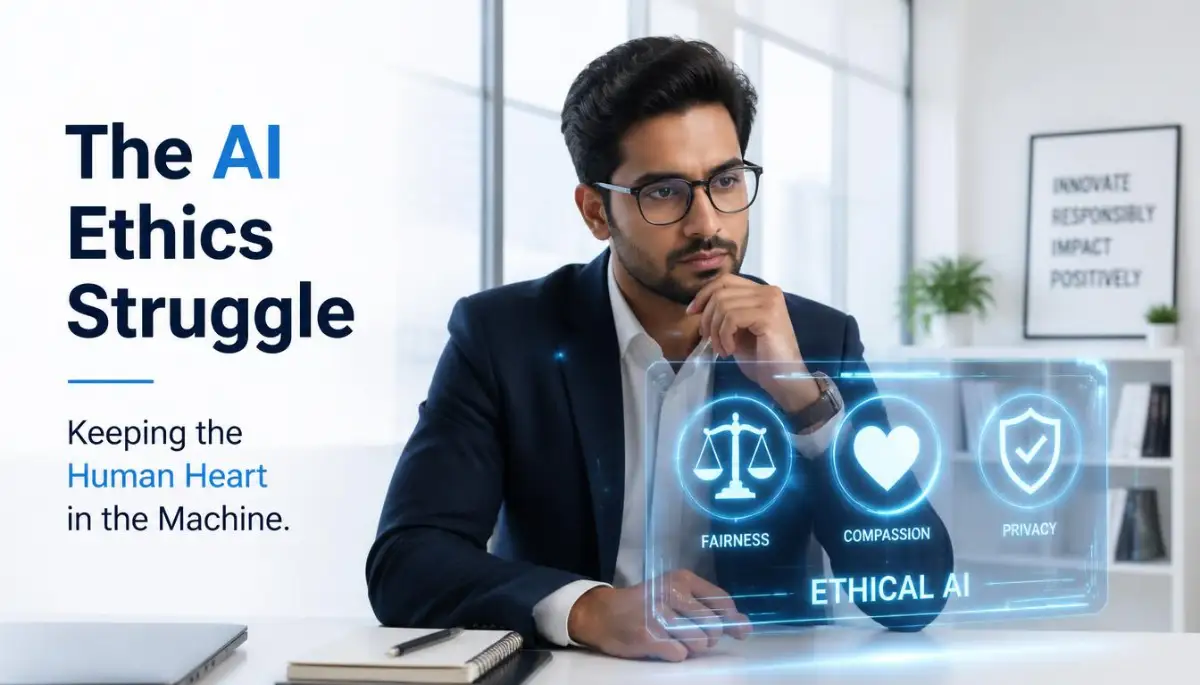
The Weight of the Digital Soul: Why Business Leaders Are Losing Sleep
Imagine waking up to find out your company just lost its best talent. Not because they quit, but because a piece of software "decided" they weren't a good fit anymore. It happens in the blink of an eye. No human conversation. No empathy. Just a cold, calculated score.
For many managers and business owners, this is the new reality. We were promised that AI would make things easier. We thought it would remove human bias. But instead, we often find ourselves trapped in a maze of code that doesn't understand right from wrong.
I’ve talked to many professionals who feel a sense of dread. They see their companies adopting powerful tools, but they feel like they are losing control. It’s a heavy burden to carry. You want to be efficient, but you don't want to lose your humanity.
Is it even possible to teach a machine to have a conscience? This question keeps people up at night. We feel the pressure to keep up with tech, yet we fear the "black box" that makes life-altering choices for our employees and customers.
The struggle is real because ethics aren't black and white. They are messy. They are human. And right now, the gap between what a machine does and what a human feels is wider than ever. This disconnect is causing real pain in the workplace today.
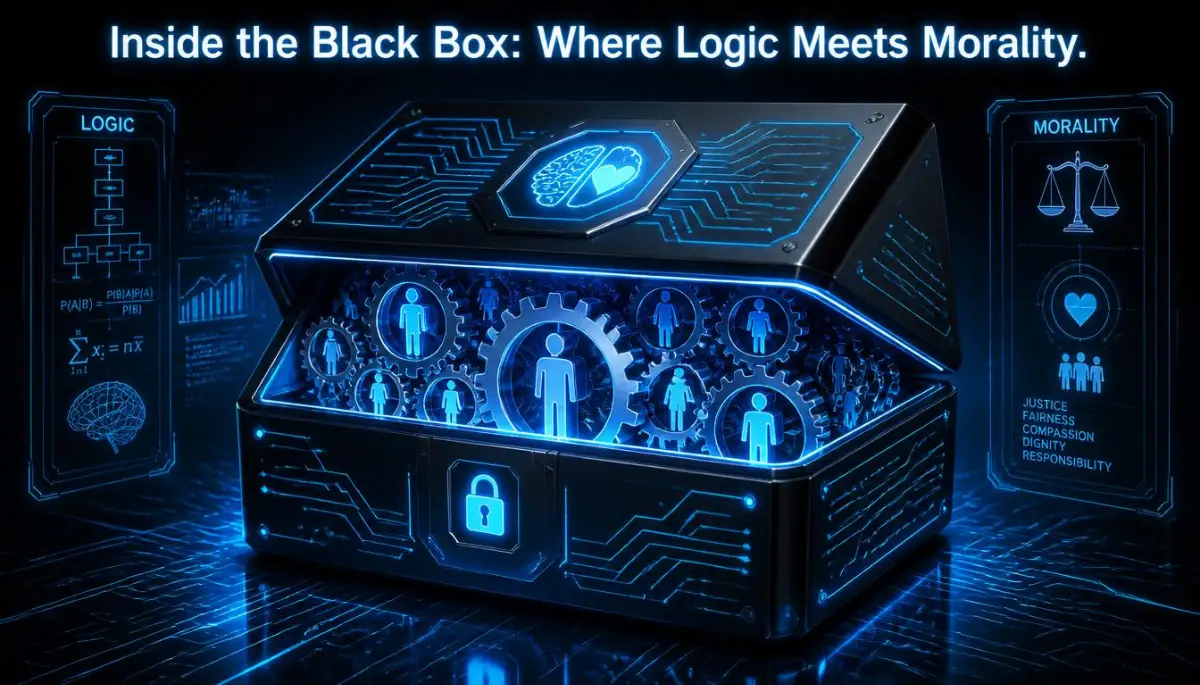
The Invisible Wall: Understanding the Transparency Gap
One of the biggest hurdles we face is the lack of clarity. We often call this the "Black Box" problem. You put data in, and an answer comes out. But how did the AI get there?
Most of the time, even the people who built the software can't fully explain it. This is terrifying for a CEO. If a machine rejects a loan application or a job candidate, you need to know why. Without "Why," there is no trust.
Transparency isn't just a buzzword. It is the foundation of any healthy business. When we use tools that we don't understand, we are essentially flying a plane in the dark. We have to demand that our software explains its logic in plain English.
If you can't explain a decision to a customer, you shouldn't let a machine make it. This is the first rule of keeping your business ethical. We must bridge this gap before the "Black Box" shuts us out of our own decision-making process.
The Hidden Mirror: Facing Data Bias Head-On
AI is like a child. It learns from what we give it. If we give it biased data, it will grow up to be a biased algorithm. This is the "Garbage In, Garbage Out" rule, but with much higher stakes.
Many companies use historical data to train their systems. But history is full of mistakes. If your past hiring data shows you mostly hired one type of person, the AI will think that is the "correct" way to hire.
It doesn't see the talent; it sees the pattern.
This creates a loop of unfairness. We think we are being objective because a computer is involved. In reality, we are just automating our old prejudices. To fix this, we have to be incredibly careful about what we "feed" our machines.
We need to constantly audit our data. Ask yourself: Does this data reflect who we want to be, or just who we used to be? It takes a lot of work to clean this up, but it is the only way to stay fair.
The Accountability Void: Who Takes the Blame?
When a human makes a mistake, we know who to talk to. We can have a meeting, offer an apology, or fix the process. But who do you blame when the AI makes a catastrophic ethical error?
Do you blame the software developer? The data scientist? The manager who bought the license? Or do you blame the machine itself?
This lack of a "single point of blame" is a huge risk.
In a corporate world, accountability is everything. If everyone is responsible, then no one is. This creates a "moral vacuum" where bad things happen, and everyone just points their finger at the code.
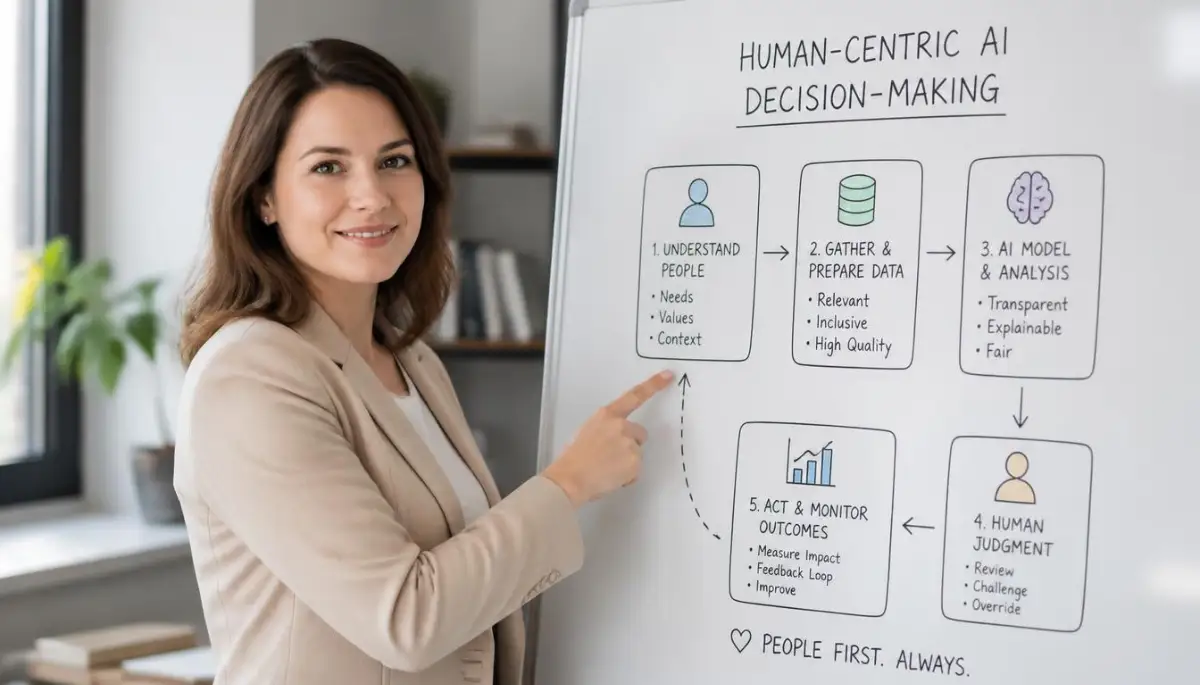
To solve this, every AI-driven choice must have a human "anchor." We need people who are willing to stand behind the machine's output. If the machine fails, the human takes the lead. We can never let the phrase "the computer said so" be a valid excuse in our offices.
The Culture Clash: Human Instinct vs. Machine Logic
We are emotional creatures. We value gut feelings, empathy, and context. AI, on the other hand, only values math and probability. This creates a massive friction point in corporate culture.
Think about a long-term employee who is going through a hard time at home. Their performance might drop for a month. A human manager sees the person and offers support. An AI sees a downward trend line and suggests a "performance improvement plan."
Logic without empathy is often cruel.
If we rely too much on the "efficiency" of AI, we risk turning our workplaces into cold, robotic environments. We have to protect our company culture. We must ensure that the "human touch" stays at the center of how we treat people.
AI should be a tool for humans to use, not a boss for humans to follow. Keeping this balance is one of the hardest parts of modern leadership. It requires us to speak up when the numbers don't match the heart of the company.
Practical Ways to Guard Your Corporate Ethics
You don't have to be a tech genius to keep your AI ethical. Here are a few things you can do starting today:
- Ask for Explanations: Only buy software that has "Explainable AI" features. If it can't tell you "how" it decided, don't use it for people-based choices.
- Diverse Teams are Mandatory: Make sure the people picking and training the AI come from different backgrounds. This helps catch bias before it becomes part of the code.
- The "Human-in-the-Loop" Rule: Never let an AI make a final decision on hiring, firing, or legal matters without a human review. The machine should only give a suggestion.
- Regular Ethics Audits: Just like you audit your finances, you should audit your algorithms. Look for patterns of unfairness every few months.
Myth vs. Reality in Business AI
Myth: AI is 100% objective and neutral.
Reality: AI is a reflection of its creators and the data they provide. It can be just as biased as a person, but much faster at it.
Myth: We can just "set it and forget it."
Reality: AI requires constant babysitting. If you leave it alone, it can drift away from your company's values over time.
Myth: AI will replace the need for ethical leadership.
Reality: We need ethical leaders more than ever. Leaders must now guide the "moral compass" of the machines they use.
The Power of "No" in the Age of Automation
Sometimes, the most ethical thing a company can do is say "No" to a new AI feature. Just because a tool can do something doesn't mean it should.
We see this often with facial recognition or deep sentiment analysis of employee emails. Yes, the tech exists. Yes, it might provide "data." But is it right? Does it respect privacy? Does it build trust?
Trust is the most valuable currency in business.
Once you lose the trust of your team or your customers, no amount of AI-driven efficiency will bring it back. We must be brave enough to reject tools that cross the line. This is where true corporate character is shown. It’s about choosing people over a slightly higher profit margin.
Building a "Living" Ethics Policy
Don't just write a policy and hide it in a drawer. Your ethical guidelines for AI should be a living document. It should change as the technology changes.
Talk to your employees about how the software is affecting them. Listen to their concerns. If they feel like they are being treated unfairly by an algorithm, they are probably right. Use their feedback to tweak your systems.
We are all learning this together. There is no perfect handbook yet. But if we keep our eyes open and our hearts engaged, we can navigate this digital shift without losing our souls.
Pro-Tip for Leaders:
Always ask your AI vendor for a "Bias Report." If they can't provide one, it's a sign they haven't taken ethics seriously. Look for partners who prioritize fairness over flashy features.
The Long Road Ahead
The journey toward ethical AI is not a sprint. It is a long, winding road that requires patience and constant attention. We are building the future of how humans and machines work together.
It is okay to feel overwhelmed. The technology is moving fast. But remember, the basic principles of fairness, honesty, and respect haven't changed. They are the same today as they were a hundred years ago.
If we keep those values as our North Star, we can use AI to build better, more inclusive, and more successful companies. The machines can handle the data, but we must handle the wisdom.
Let's make sure that when we look back, we can say we used this power to help people, not just to process them. That is the true challenge—and the true opportunity—of our time.
Mastering the Balance: Expert Strategies for Moral AI
Now that we have looked at the big problems, it is time to talk about the real solutions. Staying ahead in the business world means you can’t just ignore technology. But you also can’t let it run wild.
To keep your company’s "soul" intact, you need a plan that goes deeper than just basic rules. Think of this as the "Pro Level" of running a modern, tech-heavy business. We are moving from just "surviving" the AI wave to actually leading it with honor.
The "Red Team" Approach to Morality
One of the best secrets used by top tech firms is called "Ethical Red Teaming." In simple terms, this means you hire or assign a group of people to try and "break" your AI’s ethics. Their whole job is to find where the software might be unfair or biased before the public ever sees it.
They look for the "what ifs." What if the AI starts favoring one zip code over another? What if it begins to ignore job applications from people over a certain age? By trying to trick the machine into being biased, you find the holes in your system.
This isn't just about code; it’s about testing your values against the machine’s logic. It is much better to find a flaw in a private meeting than to read about it in a news headline later. If you want to keep your business safe, you have to be your own toughest critic.
Building "Ethics as Code"
When we talk about software, we often think of developers just writing lines of logic. However, how generative AI is changing the way developers write code shows us that the process is becoming much faster. This speed means we need to bake our values directly into the development cycle.
You should insist that your technical teams use "Ethics Checklists" at every stage. Before a single line of code is finished, they should ask: "Does this respect user privacy?" and "Is this decision explainable to a fifth-grader?"
If the answer is no, the code doesn't move forward. This creates a culture where being "right" is just as important as being "fast." It prevents the tech from moving so fast that it leaves your company’s morals behind in the dust.
The Power of Diverse Data Sourcing
We talked about how "bad data" leads to "bad choices." The secret to fixing this is to pull your information from as many different places as possible. If you only look at one source, you get one perspective.
Imagine trying to understand the housing market by only looking at one neighborhood. You would get a very skewed view. It is similar to when people debate whether is buying a home smarter than renting; the answer depends on looking at many different financial facts, not just one.
In the same way, your AI needs a "balanced diet" of data. You should actively look for data that represents different cultures, genders, and backgrounds. This makes the machine smarter and much more fair in its daily operations.
Professional Standards and Global Frameworks
You don't have to invent these rules from scratch. There are high-level organizations that spend all their time thinking about this. For example, looking at the UNESCO Recommendations on the Ethics of AI can give you a world-class roadmap.
By following global standards, you show your customers and employees that you aren't just making it up as you go. You are following a proven path that experts around the world have agreed upon. This adds a huge layer of trust to your brand.
A Long-Term Guide for Success
To keep these results going for years, you need an "Ethics Board." This shouldn't just be a group of tech people. You need a mix. Bring in someone from HR, a customer service rep, a legal expert, and maybe even a philosopher or a community leader.
This group should meet every few months to review the "decisions" the AI has made. They are the human heart of the operation. Their job is to make sure the machine is still serving the people, and not the other way around.
When you have different voices in the room, it is much harder for a bias to slip through. It keeps everyone honest. It reminds the whole company that while the tools are digital, the impact is always human.
The Hidden Traps: Mistakes That Can Sink Your Business
Even with the best intentions, it is very easy to fall into "The Efficiency Trap." This happens when a leader gets so excited about saving time that they stop looking at the quality of the choices.
The Danger of "Blind Trust"
One of the biggest mistakes is assuming the computer is always right because it uses "math." We have to remember that math can be used to justify very wrong things if the starting numbers are off.
If you stop questioning the machine, you have already lost. This "blind trust" can lead to massive legal problems and a total loss of respect from your team. People want to work for a human, not a cold algorithm that never admits a mistake.
Ignoring the "Edge Cases"
AI is usually great at predicting what the "average" person will do. But your business isn't built on "average" people. It is built on individuals.
A common mistake is ignoring the people who don't fit the standard pattern. For instance, in the world of finance, an AI might automatically reject someone who is trying to figure out how to rebuild your credit score after a disaster.
A machine might just see a low number and say "No." But a human knows that people can change and grow. If you let the AI have the final word on these "edge cases," you miss out on some of your most loyal customers and hardworking employees. You lose the "human story" behind the data.
The "Privacy Afterthought" Blunder
Many companies launch a new AI tool and then think about privacy weeks later. This is a recipe for disaster. In today’s world, people are very protective of their data.
If your AI is "sneaky" about how it gathers information, you will eventually get caught. This leads to heavy fines and a ruined reputation. You must be open and honest about what data you are taking and why you need it. If you can't be honest about it, you probably shouldn't be doing it.
The "Speed Over Safety" Mindset
We live in a world that tells us to "move fast and break things." While that might work for a small app, it is a terrible way to handle ethical decisions.
Moving too fast causes you to skip the testing phase. It causes you to ignore the warnings from your staff. Safety and ethics take time. They require slow thinking and deep conversation. Don't let the pressure of "keeping up" force you into making a moral mistake you can't take back.
Building Your Action Plan for Tomorrow
The goal of all this isn't to make you afraid of AI. It is to make you a better leader in a digital age. You have a chance to show that a company can be both high-tech and high-heart.
Start Small, But Start Today
You don't need to change everything overnight. Start by looking at one area where you use automated tools. Ask your team how those tools make their decisions. If they can’t answer, that is your first project.
Find out where the data comes from. Ask if anyone has ever checked it for bias. These small steps build a foundation of awareness. It sends a message to your whole company that ethics are a top priority.
Empower Your Team to Speak Up
The people on the front lines usually see the problems first. Make sure they feel safe telling you when an AI tool is acting weirdly or unfairly.
Create an "Ethics Hotline" or a simple email box where people can report concerns without fear of getting in trouble. When your employees know you care about doing the right thing, they will work harder to help you protect the company's values.
Final Thoughts for the Modern Leader
We are standing at a major turning point in history. We have tools that our grandparents could only dream of. But these tools don't come with a moral compass. We have to provide that ourselves.
Using AI shouldn't feel like a battle between "profit" and "people." When used correctly and ethically, AI can actually help you serve people better. It can free up your time so you can focus on the things that machines can't do—like dreaming, creating, and connecting.
Be the leader who isn't afraid to ask the hard questions. Be the company that chooses fairness even when it's not the easiest path. The world has enough "smart" companies; what we really need are more "wise" ones.
Take what you have learned here and start applying it. Talk to your tech team. Check your data. Listen to your gut. You have the power to shape how this technology treats people. Let’s make sure we build a future we can all be proud of.
Quick Ethics Checklist for Your Next Meeting:
- Is this AI decision easy to explain to a customer?
- Did we test this on a diverse group of people?
- Who is the human responsible if this goes wrong?
- Does this tool align with our core company values?
If you can answer "Yes" to all of these, you are on the right track. Keep pushing, keep learning, and keep your human values at the center of everything you do. The future is bright if we build it with care.
![The Secret Anatomy of Decentralized Networks [Exposed for Beginners]](https://topic36.com/storage/uploads/blogs/1787976177_the-secret-anatomy-of-decentralized-networks-exposed-for-beginners.webp)