The Invisible Reason You Might Be Feeling Worn Down
Have you ever wondered why one person catches every cold that goes around the office, while another person stays healthy all year? It is easy to blame "bad luck" or "genes."
But the truth is often hidden deep inside your stomach. You might be eating the right vitamins and getting enough sleep, yet you still feel sluggish, bloated, or constantly sniffly.
It feels like an uphill battle. You try to stay healthy, but your body just does not seem to have the strength to fight back.
This struggle often leads to a cycle of fatigue. You wake up tired, you drink too much coffee, and your brain feels foggy by noon.
You might think, "Is this just what getting older feels like?" I am here to tell you that it is not.
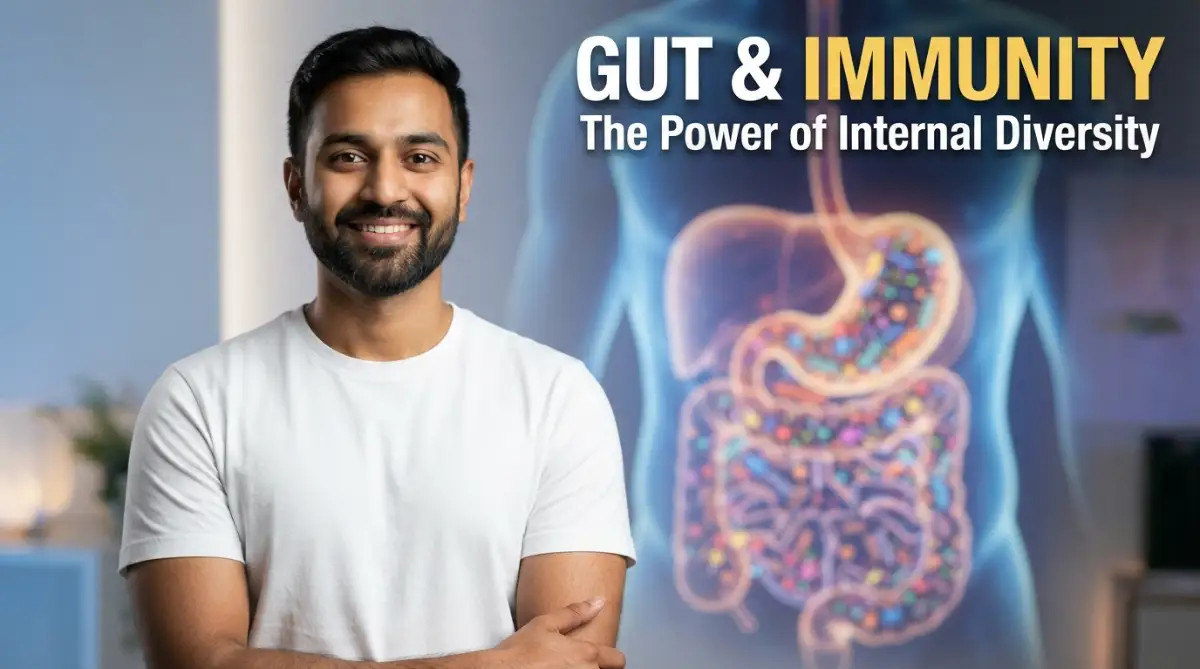
Most people do not realize they are hosting a trillion-member army inside their gut. When this army is weak or lacks variety, your immune system basically goes on vacation.
It is frustrating to do "everything right" and still feel like your health is failing you. This disconnect between your efforts and your results can be exhausting for your mental peace.
Let's change that perspective. Your body is not failing; it is just waiting for the right internal environment to thrive.

The Inner Garden: Understanding Your Microbiome
Think of your gut as a vast, hidden garden. In a healthy garden, you want many different types of plants, flowers, and helpful insects.
If you only have one type of grass, a single pest can destroy the whole lawn. This is exactly how gut diversity works.
Your "microbiome" is the collection of bacteria, fungi, and viruses living in your digestive tract. Most of these are actually your friends.
When you have a wide variety of these tiny residents, your immune system becomes smarter. It learns how to tell the difference between a harmless piece of food and a dangerous virus.
Diversity is the key to resilience. Without a mix of different bacteria, your body’s defense walls become thin and easy to break.

The Direct Talk Between Your Gut and Your Cells
Did you know that about 70% of your immune system lives right in your gut? It is not just sitting there; it is actively talking to your bacteria.
Your gut lining acts like a security checkpoint. On one side, you have the world outside (the food you eat). On the other side, you have your bloodstream.
The "good" bacteria act like training officers. They teach your white blood cells how to stay calm when there is no threat and how to attack when a "bad" germ enters.
If your gut diversity is low, the communication breaks down. Your immune system might start attacking things it shouldn't, or it might miss a real threat entirely.
This is why many experts now look at the gut as the "second brain" of our defense network.
Why a "Silent War" Might Be Happening Inside You
When the balance of your gut bacteria shifts, it creates a state called dysbiosis. This is basically a "silent war" where harmful microbes start to outnumber the helpful ones.
You might not feel "sick" in the traditional sense. Instead, you might notice small signs that things are off.
Do you have sudden skin breakouts? Are you dealing with constant sugar cravings? These are often SOS signals from your gut.
When the bad bacteria take over, they can create small holes in your gut lining. This is often called "leaky gut."
When this happens, tiny particles of food or toxins leak into your blood. Your immune system sees these as invaders and goes into overdrive.
This constant state of "high alert" leads to chronic inflammation. This is like leaving a fire alarm ringing all day—eventually, the system just gets exhausted.
Simple Ways to Invite More Diversity into Your Life
The good news is that you can change your gut makeup starting with your next meal. You do not need expensive supplements to start this process.
Fiber is the ultimate fuel for your helpful bacteria. Think of fiber as the "fertilizer" for your inner garden.
Most people only eat a few types of vegetables. To boost diversity, try to aim for a "rainbow" on your plate.
Every different color in a plant usually represents a different type of polyphenol. Different bacteria love different types of these compounds.
If you only eat broccoli, you are only feeding one "tribe" of bacteria. If you add carrots, berries, and nuts, you are feeding the whole village.
The Power of Fermented Traditions
Before modern fridges, humans ate a lot of fermented foods. These are natural sources of "probiotics" or live helpful bacteria.
Foods like plain yogurt, kefir, sauerkraut, and kimchi are like sending "reinforcements" to your internal army.
You do not need to eat a gallon of it. Just a small serving every day can introduce new species of bacteria to your system.
It is like adding new books to a library. The more information (or bacteria) your gut has, the better it can handle any problem that comes its way.
Nature’s Secret: Moving Beyond the Kitchen
Believe it or not, your gut diversity is also affected by your environment. We live in a world that is sometimes "too clean."
I am not saying you should stop washing your hands. But spending time in nature and parks exposes you to a healthy mix of environmental microbes.
Digging in a garden or even walking in a forest can actually improve the variety of bacteria on your skin and in your breath.
These tiny interactions help prime your immune system. It keeps your defenses sharp and ready for action.
The Stress Connection: Keeping the Peace
Your gut and your brain are connected by a huge nerve called the Vagus nerve. It is like a high-speed internet cable.
When you are stressed, your brain sends "danger" signals to your gut. This can actually kill off some of your helpful bacteria.
Have you ever had "butterflies" in your stomach before a big meeting? That is the connection in action.
Managing stress through short walks or deep breathing is not just for your mind. It is a way to protect the "living world" inside your stomach.
When the environment is calm, your beneficial bacteria can multiply and do their job of protecting you.
Sleep: The Night Shift for Your Bacteria
Your gut microbes have a biological clock, just like you do. They need rest to rebuild their populations.
When you skip sleep, you disrupt their natural cycle. This can lead to a drop in bacterial variety by the next morning.
I recommend trying to keep a consistent sleep schedule. Even an extra 30 minutes of quiet rest can help your gut recover.
During the night, your immune system and your gut bacteria work together to repair any damage from the day.
Common Habits That Might Be Clearing Out Your Gut
We often do things that accidentally "wipe out" our internal diversity. One of the biggest culprits is overusing certain soaps or cleaning products.
Again, cleanliness is good, but harsh chemicals can sometimes kill the good with the bad.
Another big factor is processed sugar. Harmful bacteria love sugar. When you eat a lot of it, the "bad guys" grow too fast and crowd out the "good guys."
Think of sugar as the "weeds" in your garden. If you don't control them, they will take over the whole space.
By simply swapping one sugary snack for a piece of fruit, you are shifting the balance back in favor of your immune system.
The Long-Term Reward of Internal Variety
Focusing on gut diversity is not a "quick fix." It is a lifestyle shift that pays off for years to come.
When your gut is diverse, you feel more energetic. Your skin looks clearer, and your mood feels more stable.
Most importantly, you develop a natural shield. Your immune system becomes a quiet, efficient force that handles threats before you even know they exist.
You stop being the person who "catches everything." Instead, you become the person who bounces back quickly.
Your health is an investment. And the best place to start investing is right inside your own digestive system.
Stay tuned as we look deeper into the specific foods and daily habits that act as a "supercharge" for your internal guardians.
Beyond Probiotics: Feeding the Workforce You Already Have
While many people focus on adding new bacteria through supplements, the real secret lies in nourishing the billions of microbes already living inside you. Think of your gut as a massive city where the workers need constant supplies to keep the walls strong and the gates guarded.
If you don't provide the right "fuel," these workers become slow and ineffective. This is where prebiotics come into play. Unlike probiotics, which are the bacteria themselves, prebiotics are the specific types of plant fibers that your human body cannot digest.
These fibers travel all the way to your large intestine, where your friendly bacteria are waiting for a feast. When they eat these fibers, they produce short-chain fatty acids. These compounds are like a "super-fuel" for your gut lining, keeping it airtight and preventing unwanted germs from slipping into your blood.
I always suggest starting with common kitchen staples like onions, garlic, and leeks. These are packed with inulin, a type of fiber that beneficial bacteria absolutely love. Even something as simple as a slightly green banana contains resistant starch, which serves as a slow-release energy source for your internal army.
The Polyphenol Power-Up for Your Natural Defenses
We often hear about antioxidants for skin health, but they are just as important for your gut diversity. Specifically, compounds called polyphenols act like a specialized training program for your immune-assisting bacteria.
You can find these in dark, colorful foods like blueberries, blackberries, and even high-quality dark chocolate. When you consume these, you aren't just eating a snack; you are sending a signal to your gut to increase the population of "Akkermansia," a type of bacteria that helps manage your weight and your immune response.
One interesting expert secret is the use of green tea or pomegranate. These foods contain tannins that help clear out the "bad" bacteria while letting the "good" ones thrive. It’s like having a selective security team that only kicks out the troublemakers.
I’ve noticed that people who rotate their fruit and vegetable choices every week have a much more resilient immune system. By changing the types of polyphenols you eat, you ensure that every different "tribe" of bacteria in your gut gets the specific nutrients it needs to stay strong.
Managing the Stress-Gut Connection for Long-Term Health
You might be surprised to learn that your mental state can physically change the shape of your gut microbiome. Chronic stress releases cortisol, which can make your gut lining more permeable.
When your mind is in a state of constant worry, it sends "fight or flight" signals down the Vagus nerve. This tells your gut to slow down digestion, which can lead to an overgrowth of harmful bacteria.
This is why financial peace and mental clarity are actually health tools. For example, if you are struggling with money, understanding debt consolidation can reduce the daily anxiety that is secretly harming your digestive health.
When you lower your stress levels, you allow your gut to enter a "rest and digest" state. This is the only time your internal defense force can properly rebuild and train new immune cells. Taking even ten minutes a day for quiet reflection or deep breathing is a biological necessity for your microbiome.
The Hidden Trap of a Perfectly Sterile Life
One of the biggest mistakes I see today is the obsession with living in a completely sterile environment. We have been taught that all bacteria are "germs" that must be killed with harsh chemicals and sanitizers.
While hygiene is important for preventing infection, being too clean can actually starve your immune system of the information it needs. Your immune system is like a muscle; it needs "exercise" in the form of exposure to diverse environmental microbes to stay smart.
If you live in a bubble, your immune system becomes "bored" and overreactive. This is often why we see a rise in allergies and sensitivities. By avoiding all dirt and natural microbes, you are essentially preventing your internal guardians from learning how to handle real-world threats.
I recommend opening your windows more often and spending time in diverse outdoor settings. Let your body interact with the natural world. This "micro-exposure" helps maintain a high level of diversity in your microbiome that you simply cannot get from a pill.
Relying Only on Supplements Instead of Real Food
Another common pitfall is thinking a probiotic capsule can replace a poor diet. I see people eating highly processed meals and then taking a expensive supplement, hoping it will fix everything.
Supplements usually only contain a few strains of bacteria. Your gut needs hundreds, if not thousands, of different types to function at its best. A pill is like a single person joining a city, while real food is like an entire logistics system that supports the whole population.
If you don't eat the fiber required to keep those supplement-based bacteria alive, they will simply pass through your system without doing much good. Always prioritize whole, fermented, and fibrous foods first. Use supplements only as a temporary boost, not a permanent crutch.
According to research published by the National Institutes of Health (NIH), a diverse diet is the most consistent way to maintain a healthy microbial balance over a long period. Relying on a single source of "good" bacteria often leads to a lack of variety, which leaves gaps in your immune defense.
The Danger of Unnecessary Antibiotic Use
Antibiotics are life-saving tools when used correctly for bacterial infections. However, taking them for viral issues like a common cold—where they don't work—is a major mistake for your gut health.
An antibiotic is like a "nuclear bomb" for your internal garden. It doesn't just kill the bad bacteria; it wipes out large portions of your beneficial ones too. It can take weeks, or even months, for your gut diversity to return to its original state after a single course.
Always talk to your doctor about whether an antibiotic is truly necessary. If you do have to take one, make sure you focus heavily on rebuilding your gut immediately afterward with fermented foods and high-fiber vegetables.
Ignoring the recovery phase after antibiotics is like missing a personal loan EMI payment; it creates a long-term problem that becomes much harder to fix later on. You have to be proactive about "paying back" the good bacteria you lost.
Your Blueprint for a Resilient Tomorrow
Building a strong immune system through gut diversity is one of the most rewarding things you can do for yourself. It isn't about being perfect every day. It is about making small, consistent choices that favor your internal friends.
Start by adding one new vegetable to your cart this week. Try a fermented food you’ve never had before. Spend a little more time in the sun and a little less time worrying about invisible germs on every surface.
Think of your health as a long-term project. Just as you would build a bulletproof emergency fund fast to protect your future, you are building a "biological fund" to protect your body against illness.
Every bite of fiber and every moment of stress relief is a deposit into that fund. Over time, these small actions compound into a shield that keeps you feeling energetic, clear-headed, and strong.
Taking the First Step Today
You have the power to change your internal environment starting right now. Your gut is incredibly resilient and wants to help you thrive. It only needs the right tools and a little bit of patience from you.
I want you to feel encouraged. You don't need a medical degree to understand that variety is the spice of life—and the secret to your health. Listen to your body, feed your microbes well, and trust the process of natural healing.
When you take care of your gut, your gut will take care of you. Here is to a brighter, healthier, and more diverse future for your body!
Disclaimer: The information provided in this article is for educational purposes only and should not be taken as professional medical advice. Always consult with a healthcare provider or a registered dietitian before making significant changes to your diet or lifestyle, especially if you have existing health conditions or are taking medication.