The Hidden Frustration of "Locked" Technology
Have you ever felt like you are just a guest in your own digital life? You buy a computer or a smartphone, but you don't really own the software inside it.
You cannot see how it works. You cannot fix it if it breaks. And you certainly cannot change it to fit your needs.
This is the reality of "closed-source" software. It feels like living in a house where the doors are bolted shut, and the landlord holds the only key.
For many students and new developers, this creates a massive wall. You want to learn, you want to build, and you want to grow.
But every time you try to look under the hood, you hit a "No Entry" sign. It is lonely, expensive, and quite frankly, it stops your progress.
I remember talking to a young student named Sarah. She had a brilliant idea for a small tool to help her classmates.
She spent weeks trying to use a famous piece of software to build it. But she hit a bug that she couldn't fix because the code was hidden.
She felt stuck and helpless. Her creativity was blocked by a multi-billion dollar company that didn't even know she existed.
This is the "pain" of the modern tech world. We use tools every day that we don't understand and cannot control.
But what if I told you there is a different way? A world where the gates are wide open.
A world where you are encouraged to take things apart and put them back together. That is the world of Open-Source Software.
What Exactly is Open Source?
Before we go deep, let's keep it simple. Open-source software is code that anyone can see, change, and share.
Think of it like a public recipe for a famous cake. In a closed-source world, you can buy the cake, but the recipe is a secret.
In the open-source world, the chef gives you the cake and the recipe. You can read the ingredients.
If you think it needs more sugar, you can add it. If you want to share that new version with your neighbors, you can.
This is the foundation of digital freedom. It is not just about getting things for free (though that is a big plus).
It is about the right to understand the tools we use every single day.
Why People Give Their Work Away for Free
You might wonder, "Why would someone spend hundreds of hours writing code and then give it away?"
It sounds crazy, right? But there is a very smart reason behind it.
When you share your code, you are not losing anything. Instead, you are gaining a team of thousands of helpers.
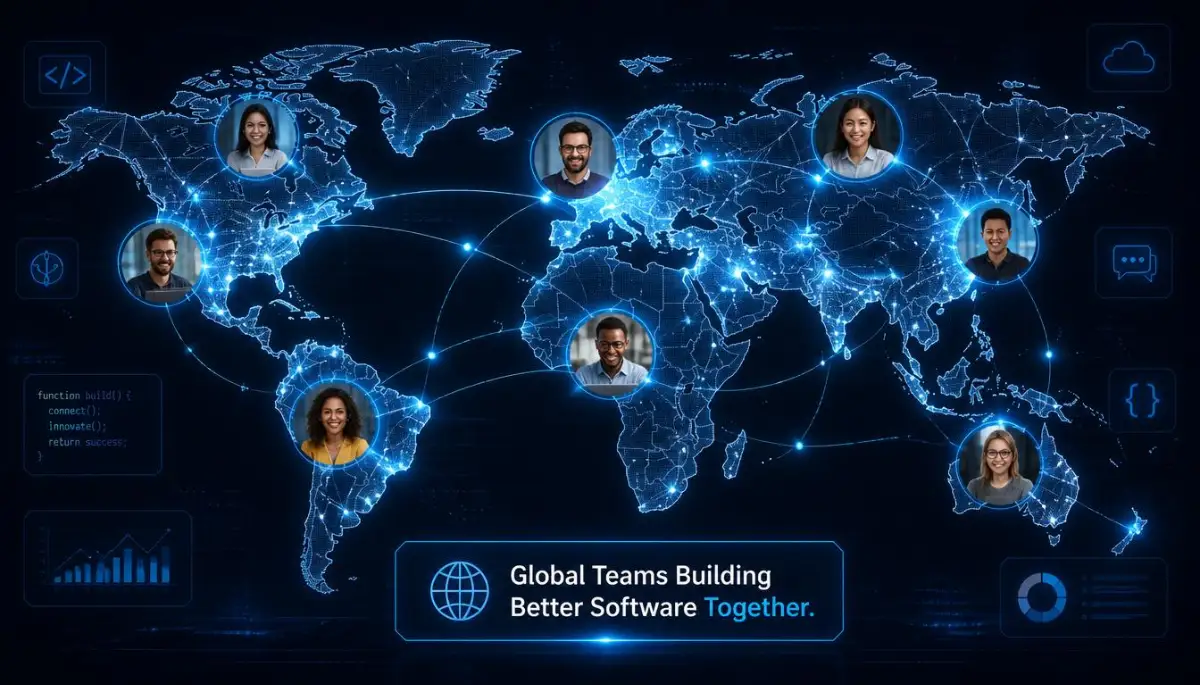
Collaboration is the true magic here. If I write a piece of code and share it, someone in Japan might find a bug.
Someone in Brazil might add a new feature. Suddenly, my small project becomes a world-class tool.
This is how some of the biggest things on the internet were built. Did you know that most of the web runs on open-source tools?
The internet wouldn't work without it. From the servers that host your favorite websites to the Android phone in your pocket.
The Core Pillars of Collaborative Innovation
Innovation does not happen in a vacuum anymore. The days of a lone genius in a basement are mostly over.
Today, the best ideas come from diverse groups of people working toward a common goal.
1. Transparency Builds Trust
When the code is open, there are no secrets. You know exactly what the software is doing with your data.
Security is actually better because thousands of eyes are looking for mistakes.
In closed software, a bug might stay hidden for years. In open source, it is often found and fixed in hours.
We call this "Linus's Law." It says that with enough eyes, all bugs are easy to find.
2. Rapid Improvement
Because anyone can suggest a change, open-source projects move fast. You don't have to wait for a company's next big "update."
If a group of users wants a new feature, they can just build it themselves. They then share that feature with everyone else.
This creates a cycle of constant growth that no single company can match.
3. Learning by Doing
For a beginner, open source is like a free university. You can read the code written by the best engineers in the world.
You can see their logic. You can see how they solve hard problems.
It is the best way to move from a beginner to an expert. You start by fixing a small typo in the documentation.
Then you fix a small bug. Before you know it, you are helping build tools used by millions.
How to Start Your Journey (Step-by-Step)
Starting can feel scary. You might think, "I'm not good enough to contribute."
Let me stop you right there. Everyone has something to offer.
Step 1: Find the Right Project
Don't try to fix the Linux kernel on your first day. Look for projects that you actually use.
Maybe it is a small browser extension. Or maybe it is a simple mobile app you like.
Look for tags like "Good First Issue" on sites like GitHub. These are tasks specifically meant for beginners.
Step 2: Read the Documentation
Every good project has a "README" file. This is your map.
It tells you what the project does and how to set it up. Read it carefully.
Often, the best way to help is to improve the documentation itself. If you found a part confusing, rewrite it so the next person understands.
Step 3: Join the Conversation
Open source is a social activity. Most projects have a chat room or a forum.
Don't be afraid to say hello. Tell them you are new and want to help.
The community is usually very welcoming to people who show a genuine interest in learning.
Common Myths About Open Source
Let's clear up some common mistakes people make.
Myth: Open source is only for "geeks."
Reality: Projects need designers, writers, and people to test the software. If you can use a computer, you can contribute.
Myth: It is not professional.
Reality: Companies like Google, Microsoft, and Meta use and support open source every day. It is the backbone of the professional tech world.
Myth: Free software is always lower quality.
Reality: Because so many people work on it, open-source software is often much more stable than paid versions.
The Philosophy of "Free as in Speech"
When we talk about "Free Software," we often mean two different things.
The first is "Free as in Beer." This means it costs zero dollars.
The second is "Free as in Speech." This means you have the liberty to use it how you want.
This second part is the most important for innovation. It allows people to take an old idea and turn it into something brand new.
We see this in the world of AI right now. Many of the biggest breakthroughs are happening because researchers are sharing their work openly.
Instead of hiding their discoveries, they publish them for everyone to see. This allows the whole world to move forward together.
Why Companies Are Switching to Open Models
Years ago, big companies hated open source. They saw it as a threat to their profits.
Today, that has changed completely. Even the biggest tech giants are now among the top contributors.
They realized that they cannot hire every smart person in the world. But they can work with them through open source.
It saves them money and helps them find the best talent. If a developer is great at contributing to a project, the company might hire them.
It is like a living resume. Your work speaks for itself.
Making Your First Contribution
Are you ready to try? It doesn't have to be perfect.
The first step is always the hardest. But once you make that first "Pull Request," everything changes.
You feel a sense of pride. You are no longer just a user. You are a builder.
You are now part of a global movement that is making the world a better place, one line of code at a time.
A Quick Tip for Success
When you start, be humble. Listen to the feedback from the project maintainers.
They might ask you to change something. Don't take it personally.
They are trying to help you become a better developer. Treat every piece of feedback like a free lesson from a pro.
The Future of Collaborative Tech
We are just getting started. As more people get online, the power of open source will only grow.
We are seeing it move beyond just software. There is open-source hardware, open-source medicine, and even open-source farming tools.
The spirit of sharing is catching on. It is a powerful way to solve the big problems our world faces today.
When we share our knowledge, everyone wins. We build better tools, we learn faster, and we stay connected.
Open source is more than just code. It is a way of thinking. It is a belief that we are stronger together than we are alone.
So, take that first step today. Explore a project, ask a question, and join the community.
The door is wide open for you. All you have to do is walk through it.
Mastering the Art of Contribution and Long-Term Success
So, you have learned the basics of what open source is and why it matters. Now, you are likely wondering how to go from a curious beginner to someone who actually makes a difference.
It is one thing to know the definition of a "Pull Request." It is another thing entirely to have your work accepted by a major project used by millions of people.
To succeed at a high level, you need to think like a professional. This means moving past just "fixing typos" and starting to understand the deep mechanics of how global teams work.
One of the best secrets I can share is that communication is more important than code. Most people think they need to be a math genius to help.
The truth is that projects fail because of bad communication, not just bad code. When you join a project, you are joining a culture.
Take the time to observe how the senior members talk to each other. Do they use specific technical terms? Do they prefer long explanations or short, direct notes?
Matching your style to the project's culture makes it much easier for people to trust your work. Trust is the currency of the open-source world.
If you want to grow fast, you should also look into how modern tools are helping developers work smarter. For example, how generative AI is changing the way developers write code is a major topic right now.
Using these tools can help you understand complex code faster, but you must be careful. Never just copy and paste AI-generated code into an open-source project without checking it.
Building a Reputation That Lasts
If you want to stay in this world for a long time, you need a plan. You cannot just jump from project to project every week.
Consistency is your best friend. It is better to help one project for six months than to help ten projects for one day each.
When you stay with one project, you start to understand the "why" behind the code. You learn the history of the project.
This deep knowledge makes you a valuable member of the community. People will start coming to you for advice.
That is when your career really takes off. Many people get high-paying job offers because a company saw their consistent work on a public project.
The Secret of "Social Coding"
You should also learn how to use version control tools like Git at a very high level. Don't just learn the three basic commands.
Learn how to "rebase" and how to keep your work clean. If a maintainer sees that your work is neat and easy to read, they will be much more likely to accept it.
Think of your code like a gift you are giving to someone. You wouldn't give a gift in a dirty, broken box.
You would wrap it nicely and make sure it is easy to open. Clean code is your gift wrapper.
Another pro tip is to participate in the "boring" stuff. Everyone wants to build the cool new feature.
Hardly anyone wants to write tests or fix the build system. If you become the person who fixes the hard, boring problems, you will become a hero in that community.
To understand how big organizations handle these standards, you can look at the Open Source Initiative standards, which define the rules for the whole industry. Following these rules shows that you are a true professional.

Traps That Can Kill Your Progress
Starting your journey is exciting, but it is very easy to fall into a few deep holes. These mistakes can make you feel burnt out or even get you banned from a community.
The biggest mistake is the "Ego Trap." Some new developers come into a project and start telling everyone what is wrong.
They suggest massive changes before they even understand how the project works. This is a very quick way to make enemies.
Even if you are right, no one likes a newcomer who acts like they know everything. Be a student before you try to be a teacher.
Another common error is working in total silence. You spend three weeks building a huge feature without telling anyone.
When you finally show it to the team, they tell you they don't want that feature. Or maybe someone else was already working on it.
This is heartbreaking and a huge waste of time. Always open an "Issue" or start a discussion before you do any big work.
Get the "green light" from the leaders first. This saves your energy and ensures your work will actually be used.
The Danger of Ignoring the Rules
Every project has a set of "Contribution Guidelines." These are the laws of that specific land.
If the rules say "use four spaces for indenting" and you use tabs, your work might be rejected. It sounds small, but it matters.
Ignoring these rules shows that you don't respect the project's time. It tells the maintainers that you expect them to clean up after you.
Don't be that person. Read the rules twice and follow them exactly.
Lastly, watch out for "Burnout Syndrome." Open source can be addictive.
You might feel like you have to answer every message and fix every bug immediately. Remember, this is usually a volunteer effort.
If you push yourself too hard, you will start to hate the project. Set clear boundaries for yourself.
It is okay to walk away from the computer and take a break. The code will still be there tomorrow.
Just like you would manage your personal health or even why your gut bacteria holds the secret to a stronger immune system, you must manage your mental energy to stay productive.
Moving Toward a Future of Shared Knowledge
We have covered a lot of ground. From the basics of what open source is to the advanced ways you can make it your career.
The most important thing to remember is that you are part of something much bigger than yourself. You are contributing to the global library of human knowledge.
The work you do today might help a student in a small village or a scientist in a huge lab ten years from now. That is a very powerful thought.
Don't let the fear of making a mistake stop you. Every single expert was once a beginner who felt confused.
They made mistakes, they broke things, and they had their code rejected. But they didn't stop.
They learned from the feedback and tried again. That is the only real "secret" to success in the tech world.
Your Action Plan for Today
I want you to do one small thing today. Don't worry about writing code yet.
Just go to GitHub or GitLab and find a project that you use every day. Go to the "Issues" tab and just read.
See what people are talking about. See what problems they are trying to solve.
This simple act takes away the "mystery" of the project. It makes it feel real and human.
If you see someone asking a simple question and you know the answer, reply to them. That is your first contribution.
You don't need a degree or a fancy job title to be helpful. You just need a willing heart and a little bit of patience.
The world of collaborative innovation is built by people just like you. It is a place where your ideas have value and your hard work can change lives.
Success here is a marathon, not a sprint. Take it one step at a time, and you will be amazed at how far you can go.
If you are worried about the financial side of life while you spend time learning, understanding things like how to rebuild your credit score after a major financial disaster can give you the stability you need to focus on your new skills.
Technology should be for everyone. By joining the open-source movement, you are helping make that a reality.
I am excited to see what you will build. The community is waiting for you, and the first "Welcome" is just one message away.
Stay curious, stay humble, and keep building. Your journey into the future of software starts right now.
![The Secret Anatomy of Decentralized Networks [Exposed for Beginners]](https://topic36.com/storage/uploads/blogs/1787976177_the-secret-anatomy-of-decentralized-networks-exposed-for-beginners.webp)