
The Heavy Weight of a Falling Credit Score
Imagine waking up to a phone call from a collector. Your heart sinks. You know you missed a few payments, but it wasn't because you were careless.
Maybe it was a medical emergency that drained your savings. Perhaps a job loss hit you when you least expected it.
Life happens, and sometimes, it hits your wallet hard. When your credit score drops, it feels like a heavy chain is wrapped around your future.
You try to apply for a small loan or a new apartment, and the answer is always "no." It is frustrating and embarrassing.
You feel like a number on a screen is defining who you are. The stress can keep you up at night, wondering if you will ever get back on track.
I want you to know one thing: you are not your credit score. This situation is temporary.
Think of your credit health like a physical injury. It takes time to heal, the right medicine, and a bit of patience.
We are going to walk through this together. We will look at how to stop the bleeding and start the rebuilding process today.
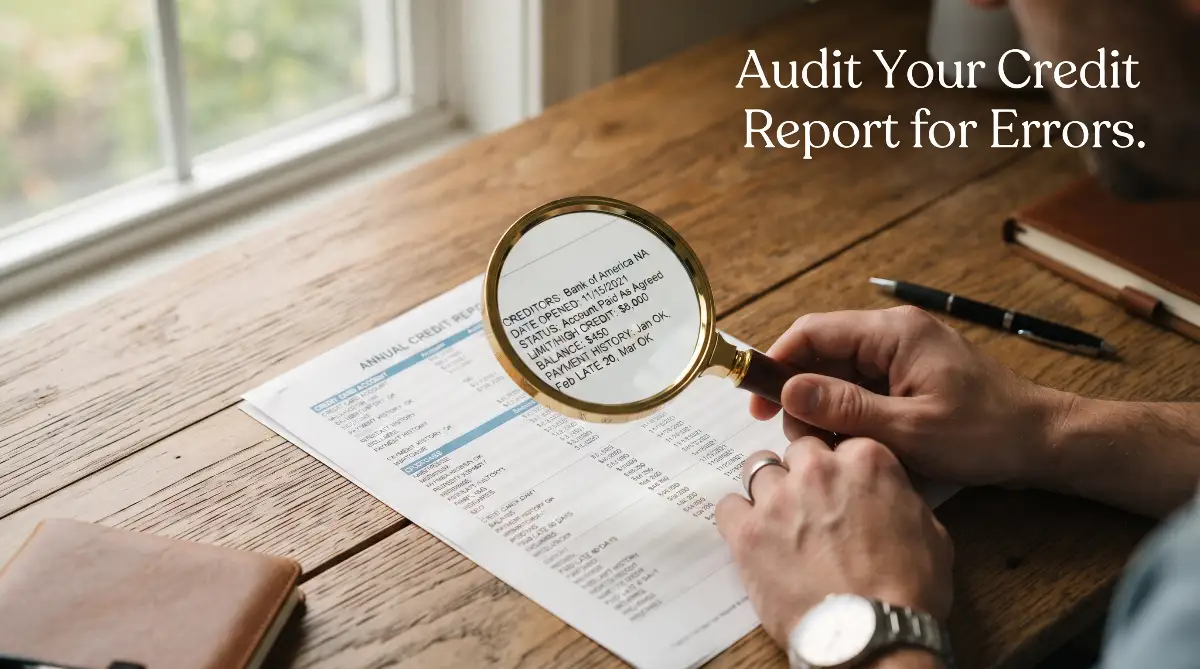
Facing the Truth: Your Credit Report Audit
The first thing we must do is look at the damage. You cannot fix what you do not see.
Most people avoid looking at their credit reports because they are scared. They think the numbers will be too painful to see.
But hiding from the truth only makes the problem grow. You need to get a copy of your credit report from the major bureaus.
Look for errors first. You might be surprised at how many mistakes end up on these files.
Check for accounts that are not yours. Look for late payments that you actually paid on time.
Identify the biggest "red flags." Is it a high credit card balance? Is it a collection account?
Knowing exactly what is dragging you down is 50% of the battle. It gives you a target to hit.
The Logic of Disputing Inaccuracies
Once you find a mistake, you have a legal right to challenge it. This is a powerful tool in your hands.
Credit bureaus are required by law to provide accurate information. If they cannot prove a negative item is correct, they must remove it.
Write a simple letter. You do not need a lawyer for this.
State clearly which item is wrong and why. Provide any receipts or bank statements you have as proof.
When an error is removed, your score can jump up significantly in a very short time. This is the fastest way to see progress.
The Science of Payment History
Your payment history is the single most important factor in your score. It accounts for about 35% of the total calculation.
The credit algorithm looks for consistency. It wants to see that you are a reliable borrower.
Set up automatic minimum payments. Even if you can only pay the bare minimum, do it on time.
One late payment can stay on your record for years. Preventing new late payments is like putting a bandage on a wound.
If you missed payments during your setback, don't panic. The "age" of those late payments matters.
As time goes by, those old mistakes carry less weight. Your goal now is to create a fresh "green" streak of on-time payments.
Pro Tip: The "Reminders" Strategy
If you hate automation, use your phone. Set three different alarms for each bill due date.
The goal is to make it impossible to forget. Consistency is the language that credit scores speak.
Mastering the 30% Credit Utilization Rule
The second biggest factor is how much of your available credit you are using. This is called credit utilization.
If you have a credit card with a $1,000 limit and you owe $900, your score will drop. The system thinks you are "maxed out" and desperate.
Aim for 30% or lower. In our example, that means keeping your balance under $300.
The "Micropayment" Hack: You don't have to wait for the end of the month to pay your bill.
If you get a small extra bit of cash, put it toward your credit card immediately. These small payments lower your "average" balance.
Lowering your utilization is one of the most effective ways to boost your score without needing more income.
Negotiating with Creditors Like a Pro
When you are in a financial hole, the phone becomes your enemy. But you should make it your friend.
Call your creditors before they send your account to a collection agency. Most banks have "hardship programs."
Be honest about your situation. Tell them you had a setback but you want to pay.
They might lower your interest rate for a few months. They might even let you skip a payment and add it to the end of the loan.
Ask for a "Pay for Delete" (With Caution). If an account is already in collections, you can negotiate.
Offer to pay the full amount only if they agree to remove the negative mark from your credit report. Get this agreement in writing.
This takes guts, but it can save your credit health years of waiting.
The Role of "Credit Mix" in Recovery
Credit bureaus like to see that you can handle different types of debt. This includes "revolving" credit (like credit cards) and "installment" loans (like an auto loan).
If you only have credit cards, your mix is weak. If you only have loans, it's also not ideal.
Don't open new accounts just for "mix." This is a slow-burn strategy.
Only add what you need. But if you are recovering, a "Credit Builder Loan" can be a smart tool.
These are small loans where the bank holds the money in a savings account while you pay it off. Once you finish, you get the money and a great boost to your payment history.
Why Time is Your Best Friend
You cannot rush a credit score. It is a marathon, not a sprint.
Every month that passes with a perfect payment record makes your old setbacks look smaller.
Think of it as "diluting" the bad with the good. The more good data you put into the system, the less the bad data matters.
Most negative items fall off completely after seven years. But you will see improvements much sooner than that if you follow these steps.
Stay focused on the small wins. Every five-point increase is a step toward your freedom.
Handling the Psychological Stress of Debt
It is hard to stay logical when you are worried about money. Your brain goes into "survival mode."
In this mode, you make quick, often bad, decisions. You might be tempted by "quick fix" companies that promise to erase your debt for a fee.
Avoid "Credit Repair" Scams. If they promise something that sounds too good to be true, it is.
No one can legally remove accurate information from your report. You can do everything they do for free.
Save that money and use it to pay down your actual debt.
Take a deep breath. You are taking action. You are reading this guide. You are already ahead of most people who just stay in the "worry" phase.
Building an Emergency Buffer
To prevent future setbacks from ruining your credit again, you need a shield. This shield is your emergency fund.
Even if it is just $500, it can stop a small emergency from becoming a credit disaster.
Prioritize this fund. It might seem strange to save money while you have debt.
But if your car breaks down and you have no cash, you will use a credit card. If that card is maxed out, you miss a payment.
The cycle starts again. Break the cycle by saving a small "starter" emergency fund first.
Analyzing Your Spending Patterns
We must look at why the setback hit so hard. Was it just bad luck, or was the margin too thin?
Track every penny for 30 days. Use a simple notebook or a free app.
You will find "leaks" in your spending. Maybe it's a subscription you forgot about.
Closing these leaks gives you more "fuel" to pour into your credit recovery.
Every dollar you save is a dollar that can lower your credit utilization.
The Power of Secured Credit Cards
If your credit is so damaged that no one will give you a card, look at secured cards.
You give the bank a deposit (like $200), and they give you a card with a $200 limit.
It works exactly like a regular card. They report your payments to the bureaus.
This is the "training wheels" of the credit world. It is a safe way to prove you are responsible again.
After a few months of perfect use, many banks will "graduate" you to a regular card and give your deposit back.
Strategies for Long-Term Credit Growth and Stability
Now that you have fixed the obvious errors and started your basic recovery, it is time to think like a pro. Most people stop at the basics, but you want a score that stays strong even when life gets messy.
One of the most effective tools is understanding the Statement Closing Date. This is different from your due date.
The statement date is when the bank "takes a picture" of your balance and sends it to the credit bureaus. If you pay your bill on the due date, the "picture" might already show a high balance.
Try to pay your balance down a few days before the statement date. This makes it look like you are using very little of your credit.
Banks love this because it shows you are not living on borrowed money. It is a small change that can lead to big jumps in your score.
Another pro-level move is asking for a credit limit increase. You might think this is bad because it gives you more room to spend.
But if you have the discipline not to spend it, your utilization ratio drops instantly. If you owe $500 on a $1,000 card, you are using 50%.
If the bank raises your limit to $2,000, that same $500 debt now only counts as 25%. Just make sure to ask if this request requires a "hard pull" on your credit.
If it does, it might cause a small, temporary dip in your score. If they can do a "soft pull," it is a win-win for you.
You might also consider becoming an Authorized User on someone else's account. This is often called "credit piggybacking."
If a family member has a card they have used for ten years with perfect history, their good habits can rub off on you. When they add you to the account, their long history is added to your credit report.
You do not even need to have the physical card or spend a penny. Their "age" and "limit" become part of your data.
However, choose this person carefully. If they start missing payments, it will hurt your score too.
While you are working on these steps, don't forget the importance of building a bulletproof emergency fund fast. Having cash in the bank is the best way to protect your credit from future setbacks.
If you have a sudden car repair, you won't have to put it on a credit card and spike your utilization. You can pay with cash and keep your credit score safe and sound.
Finally, keep an eye on your credit mix. If you only have credit cards, consider a small installment loan.
Something like a secured personal loan can show banks you can handle different types of debt. It adds variety to your profile and shows you are a well-rounded borrower.
Mastering the Art of Financial Discipline
Staying at the top requires a change in how you see money. It is not just about paying bills on time; it is about planning for the "what ifs."
One secret many experts use is the weekly check-in. Don't wait for the end of the month to look at your accounts.
Spend ten minutes every Sunday morning looking at your spending. See if any strange charges appeared.
This habit keeps your finances at the front of your mind. It prevents "lifestyle creep" where you start spending more just because your credit score is going up.
If you have many small debts, you might want to consolidate multiple debts into one monthly payment. This can lower your interest rates and make your life much simpler.
When you have only one payment to worry about, you are much less likely to forget it. It also lowers your total interest, which helps you pay off the principal faster.
Remember that patience is a skill. Your score will not go from 500 to 800 in a month.
Celebrate the small gains. If your score goes up by 10 points, that is a victory.
Those small wins build momentum. Before you know it, you will be qualifying for the best interest rates available.

Hidden Traps that Can Ruin Your Progress
When you start seeing progress, it is easy to get overconfident. This is exactly when many people make mistakes that send them back to square one.
One of the biggest mistakes is applying for too much credit at once. You might think that getting three new cards will help your limit.
But each application creates a "hard inquiry." Too many inquiries in a short time make you look desperate to lenders.
They wonder why you suddenly need so much credit. It can make them nervous and lead to rejections.
Another trap is closing your oldest credit card accounts. You might think you are "cleaning up" by closing a card you no longer use.
But the "age of credit" is a big part of your score. If you close your oldest card, your average credit age drops.
This can cause your score to fall significantly. If the card has no annual fee, just keep it open.
Put a small subscription on it, like a streaming service, and set it to autopay. This keeps the account active and helps your score grow.
Many people also fall for credit repair scams. These companies promise to delete your late payments for a high fee.
They often use aggressive or illegal tactics that can get you in trouble. There is nothing a credit repair company can do that you cannot do yourself for free.
According to the Federal Trade Commission, you have the right to dispute any inaccurate information on your own. Saving that money and paying down your debt is always a better choice.
Don't forget to avoid common personal loan mistakes you must avoid when you are looking for new credit. Taking out a loan with a high interest rate or hidden fees can trap you in a new cycle of debt.
Always read the fine print before signing anything. Your goal is to move forward, not sideways.
Lastly, never ignore a small collection notice. You might think a $50 medical bill doesn't matter.
But a collection is a collection, no matter the size. It can stay on your report for seven years and keep your score from reaching the top levels.
If you get a notice, deal with it immediately. Often, you can pay the bill and ask the agency to remove the negative mark as a gesture of goodwill.
Protecting Your Future from Unexpected Slips
Even with the best plan, life can throw a curveball. You might lose your job or face an illness again.
If you feel like you are going to miss a personal loan EMI payment, don't hide from the bank.
Call them immediately. Most lenders have programs to help people in temporary trouble.
They would rather help you stay on track than deal with a defaulted loan. Communication is your best defense against a falling score.
Also, be very careful about co-signing for others. While your credit is recovering, you might want to help a friend or a child.
But if they miss a payment, it shows up on your report too. You are 100% responsible for that debt.
Protect your progress. It is okay to say no until your own financial house is perfectly stable.
Your Personalized Action Plan for Tomorrow
You have learned a lot today. Now, it is time to put it into action.
Don't try to do everything at once. Start with these three steps tomorrow morning.
First, log into your credit accounts and check your statement closing dates. Write them down on a calendar.
Second, check your credit report one more time. Look for any new entries that shouldn't be there.
Third, set a small savings goal. Put $20 or $50 into a separate account.
This is the start of your new life. You are no longer someone who is "bad with money."
You are someone who is building a legacy. You are learning the rules of the game and playing it to win.
Every day you stay disciplined, you are building a stronger future for yourself and your family. The stress of the past is fading away.
You are in control now. You have the tools, the knowledge, and the drive to succeed.
Don't let a bad month or a low number define you. Look at how far you have already come just by reading this guide.
The road to a perfect score is open. All you have to do is keep walking.
You can do this. Your financial freedom is waiting for you just around the corner.
Start today, stay consistent, and watch your life transform.