
The Hidden Stress of Finding the Perfect Online Address
Have you ever spent weeks dreaming up the perfect name for your business? You finally find a name that sounds bold, smart, and exactly like "you."
Then, you go to buy the domain. Your heart sinks when you see that the .com version is already taken or costs ten thousand dollars.
It feels like a punch to the gut. You start to wonder if your business is doomed before it even starts.
Many people spend sleepless nights staring at their screens. They ask themselves, "Will people think I am a scammer if I use a .xyz extension?"
The fear of looking unprofessional is very real. You want to look like a big deal, but your budget says otherwise.
I talked to a friend recently who was in tears over this. She had the perfect logo and the perfect product.
But she felt like a failure because she couldn't get the ".com" she wanted. She felt like her brand was "cheapened" by having to pick something else.
This is a common struggle that kills many great ideas before they launch. It’s not just about a URL; it’s about your identity and how the world sees your hard work.
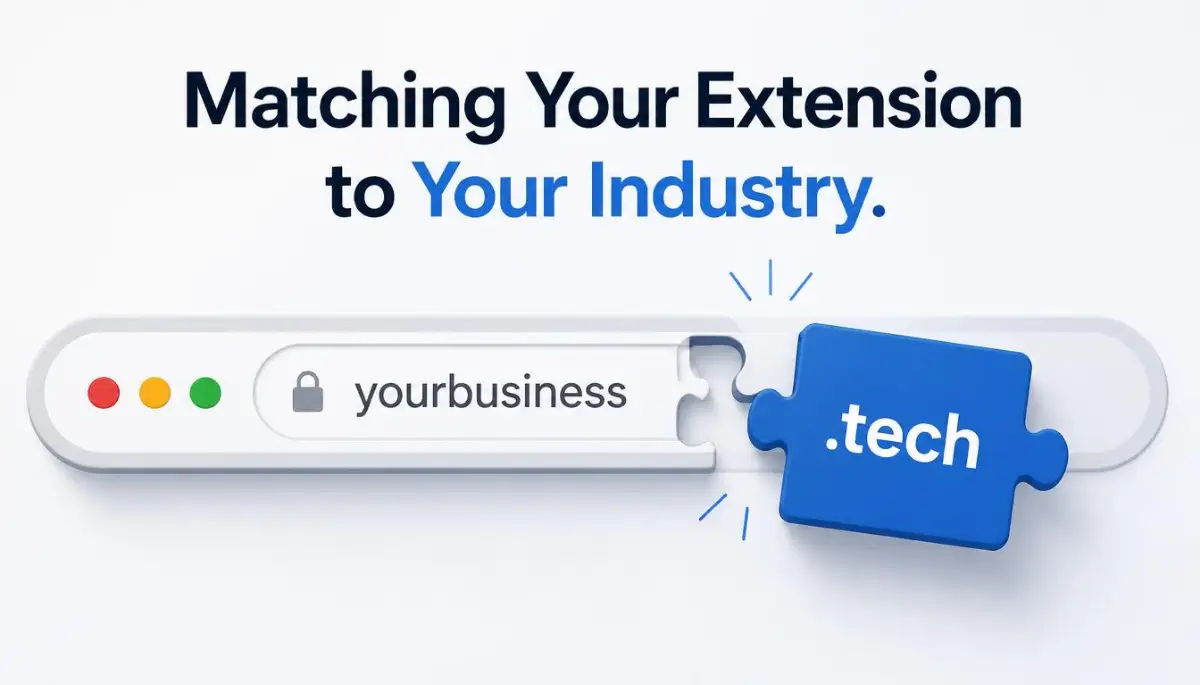
Why Your Domain Ending Changes Everything
The letters after the "dot" in your website address are called a TLD. This stands for Top-Level Domain.
Most people think only about the name itself. But the ending is what tells people what kind of business you run.
If you see a site ending in .edu, you know it is a school. If you see .gov, you know it is the government.
When you pick a random or weird extension, you might be sending the wrong message. You want people to feel safe when they click your link.
The Power of the Classic Dot Com
There is a reason why almost everyone wants a .com. It is the "gold standard" of the internet.
Most mobile phones even have a ".com" button on their keyboards. This makes it very easy for people to type.
Trust is the biggest factor here. Since the early days of the web, .com has been the leader.
If your audience is older or not tech-savvy, they might not even know other extensions exist. They might try to type .com even if your site ends in .net.
However, do not panic if you can't get it. The world is changing, and new options are becoming very popular.
When to Choose a Dot Net or Dot Org
If the .com is gone, many people look at .net next. Originally, this was for "network" companies.
Today, it is a safe second choice for many businesses. It still feels professional and established.
Dot org is a different story. This is usually for non-profits or community groups.
If you are running a store to make money, using a .org might confuse your customers. They might think you are a charity.
Always think about the intent of your website before you hit that buy button.
Making Your Brand Pop with Niche Extensions
We are now in an era where you can get very specific endings. You can choose .photography, .agency, or even .pizza.
These are great because they tell people exactly what you do. If someone sees "John.photography," they know he takes pictures.
This helps with brand recognition immediately. You don't have to explain your business because the URL does it for you.
It also helps you get a shorter and more memorable name. Short names are much easier for people to remember and share.
The Local Approach: Using Country Codes
Are you only selling to people in your own country? If so, a country code TLD (ccTLD) is a smart move.
Examples include .uk for the United Kingdom or .ca for Canada. People in those countries often prefer to buy from "local" sites.
It gives them a sense of security regarding shipping and currency. Search engines also notice this.
They might show your site more often to local users. This is a big win for small businesses serving a specific area.
Testing the "Radio Test" for Your Domain
One of the best ways to know if your extension works is the radio test. Imagine you are saying your website address out loud on a podcast.
Is it easy to say? Is it easy for the listener to understand?
If you have to say, "It’s my brand name dash site dot net," it is too hard. You want something that flows off the tongue.
Simplicity is your best friend. If people have to ask you how to spell the extension, you might want to rethink your choice.
How Extensions Affect Your Google Ranking
Many people worry that a non-dot-com extension will hurt their SEO. The truth is that Google treats most extensions the same.
What matters most is the quality of your content. Google wants to show the best answers to users.
However, user behavior does matter. If people are afraid to click your link because it looks like spam, your ranking might drop.
This is why picking a "clean" and "trusted" extension is helpful. It encourages more clicks, which tells Google your site is good.
Avoiding the "Spam" Trap
Some domain extensions are very cheap, sometimes less than a dollar. While this sounds good for your wallet, it can be bad for your brand.
Spammers often use these cheap extensions to send junk mail or host fake sites. Because of this, some email filters might block mail from those extensions.
Your reputation is worth more than saving five dollars. Stay away from extensions that have a history of being used for "shady" activities.
Stick to well-known or industry-specific endings to stay safe.
The Mobile User Experience
Think about how often you use your thumb to type a URL. It is much harder to type a long extension on a small screen.
When you choose a domain, try typing it on your phone first. See how it feels.
User experience is a huge part of branding. If your site is hard to reach, people will just go to your competitor.
Keep it short, keep it simple, and make it easy for thumbs to type.
Matching Your Extension to Your Personality
Your brand has a "vibe." Is it serious and corporate? Or is it fun and creative?
A law firm might want to stick to .com or .legal. They need to look very serious and trustworthy.
A new AI startup might look cool with a .ai or .io extension. These endings suggest that the company is on the cutting edge of technology.
Match the "feeling" of the extension to the "feeling" of your brand. It should all fit together like a perfect outfit.
Legal and Trademark Issues to Watch
Before you fall in love with a domain, check for trademarks. Just because a domain is "available" doesn't mean you have the right to use it.
If you use a name that belongs to a big company, they can take it from you later. This is a nightmare that can cost you a lot of money.
Always do a quick search for trademarks in your country. It only takes a few minutes but can save your business from a huge disaster.
Being safe is always better than being sorry when it comes to legal stuff.
Creating a Long-Term Vision
Don't just think about what you are doing today. Think about where your brand will be in five years.
If you pick a very narrow extension, will it still fit if you grow? For example, if you pick .shoes but later want to sell hats, you might have a problem.
Pick an extension that allows you to grow. You want your online home to be somewhere you can stay for a long time.
Changing a domain name later is hard and can hurt your traffic. It is better to get it right the first time.
Psychological Impact on Your Customers
Human brains like things that feel familiar. This is called the "mere-exposure effect."
We tend to like things more just because we have seen them many times before. This is why .com is so powerful.
When you use a familiar extension, you are tapping into this psychological comfort. Your customers feel a sense of "okay, I know what this is."
If you go with something very new, you have to work a little harder to build that same comfort. It is not impossible, but it takes more time and good branding.
The Role of Social Media in Your Domain Choice
When you share your link on Facebook or Pinterest, how does it look? Some social media platforms "shorten" links or show a preview.
A clean domain extension looks much better in a social media post. It makes people more likely to click and share your content with their friends.
Visual appeal matters in the digital world. Your URL is part of your visual identity, just like your logo or your colors.
Make sure it looks "clickable" and clean when it appears in a news feed.
Handling the "Taken" Domain Situation
If your dream .com is taken, don't give up. You can try adding a small word to the name.
Words like "get," "my," or "the" can help you keep the .com. For example, instead of "apple.com," you might use "get apple.com."
This is a common trick used by many successful startups. It lets you keep the trusted extension while using your brand name.
It is often better to have a slightly longer .com than a very short but "weird" extension.
Why Consistency is Key for Your Brand
Once you pick an extension, use it everywhere. It should be on your business cards, your email, and your social media profiles.
Mixing different extensions for the same brand can confuse people. If your site is .net but your email is @gmail.com, it looks a bit messy.
Professionalism comes from consistency. Aim to have everything matching so your brand looks solid and well-planned.
This builds a strong image in the minds of your audience. They will start to recognize you across the whole internet.
Looking at Success Stories
Many big companies have successfully used non-traditional extensions. For example, Twitch uses "twitch.tv."
It works because they are a video streaming site, and ".tv" fits perfectly. It makes sense to the user.
Another example is "notion.so." While ".so" is a country code, it became a trend for tech tools.
These companies succeeded because they made the extension part of their story. If you have a clear reason for your choice, your customers will follow you.
Expert Insight: The Value of Simplicity
I always tell my clients to keep their domain under 15 characters if possible. This includes the extension.
Short domains are easier to remember. They also fit better on marketing materials.
If you have a long brand name, a short extension like .co can help balance it out.
Think of your domain as a sign on the front of a shop. You want it to be clear, readable, and inviting from a distance.
Myths About Domain Extensions
Some people think that you must own every version of your domain (.com, .net, .org). While this is nice, it is not always needed for a small business.
Don't waste all your money buying 20 different domains when you are just starting.
Focus on one great domain and build your brand there. You can always buy more later if your business becomes a massive hit.
Put your energy into creating great content and helping your customers instead.
Master Strategies for Securing Your Digital Future
Picking the right domain ending is only the beginning of your journey. To truly stand out, you need to think like a digital architect building a skyscraper.
One of the best secrets is to research the history of a domain extension before you commit. Some extensions have been used by spammers in the past, which can make your website start with a bad reputation.
You can use tools like the ICANN Lookup to see the technical registration details of any domain you are considering. This helps you avoid "blacklisted" extensions that might prevent your emails from reaching your customers' inboxes.
Think of your domain name as a long-term investment. Just like is buying a home smarter than renting, owning a high-quality domain extension gives you full control over your digital property for years to come.
The Art of the "Domain Hack"
Have you ever noticed websites like "itun.es" or "instagr.am"? These are called domain hacks.
They use the extension to complete the name of the brand. This is a very creative way to get a short, memorable address that looks modern and clever.
However, you must be careful with this approach. If you use a country code extension like .ly (Libya) or .io (British Indian Ocean Territory), the rules for owning those domains can change.
Always make sure you are allowed to keep the domain even if you don't live in that country. Stability is the key to a brand that survives for a long time without technical hiccups.
Why Security and Domain Extensions Go Hand in Hand
When you pick an extension, you also need to think about how you will protect it from hackers. Some extensions offer better security features than others.
For example, many .com and .net registrars allow you to "lock" your domain. This prevents anyone from stealing your web address and moving it to a different company.
Treating your domain security is just as important as protecting your crypto for decades with advanced storage methods. If your domain is stolen, your entire brand identity could disappear overnight.
Always use two-factor authentication (2FA) on your domain registrar account. This adds a powerful layer of safety that keeps your online home locked tight against intruders.
Future-Proofing Your Brand Extension
Your business might start small today, but what happens when you add new products? Choosing a very narrow extension like .coffee might be a problem if you decide to sell tea later.
Try to pick an extension that is broad enough to grow with you. A generic extension like .com or .site gives you the freedom to change your business model without changing your name.
Think about the longevity of your brand, much like the way you would think about hybrid engine care and longevity to keep a car running for hundreds of thousands of miles. A domain that fits you today should still fit you ten years from now.
If you do pick a niche extension, make sure it is a niche you are passionate about staying in. This helps you build deep authority in your specific industry.

Fatal Errors That Can Destroy Your Brand Reputation
Many people rush into buying a domain because they are excited. This excitement often leads to "blind spots" where they ignore huge warning signs.
One massive mistake is using hyphens and numbers in your domain. Imagine telling someone to visit "best-cup-of-coffee-101.net."
It sounds like a scam and it is impossible to remember. People will forget where the dashes go and end up on someone else’s website.
Stick to plain letters whenever possible. If you need a hyphen to make the name readable, your name is probably too long or too complicated.
Falling Into the Trademark Trap
Nothing kills a new business faster than a legal letter from a big company. If you pick a domain extension that sounds too much like a famous brand, you are asking for trouble.
Even if the name is available, it might not be legal for you to use it for profit. You should always check resources like the WIPO Trademark Database to ensure you aren't stepping on any toes.
A legal battle can drain your bank account and force you to start your branding from zero. It is much better to be original and unique than to try and ride the coattails of a giant.
Protecting your name from the start is like rebuilding your credit score after a disaster; it takes a lot of effort to fix mistakes, so it's better to avoid them from day one.
Ignoring the Social Media Sync
A common mistake is picking a great domain extension but forgetting to check if the name is available on social media. Your brand should have the same name on your website, Facebook, Instagram, and Pinterest.
If your website is "BrandName.tech" but your Instagram is "@TheRealBrandName123," you are confusing your fans. This makes it much harder for people to find you across different platforms.
Before you buy the domain, do a quick search on every social media site. Consistency builds trust, and trust is the currency of the internet.
If the names don't match, consider changing the name slightly so you can have the same handle everywhere. This creates a professional and "polished" look for your business.
The "Cheap Domain" Regret
It is tempting to buy a domain for $0.99 from a random company. But often, these cheap domains have very high renewal prices in the second year.
Some people find out that their $1 domain costs $50 to keep the following year. This is a common trap that catches many beginners off guard.
Always read the fine print before you pay. You want a company that has fair and transparent pricing for the long haul.
Spending an extra few dollars today can save you hundreds of dollars in the future. Think of it as a small maintenance cost for your digital storefront.
Your Path to a Strong and Memorable Identity
Choosing your domain extension is a powerful moment for your brand. It is the bridge between your ideas and your audience.
By picking an extension that fits your goals, you are telling the world that you are here to stay. Whether you go with the classic .com or a creative .design, make sure it feels right for you.
Don't let the fear of making a mistake stop you from starting. The internet is a place of growth and learning, and your domain is your starting line.
Take a deep breath and look at your options one last time. Does the name sound like the business you want to build?
Your Action Plan for Today
I want you to stop overthinking and take these three simple steps right now. First, write down your top three domain name ideas.
Second, check if those names are available with your favorite extension. Third, ask a friend to type the name on their phone without you helping them.
If they can do it quickly, you have a winner. The best time to start is now, and your perfect domain is waiting for you.
![How to Move Your Website to a New Server [Without Fear]](https://topic36.com/storage/uploads/blogs/1787759627_how-to-move-your-website-to-a-new-server-without-fear.webp)
![How to Secure Your Website and Stop Hackers [The Ultimate Blueprint]](https://topic36.com/storage/uploads/blogs/1787043730_how-to-secure-your-website-and-stop-hackers-the-ultimate-blueprint.webp)