Drowning in Numbers: My Battle With Hidden Loan Costs
I still remember sitting at my small kitchen table, staring blankly at a thick stack of loan papers. My heart was pounding, and my hands were actually sweating as I tried to make sense of the fine print. I desperately needed extra cash to fix a massive leak in my roof, but the numbers on those pages felt entirely foreign to me. Every bank representative I spoke to sounded like they were speaking an alien language filled with complex banking jargon. I felt incredibly foolish asking them to explain the difference between a simple rate and an APR. My confidence hit rock bottom, and I almost signed a terrible deal just to escape the deep embarrassment I felt. That frustrating, terrifying night completely changed my entire perspective on borrowing money.
Millions of ordinary people wake up every single day facing this exact same nightmare. You need money to cover an emergency, consolidate debt, or fund a major life event, but the banking system makes you feel small and uneducated. The mental weight of not understanding what you are actually signing up for is exhausting.
Instead of feeling relief when you get approved for a loan, you feel a deep sense of anxiety. You lie awake at night wondering if you made a huge mistake. Are you paying hundreds or even thousands of dollars more than you should? Are there hidden fees lurking in the background that will drain your bank account next month?
This constant stress completely destroys your everyday peace of mind. It ruins family dinners, distracts you at work, and makes you dread checking your mail. We are taught basic math in school, but nobody ever sits us down to explain how borrowing money actually works in the real world.
Why do some people get amazing, affordable offers while others are trapped with crushing monthly payments? Is the whole system rigged against everyday people? Let us clear the fog right now. You do not need a finance degree to master this topic; you just need plain, simple English.
Decoding the True Cost of Borrowing Money
When you strip away all the fancy banking terms, taking out a loan is basically just renting money. Just like you pay a landlord to live in their apartment, you pay a bank to use their cash. That "rent" is your interest rate.
If you understand exactly how this rent is calculated, you instantly take back your power. Let us walk through the most practical, logical steps to ensure you never get ripped off by a greedy lender again.
The Foundation: How Lenders Look at You
Before a bank even thinks about offering you money, they put you under a microscope. They want to know one simple thing: are you a safe bet, or are you a risky gamble? To figure this out, they look primarily at your credit history.
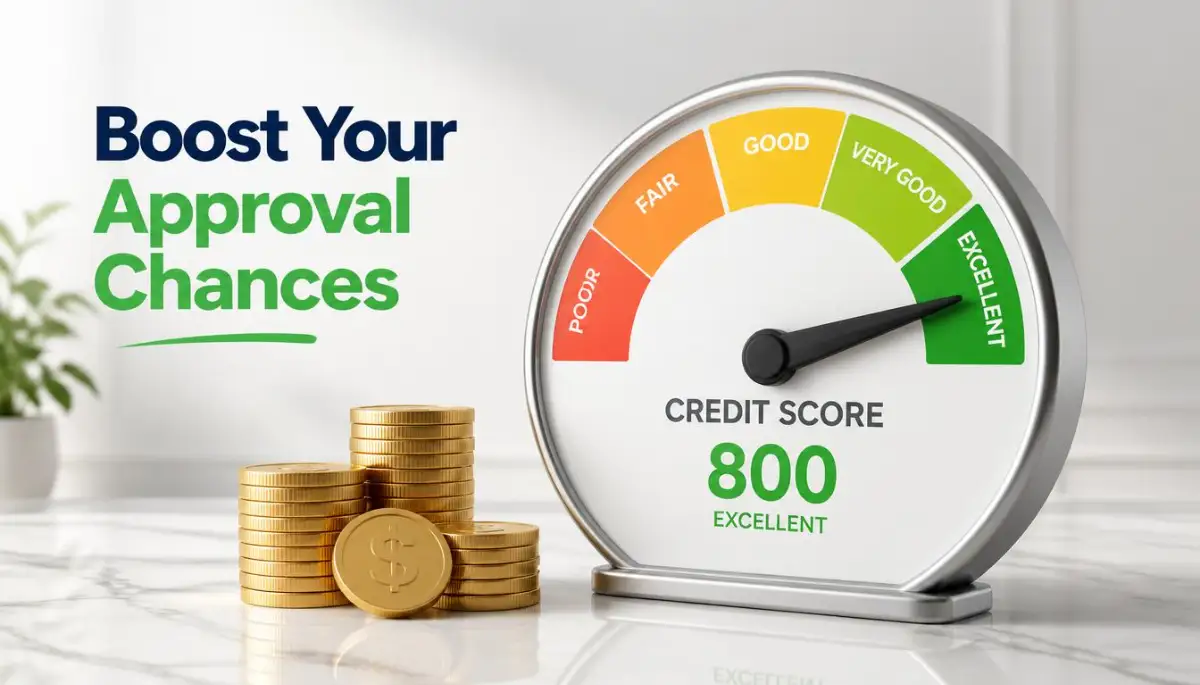
Think of your credit score as your ultimate financial report card. If you have a high score, lenders see you as a responsible A+ student. Because they trust you, they will offer you a much lower interest rate to win your business.
On the other hand, if your score is low, they see you as a high-risk borrower. To protect themselves, they will charge you a much higher rate. They want to make their money back as quickly as possible just in case you stop paying.
Pro Tip: I completely ruined my chances of getting a good rate a few years ago because I missed one simple credit card payment by just three days. I quickly realized that setting up automatic minimum payments is the easiest way to protect your financial reputation and lock in better loan offers.
The Big Trap: Interest Rate vs. APR
This is the exact spot where most hardworking people lose their hard-earned money. When you see an advertisement for a personal loan, the bank will proudly display a very low number in massive, bold letters. This is usually just the basic interest rate.
However, that number is basically an illusion. It only represents the cost of the money itself, completely ignoring all the extra fees the bank plans to charge you. You need to look closely for three letters: APR (Annual Percentage Rate).
The APR is the absolute truth. It combines the basic interest rate with all the sneaky administrative fees, processing charges, and origination costs. Always compare loans by their APR, never just the basic rate.
Boldly Ask for the Breakdown
If you want to feel totally confident before signing anything, watch this quick breakdown.
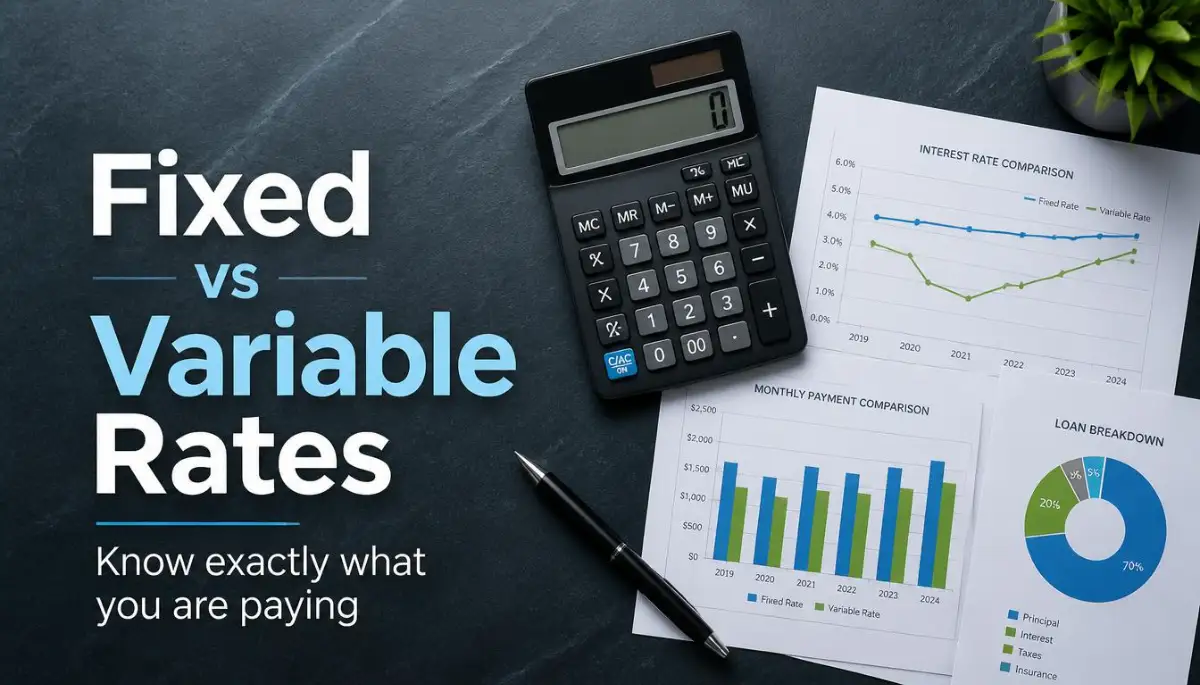
Fixed Rates vs. Variable Rates (The Boat Analogy)
When you borrow money, you will usually have to choose between a fixed rate and a variable rate. Understanding this difference is essential for your long-term mental health.
A fixed-rate loan is like riding on a massive, steady cruise ship. No matter how crazy the economy gets out there, your interest rate and your monthly payment will never change. You will pay the exact same amount in your first month as you will in your final month.
This predictability makes budgeting incredibly easy. You know exactly how much money is leaving your account every single month. Most financial experts heavily recommend fixed rates for personal loans because they offer total peace of mind.
A variable-rate loan, however, is like riding in a tiny sailboat. Your interest rate is tied to the overall economy. If the financial weather is calm, your rate might be very low, and your payments will be cheap.
But if the economy gets rough and national rates go up, your monthly payment will suddenly increase. You could easily wake up one morning to find out your loan just became too expensive to afford.
Myth vs. Reality: Personal Loan Truths
Let us clear up some of the most common misunderstandings that keep people trapped in bad financial situations.
Myth: Shopping around for different loan offers will destroy your credit score.
Reality: Most modern lenders offer a "soft pull" or pre-qualification check. This allows you to see your potential interest rate without hurting your credit score at all. You only get a hard inquiry when you officially accept the offer and submit the final application.
Myth: You should always take the maximum amount of money you are approved for.
Reality: Every extra dollar you borrow collects interest. Only borrow the exact amount you desperately need to solve your specific problem.
Myth: A longer loan term is always better because the monthly payments are smaller.
Reality: While a five-year loan gives you small, comfortable monthly payments, you will pay significantly more in total interest compared to a three-year loan.
Understanding the Debt-to-Income Ratio (DTI)
Your credit score is not the only number lenders care about. They also look closely at your Debt-to-Income ratio, commonly known as DTI. This is a very simple math equation that shows how much of your monthly income is already being eaten by other debts.
Imagine you bring home $4,000 every single month after taxes. Now, imagine you already pay $1,000 for your car loan and $1,000 for your credit cards. Half of your money is completely gone before you even buy groceries. Your DTI in this scenario would be 50%.
Lenders get very nervous when they see a high DTI. If you already spend most of your paycheck on old debts, they worry you will not have enough cash left over to pay them back.
If your DTI is too high, lenders will either reject your application entirely or give you a terribly high interest rate to justify the risk. To get the best rates, try to pay down your smaller credit card balances before applying for a new personal loan.
Secured vs. Unsecured Loans: What is the Catch?
When searching for the best possible interest rate, you will likely encounter these two terms. It is highly important that you know exactly what they mean for your personal property.
An unsecured personal loan is the most common type. This means the bank is lending you money based purely on your promise to pay it back. Because they have nothing to take from you if you stop paying, these loans carry higher interest rates. The bank is taking on all the risk.
A secured personal loan requires you to pledge something of value, like your car or a savings account, as collateral. If you fail to make your payments, the bank has the legal right to seize your property.
Because the bank is heavily protected, they will usually offer you a noticeably lower interest rate. However, you must ask yourself if risking your personal vehicle is truly worth saving a few dollars a month.
The Hidden Danger of Origination Fees
Even if you find a loan with a fantastic interest rate, you still need to watch out for the dreaded origination fee. This is an upfront charge the lender demands just for processing your paperwork and creating the loan.
Origination fees are usually a percentage of your total loan amount, often ranging from 1% to 8%. The tricky part is how banks actually collect this money. They do not send you a bill in the mail.
Instead, they usually deduct the fee directly from the cash they send you. If you borrow $10,000 with a 5% origination fee, the bank takes $500 right off the top. They will only deposit $9,500 into your checking account, but you still have to pay back the full $10,000 plus interest.
If you absolutely need a specific amount of cash to cover a bill, you must calculate this fee in advance. You might need to borrow slightly more than you initially thought just to ensure you get enough actual cash in your hand.
Quick Rate Comparison Table
To help you visualize how different rates affect your wallet, look at this simple breakdown. Let us assume you are borrowing $15,000 for a term of exactly 48 months.
As you can clearly see, simply having a lower credit score can cost you over $8,000 in extra interest charges for the exact same loan amount. This is why improving your financial profile before applying is the smartest move you can make.
Beware of Prepayment Penalties
Imagine a wonderful scenario where you get a huge promotion at work or receive a nice tax refund. You decide to do the responsible thing and pay off your personal loan two years early. You would expect the bank to be happy, right?
Shockingly, some lenders will actually punish you for doing this. This is known as a prepayment penalty. Banks make their profit by collecting interest over a long period. When you pay the loan off early, you cut off their steady stream of passive income.
To protect their profits, they hide a clause in your contract that forces you to pay a large fee if you close the account ahead of schedule. Always read the fine print and exclusively look for lenders that proudly advertise "No Prepayment Penalties".
How Loan Term Length Impacts Your Wallet
The amount of time you take to pay back the borrowed money is called the loan term. This single decision heavily dictates how much money you will lose to interest over the long run.
Short-term loans, typically lasting 12 to 24 months, generally offer much lower interest rates. Lenders love getting their money back quickly. However, because you are compressing a large debt into a small window of time, your monthly payments will be quite large.
Long-term loans, lasting anywhere from 48 to 84 months, stretch out the debt and make your monthly payments wonderfully small and easy to manage. The major downside is that you will be charged a slightly higher interest rate, and you will be paying that interest for many more years.
You must carefully balance your desire for a comfortable monthly payment against the total overall cost of the loan. Do not stretch out a small loan for five years just to save twenty dollars a month; the long-term math will work heavily against you.
Why Your Employment History Matters
Lenders crave stability. They want to know that your paycheck is safe, reliable, and predictable. When deciding your final interest rate, a computer algorithm will look deeply into your job history.
If you have been working steadily at the exact same company for several years, lenders view you as a remarkably safe investment. They are more willing to offer you their most competitive promotional rates.
If you frequently jump from job to job every few months, or if you have large gaps in your employment history, lenders get extremely nervous. Even if your current salary is high, the lack of stability makes you look risky, which will automatically trigger a higher interest rate on your offer.
Mastering the Game: Insider Secrets to Secure the Best Rates
Once you understand the basic math behind borrowing, you can start playing the game like a true insider. Most people blindly accept the very first offer a bank hands them, thinking they have absolutely no power to negotiate. This is a massive misconception that costs everyday consumers thousands of dollars.
You actually have significantly more control over your financial destiny than you might think. Lenders are businesses, and just like a local grocery store, they desperately want your business. Let us look at some highly effective strategies to force lenders to give you their cheapest possible money.
The Hidden Power of Relationship Banking
One of the smartest ways to get a cheaper rate is to look right in your own backyard. Banks absolutely love loyal customers who already keep money in their checking or savings accounts. If you already have a history with a specific credit union or bank, start your search there.
Many financial institutions offer a "relationship discount" to their existing members. They already know your spending habits, they can easily see your direct deposits, and they feel incredibly safe lending you money. Just by asking your current bank for a loyalty rate, you might instantly knock a half percent off your loan cost.
This is exactly why having a healthy financial hub makes your life so much easier. If you are looking for more smart budgeting guides, setting up a solid foundation with a local credit union is a fantastic first step. They are typically non-profit organizations, which means their rates are almost always lower than giant corporate banks.
The Autopay Discount Hack
Here is a brilliant, effortless trick that almost anyone can use right now. When you finally sit down to sign your loan paperwork, actively look for the "autopay discount" option. Most modern lenders will happily lower your interest rate by 0.25% or even 0.50% if you agree to let them pull the money automatically from your bank account every month.
Why do they do this? Because it dramatically reduces their administrative costs and virtually guarantees you will never forget a payment. The bank gets total peace of mind, and you get to keep more cash in your pocket.
It truly is a perfect win-win situation for everyone involved. Just make sure you always keep enough padding in your checking account so the automatic withdrawal never triggers a dreaded overdraft fee.
The 30% Credit Utilization Rule
If you want to quickly boost your financial profile before applying for cash, you must understand your credit utilization ratio. This extremely fancy term simply describes how much of your available credit card limit you are actually using. It makes up a massive portion of your overall FICO credit score calculation.
For example, if you have a credit card with a $10,000 limit and a $5,000 balance, your utilization is 50%. Lenders get very nervous when they see this number climb above 30%. They assume you are heavily relying on borrowed money just to survive your everyday life.
If you can manage to pay down your current credit cards below that 30% mark before you apply for a new personal loan, you will look like a financial superstar. Lenders will see you as highly responsible, and their computer algorithms will automatically spit out much better interest rates.
Leveraging a Co-Signer Safely
Sometimes, despite your absolute best efforts, your financial history might not be strong enough to get a cheap rate on your own. This is where asking a trusted family member or spouse to co-sign can completely save the day. A co-signer basically tells the bank, "If this person cannot pay, I promise I will cover the bill myself."
Because the bank now has two separate incomes to rely on, their risk drops dramatically. They will usually reward this extra security by dropping your interest rate significantly. However, you must treat this strategy with extreme caution and deep respect.
If you miss even a single payment, it directly damages your co-signer's credit score as well as your own. This can easily destroy a beautiful friendship or ruin a family relationship forever. Only use a co-signer if you have total confidence in your ability to repay the debt without fail.
Purpose-Driven Borrowing
Did you know that telling the bank exactly what you plan to do with the money can actually influence your rate? Lenders categorize loans based on their perceived risk. Taking out a loan to pay off high-interest credit cards is viewed very favorably.
This is because debt consolidation actually improves your monthly cash flow, making you a safer borrower. On the other hand, taking out a loan to go on a luxury vacation is seen as highly risky behavior. Lenders might quietly bump up your rate because they question your financial priorities.
Whether you want to renovate your house to maximize natural light and make your tiny room look huge or buy heavy equipment for a new business, always be honest. If your goal improves your life or increases your overall value, lenders will feel much more comfortable handing over the cash.
The Silent Traps: Warning Signs You Must Never Ignore
The banking industry is a massive, highly profitable machine built to extract wealth from confused consumers. While a personal loan can absolutely be a helpful tool, it can also quickly turn into a terrifying trap if you are not paying close attention. Let us walk through the most dangerous mistakes everyday people make.
The "Monthly Payment Illusion"
This is by far the most common and devastating mistake I see hardworking people make every single day. When you sit down with a loan officer, they will constantly steer the conversation away from the total cost and focus entirely on the monthly payment. They will say things like, "We can get this down to just $199 a month for you!"
This sounds incredibly affordable, but it is a psychological trick. To get that payment so delightfully low, they usually stretch the loan out for five or even seven years. Over that massive stretch of time, a completely average interest rate will silently eat away at your wealth.
You might end up paying back double what you originally borrowed just because you only looked at the monthly bill. Always demand to see the total amortization schedule. This simple document shows you exactly how many thousands of dollars you are handing over in pure profit to the bank.
The Shotgun Application Disaster
When people feel desperate for cash, their first instinct is usually to apply at every single bank they can find online. They think that applying in ten different places will increase their chances of getting a quick approval. This is actually the absolute worst thing you can do for your financial reputation.
Every time you submit an official application, the bank performs a "hard inquiry" on your credit file. If lenders suddenly see six hard inquiries pop up on your report in a single week, they panic. To a bank, this desperate behavior makes it look like you are about to go completely bankrupt.
They will either deny you instantly or hit you with the highest possible interest rate to protect themselves. Instead of randomly applying everywhere, use Federal Reserve Economic Data (FRED) to track average national rates first. Then, carefully select only one or two lenders that offer pre-qualification without hurting your score.
Falling for the "Guaranteed Approval" Scam
If you ever see a glowing online advertisement that promises "Guaranteed Approval No Matter Your History," you need to run away immediately. Legitimate, honest banks never guarantee an approval before looking at your financial documents. These ads are almost always run by predatory lenders designed to trap vulnerable people.
They will indeed give you the money, but they will bury astronomical interest rates deep inside the confusing paperwork. We are talking about rates that can soar past 100% or even 300% in some extreme cases. These are essentially glorified payday loans wearing a nice suit.
If you are struggling with overwhelming debt, do not turn to these shady websites. Instead, seek free guidance from the National Foundation for Credit Counseling (NFCC), where trained experts can help you find safe, legal alternatives. No emergency is ever worth destroying your entire financial future for a quick cash fix.
Borrowing to Fund a Risky Business Dream
Many passionate entrepreneurs use personal loans to fund their brand-new business ideas. While this can sometimes work, it is an incredibly dangerous gamble. Personal loans are tied entirely to you, not your business entity.
If you are passionate about building products that people actually love, you might feel tempted to borrow $20,000 to launch your big idea. But what happens if the business fails in six months? The bank does not care that your startup went under; they still want their full payment on the first of every month.
If you cannot pay, your personal assets and your personal credit score will be heavily damaged. Always try to seek dedicated business funding, grants, or save up cash before putting your own livelihood on the line for a startup idea.
Ignoring the Fine Print on Insurance Upsells
Right before you sign your final contract, a loan officer might casually ask if you want to add "payment protection insurance" to your package. They will aggressively sell this as peace of mind, claiming it will cover your payments if you lose your job. While it sounds nice, it is usually a wildly overpriced product that offers very little real protection.
The bank simply rolls the hefty cost of this insurance directly into your principal balance. This means you are now actually paying interest on the insurance policy itself! The Consumer Financial Protection Bureau (CFPB) heavily warns against these sneaky add-ons because they rarely benefit the consumer.
If you genuinely want to protect your family in case of an emergency, buy a separate, highly affordable term life insurance policy. Never let a fast-talking salesperson bundle expensive junk into your personal loan agreement.
Your Ultimate Roadmap to Smart Borrowing
Taking out a personal loan does not have to be a terrifying, sweat-inducing experience. Now that you understand exactly how the system works behind the curtain, you hold all the real power. You know how to read past the shiny marketing numbers and spot the true cost of borrowing money.
By checking your credit health, demanding to see the true APR, and carefully comparing different lenders, you easily protect your hard-earned cash. You will never again sit at a bank desk feeling confused or intimidated by financial jargon. You are now fully equipped to make smart, logical decisions that actually benefit your family's future.
Whether you need a quick loan to repair a leaky roof or upgrade home equipment to fix your slow internet connection, patience is your greatest weapon. Take a deep breath, review your options, and never let anyone pressure you into signing a bad deal.
My Personal Takeaway: I still clearly remember how totally helpless I felt during my very first loan application, convinced the bank was doing me a massive favor by just giving me money. Today, I proudly treat banks like regular vendors; if they do not offer me a highly competitive rate, I simply pack up my papers and confidently walk away to find someone who will. You absolutely deserve a fair deal, so always fiercely protect your financial boundaries.
Quick Answers to Your Biggest Borrowing Questions
How fast can I actually get a personal loan approved?
Many modern online lenders can approve your application and deposit the cash into your checking account within 24 to 48 hours. However, traditional brick-and-mortar banks might take up to a full week to thoroughly process your paperwork. Always ask the lender for their specific timeline if you are facing an urgent emergency.
Can I use a personal loan for absolutely anything I want?
In most cases, yes, you can use the funds for debt consolidation, home repairs, or major medical bills. However, most lenders strictly forbid you from using personal loans to pay for college tuition or illegal gambling activities. Always read your specific loan agreement to ensure your planned purchase is allowed.
Does simply checking my rate hurt my credit score?
No, it usually does not hurt you at all if the lender uses a "soft pull" or pre-qualification feature. This allows you to safely shop around and see estimated interest rates without leaving a permanent mark on your history. Just remember that accepting the final offer will always trigger a hard inquiry.
What is a surprisingly good interest rate right now?
A truly excellent rate for someone with top-tier credit usually hovers between 6% and 9%, depending on the national economy. If your credit is average, you should realistically expect to see offers ranging from 12% to 18%. Anything stretching above 25% is generally considered highly expensive and should be carefully avoided.
Is it better to get a personal loan or just use my credit card?
If you can aggressively pay off the balance in less than three months, a credit card is usually fine. But if you need several years to slowly pay back a large expense, a personal loan is almost always the clear winner. Personal loans offer fixed, predictable payments and significantly lower interest rates than standard credit cards.
Disclaimer: The information provided in this article is for educational and informational purposes only and should not be construed as professional financial advice. Always consult with a certified financial planner or legal advisor before making any major borrowing decisions. Rates and terms mentioned are examples and can vary widely based on your individual profile.