
The Silent Thief Hiding in Your Bank Account
I remember staring at my bank statement on a quiet Tuesday morning, feeling a heavy knot form in my stomach. I had been doing everything right by saving a portion of my income every single month. I skipped the expensive coffees, cooked meals at home, and rarely bought new clothes. But when I looked at my total balance, I realized my hard-earned money was barely enough to cover the basic things I wanted to buy.
My savings account balance had grown, but the actual value of my money felt like it was slipping through my fingers. I was confused and honestly a little heartbroken. It took me a while to understand that keeping my money parked in a traditional bank was slowly making me poorer.
The things I bought every day were getting more expensive, while my bank was giving me pennies in interest. I realized I was fighting a losing battle against an invisible enemy. This realization hit me hard, and I knew I had to completely change the way I looked at my money.
Everyday people are dealing with this exact same frustration right now. You go to the grocery store, and the exact same basket of food costs noticeably more than it did a few months ago. You fill up your car with gas, pay your utility bills, and suddenly your monthly budget is stretched to the absolute limit.
This constant pressure is robbing people of their mental peace. You work so hard to build an emergency fund, hoping it will give you a sense of security. Instead, you are left lying awake at night, wondering if your savings will actually be enough when a real emergency strikes.
It is exhausting to feel like you are running on a treadmill, moving faster and faster but never actually getting ahead. People are feeling forced to cut back on simple joys, like family dinners out or weekend trips, just to maintain their basic standard of living.
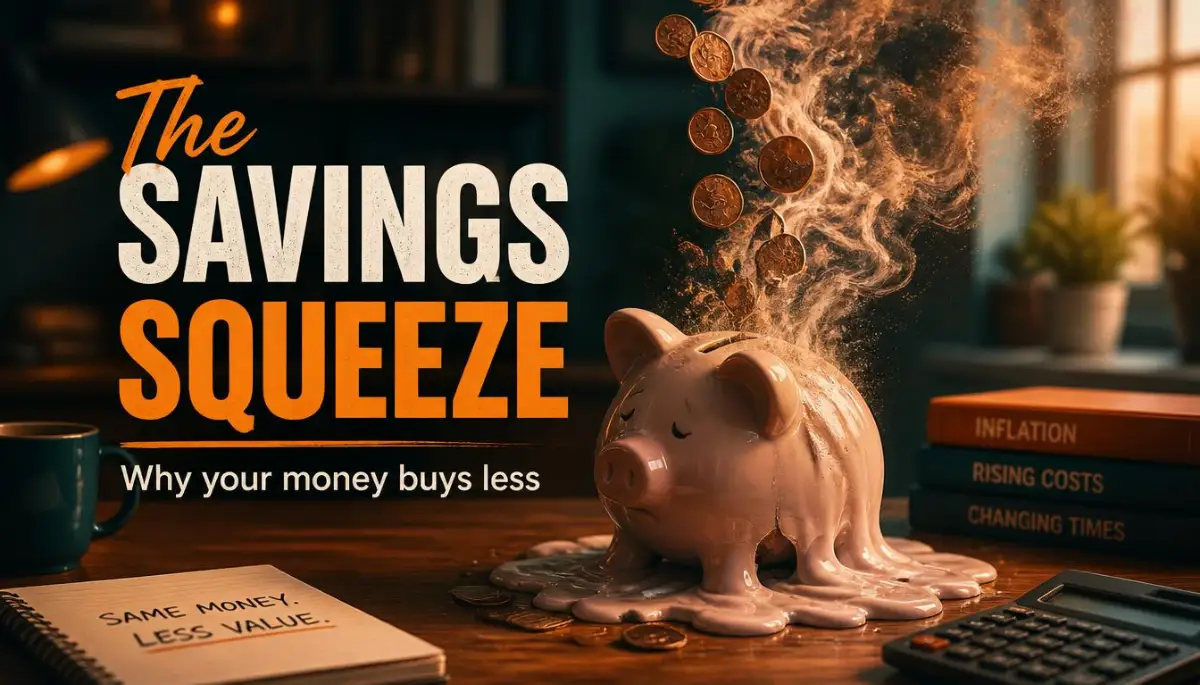
What Is Actually Happening to Your Hard-Earned Cash?
Let us break down this massive global issue into something we can easily understand. Imagine you have a bucket of water, and you need that water to survive a long drought. You keep adding a small cup of water to the bucket every week, feeling proud of your growing supply.
However, there is a tiny, almost invisible hole at the bottom of your bucket. While you are busy pouring water in the top, water is constantly dripping out the bottom. By the time you actually need a full bucket, you find it is only half full.
This is exactly what rising global prices do to your personal bank balance. The money you saved yesterday simply does not have the same buying power today. You are not losing the actual bills or coins, but you are losing what those bills and coins can do for you.
The Real-Life Math They Do Not Teach in School
Let us look at a simple, real-world scenario to make this crystal clear. Imagine you saved up a decent amount of money to buy a reliable used car. You decide to leave that cash in a basic account for a little while to earn some interest.
Your bank gives you a tiny reward, maybe a few extra dollars by the end of the year. You feel good because your balance mathematically went up. But when you go back to the car dealership, the price of that exact same car has jumped significantly.
Even though you have more money on paper, you can no longer afford the car. The cost of the item grew much faster than the money sitting in your account. This is the silent trap that catches so many honest, hardworking people off guard.
Discover exactly how this hidden trap works and how you can stop it. Watch this simple breakdown that explains the math behind your shrinking money.
Breaking the Biggest Money Myth
There is a massive misunderstanding about how saving money actually works. Let us look at a quick comparison between what we are told and what is actually true.
The Popular Myth: Keeping all your extra cash in a standard checking or savings account is the safest thing you can do. It protects you from all financial risks and guarantees your wealth will be there when you need it.
The Harsh Reality: Keeping too much cash in a low-interest account is actually one of the riskiest financial moves you can make. You are mathematically guaranteed to lose purchasing power over time as the cost of living continues to climb.
While it is absolutely essential to have cash ready for sudden emergencies, hoarding everything in cash is a massive mistake. You are essentially volunteering to let inflation slowly eat away at your life savings.
Actionable Moves to Protect Your Financial Future
Now that we understand the core problem, it is time to take back control of your financial well-being. You do not need to be a Wall Street expert to protect your wealth. You just need to make a few smart, deliberate changes to how you manage your funds.
The first thing you need to do is stop rewarding banks that do not reward you. Most traditional, big-name banks offer interest rates that are practically zero. They take your deposits, lend your money out for a huge profit, and give you almost nothing in return.
Move 1: Hunt for Better Yields Immediately
You need to actively search for accounts that are designed to fight back against rising prices. High-yield savings accounts are offered mostly by online banks that do not have the heavy costs of physical branches. Because their costs are lower, they can pass much higher interest rates directly to you.
Moving your emergency fund from a traditional bank to a high-yield account takes about ten minutes. This one simple action can easily multiply the amount of interest you earn every single month. It will not completely beat high inflation, but it acts as a strong shield to slow down the damage.
I remember when I finally made the switch to a high-yield account. I honestly felt a bit silly for leaving my money in a dead account for so many years. Just seeing a noticeable interest payment hit my account every month gave me a huge psychological boost. My money was finally doing a little bit of the heavy lifting for me.
Move 2: Rethink Your Emergency Fund Size
We all know we need a safety net for those unexpected life events. A broken water heater, a sudden medical bill, or an unexpected job loss can happen to anyone. But how much cash is too much cash to keep sitting idle?
Personal finance experts used to say you need three to six months of living expenses in cash. While this is still a good baseline, keeping a massive amount of excess cash beyond that is dangerous. Every extra dollar sitting idle is a dollar that is slowly losing its value.
Calculate your true monthly bare-bones living expenses. Multiply that by your comfort number, usually around three to six months. Anything above that specific amount should probably be moved into places where it has a chance to grow.
Move 3: The Power of Hard Assets and Diversification
When paper money loses its value, things that are tangible tend to hold their value much better. This is why you often see the prices of real estate, precious metals, and basic commodities rise during tough economic times. People naturally rush to buy things that have real, physical value.
You do not need to be rich to start diversifying your money. You can start small by looking into low-cost index funds that track strong, profitable businesses. Businesses often adapt to inflation by raising their prices, which helps protect their overall value over time.
Let us look at a simple comparison of where you can put your money:
By spreading your money across different areas, you build a strong financial fortress. If one area is struggling, another area might be thriving. This balance is the secret to long-term wealth preservation.
Move 4: Becoming a Strategic Spender
Protecting your savings is not just about where you store your money. It is also about how you choose to spend it in your daily life. When everything around you costs more, you have to become a strategic, mindful consumer.
Start by looking at your recurring monthly subscriptions. Most of us are paying for streaming services, app memberships, or gym fees that we barely even use. Canceling these unused services instantly keeps more cash inside your protective bubble.
Next, change the way you buy your daily essentials. Buying non-perishable goods in bulk when they are on sale is a fantastic defense mechanism. You are essentially locking in today's lower prices for items you know you will definitely use in the future.
If you know you will need toilet paper, laundry detergent, and dry pasta for the next six months, buy them now if you find a great deal. This simple habit guarantees a high return on your money because you completely bypass future price hikes on those items.
The Psychological Shift You Need to Make Today
Understanding money is only half the battle; the other half is entirely in your mind. It is very easy to feel paralyzed by fear when you see scary news headlines about the global economy. Fear often leads to freezing up and doing absolutely nothing, which is the worst possible choice.
You have to shift your mindset from being a passive victim to being an active defender of your wealth. Accept the reality that prices will fluctuate, and economic storms will come and go. Your job is not to predict the future, but to prepare your finances to handle whatever comes next.
Stop checking your accounts every single day in a panic. Set up automatic transfers so a portion of your paycheck goes directly into your high-yield accounts or investments before you can spend it. When you automate good financial habits, you remove the daily stress of making constant money decisions.
Building financial resilience takes time, patience, and consistency. You might not see massive results in the first week, but month after month, you will notice a growing sense of security. You are building a system that works for you, even while you are sleeping.
I want you to take just one small step today. Do some quick research on better banking options or cancel one subscription you no longer need. That single action proves to yourself that you are taking charge.
Money should be a tool that gives you freedom and choices, not a source of constant anxiety. By understanding how rising costs directly affect your savings, you are already ahead of the majority of people. Keep educating yourself, stay disciplined, and watch your financial confidence grow steadily over time.
Next-Level Strategies to Outsmart Rising Prices
Taking control of your basic savings account is an amazing first move, but we need to push a bit further. If you truly want to build a long-term defense shield around your money, you have to think outside the traditional banking box. The wealthy do not just save their money; they position their money in places where it naturally grows alongside the cost of living.
One of the smartest hidden secrets is exploring government-backed inflation bonds. In many countries, governments offer specific treasury bonds that adjust their interest rates based on current inflation numbers. This means if everyday prices suddenly skyrocket, the interest rate on your bond automatically goes up to match it.
It is basically a safe harbor for a portion of your cash. You are letting the government guarantee that your stored value will not melt away over time. To understand how these rates are calculated, it helps to look at official Consumer Price Index data, which tracks the exact price changes of everyday items like milk, bread, and gasoline.
The Ultimate Asset Is Your Personal Earning Power
We spend so much time worrying about the money we have already saved, but we often forget about our ability to make more. Your personal skills, your career knowledge, and your daily energy are your most powerful financial assets. Upgrading your own skills is an investment that rising prices can never take away from you.
Think about your current job and the value you bring to your company. As everything gets more expensive, your employer is likely raising the prices of their goods or services to keep up. You have every right to politely request a cost-of-living adjustment to your salary.
I know asking for a raise feels terrifying for most people. We worry about sounding greedy or causing conflict with a manager. But if you do not ask for a raise when prices go up, you are quietly accepting a massive pay cut without even realizing it.
Start tracking your daily wins and the extra value you bring to your team. Gather actual numbers and present them to your boss with confidence. You are the CEO of your own life, and you need to advocate for your own financial health.
Designing a Life That Absorbs Financial Shocks
Sometimes, fighting economic stress requires a complete perspective shift on how you manage your daily lifestyle. You have to start treating your household budget like a lean, efficient project. Just like discovering the real secret to building products that people actually love requires listening to feedback, you must listen to the feedback your bank account is giving you.
Are you spending too much on things that bring zero joy? Are you ignoring leaky holes in your budget?
When you feel financially squeezed, it is easy to retreat into a dark, stressed mindset. But just like you can maximize natural light to make your tiny room look huge, you can find creative ways to open up your tight budget and make it feel abundant.
You can host a simple potluck dinner with friends instead of spending a fortune at a fancy restaurant. You can start a small side hustle using a hobby you already enjoy. These small, deliberate lifestyle tweaks create a powerful buffer against sudden price hikes at the grocery store.
The Dangerous Traps That Will Destroy Your Wealth
Trying to protect your money can sometimes lead to panic, and panic always leads to terrible decisions. When people see the news talking about massive economic collapse, they rush into actions that actually hurt them more in the long run. I have seen so many hardworking people fall into these exact emotional traps.
The Panic Spending Illusion
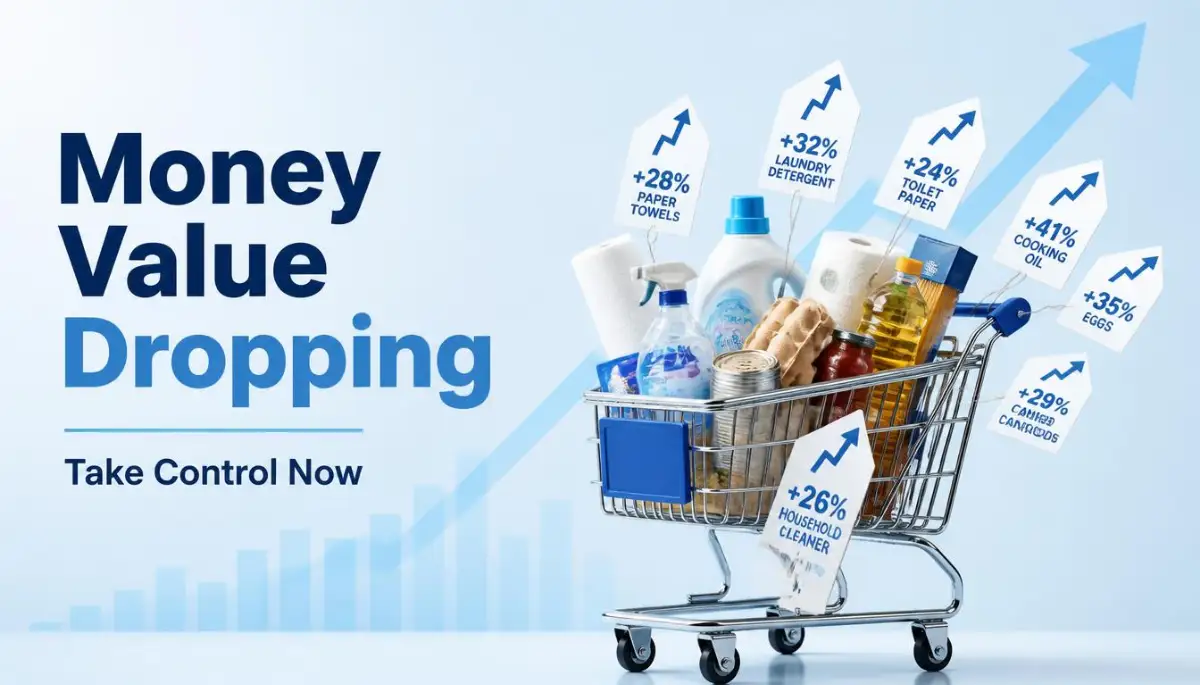
The most common mistake I see is panic buying. You notice that the price of your favorite coffee or household item is going up, so you rush out and buy fifty of them. While buying non-perishable goods in bulk is generally a smart move, hoarding out of fear will destroy your cash flow.
When you tie up all your available cash in paper towels and canned beans, you lose your financial flexibility. If a real emergency happens, like a flat tire or a medical issue, you cannot pay the mechanic with canned soup. You need liquid cash.
Finding the right balance is essential. You want to stock up on deals logically, not emotionally. Never drain your entire emergency fund just because you are scared of future grocery prices.
Ignoring Expensive Debts for Savings
Another massive trap is focusing entirely on building a savings account while completely ignoring high-interest debt. Let us say you find a great online bank that pays you a solid return on your savings. You feel proud of yourself, but at the same time, you are carrying a large balance on a credit card.
Your savings might be earning a few dollars, but your credit card company is charging you a massive penalty every single month. This math simply does not work in your favor.
Any money you save is being completely wiped out by the interest you owe. It is like trying to fill a bathtub while the drain is wide open. You must attack high-interest debt aggressively before you start hoarding cash.
To see the broader economic picture of why borrowing costs rise, you can explore how central banks monitor price stability. When the economy gets rough, they raise rates, making your credit card debt even more expensive to carry.
The Danger of Doing Absolutely Nothing
Perhaps the most tragic mistake of all is freezing up and doing nothing. Sometimes the stress of losing money feels as frustrating as when you constantly lose your digital connection and need to fix your slow internet connection right in the middle of important work. It is annoying, exhausting, and makes you want to quit.
Many people just leave their money in a checking account, close their eyes, and hope the problem magically fixes itself. But hope is not a financial strategy. The silent thief of rising prices does not care if you are tired or overwhelmed.
Every day you wait to move your money to a better account is a day you voluntarily surrender your purchasing power. Even a tiny, imperfect step forward is better than standing completely still.
Your Blueprint for a Secure Financial Tomorrow
We have covered a lot of ground today, and I know thinking about the global economy can feel heavy. But you should honestly feel proud of yourself for taking the time to learn about these hidden money traps. The vast majority of people never look under the hood of their own finances, and they pay a heavy price for that ignorance.
You now understand exactly why leaving cash in a dead account is dangerous. You know how to seek out better banking options, how to balance your emergency fund, and how to diversify your assets. You are armed with real knowledge, and knowledge is the ultimate weapon against financial fear.
There is a fascinating historical impact of inflation on household wealth that proves one simple truth: those who adapt, survive and thrive. Those who ignore the changing economic weather end up getting soaked.
Take a deep breath and look at your budget today. Remember to lean on reliable resources and visit our main hub whenever you need practical life advice. You do not have to fix everything before dinner time. You just need to pick one small action and follow through with it.
Maybe you will finally open that high-yield account, or maybe you will sit down and list out your monthly subscriptions. Whatever it is, do it with confidence. You are actively building a wall around your hard-earned money, and every brick you lay makes your future that much more secure.
I used to lose sleep over the thought of my money becoming worthless, but taking these small, deliberate steps changed everything for me. My financial stress slowly turned into a quiet sense of control, and I want you to experience that exact same relief starting today.
Real Answers to Your Biggest Money Worries
Should I keep my money in cash during high inflation?
Keeping a small amount of cash is necessary for daily expenses and sudden emergencies. However, holding all your wealth in plain cash guarantees you will lose buying power over time. You should always move excess funds into accounts or investments that offer a higher return.
How does inflation actually affect my everyday life?
It quietly reduces what your money can buy. A hundred dollars today will simply buy fewer groceries, less gas, and fewer services than it did a few years ago. This forces you to spend more of your income just to maintain your current basic standard of living.
Are high-yield savings accounts perfectly safe?
Yes, as long as you choose a reputable institution that is insured by the government (like FDIC insurance in the US). If the bank ever fails, your money is fully protected up to a certain high limit. This makes them a fantastic, risk-free place for your emergency fund.
Can I protect my money by buying physical gold?
Gold is often viewed as a traditional safe space when paper money loses value, but it is not a perfect solution. The price of gold can go up and down wildly based on human emotion and market panic. It can be a tiny part of your plan, but it should never replace a solid savings strategy.
Is paying off my house early a good idea right now?
If you have a very low fixed-rate mortgage, there is usually no rush to pay it off early during times of rising prices. The money you owe actually becomes cheaper over time because you are paying the bank back with money that is worth less. You are often better off putting extra cash into investments.
Why do banks offer such low interest on standard accounts?
Traditional banks have massive costs, like paying for physical buildings, huge marketing campaigns, and thousands of staff members. They keep your interest rates near zero so they can maximize their own profit margins. To find better rates, you generally have to look at modern online banking platforms.
Disclaimer: The information provided in this blog post is for educational and informational purposes only and should not be considered professional financial advice. Every individual's financial situation is unique. Please consult with a certified financial planner or advisor before making any major decisions regarding your savings, investments, or debt management.