The Heavy Burden of the "Quick Fix" Loan
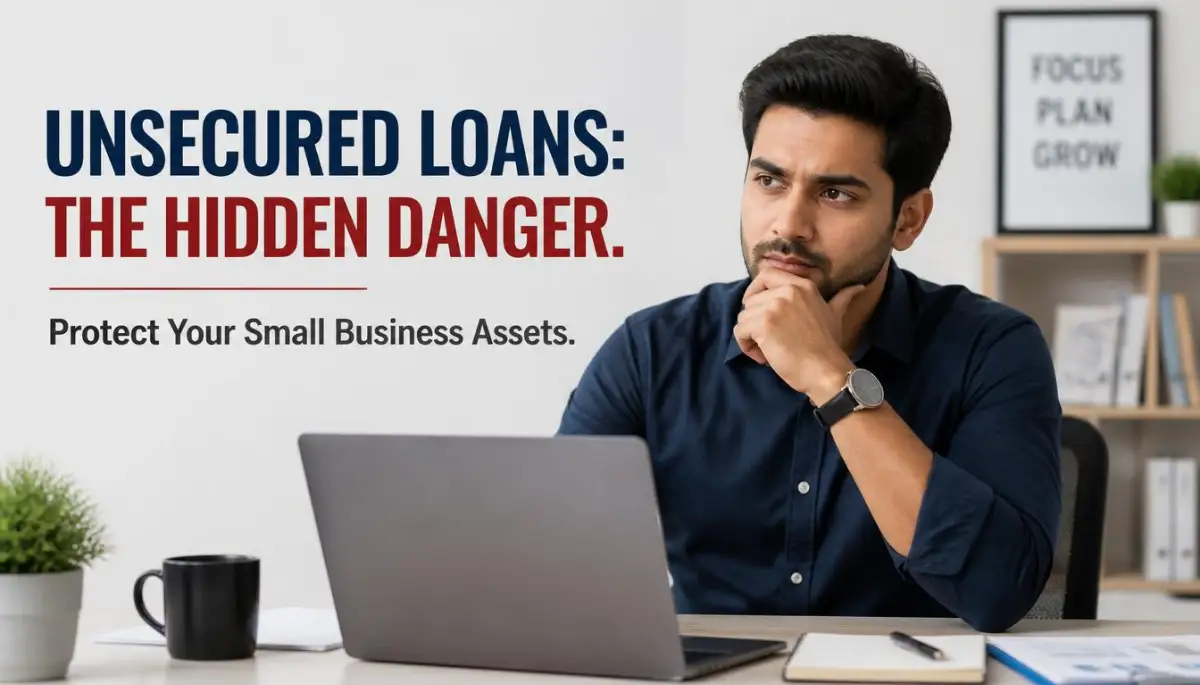
You are sitting at your desk late at night. The office is quiet. Your laptop screen is the only light in the room. You look at your bank balance and feel a knot in your stomach.
Inventory is low. A key piece of equipment just broke. Or maybe you just need a little extra cash to get through a slow month. Then, you see an ad for a "guaranteed" unsecured personal loan.
No collateral needed. Cash in your account within 24 hours. It sounds like a dream. It feels like the answer to all your prayers.
But for many small business owners, this dream quickly turns into a nightmare. I have seen talented entrepreneurs lose sleep, health, and even their homes because of these "easy" loans.
The stress is not just about the money. It is the constant "what if" that follows you home. It ruins your dinner with family. It keeps you awake at 3:00 AM.
You started your business for freedom. Now, you feel like a servant to a high-interest debt that never seems to go down. This is the reality many people face when they jump into unsecured personal debt without seeing the hidden traps.
Why Your Personal Credit Score Is at High Risk
When you take an unsecured personal loan for your business, you are putting your own name on the line. Most people think, "I am the business, so it doesn't matter."
Actually, it matters a lot. If your business has a bad month and you miss a payment, it is your personal credit score that takes the hit.
A lower credit score affects everything in your life. It makes it harder to get a mortgage. It increases your car insurance rates. It can even prevent you from getting a personal credit card when you really need it.
Personal loans are not separate from your life. They are tied to your Social Security number. This creates a bridge between your professional struggles and your private life.
Many owners find that after one or two missed business payments, their personal credit drops by 100 points or more. This damage can take years to fix. You are not just risking your shop; you are risking your future ability to borrow for anything.
The True Cost: Interest Rates That Steal Your Growth
Unsecured loans carry much higher interest rates than secured ones. Why? Because the lender is taking a bigger risk. They have no house or car to take if you don't pay.
To cover this risk, they charge you a premium. Often, the "small" monthly payment hides the fact that you are paying 20% or 30% in interest.
Let’s look at a real scenario. Imagine you borrow $10,000 to buy new stock. If your interest rate is high, you might end up paying back $15,000 over two years.
Did that inventory make you $5,000 in extra profit? Probably not. In this case, the loan didn't help you grow. It actually cost you money.
You end up working for the lender. Every sale you make goes toward interest, not toward hiring new staff or improving your products. This is a "growth trap" that keeps small businesses small forever.
The Myth of "No Collateral" Loans
Lenders love to use the term "unsecured." It makes you feel safe. It sounds like nothing is at risk.
But here is the reality check. While there is no specific asset like a building tied to the loan, you are still legally responsible.
If the business fails, the lender can still sue you personally. They can go after your personal bank accounts. In some places, they can even garnish your future wages.
"Unsecured" does not mean "no responsibility." It just means the lender doesn't have a claim on one specific item. They still have a claim on you.
Many owners feel a false sense of security. They think, "If the business closes, the debt goes away." That is rarely true with personal loans used for business. The debt follows the person, not the store sign.
How to Audit Your Business Cash Flow Before Borrowing
Before you sign any loan paper, you must do a deep check of your cash flow. Do not just look at your bank balance today. Look at the last six months.
Ask yourself these three questions:
- Is my revenue steady, or does it jump up and down?
- What is my "burn rate" (how much I spend just to keep the doors open)?
- Can I pay this loan even if I have zero sales for a whole month?
If you cannot answer these clearly, you are not ready for a loan. You might just need to cut costs or change your pricing.
Pro Tip: Create a "Worst-Case Scenario" budget. If your sales drop by 30%, can you still make the loan payment? If the answer is no, the loan is too risky.
Understanding the Personal Guarantee Trap
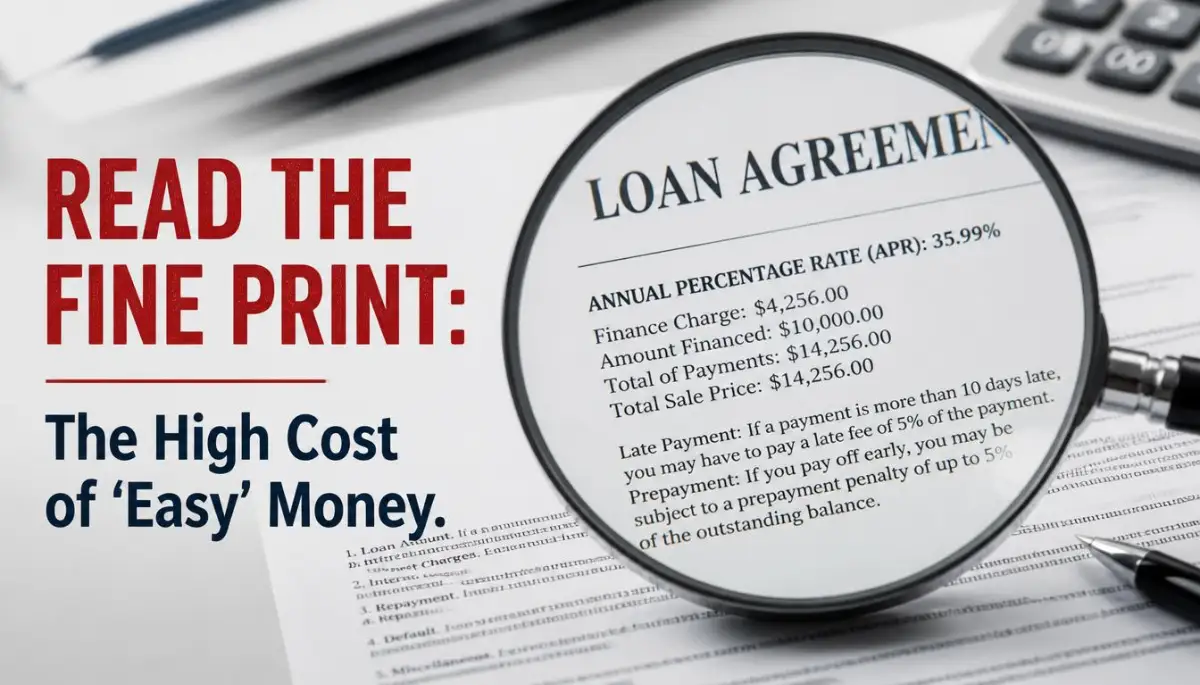
Even if a loan is called a "business loan," many lenders ask for a "Personal Guarantee." This is the "fine print" that catches most people off guard.
A personal guarantee means you agree to be personally liable if the business cannot pay. It basically turns a business debt into a personal one.
Why is this dangerous? It bypasses the protection of a Limited Liability Company (LLC) or a Corporation.
You might have spent money to set up a legal structure to protect yourself. But the moment you sign a personal guarantee, you throw that protection away.
Lenders do this because they know small businesses are risky. They want to make sure they can get their money back from your personal savings if your business idea doesn't work out. Always read the "Guarantee" section twice before signing.
The Psychological Cost of Debt Stress
We often talk about money, but we rarely talk about the mind. Carrying high-interest, unsecured debt is a heavy mental burden.
It creates a "scarcity mindset." When you are worried about a loan payment, you stop thinking about long-term strategy. You start making desperate choices.
You might lower your prices too much just to get quick cash. Or you might stop investing in marketing. These choices hurt your business in the long run.
I have talked to owners who felt "suffocated" by their debt. This feeling leads to burnout. When the owner burns out, the business usually follows.
Your mental clarity is your most valuable business asset. If a loan is going to keep you in a state of constant fear, it is too expensive, no matter what the interest rate is.
Comparison: Secured vs. Unsecured Business Debt
As you can see, the "speed" of an unsecured loan comes at a very high price in terms of interest and personal risk.
Steps to Minimize Risk If You Already Have a Loan
If you already have one of these loans, do not panic. There are ways to manage the situation.
Step 1: Prioritize High-Interest Debt. Look at all your debts. Find the one with the highest interest rate. Pay as much as you can toward that one first while making minimum payments on others. This is often called the "Debt Avalanche" method.
Step 2: Negotiate with Your Lender. Believe it or not, lenders sometimes prefer getting less money over a longer time than getting no money at all. If you are struggling, call them. Ask if they can lower the interest rate or extend the term.
Step 3: Separate Your Finances Immediately. If you haven't already, open a separate bank account for your business. Stop using your personal card for business snacks or gas. It makes tracking your "real" business profit much easier.
Step 4: Build a "Debt Buffer." Try to save a small amount of money every week into a separate "Emergency Loan Fund." This fund is only for making loan payments if your business has a bad month. It acts like a safety net for your personal credit score.
The Importance of Scientific Financial Planning
Finance is not just about math; it is about logic and patterns. Successful business owners use "Data-Driven Decisions."
Instead of "feeling" like you need a loan, use a spreadsheet. Map out your expected income for the next 12 months.
If you see a gap in the future, you can plan for it now. Maybe you can save up instead of borrowing. Or maybe you can find a partner.
Logical planning removes the emotion from borrowing. When you remove emotion, you stop making the "quick fix" mistakes that lead to unsecured debt traps.
Focus on building a business that generates its own cash. It is a slower path, but it is a much safer one. Your future self will thank you for the patience you show today.
Remember, a loan should be a tool for building a bridge, not a weight that pulls you underwater. Always look at the hidden risks before you take the leap.
Smarter Strategies for Handling Unsecured Business Debt
If you already have an unsecured personal loan for your business, your main goal should be safety. You need to protect your personal assets while keeping your business running. One of the best ways to do this is by renegotiating your loan terms as soon as your business starts showing steady profit.
Many owners do not know that they can ask for a better deal. If you have made your payments on time for six months, call your lender. Ask them to lower the interest rate or give you a longer time to pay it back.
Lenders often agree to this because they want to keep getting paid. They know that if the debt is too heavy, you might stop paying altogether. A lower interest rate means more of your money stays in your business to buy supplies or pay workers.
You should also look into debt consolidation once your business credit score improves. This means taking out one larger loan with a lower interest rate to pay off several high-interest unsecured loans.
By doing this, you simplify your monthly life. Instead of five different due dates, you have one. This helps you avoid late fees that often happen when you are tired and forget a deadline. If you have faced issues with credit in the past, learning how to rebuild your credit score after a major financial disaster can be the first step to getting better loan offers.
The Power of the "Debt Buffer" System
Another expert secret is to create what I call a "Debt Buffer." Most business owners spend every dollar they make as soon as it comes in. This is a big mistake when you have a personal loan on the line.
Try to set aside 10% of every sale into a separate savings account. This account is not for growth or new equipment. It is only for your loan payments during "dry" months.
Think of it like an insurance policy for your personal life. If your business has a week with no sales, you won't have to use your grocery money to pay the bank. This buffer keeps your stress levels low and your personal credit safe.
According to financial guidelines from the Small Business Administration, maintaining a healthy cash reserve is the number one way to survive unexpected economic shifts. It gives you the "breathing room" you need to think clearly.
Why You Should Stop Using Personal Credit Cards Immediately
I often see owners use an unsecured loan to pay a bill, and then use their personal credit card for the rest. This creates a "double trap." You are now paying high interest on two different fronts.
If you cannot afford an expense with your business cash flow, adding more personal debt is rarely the answer. Instead, look at your accounts receivable. Are your customers paying you on time?
Sometimes, you don't need a loan. You just need to be more aggressive about collecting the money people already owe you. Send your invoices earlier. Offer a small discount for customers who pay within 48 hours.
This brings in "free" cash that doesn't have an interest rate attached. It is a much healthier way to fund your daily operations. You might even find that you can pay off your unsecured loan much faster than you planned.
Building a Wall Between Your Personal and Business Life
One of the most important things you can do today is to "draw a line in the sand." You must stop thinking of your business money and personal money as the same pile of cash.
Even if you are a solo worker, you should have separate bank accounts. Pay yourself a small, fixed salary every month. Do not just take money out of the business whenever you need a coffee or a new shirt.
When you treat your business like a separate person, you make better choices. You start to see that the unsecured loan is a "business expense," not a personal burden.
This mindset shift is what separates small hobbyists from long-term business leaders. It also protects your personal dreams, like buying a home. If you are wondering about big personal investments, it helps to understand is buying a home smarter than renting when your business is still growing.
The Danger of the "Quick Cash" Addiction
A very common mistake I see is when an owner gets one loan and finds it "too easy." They see the money hit their account and they feel a rush of relief.
The next time they have a small problem, they go back for another loan. This is how the debt spiral begins. Before you know it, you are taking out a second loan just to pay the interest on the first one.
This is a "leaking bucket" situation. No matter how much water you pour in, the bucket will never stay full because of the holes at the bottom.
The holes are the high interest rates and fees. If your business is not making enough profit to cover its own costs, more debt will not fix it. Debt is only a tool for growth, not a long-term solution for a failing business model.
The Costly Mistake of Ignoring "APR" vs. Interest Rate
Many lenders use confusing language to make their loans look cheap. They might tell you the "monthly interest" is only 2%. That sounds great, right?
But 2% a month is actually 24% a year. Plus, there are often "origination fees" or "processing fees" hidden in the fine print.
When you add those fees, your Annual Percentage Rate (APR) could be as high as 40% or 50%. This is the real number you need to look at.
Always ask the lender, "What is the total APR including all fees?" If they won't give you a straight answer, walk away. There are many transparent lenders out there who will not hide the true cost from you. You can check the Consumer Financial Protection Bureau for guides on how to spot predatory lending practices.
Using Debt to "Buy Time" Instead of "Buy Assets"
Another trap is using an unsecured loan to pay for daily things like rent or electricity. These are "operating costs." They happen every single month.
If you use a loan to pay rent this month, how will you pay it next month? You will still have the rent to pay, plus the new loan payment.
Loans should be for things that make money. Buy a machine that works faster. Buy inventory that you know will sell in 30 days.
If you use debt to buy "time," you are just delaying the end of your business. It is a painful truth, but it is better to face it now than to lose your personal savings later. Use your debt to build something, not just to stay afloat for one more week.
The "Silent" Risk to Your Mental Health
We talk about the math, but the emotional toll is often worse. Business owners who carry heavy unsecured debt often stop being creative.
They become "scared" owners. They stop taking smart risks because they are terrified of losing their personal credit. This fear actually stops the business from growing.
I have seen owners stop answering the phone because they think it's a debt collector. They stop talking to their spouse about the business because they feel ashamed.
This isolation is dangerous. If you feel this way, talk to a financial advisor or a trusted friend. You are not alone, and there is always a way out. Even high-tech changes like how generative AI is changing code show that the world is always evolving, and your business can too if you keep a clear head.
Your Action Plan for a Debt-Free Future
You do not have to live with the weight of unsecured loans forever. Start today by looking at your numbers with total honesty.
First, stop all new borrowing. No matter how tempting it looks, do not take more "easy" cash. You must learn to work with what you have.
Second, create a "Debt Map." List every loan, its interest rate, and the total amount you owe. Seeing it on paper makes it less scary. It becomes a problem you can solve, not a ghost that haunts you.
Third, focus on your health. Financial stress affects your body. Many experts believe that your gut bacteria holds the secret to a stronger immune system, and high stress ruins that balance. You need to be healthy to lead your business to success.
Finally, celebrate every small win. When you pay off one small loan, give yourself credit. When you build your first $500 buffer, feel proud.
Small steps lead to big changes. You started your business because you are a dreamer and a doer. Do not let a high-interest loan take that away from you.
You have the power to fix your finances. You have the skills to grow your revenue. Take the first step toward financial freedom today, and protect your personal life from business risks. Your future is worth more than any quick loan.
![The Secret Truth Behind Student Loan Forgiveness [Step-by-Step]](https://topic36.com/storage/uploads/blogs/1791388180_LVR3XS4A.webp)
![The Ultimate Blueprint to Fix a Denied Loan Application [Step-by-Step]](https://topic36.com/storage/uploads/blogs/1788883415_the-ultimate-blueprint-to-fix-a-denied-loan-application-step-by-step.webp)