
Staring at five different credit card statements on my kitchen table made my chest tight with intense anxiety. Every single month, I felt like I was throwing money into a bottomless pit just trying to cover the minimum payments. The sheer mental exhaustion of tracking multiple due dates drained my energy and completely ruined my sleep. I tried working extra hours, but the compounding interest kept outpacing my hard-earned income. Hitting that breaking point forced me to rethink my entire financial strategy and seek a practical way out of the mess.
Quick Answer: What is debt consolidation?
Debt consolidation is the process of combining several high-interest debts into one single new loan or line of credit. This leaves you with only one manageable monthly payment, often at a significantly lower interest rate, which simplifies your budget and accelerates your journey to becoming debt-free.
Living with the weight of multiple balances affects much more than just your bank account. It slowly chips away at your daily peace of mind. You start avoiding phone calls from unknown numbers because you fear it might be a collections agency. You second-guess every small purchase at the grocery store.
The mental load of remembering which bill is due on the 5th and which one hits on the 14th creates a constant background hum of stress. Financial strain often spills over into relationships, causing arguments over money that never seem to get resolved. People experiencing this kind of pressure often feel completely isolated.
Many individuals resort to skipping meals or ignoring routine healthcare just to make sure a credit card payment goes through on time. The reality is that minimum payments are mathematically designed to keep you trapped in a cycle of interest for decades. When you only pay the minimum, nearly all your money goes straight to the bank's profit margins instead of reducing your actual balance. You deserve a clear, actionable way to break out of this exhausting cycle and reclaim control over your own paycheck.
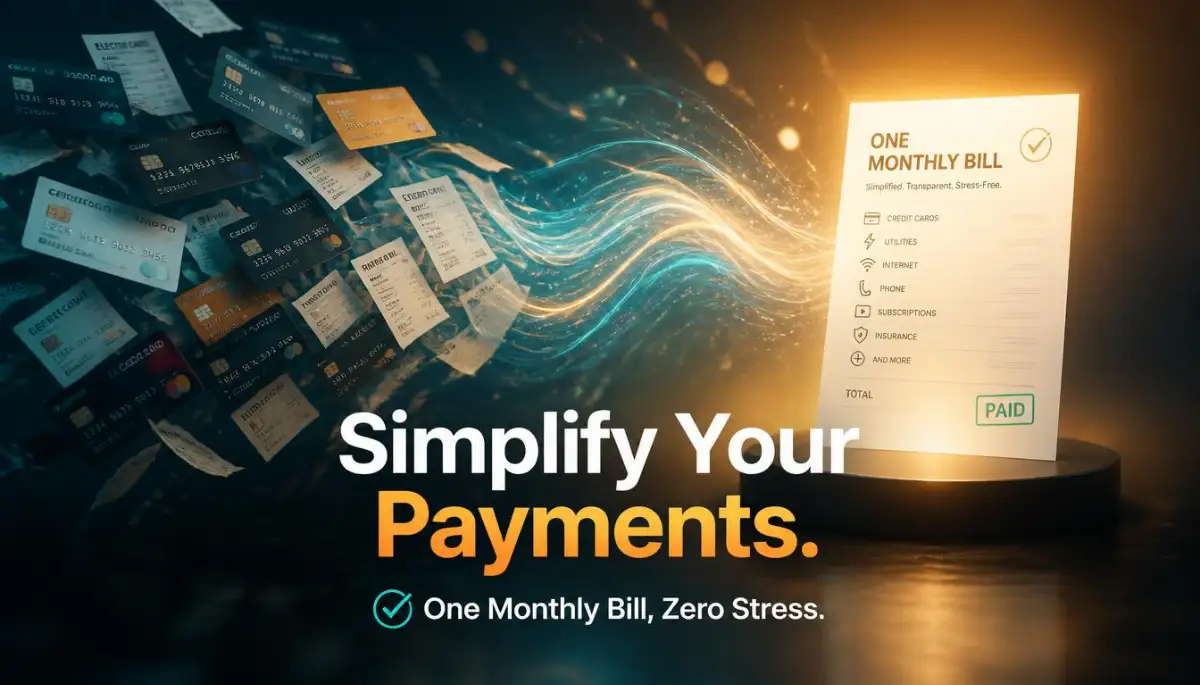
How Does Debt Consolidation Actually Work to Lower Monthly Costs?
Debt consolidation works by shifting your owed money from high-cost environments to a low-cost environment. You apply for a new financial product with a much lower annual percentage rate (APR) than your current accounts. You then use those new funds to pay off your existing credit cards, medical bills, or personal lines of credit entirely.
Moving forward, you only make one payment to the new lender. Because the new interest rate is lower, a much larger portion of your monthly payment goes toward the principal balance. This mechanical shift is exactly what allows you to pay off the total amount months or even years earlier.
Dispelling the Illusions: Myth vs Reality
Many people hesitate to restructure their finances because of bad information. Let's clear up some common misunderstandings right now.
- Myth: Consolidating your balances magically erases what you owe.
- Reality: The principal balance remains exactly the same. You are simply moving the debt to a different location with better terms to save money on interest.
- Myth: You need a perfect credit score to get approved for any new loan.
- Reality: While excellent scores get the best rates, many credit unions offer specialized programs specifically designed for fair or average credit profiles.
- Myth: Closing your old credit cards immediately after paying them off is a smart move.
- Reality: Closing old accounts abruptly drops your total available credit, which can heavily damage your credit score.
Which Financial Tool Fits Your Specific Situation?
Not all financial products operate the same way. Choosing the right tool depends heavily on your current credit score, your total owed amount, and your personal self-discipline. Below is a breakdown of the three most common methods used for managing multiple balances.
Before you even think about putting your home on the line to clear consumer debt, you must be extremely careful. Thinking about tapping into your house equity? Always warning read this before building a property extension the complete guide or taking out heavy loans against your primary residence. Losing your house over credit card bills is the worst possible outcome.
How Can I Conduct a Proper DIY Audit of My Accounts?
Before applying for any new loan, you need total clarity on what you actually owe. Guessing your balances will lead to borrowing the wrong amount and failing to close out the accounts properly. Grab a notepad, log into your banking apps, and follow these exact steps.
- List the exact payoff amounts: Do not just write down the current balance shown on the main screen. Look for the specific "payoff quote" for today's date, which includes accrued daily interest.
- Document the exact APR for each account: Write down the specific interest rate you are being charged for every single card. You will target the highest APR accounts first.
- Calculate your total monthly minimums: Add up exactly how much cash is leaving your bank account every month just to keep these creditors happy.
- Note the account closure rules: Check if your current lenders charge any early payoff penalties. Most credit cards do not, but some older personal loans might.
Doing this audit can feel intimidating, much like walking into a house with unknown foundation issues. Just like you need proven ways to inspect a residential property without fear to avoid hidden traps, you must inspect your credit report for hidden errors. Pull a free copy of your credit report from AnnualCreditReport.com, an officially mandated site by the Consumer Financial Protection Bureau (CFPB), to ensure no fraudulent accounts are dragging your score down.
What Are the Hidden Fees in Consolidation Offers?
Lenders are businesses, and they build sneaky profit margins into their contracts. When looking at a balance transfer credit card, you must calculate the transfer fee. Almost every bank charges a one-time fee ranging from 3% to 5% of the total amount you are moving over.
If you are transferring $10,000, a 5% fee means $500 is instantly added to your new balance. You need to do the math to ensure the interest you save over the next year is significantly higher than that upfront fee.
Personal loans carry their own hidden traps called origination fees. This is an administrative charge the lender takes right off the top before sending you the money. If you get approved for a $15,000 loan with a 4% origination fee, the bank keeps $600 and only deposits $14,400 into your account. Always demand to see the final APR, which legally must include these administrative costs in its calculation.
Watch this visual breakdown of how balance transfers actually process behind the scenes so you don't get hit with surprise charges.
I completely ignored my credit utilization ratio before applying for my first consolidation loan. I assumed my flawless payment history would guarantee a low rate, but because my cards were maxed out, my score temporarily tanked. I learned the hard way that paying down just enough balance to get under 30% utilization before applying for new credit completely changes the interest rates banks will offer you.
How Do I Manage My Finances if My Credit Score is Low?
When your credit score dips below 600, traditional banks will likely deny your application. Getting rejected repeatedly generates multiple hard inquiries, which drops your score even further. In this scenario, you need to pivot to alternative strategies rather than chasing new loans.
First, consider setting up a Debt Management Plan (DMP) through a non-profit credit counseling agency. These agencies negotiate directly with your current credit card companies on your behalf. They often succeed in getting your interest rates slashed to single digits and stopping penalty fees, without requiring a new loan approval.
However, you must be highly vigilant about who you trust with your money. The Federal Trade Commission (FTC) strongly warns consumers to avoid aggressive, for-profit debt settlement companies. These predatory firms often tell you to stop paying your bills entirely, which ruins your credit score and invites heavy lawsuits from creditors.
Emergency Action Checklist for Maxed-Out Accounts
If you are facing immediate financial distress and cannot get approved for consolidation, follow these specific defensive actions today:
- Call your card issuers directly: Ask for their "hardship department." Many banks have unadvertised programs that temporarily lower your interest rate if you have lost your job or faced a medical emergency.
- Liquidate unused assets: Sell things you no longer need. If you have real estate or property sitting vacant, learn 3 powerful tricks to make buyers love your empty house save time money so you can liquidate it fast and dump the cash onto your highest interest card.
- Halt all credit usage: Physically remove credit cards from your digital wallets and freeze the physical cards in a block of ice in your freezer to stop impulse spending.
- Switch to cash envelopes: Force yourself to use physical cash for groceries and gas until the financial bleeding stops.
Will Restructuring My Debt Damage My Credit Score?
A very common worry is that moving money around will destroy a carefully built credit history. The direct answer is yes, you will likely see a small, temporary drop in your score at first. When you apply for a new loan or card, the lender performs a hard inquiry on your credit report, which typically shaves off a few points.
Additionally, opening a brand new account lowers the "average age" of your credit history. The credit bureaus prefer to see accounts that have been open for many years. However, this initial dip is temporary and usually recovers within a few months of on-time payments.
The long-term impact on your score is overwhelmingly positive. Credit scoring models heavily weight your "credit utilization ratio," which is the amount of credit you are using compared to your total available limits. According to research from Purdue University Extension regarding household financial management, paying off maxed-out revolving credit cards with a fixed-rate installment loan drastically improves this ratio. Your score will eventually rise higher than it was before, provided you do not run up the balances on the old cards again.
The Psychological Shift: Staying Out of the Red
The most dangerous part of debt consolidation explained simply is the "empty card illusion." After the personal loan pays off your credit cards, those card balances suddenly read zero. It feels like you have a massive amount of new spending power.
Before dreaming about passive income and facing the secret reality of being a landlord what nobody tells you, you must maintain strict discipline over your own balance sheet. If you start swiping those cleared cards for dinners and vacations, you will end up with double the debt. You will have the new consolidation loan payment plus a fresh stack of credit card bills.
To prevent this, you must build a starter emergency fund of at least $1,000 immediately. When the car breaks down or the water heater bursts, you pay for it with cash instead of reaching for plastic. Managing multiple balances is not just about doing clever math with interest rates. It is about permanently changing how you interact with money on a daily basis so you never end up back at that kitchen table feeling overwhelmed again. Mastering your payment strategy requires moving beyond basic budgeting and applying advanced financial mechanics to your daily life. Once you secure a lower interest rate, you have a massive mathematical advantage, but you must direct your cash flow intelligently to maximize that benefit.
Paying down a 24% APR credit card balance guarantees a 24% return on your money. No standard stock market investment offers that kind of guaranteed, risk-free return in a single year. You can significantly reduce the total time you spend in debt by strategically allocating every spare dollar toward your new principal balance.
Many successful debt-free individuals rely on a technique called "micro-payments." Instead of making one large monthly payment on the due date, they divide their monthly bill by four and pay that smaller amount every single week. This simple DIY hack forces the daily compounding interest to calculate based on a constantly shrinking balance, saving you hundreds of dollars over a 36-month loan term.
The Mathematics of Strategic Payoff Methods
You must decide exactly how to attack any remaining balances that did not fit into your primary new loan. Financial advisors generally recommend two distinct mathematical approaches for clearing out lingering accounts. Choosing the right one depends heavily on whether you need a quick psychological win or strict mathematical efficiency.
Smart Automation and Defensive Banking
Relying on human memory to pay bills on time is a fundamentally flawed strategy. Setting up auto-pay for at least the minimum amount on every single account acts as a digital safety net against late fees. A single payment that is 30 days late will aggressively drag down your credit score by up to 100 points overnight.
You should specifically schedule these automated drafts to align with your payday rather than the bank's default due date. If you get paid on the 15th, call your lenders and formally request a due date shift to the 17th. Almost all major banks will adjust your billing cycle upon request, which completely eliminates the stress of wondering if enough cash is in your checking account.
Edge Cases: Navigating Sudden Financial Shocks
Life rarely respects your newly organized budget. A sudden job loss or an unexpected medical emergency can completely derail your progress if you do not have a contingency plan in place.
If your income suddenly drops to zero, you must immediately shift from an aggressive payoff stance to a purely defensive cash-preservation mode.
- Cancel aggressive extra payments: Revert all your accounts to minimum payments only to conserve your liquid cash.
- Trigger hardship clauses: Call your loan servicer before you miss a payment and explicitly ask to enter their "forbearance" or "hardship" program.
- Pause non-essential upgrades: If you were planning renovations, immediately halt those plans. You should always warning read this before building a property extension the complete guide to understand the massive hidden costs that can destroy an emergency budget.
- Liquidate heavy liabilities: If you own a rental property that is bleeding money, accept the secret reality of being a landlord what nobody tells you and consider selling it to eliminate the mortgage liability.

Hidden Traps That Keep People Financially Stuck
Clearing out a maxed-out account feels incredibly relieving, but that exact moment is when most people make their biggest financial missteps. A zero balance creates a powerful psychological illusion of wealth. You look at your banking app and suddenly see $10,000 in available credit, which triggers a subconscious urge to start spending again.
Running up new charges on a recently cleared credit card while simultaneously paying off a personal loan is a massive disaster. You effectively double your monthly obligations overnight. This specific behavior is why a large percentage of individuals who restructure their finances end up filing for bankruptcy a few years later. You must treat those cleared cards as strictly off-limits for daily lifestyle spending.
The Danger of Closing Old Accounts Instantly
A natural instinct after paying off a frustrating credit card is to call the bank and cancel the account out of spite. Shutting down an old revolving account instantly shrinks your total available credit limit across your entire profile. This action mathematically spikes your credit utilization ratio, causing a sudden and severe drop in your credit score.
Instead of closing the account, you should simply lock the physical card in a drawer or use your bank's app to temporarily freeze it. To keep the account active without risking new debt, put a single, small recurring subscription on it, like a $10 streaming service. Set that specific card to auto-pay in full every month to build a flawless, ongoing payment history.
Falling for Predatory Settlement Scams
Desperation often drives people into the arms of aggressive, for-profit settlement companies. These predatory firms will instruct you to purposefully stop paying your bills so they can negotiate a lower lump-sum payment with the bank later. They heavily market this as a quick fix, but they rarely explain the devastating consequences of defaulting.
Missing consecutive payments will completely trash your credit score for up to seven years. Furthermore, your original creditors can and will sue you for the unpaid balances, leading to potential wage garnishment. You significantly reduce risk by working exclusively with non-profit credit counseling organizations that negotiate directly with your lenders without requiring you to default.
Ignoring the Fine Print on Introductory Rates
Zero percent introductory offers are incredibly powerful tools, but they contain highly aggressive penalty clauses. If you transfer $5,000 to a 0% APR card for 18 months, you must pay off that entire balance before month 19 begins. Many of these contracts include "deferred interest" clauses.
If you leave even one dollar unpaid when the promotional window closes, the bank retroactively applies the standard 29% interest rate to the entire original $5,000 amount. You get hit with a massive, unexpected fee that wipes out all the progress you made over the past year and a half. Always divide the total transfer amount by the number of promotional months minus one, and make that your non-negotiable monthly payment.
Questions People Always Ask About Managing Multiple Balances
Do balance transfer cards hurt my credit score?
No, a balance transfer itself does not inherently damage your credit score. Applying for the new card will cause a small, temporary dip due to the hard inquiry, but lowering your credit utilization by moving the debt often increases your overall score long-term.
Can I include my federal student loans in a personal consolidation loan?
Yes, you technically can, but it is rarely a smart financial move. Moving federal student loans to a private lender strips away your legal access to income-driven repayment plans, extended forbearance options, and potential federal forgiveness programs.
Does debt management force me to close my current credit cards?
Yes, entering a formal Debt Management Plan (DMP) typically requires you to close all enrolled revolving credit accounts. The counseling agency mandates this to ensure you do not accumulate new charges while they actively negotiate lower interest rates on your behalf.
Should I drain my emergency savings to pay off a high-interest loan?
No, you should never completely drain your liquid savings to clear a balance. If you empty your bank account and your car transmission blows out the next day, you will be forced to put that massive emergency expense right back onto a high-interest credit card.
Will settling a debt for less than I owe ruin my credit?
Yes, settling an account for less than the full balance immediately drops your score and stays on your report as a negative mark. Lenders view a "settled for less than full amount" status as a strong indicator that you are a high-risk borrower.
Can a lender legally change my fixed interest rate later?
No, a true fixed-rate personal loan locks in your exact interest percentage for the entire lifespan of the contract. However, if you are using a variable-rate product like a home equity line of credit, your rate will definitely fluctuate based on national federal reserve adjustments.
Your New Blueprint for Financial Peace
Taking control of multiple payments is not about performing complex mathematical gymnastics or depriving yourself of every joy in life. It is simply about intentionally organizing your money so that your hard work actually benefits you instead of enriching massive banking institutions. By auditing your current statements, selecting the right financial tool, and automating your new single payment, you instantly remove a massive layer of daily anxiety.
You now have a clear, actionable roadmap to permanently change your financial trajectory. Start by writing down every single balance tonight, freezing the cards you no longer need, and calculating your actual payoff timeline. I remember the exact moment I cut up my most toxic credit card — my hands were literally shaking, but that one physical action finally gave me the momentum to take my paycheck back.
Just a quick note from someone who fought their way out of this exact frustrating cycle: I am sharing the strict budgeting and payoff steps that personally saved my own bank accounts, but I am not a certified financial planner. Before you sign any massive loan contracts or move large amounts of money around, checking in with a local, non-profit credit counselor is always a smart move to make sure the math lines up perfectly for your specific situation.