The Silent Stress of Owning an Electric Car
I remember the first week I got my electric car. I was so excited. The smell of the new interior and the quiet hum of the motor felt like the future.
But then, the "Range Anxiety" hit me. I found myself staring at the battery percentage every two minutes.
Have you ever felt that sudden 1:00 AM panic? You wonder if you have enough charge to reach the office and back. Or worse, you worry if your expensive battery is "dying" faster than it should.
It is a heavy feeling. You spent a lot of money on this vehicle. You want it to last.
The fear of a dead battery in the middle of a highway is real. The worry about a $10,000 replacement bill a few years down the road keeps many owners awake.
We see the bars go down, and we feel our heartbeat go up. It feels like we are babysitting a giant smartphone on wheels.
But I have good news for you. You don't have to live in fear.
Most of this stress comes from not knowing how the technology works. Once you understand the "why," the "how" becomes easy.
I want to help you move from being a worried driver to a confident EV pro. Let’s look at how we can protect your investment together.
Why Battery Health Matters More Than You Think
Your battery is the heart of your car. If the heart is weak, the whole body suffers.
Unlike a gas tank, a battery is a living chemical pack. It breathes, it gets hot, and it gets tired.
Chemical degradation is natural, but we often speed it up without knowing. When we treat the battery poorly, we lose range.
Losing range means more frequent stops at chargers. It means your car loses its resale value quickly.
By following a few simple rules, you can keep your battery "young" for a decade or more.
The Golden Rule: The 20-80% Charging Habit
If you want one tip to remember, this is it. Stop charging to 100% every single day.
Think of your battery like your own stomach. Are you comfortable when you are 100% full? No, you feel bloated and stressed.
Lithium-ion batteries are the same. They hate being completely full or completely empty.
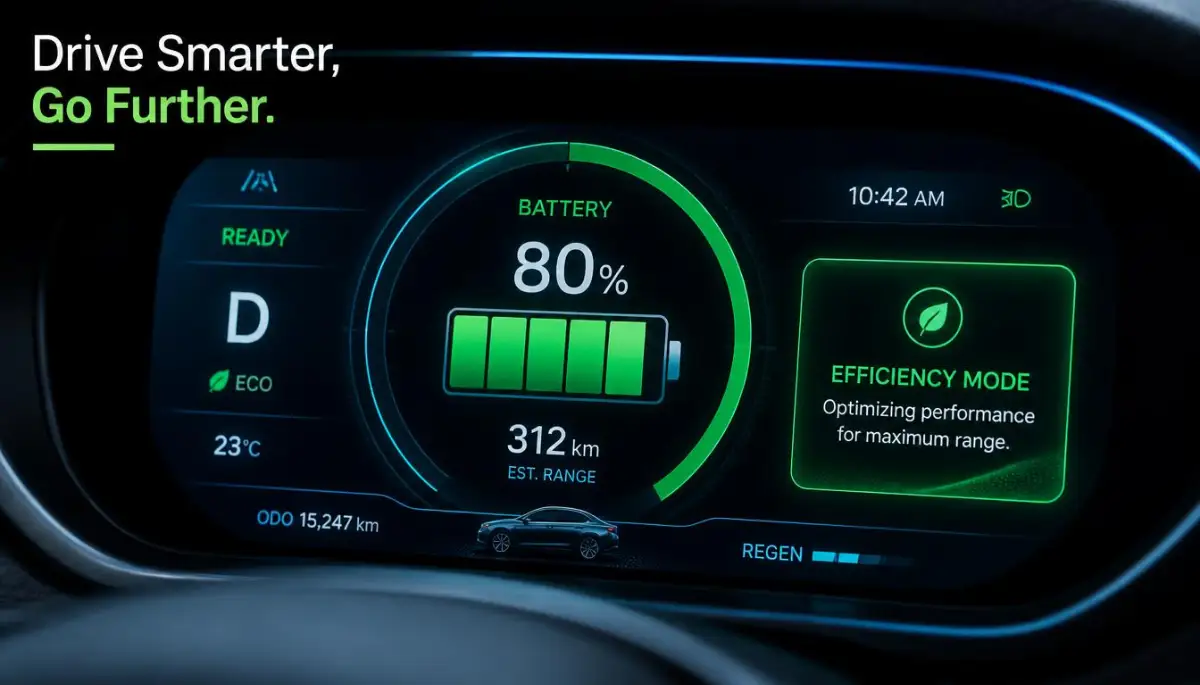
Keep your battery between 20% and 80% for your daily driving. This is the "sweet spot" where the chemicals stay stable.
Most modern cars let you set a "Charging Limit" in the settings. Set it to 80% and forget it.
Only charge to 100% when you are planning a very long road trip. Even then, try to drive the car shortly after it hits 100%.
Don't let it sit at full capacity for days. It creates internal pressure that wears down the cells.
Temperature Control: The Hidden Battery Killer
Batteries are just like humans. They love "room temperature."
Extreme heat is the number one enemy of battery life. When it is 100 degrees outside, the chemicals inside the battery react faster.
This speed causes the battery to wear out. If you can, park in the shade or in a garage.
Cold weather is also a challenge, but for a different reason. In the cold, the ions move slowly.
Your range might drop by 20% or 30% on a freezing morning. This is normal and usually temporary.
Pro Tip: Use the "Pr-conditioning" feature in your car app. This warms up the battery using power from the wall before you start driving.
It makes the battery more efficient from the first mile. It also saves your range for the actual road.
The Truth About Fast Charging (DCFC)
We all love those super-fast chargers. They get us back on the road in 20 minutes.
But speed comes at a cost. Fast charging forces a lot of electricity into the cells very quickly.
This creates significant heat. Frequent use of fast chargers can lead to faster degradation.
Think of fast charging like "fast food." It is okay once in a while when you are in a rush.
But for your daily health, "home cooking" is better. Slow charging at home (Level 1 or Level 2) is the healthiest way to fuel your car.
It keeps the battery cool and allows the cells to balance themselves properly.
Myth vs Reality: The Charging Table
Smooth Driving for Maximum Range
How you drive affects how much energy you use. It is not just about the battery; it is about your foot.
Aggressive acceleration drains the battery very fast. It is fun to feel that instant torque, but it wastes power.
Try to drive smoothly. Imagine there is an egg under your pedal.
Use Regenerative Braking as much as possible. This is a magic feature of electric cars.
When you lift your foot off the pedal, the motor turns into a generator. It slows the car down and puts energy back into the battery.
In many cars, you can do "One-Pedal Driving." This is the most efficient way to navigate city traffic.
It saves your brake pads and extends your range at the same time.
Lighten the Load
Are you carrying heavy boxes or tools in your trunk? Extra weight requires more energy to move.
Clean out your car. Every 100 pounds of extra weight can reduce your efficiency by a small percentage.
Also, check your roof racks. If you are not using them, take them off.
They create wind resistance (drag). At highway speeds, drag is a major range killer.
Keeping your car aerodynamic is an easy way to get extra miles for free.
Tire Pressure: The Easy Win
This is the most overlooked part of EV efficiency. Electric cars are heavy because of the battery.
This weight puts a lot of pressure on the tires. If your tires are even slightly under-inflated, your efficiency drops.
Low tire pressure increases rolling resistance. Your motor has to work harder to turn the wheels.
Check your tire pressure once a month. Keep them at the recommended level found on your door frame.
It is a 5-minute task that can save you hundreds of dollars in energy costs over time.
Software Updates Are Your Friend
Modern E Vs are like computers on wheels. Manufacturers often send "Over-the-Air" (OTA) updates.
Sometimes these updates include better battery management software. They find ways to squeeze more range out of the same hardware.
They also improve how the car manages heat. Always keep your car’s software up to date.
It is like getting a free tune-up while you sleep.
Using Climate Control Wisely
The AC and heater take power directly from the main battery. In some cars, the heater can use a lot of energy.
If you are alone in the car, use heated seats or a heated steering wheel instead of the main cabin heater.
Heated seats use much less power to keep you warm. They heat your body directly rather than heating all the air in the car.
In the summer, try to cool the car down while it is still plugged into the charger.
This uses grid power instead of your battery range to get the cabin comfortable.
Planning Your Routes
The shortest path is not always the most efficient. High-speed highways drain batteries faster because of wind resistance.
Sometimes, taking a slightly slower back road can actually save you battery.
Most EV navigation systems now show you the most energy-efficient route. Follow those suggestions.
They account for hills, traffic, and speed limits.
Understanding the "Vampire Drain"
Even when your car is parked, it uses a little bit of power. This is called "Vampire Drain."
The car’s computers are always awake. They check for updates and stay connected to the internet.
If you leave your car at the airport for a week, you might lose 2-3% of your charge.
To minimize this, turn off "Sentry Mode" or "Summon Standby" if you are parked in a safe place.
These features keep the cameras and sensors running, which eats up energy.
The Beauty of Consistency
You don't need to be an engineer to own an EV. You just need to be consistent.
Small changes in how you charge and drive make a huge difference over 100,000 miles.
Think of your battery as a long-term partner. If you treat it with respect, it will take you wherever you want to go.
I hope these tips help you feel more in control. Your electric car is a wonderful piece of tech.
Enjoy the quiet ride. Enjoy the savings. And most of all, enjoy the peace of mind that comes with knowing you are doing it right.
Mastering the Art of Long-Term Battery Care
Maintaining a healthy battery is not just about today's drive. It is about making sure your car stays valuable for years.
Many people ask me if they should worry about the battery "wearing out" like a laptop. While all batteries age, how you treat yours determines if it lasts 8 years or 15 years.
One secret I always share with new owners is the concept of Depth of Discharge (DOD). This sounds fancy, but it just means how much of the battery you use before plugging back in.
Using 10% of your battery and then charging it is much easier on the cells than using 90% and then charging. Think of it like a rubber band.
If you stretch a rubber band just a little bit, it will snap back to its original shape forever. But if you stretch it to its absolute limit every day, it eventually loses its elasticity.
Your battery cells are the same. Shallow discharge cycles are the best way to keep the internal chemistry stable.
I usually tell people that managing a battery is a lot like why your gut bacteria holds the secret to a stronger immune system. Just as your body needs the right internal balance to stay strong, your EV needs a balanced state of charge to keep its "health" high.
If you plan to leave your car for a long time, like a two-week vacation, never leave it at 100% or 0%. The best state for a resting battery is around 50% charge.
This is where the internal ions are most relaxed. It prevents the "stress" that leads to permanent capacity loss while you are away.
The Mystery of the 12V Battery
Most people don't realize that their high-tech electric car still has a regular 12-volt lead-acid battery. This small battery powers your lights, door locks, and the computer that "wakes up" the big battery.
If this small battery dies, your car will not start, even if the big battery is at 90%. I have seen many owners get stranded because they ignored this tiny part.
Modern EVs try to keep the 12V battery charged, but it can still fail over time. If you notice your electronics acting glitchy, check the 12V battery first.
Why Charging Slips Into "Slow Mode" After 80%
Have you noticed how your car charges really fast until it hits 80%, and then it slows down significantly? This is not a bug; it is a safety feature.
Think of a crowded parking lot. When the lot is empty, cars can zoom in and find a spot easily.
But when the lot is 80% full, the remaining cars have to drive around slowly to find the last few open spots. Battery ions work exactly the same way.
Forcing them in at high speed when the "lot" is almost full creates too much heat. By letting the car slow down the charging rate, you are protecting the battery from thermal stress.
According to research from Battery University, avoiding high voltage for long periods is the best way to stop chemical breakdown. This is why that last 20% takes so long and why you should usually skip it unless necessary.
Balancing the Cells: The Overnight Secret
Every now and then, it is actually good to let your car sit plugged in overnight on a slow Level 1 or Level 2 charger. This allows the Battery Management System (BMS) to perform "cell balancing."
A battery pack is made of thousands of small cells. Sometimes, a few cells get slightly more or less charge than others.
When you leave the car plugged in after it reaches its limit, the computer works to even everything out. This ensures every cell is working at the same level, which improves total range.
Just like how to rebuild your credit score after a major financial disaster, fixing small imbalances early prevents a total collapse later. Consistency is the path to long-term success.
Traps and Mistakes That Could Cost You Thousands
We all want to save money, but some "saving" habits actually hurt your car. One of the biggest mistakes I see is people using third-party charging cables that are not certified.
Cheap cables can have poor insulation or bad connectors. This can cause "arcing" or heat buildup at the charging port.
Over time, this heat can damage the sensitive sensors in your car. Always stick to high-quality, reputable equipment for your home setup.
Another trap is ignoring your tires. I know I mentioned pressure before, but the type of tire matters too.
When it is time for new tires, many owners buy regular "gas car" tires because they are cheaper. However, EVs are heavier and have instant power.
Standard tires will wear out in half the time on an electric vehicle. You want tires specifically designed for EVs, which have lower rolling resistance and stronger sidewalls.
The Fear of the "Deep Freeze"
I have seen people get scared during winter and leave their car plugged in 24/7 at 100%. They think the heat of charging will protect the battery.
While the car does use some power to stay warm, keeping it at 100% in the cold is a double-whammy of stress. It is better to set the limit to 80% and use the "Departure Time" feature.
This tells the car when you plan to leave. It will finish charging and warm up the battery just in time for your commute.
This uses the electricity from your house to do the "heavy lifting." When you step inside, the cabin is warm, and the battery is ready to go without wasting range.
Why You Should Never "Floor It" When the Battery is Low
We all have those days when we are running late and the battery is at 10%. It is tempting to drive fast to get to the charger sooner.
This is a terrible idea. When the battery is low, its voltage is also low.
Asking for high power (speed) from a low battery puts a massive strain on the remaining active chemicals. It is like asking a marathon runner to sprint the last mile when they are already dehydrated.
You risk the car going into "Limp Mode" to protect itself. If your charge is below 15%, drive slowly and gently until you reach a plug.
Neglecting the Coolant System
Did you know most modern E Vs have a liquid cooling system for the battery? Just like a gas engine, this system has pumps and coolant fluid.
Some owners forget that this fluid needs to be checked or changed according to the manual. If the cooling system is not working perfectly, your battery will run hotter.
And as we know, heat is the silent killer of battery life. A small service fee today is much better than a full battery replacement tomorrow.
Deciding to maintain your EV properly is a smart financial move. It is very similar to the logic used when is buying a home smarter than renting. You are protecting an asset that you own so that it retains its value over time.
Your Action Plan for a Healthy Electric Future
Owning an electric car should be a joy, not a source of worry. By making a few small changes to your routine, you can drive with total confidence.
Start today by checking your car's charging settings. Set that 80% limit for your daily needs and feel the weight lift off your shoulders.
Pay attention to how the car feels. Listen to the quietness and use that smooth regenerative braking to your advantage.
You are part of a massive shift in how the world moves. You are driving a machine that is cleaner, quieter, and smarter than anything that came before it.
Treat your battery with a little bit of respect, and it will reward you with years of trouble-free travel. Don't let the small details overwhelm you.
Just focus on the basics: park in the shade, drive smoothly, and keep the charge in the middle zone. If you do these things, you are already doing better than 90% of other drivers.
The future is electric, and you are leading the way. Keep your battery healthy, keep your range high, and enjoy every single mile of the journey ahead.
You have the power to make your vehicle last longer than anyone expected. Now, go out there and enjoy the drive!
![How to Change a Flat Tire in an Emergency [Avoid Being Stranded]](https://topic36.com/storage/uploads/blogs/1787755147_how-to-change-a-flat-tire-in-an-emergency-avoid-being-stranded.webp)