
The Moment Your Heart Sinks: The Reality of Car Troubles
Imagine it is a rainy Monday morning. You are already five minutes late for a meeting that could change your career. You jump into your car, turn the key, and... nothing. Or worse, you hear a sound like a bag of nails being tossed in a dryer.
Your stomach drops instantly. You start thinking about the towing fees. You wonder how much the mechanic will charge you just to look at it. There is a deep sense of helplessness when your primary mode of transport fails you.
Most people feel like they are at the mercy of professionals. We worry about being lied to or overcharged because we do not speak "mechanic." That glowing light on the dashboard feels like a ticking time bomb for your bank account.
This stress does not just affect your wallet; it ruins your peace of mind. You start doubting if your car is even safe for your family. But what if you could take back that control? What if you could know exactly what is wrong before you ever step foot in a shop?
Understanding your car is not just about saving money. it is about the confidence that comes with knowledge. It is about knowing that a flickering light might just be a loose cap, not a blown motor. Let’s change how you look at that engine bay.
Listening to Your Car’s Secret Language
Your car is constantly talking to you. It does not use words, but it uses sounds, smells, and vibrations. If you learn to listen, you can catch a small problem before it turns into a disaster.
Most major engine failures give plenty of warnings. The problem is that we often ignore them because we are busy. We turn up the radio to drown out the squeak. We tell ourselves we will check that leak "next weekend."
But early detection is your best friend. It is the difference between a $20 fix and a $2,000 engine replacement. Let's look at the most common ways your engine tries to get your attention.
Identifying Strange Noises Under the Hood
When you hear something new, do not panic. Instead, try to describe the sound. Is it a squeal, a knock, or a hiss?
A high-pitched squeal usually points toward a worn-out belt. This often happens when you first start the car or when you turn the steering wheel. If the belt is loose or cracked, it slips and makes that terrible noise.
A deep rhythmic knocking sound is more serious. This often suggests a problem with the internal parts of the engine. It could mean your engine oil is dangerously low or that a bearing is failing.
If you hear a hissing sound, you might have a leak. This is often steam escaping from the cooling system or air leaking from a vacuum hose. Each sound is a specific clue that tells you where to look first.
The Mystery of the Dashboard Warning Lights
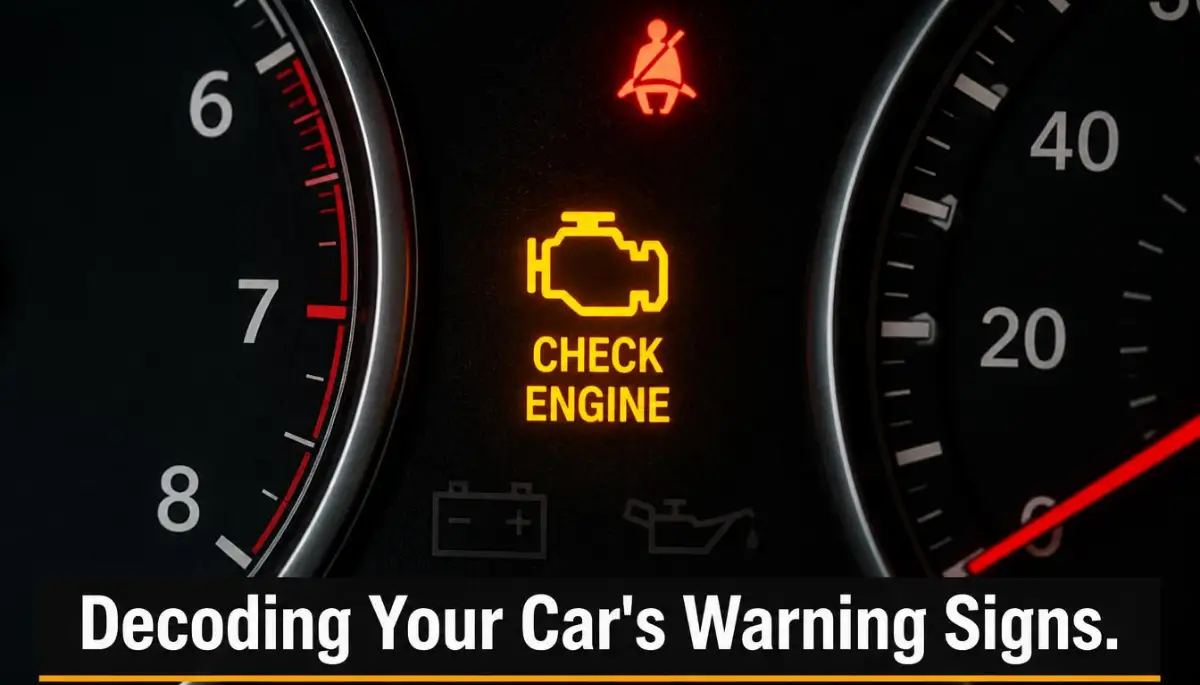
The "Check Engine" light is the most misunderstood part of a car. Many people think it always means the engine is about to explode. In reality, it is a general warning that a sensor has found a problem.
Sometimes, it is something as simple as a loose gas cap. If the cap is not tight, the car's computer thinks there is a leak in the fuel system. Before you call a mechanic, check your gas cap and tighten it.
Other times, it could be a failing oxygen sensor. This affects your fuel mileage but won't stop the car from running immediately. If the light is blinking, however, that is a sign of a major problem like an engine misfire.
In a blinking light scenario, you should stop driving as soon as it is safe. For a steady light, you have some time to investigate. You can even buy a cheap tool to read the code yourself.
Simple Visual Inspections Anyone Can Do
You do not need to be an expert to use your eyes. A quick five-minute visual check can reveal a lot of information. Open the hood when the engine is cool and look for things that seem "off."
Look for wet spots or stains. If you see bright green or pink fluid, that is likely your coolant. If the fluid is dark brown and greasy, it is probably oil. Finding the source of a leak is the first step to fixing it.
Check the condition of the hoses. Rubber hoses should be firm but flexible. If they feel very soft, or if they are hard and brittle, they are going to fail soon. Look for any cracks near the metal clamps.
Inspect the battery terminals. Do you see white, crusty powder on the metal posts? That is corrosion. It prevents electricity from flowing correctly. A simple mix of baking soda and water can clean that off and might solve your starting issues.
The Power of the Dipstick
Oil is the lifeblood of your engine. Without it, the metal parts rub together and melt. This is why checking your oil is the single most important DIY task.
Pull the dipstick out, wipe it clean, put it back in, and pull it out again. Look at the level. If it is below the "minimum" mark, you need to add oil immediately.
Also, look at the color and texture of the oil. Fresh oil is amber and clear. Old oil is black but should still be smooth. If the oil looks like chocolate milk, you have a major problem—coolant is leaking into your engine.
If you see tiny metal flakes in the oil, your engine is wearing itself down from the inside. These visual cues tell you the internal health of your vehicle without taking anything apart.
Understanding the Engine Startup Struggle
Does your car struggle to start in the morning? This is one of the most common complaints. Usually, the problem falls into one of three categories: Fuel, Spark, or Power.
If the engine turns over very slowly (the wuh-wuh-wuh sound), your battery is likely weak. It doesn't have enough "juice" to spin the starter motor. This is common in very cold or very hot weather.
If the engine turns over quickly but won't "catch" and run, you might have a fuel delivery issue. Maybe your fuel pump is tired or your fuel filter is clogged. Sometimes, just tapping the fuel tank can get a dying pump to work one last time.
If you hear a single "click" when you turn the key, your starter motor might be stuck. Often, the connection to the starter is just dirty. Cleaning the wires can sometimes bring a "dead" car back to life.
The Role of Air Filters in Engine Health
Your engine needs to breathe just like you do. It mixes air with fuel to create the explosion that moves the car. If the air filter is clogged with dirt and bugs, the engine has to work harder.
A dirty filter can cause your engine to stutter or lose power. It can also significantly lower your gas mileage. Checking the filter is incredibly easy on most modern cars.
Usually, the filter is inside a plastic box with simple clips. Open it up and hold the filter up to the sun. If you cannot see light through it, it is time for a new one. This is a $15 fix that takes two minutes but saves your engine from unnecessary stress.
Using Technology to Your Advantage
We live in an amazing time for DIY car owners. You no longer have to guess why a light is on. You can use a tool called an OBD2 Scanner.
These devices used to cost thousands of dollars. Now, you can buy a basic one for the price of a few pizzas. You plug it into a port under your dashboard, and it talks to the car’s computer.
The scanner will give you a code, like "P0300." You can type that code into your phone, and it will tell you exactly which part is complaining. This prevents a mechanic from telling you that you need a new engine when you only need a $30 sensor.
Even if you don't want to do the repair yourself, having this information is powerful. When you walk into the shop and say, "My car has a P0442 code for a small evap leak," the mechanic knows you are informed. They are much less likely to try and trick an informed customer.
Why Fluids Are the Key to Longevity
Beyond just oil, your car relies on several other fluids to stay healthy. Neglecting these is a fast track to a massive repair bill.
Transmission fluid should be checked while the engine is running. It should be bright red. If it smells burnt or looks like mud, your transmission is in danger. Replacing the fluid is much cheaper than replacing the whole transmission.
Brake fluid is what allows you to stop. If the level is low, your brakes might feel "spongy." This is a major safety risk. Always check the reservoir to make sure it is full and the fluid looks clear.
Coolant (Antifreeze) keeps your engine from melting. Never open the radiator cap while the engine is hot! You can check the level in the plastic overflow tank. If it is constantly low, you have a leak that needs to be plugged before the engine overheats.
Recognizing the Smell of Trouble
Your nose can be a great diagnostic tool. Different car problems have very specific smells. If you smell something strange, do not ignore it.
A sweet, syrupy smell usually means a coolant leak. You might notice this more after you turn the car off. Coolant contains ethylene glycol, which has a very distinct sugary scent.
The smell of rotten eggs is a classic sign of a failing catalytic converter. This means your exhaust system isn't cleaning the gases correctly. It can also lead to a loss of engine power.
A burning rubber smell often means a belt is slipping or a hose is touching a hot engine part. If you smell burnt oil, it likely means oil is leaking out of the engine and dripping onto the hot exhaust pipe. Each scent is a map to a specific problem area.
Staying Safe While You Troubleshoot
Before you start poking around under the hood, safety must be your priority. Engines have moving parts and get extremely hot.
Always wear eye protection. A splash of battery acid or a spray of hot coolant can cause permanent damage.
Avoid loose clothing or long hair. If a scarf or hair gets caught in a spinning belt, it can pull you into the machinery. Always tie back hair and tuck in loose shirts.
Never work on a car supported only by a jack. If you need to look under the car, use jack stands. A hydraulic jack can fail in a second, and the weight of the car is unforgiving.
By following these simple steps, you become the master of your vehicle. You move from a place of fear to a place of empowerment. Troubleshooting is not about knowing everything; it is about being brave enough to look and learn.
Mastering the Art of Advanced Engine Diagnostics
Once you understand the basics of noises and smells, you are ready to dig deeper. You don't need to be a scientist to use advanced tools. You just need to be patient and follow the logic of the machine.
One of the most powerful tools in your garage is a simple multi meter. This device measures electricity in your car. It helps you find out if a sensor is actually broken or if the wires are just dirty.
For example, if your car won't start, don't just buy a new battery. Use the multi meter to check the voltage while the car is off. It should read about 12.6 volts. If it is lower, your battery might just need a charge, not a replacement.
If you own a modern car, learning simple habits to protect your electric vehicle battery life is just as important as traditional engine care. Many of the electrical diagnostic principles are very similar between gas and electric cars.
The Secret of Cleaning vs. Replacing
Most people think that if a sensor throws a code, they must buy a new one. This is a very expensive mistake. Often, sensors like the Mass Air Flow (MAF) sensor just get dusty.
The MAF sensor tells the engine how much air is coming in. If it gets dirty, your car might stall or shake. Instead of spending $100 on a new part, buy a $7 can of MAF sensor cleaner.
A quick spray can make the sensor work like new. This simple trick can save you hundreds of dollars. It also keeps your engine running smoothly for many more miles.
Hunting for Invisible Vacuum Leaks
A vacuum leak is like a hidden ghost in your engine. It causes a rough idle and poor gas mileage. Since you can't always see air moving, you have to be clever to find it.
One expert secret is using soapy water. Spray a little bit of soapy water on the rubber hoses while the engine is running. If the bubbles get sucked in or start dancing, you found your leak.
Another trick is the "cigar" or smoke method. By blowing safe smoke into the intake, you can see exactly where it escapes. This turns a complex mystery into a simple visual fix.
When you manage these systems properly, you are essentially following the ultimate guide to hybrid engine care and longevity. Keeping the air and fuel balance perfect is the key to any engine lasting for decades.
Understanding Fuel Trims and Computer Logic
If you use an OBD2 scanner, look for a setting called "Fuel Trims." This is the car's way of adjusting the fuel mix. If the number is a high positive, the car thinks it is "running lean."
This means there is too much air and not enough gas. This usually points to a vacuum leak or a clogged fuel injector. If the number is a high negative, it is "running rich."
A rich engine is wasting gas and could damage your catalytic converter. Knowing these numbers helps you tell the mechanic exactly what is wrong. Or better yet, it helps you fix the root cause yourself.
Before you make any big changes, always check for official vehicle safety recalls to see if your car has a known factory defect. Sometimes, the manufacturer will fix a major engine issue for free.

The High Cost of Common DIY Mistakes
We all want to save money, but moving too fast can lead to disaster. One of the biggest traps people fall into is called the "Parts Cannon." This is when you keep buying and swapping parts hoping one of them fixes the problem.
This is a very emotional way to fix a car. You get frustrated because the light is still on. You spend $400 on sensors and spark plugs, but the car still shakes.
The reality is that guessing is more expensive than a professional. If you cannot find the problem after three clear steps, stop. Take a breath and look at the data again.
The Danger of Ignoring the Small Things
Many drivers see a small oil drip and think it is "just an old car thing." They ignore the tiny spot on the driveway for months. Then, one day, the engine seizes on the highway.
Small leaks often hide bigger problems. An oil leak can drip onto rubber coolant hoses and melt them. A small coolant leak can lead to a warped engine head in minutes if the car overheats.
Never ignore a new vibration or a slight change in how the brakes feel. These are the early warning signs of your car's "health" failing. Catching them early is the only way to avoid a financial nightmare.
The Mistake of Over tightening
When people start working on engines, they often think "tighter is better." This is a huge mistake. Engine parts are often made of soft aluminum.
If you pull too hard on a bolt, you can strip the threads. This turns a ten-minute job into a two-day disaster. You might have to drill out the bolt or replace the entire engine block.
Always use a torque wrench for important bolts like spark plugs or valve covers. It tells you exactly when to stop. This tool ensures that the part is secure but not crushed.
Why Safety Shortcuts Never Pay Off
Working on a car while you are tired or frustrated is a recipe for injury. We have seen people try to change a tire or look under a car using only the emergency jack.
These jacks are made for one-time use on the side of the road. They are not stable. A simple gust of wind or a nudge can knock the car off the jack.
If you are under the car when that happens, the result is fatal. Always use jack stands and wheel chocks. Your life is worth much more than the $30 price of a set of stands.
Your Path to Mechanical Confidence
Taking care of your own engine is one of the most rewarding skills you can learn. It transforms your car from a scary metal box into a machine that you understand.
Start small. Maybe this weekend you just check your air filter and clean your battery terminals. These tiny wins build the "muscle memory" you need for bigger tasks later.
Keep a maintenance logbook in your glove box. Write down every time you check the oil or change a filter. This record is very valuable if you ever decide to sell the car. It shows the next owner that the car was loved.
A New Way to Look at Modern Technology
Even if you move toward newer technology, these diagnostic skills stay with you. The world of transportation is changing. You might find yourself interested in how to rebuild your credit score so you can afford a newer, more efficient vehicle.
Having a healthy car also helps you make better financial choices. For example, if your current car runs perfectly, you can objectively ask if buying a home is smarter than renting. You won't be forced into a bad house deal just because you need a garage for a broken car.
Knowledge is the ultimate tool. When you know how your engine works, you are no longer a victim of high repair bills. You are a smart, capable owner who takes pride in their machine.
Your Final Action Plan
Don't wait for a breakdown to start learning. Open your hood tonight. Just look at the components. Identify where the oil goes, where the coolant lives, and where the battery is.
- Buy a basic OBD2 scanner. It is the best investment you will ever make for your car.
- Listen to your engine. Learn its "normal" sound so you can spot the "weird" sound immediately.
- Clean one thing. Wipe down the battery or the top of the engine. A clean engine makes leaks much easier to see.
You have the power to keep your vehicle on the road for a long time. You don't need to be an expert on day one. You just need to be curious and willing to try.
The road ahead is much smoother when you are the one in control of the repairs. Happy driving, and keep those engines humming!
Disclaimer: The information provided in this article is for educational purposes only. Automotive repair can be dangerous. Always follow the safety guidelines in your vehicle's owner manual. If you are unsure about a repair, consult a certified professional to ensure your vehicle remains safe for the road.
![How to Change a Flat Tire in an Emergency [Avoid Being Stranded]](https://topic36.com/storage/uploads/blogs/1787755147_how-to-change-a-flat-tire-in-an-emergency-avoid-being-stranded.webp)