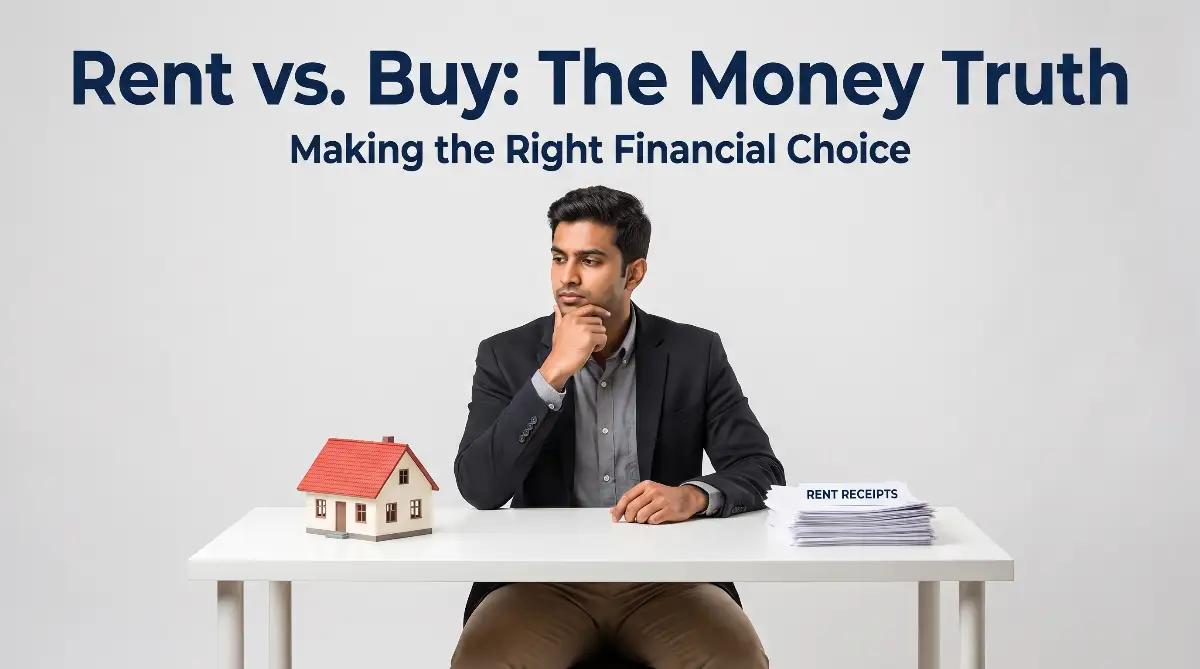
The Weight of the "Where to Live" Decision
Have you ever stared at your bank statement after paying rent and felt a small pit in your stomach? You are not alone. Millions of people go through this every single month.
It starts with a simple thought. You wonder if that money is just disappearing into a black hole. You see your landlord getting richer while you just get a receipt.
Then, the fear of buying hits you. You think about the massive debt of a mortgage. You worry about a pipe bursting or the roof leaking.
This creates a constant state of mental friction. You feel stuck between a rock and a hard place. Renting feels like throwing money away, but buying feels like a heavy chain around your neck.
I remember talking to a friend named Sarah. She had been renting for ten years. She loved the freedom of moving whenever she wanted.
But one day, she calculated how much she had paid in rent over that decade. The number was shocking. It was enough to have paid off half a small house.
She felt a deep sense of regret. She realized she had no asset to show for all that hard work. That is the reality of the "rental trap" many face today.
On the flip side, I know people who bought a house and regretted it instantly. They didn't realize that the "sticker price" was just the beginning.
The taxes, insurance, and repairs started eating their savings. They felt "house poor," meaning they had a beautiful home but no money to actually live their lives.
This struggle is real. It affects your sleep, your stress levels, and your future plans. Choosing between renting and owning isn't just a math problem. It is a life-changing choice.
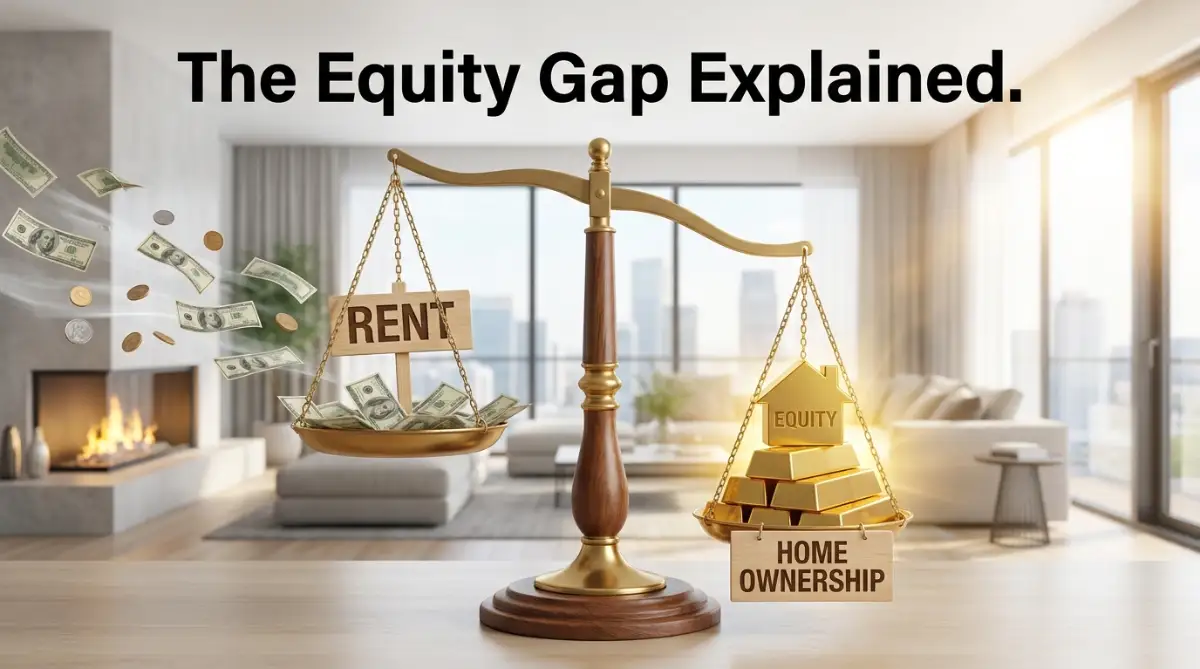
Breaking Down the True Cost of Your Monthly Rent
When you rent, you pay for one thing: a roof over your head for thirty days. It is a simple transaction. You give money, and you get shelter.
But there is a "silent tax" on renting that most people ignore. This is called inflation. Your rent today will likely not be your rent in five years.
Landlords often raise the price every time the lease ends. You have no control over this. It makes long-term budgeting very hard.
Another big factor is zero equity. Equity is just a fancy word for the part of the house you actually own. When you rent, your equity is always zero.
Think of it like a car. If you lease a car, you return it and have nothing. If you buy the car, you eventually own it and can sell it later.
However, renting does have one huge financial "plus." Your costs are capped. The rent is the maximum you will pay each month.
If the water heater breaks, you don't pay a cent. If the property taxes go up, that is the landlord's problem. This brings a certain kind of peace of mind.
The Real Price of "Owning" a Piece of Earth
Now, let's look at the other side of the coin. Buying a home is often called the "American Dream," but the math is complex.
When you own a home, your mortgage is actually the minimum you will pay. There are always extra costs hiding in the shadows.
First, you have property taxes. These are not optional. If you don't pay them, you can lose your home, even if the mortgage is paid off.
Then, you have homeowners insurance. This protects you from fires or storms. It is an added monthly cost that never goes away.
The biggest surprise for new owners is maintenance. Experts say you should save 1% of your home's value every year for repairs.
If your home is worth $300,000, you need to set aside $3,000 a year. That is $250 every single month just for "what if" moments.
But here is the magic part of owning: Amortization. Every time you make a mortgage payment, a tiny bit of it goes toward owning the house.
It is like a forced savings account. You are paying yourself instead of a landlord. Over time, this builds massive wealth.
Comparing Flexibility and Stability
We live in a world that moves fast. Sometimes, you might get a job offer in a different city or even a different country.
If you rent, moving is easy. you wait for your lease to end and pack your bags. This flexibility has a real dollar value.
Selling a house is not fast. It can take months. You also have to pay real estate agents a large fee, often 5% to 6% of the sale price.
If you buy a house and need to move in two years, you might actually lose money. This is because of the "closing costs" you paid when you bought it.
However, owning offers stability. No one can tell you to move out because they want to sell the building. No one can tell you that you can't paint the walls blue.
This emotional security often leads to better financial decisions in other areas of life. When you feel stable, you tend to plan better for the future.
The Opportunity Cost of the Down Payment
This is the part most people forget to talk about. To buy a house, you usually need a down payment.
Let's say you put down $50,000 on a house. That is $50,000 that is now "locked" in the walls of your home.
What if you took that same $50,000 and put it into the stock market? Or used it to start a small business?
This is called opportunity cost. By choosing the house, you are giving up the potential gains from other investments.
In some markets, the stock market grows faster than home prices. In those cases, a renter who invests their savings might end up richer than a homeowner.
But this requires a lot of discipline. Most people don't actually invest the money they save by renting. They usually just spend it on lifestyle items.
Buying a house forces you to build wealth. It is a "brick-by-brick" approach to financial security that works for most people.
Understanding Interest vs. Principle
When you look at your mortgage statement, it can be depressing at first. In the early years, most of your money goes to interest.
Interest is the fee the bank charges you for borrowing their money. It is a "sunk cost," just like rent. You never see that money again.
The principle is the part that actually pays down the loan. In the beginning, this part is very small.
As the years go by, the math shifts. You pay less interest and more principle. This is why staying in a home for a long time is the key to winning.
If you plan to live in a place for less than five years, renting is almost always the smarter financial move.
The costs of buying and selling will eat up any small gains you make. Time is the best friend of the property owner.
The Impact of Local Markets
You cannot make this decision based on a general YouTube video or a news article. Real estate is local.
In some cities, it is much cheaper to rent than to buy. This is common in "mega-cities" where home prices are sky-high.
In smaller towns, the monthly mortgage might be lower than the local rent. In these places, buying is a "no-brainier."
You need to look at the Price-to-Rent Ratio in your specific neighborhood. This is a simple tool to see which side has the advantage.
To find it, you divide the home price by the annual rent. If the number is above 20, renting might be the better deal right now.
If the number is below 15, you should seriously look into buying. This data-driven approach takes the emotion out of the choice.
Tax Benefits: Myth vs. Reality
Many people will tell you to buy a house because of the tax breaks. While there are benefits, they are not as big as they used to be.
In many places, you can deduct the interest you pay on your mortgage from your taxes. This sounds great on paper.
But you have to spend a dollar on interest to save maybe twenty-five cents on taxes. It is not "free money."
You should never buy a house just for the tax deduction. It should be a "bonus," not the main reason for your choice.
The real tax benefit comes when you sell your home. In many countries, you don't pay taxes on the profit you make from your primary home (up to a certain limit).
This is one of the few ways an average person can make a large amount of money without the government taking a huge cut.
The Hidden Monster: Maintenance and Repairs
We touched on this earlier, but it deserves its own focus. Maintenance is the "unpredictable enemy" of the homeowner.
A roof can cost $10,000. A new HVAC system can cost $6,000. These are not small numbers.
When these things happen, they usually happen at the worst time. Like right before the holidays or when you just fixed your car.
As a renter, you have a repairman on call for free. Your landlord is legally required to keep the home livable.
This "service" is part of what you are paying for in your rent. For many busy professionals, this time saved is worth the extra cost.
If you hate tools and don't want to spend your Saturday at a hardware store, property ownership will be a struggle for you.
Wealth Building through Appreciation
Over the long term, real estate tends to go up in value. This is called appreciation.
It doesn't happen every year. Sometimes prices go down. But over 10 or 20 years, they almost always rise.
The cool thing about this is leverage. If you buy a $200,000 house with $20,000 down, and the house price goes up 5%, you didn't just make 5%.
The house is now worth $210,000. You made $10,000 on a $20,000 investment. That is a 50% return!
This is how the middle class has historically built wealth. You are using the bank's money to make gains on the full value of the asset.
Renters do not get to use leverage in this way. They only make gains on the actual cash they have in their hands.
Final Thoughts for Part 1
Choosing between renting and owning is a journey. It depends on your job, your family, and your "stomach" for risk.
There is no "one size fits all" answer. Both paths can lead to a happy and wealthy life if you manage your money well.
In the next part of this guide, we will look at the specific math formulas you can use to decide. We will also talk about how to prepare your credit for a mortgage.
Whether you choose a lease or a deed, the most important thing is to be intentional. Don't just do what your parents did. Do what fits your life today.
Stay tuned for more deep insights into your financial future. Knowledge is the best investment you can ever make.
Mastering the Math of Your Future Home
Building wealth through real estate requires more than just a down payment. It requires a mindset shift that most people never achieve.
If you want to win at this game, you need to look at your home as a tool, not just a place to sleep. One of the best secrets of successful owners is a strategy called house hacking.
This simply means finding a way to make your property pay for itself. You might buy a house with an extra room to rent out on a short-term basis.
Or perhaps you find a "duplex" where you live in one half and a tenant pays the mortgage by living in the other. This moves you from being a consumer to being an investor instantly.
Another expert tip involves your credit health. Your mortgage interest rate is the most important number in your financial life for the next thirty years.
A tiny difference in that rate can save you $50,000 or more over the life of the loan. If your history is messy, you must focus on how to rebuild your credit score after a major financial disaster before you even talk to a bank.
The Power of Mortgage Recasting
Most people know about refinancing, but few understand mortgage recasting. This is a "pro-level" move for when you have extra cash but don't want to change your loan terms.
You give the bank a large lump sum, and they recalculate your monthly payments based on the new, lower balance. Unlike refinancing, you keep your original interest rate and pay very low fees.
This is a great way to lower your monthly expenses without the stress of a full loan application. It provides instant breathing room in your monthly budget.
You should also look into the "1% Rule" for maintenance. Always keep at least one percent of the home's total value in a high-yield savings account.
This fund is for "house emergencies" only. When the roof leaks or the furnace stops in the middle of winter, you won't need to use a high-interest credit card.
Having this cash ready changes the way you feel about your home. It turns a potential disaster into a simple weekend project.
Using Technology to Beat the Market
We live in an age where data is free if you know where to look. Smart buyers use tools like the Consumer Financial Protection Bureau’s mortgage exploration tool to see what others are paying.
You should also study the local absorption rate in your target neighborhood. This tells you how fast homes are selling and who has the power: the buyer or the seller.
If homes stay on the market for more than 60 days, you have the "upper hand." You can ask for repairs or a lower price with more confidence.
While you do this, remember that your brain works differently than a computer. Our emotions often cloud our judgment when we see a "pretty" kitchen.
I always tell my friends to bring a "cynical" person with them when viewing a house. You need someone who will point out the cracked foundation while you are busy looking at the granite countertops.
Even developers use logic over emotion. They often look at how generative AI is changing the way developers write code to automate their building designs and cost estimates.
You should use a similar "robotic" logic when checking the structural integrity of a potential investment. If the bones of the house are bad, the paint doesn't matter.

The Dangerous Traps of Emotional Buying
One of the biggest mistakes you can make is falling in love with a house before you own it. When you get emotional, you start to ignore red flags.
You might overlook a damp basement or an old roof because the backyard looks "perfect" for a summer party. This mistake can cost you tens of thousands of dollars later.
Another trap is over-leveraging. Just because a bank says you can borrow $400,000 does not mean you should.
The bank doesn't care if you have enough money left over for groceries or travel. They only care that you can pay them back.
If you spend every cent of your income on your mortgage, you are "house poor." This leads to a life of high stress and zero freedom.
I have seen families stop going on vacations for years because their house was too expensive. That beautiful living room feels like a prison when you can't afford to leave it.
The Renter's Ghost: Cost of Waiting
On the other side, renters often make the mistake of "waiting for the perfect time." They wait for prices to drop or interest rates to hit rock bottom.
While they wait, they miss out on years of principle pay down. They pay someone else’s mortgage instead of their own.
Market timing is a losing game for most people. If you find a home you can afford and you plan to stay for a decade, the "market timing" matters very little.
Renters also tend to ignore the lifestyle inflation that happens when they move. Every time they switch apartments, they buy new furniture or decor.
These "small" costs add up to a massive amount of wasted capital over twenty years. It is better to have a modest home you own than a luxury apartment you rent forever.
The Maintenance Mirage
Many people buy a home and think the expenses stop at the mortgage. They forget about the "hidden" costs like property taxes and insurance.
In some areas, property taxes can rise significantly every year. This can make a "cheap" mortgage become very expensive over time.
You must also consider the time cost of ownership. Every hour you spend mowing the lawn or fixing a fence is an hour you aren't working or resting.
If you value your time at $50 an hour, a four-hour lawn project "costs" you $200. Renters don't have this cost.
However, many owners find that physical work on their home is good for their mental health. It gives them a sense of pride and accomplishment.
Just make sure you are physically and mentally ready for the "extra job" that comes with a deed. Ownership is a lifestyle, not just a financial move.
Designing Your Personal Action Plan
So, where do you start? The first step is a deep audit of your current finances.
Look at your bank statements for the last six months. How much are you truly saving after all your bills are paid?
If you aren't saving at least 20% of your income, you might not be ready for the "surprises" of home ownership. Use this time to build your "house fund" while you rent.
Think of your body like a building too. Just as a house needs a strong foundation, your health keeps you productive.
Some experts believe that why your gut bacteria holds the secret to a stronger immune system is the key to staying healthy enough to work and pay off that mortgage. If you aren't healthy, you can't manage your assets.
Once your "health foundation" and "money foundation" are solid, start looking at neighborhoods. Don't look at the houses yet—look at the streets.
Are people taking care of their yards? Are there new businesses opening nearby? These are signs of a healthy local economy.
Your Final Path to Financial Freedom
There is no "wrong" choice if you make it with your eyes wide open. Renting gives you the freedom to chase opportunities across the globe.
Owning gives you a "forced savings account" and a place to truly call your own. Both can lead to a wealthy retirement if you are disciplined.
The real losers are those who don't choose at all. They just float from year to year without a plan.
I want you to sit down tonight and write out your five-year goal. Do you see yourself in the same city, or are you looking for adventure?
If you see yourself staying put, start cleaning up your credit and saving your coins. If you want to travel, find the best rental deal possible and invest the difference in the stock market.
The power is in your hands. You now have the knowledge to see past the marketing and look at the real numbers.
Take the first step today. Whether it is opening a new savings account or calling a mortgage broker, do something.
Your future self will thank you for the work you are doing right now. Building a legacy starts with one single, smart decision about where you lay your head at night.

![5 Hidden Real Estate Escrow Secrets to Know [Step-by-Step]](https://topic36.com/storage/uploads/blogs/1788794749_5-hidden-real-estate-escrow-secrets-to-know-step-by-step.webp)