
The Midnight Headache of Choosing a Health Plan
Have you ever sat at your kitchen table late at night with ten different insurance brochures spread out? Your eyes start to blur as you see terms like HMO, PPO, EPO, and POS. It feels like you are trying to crack a secret code just to make sure your kids can see a doctor.
I know that feeling of heavy pressure in your chest. You worry that if you pick the wrong three-letter acronym, you might lose your favorite doctor. Or worse, you might get hit with a $5,000 bill because you went to the "wrong" hospital by mistake.
Choosing health insurance is not just about money. It is about your peace of mind and your family’s safety. It is frustrating when you work hard all day but cannot understand the basic rules of your own healthcare.
You just want a plan that works when you are sick. You want to know that you can get help without jumping through a thousand hoops. This guide is here to take that weight off your shoulders and show you exactly how these systems work in plain English.
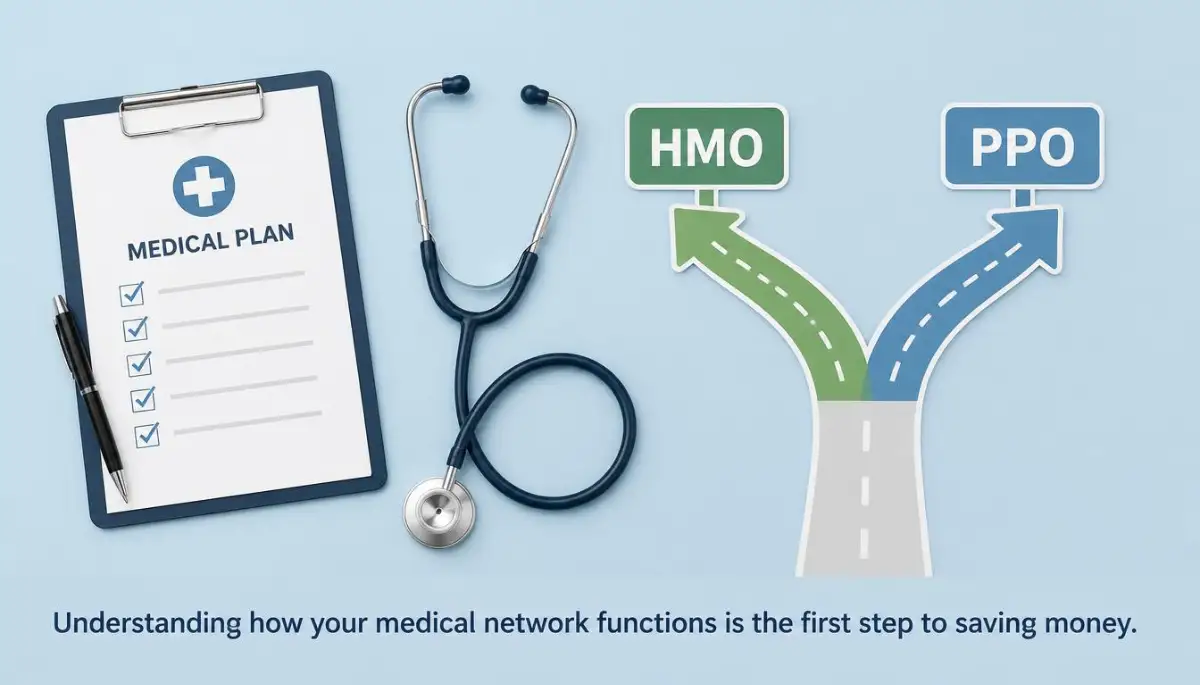
HMO: The Orderly Path to Affordable Care
An HMO (Health Maintenance Organization) is built for people who like a clear, structured path. Think of it like a private club where everyone knows each other. You must stay inside the club to get the best benefits.
Your Primary Care Physician (PCP) is the Boss
In an HMO, you must pick one Primary Care Physician. This doctor is your main point of contact for everything. They get to know your history, your habits, and your health goals over time.
If you wake up with a weird skin rash, you do not go straight to a specialist. You go to your PCP first. They decide if you need extra help and then give you a referral. Without that golden ticket (the referral), the insurance company might refuse to pay for the specialist.
Staying Inside the "Walled Garden"
HMOs use a "Closed Network" architecture. This means the insurance company has special contracts with specific doctors and hospitals. If you see a doctor who is not on that list, you will likely pay the full cost out of your own pocket.
This structure helps keep costs low. Since the insurance company limits where you can go, they can negotiate better prices. This usually leads to lower monthly premiums and smaller co-pays for you.
PPO: The Freedom to Choose Your Own Way
A PPO (Preferred Provider Organization) is the complete opposite of a strict HMO. It is designed for people who value flexibility and speed over everything else. If you hate asking for permission, this is the architecture for you.
No Gatekeepers Allowed
With a PPO, you do not need to name a Primary Care Physician. You have the freedom to see any doctor you want. If you want to see a cardiologist today, you can just call one and make an appointment.
You never have to wait for a referral letter. This is a huge win for people who have chronic issues or need to see multiple specialists. It saves you time and cuts out the middleman.
The Best of Both Worlds (At a Price)
PPOs still have a "Preferred Network" where you get big discounts. However, they also allow you to go out-of-network. If you go to a doctor outside the list, the insurance will still pay a portion of the bill.
You will pay more for this freedom. PPO plans almost always have higher monthly premiums. You might also have a higher deductible to meet before the insurance starts helping with the costs.
Let’s Compare: A Real-Life Look at the Costs
Myth vs. Reality: Clearing the Air
Myth: HMO doctors are not as good as PPO doctors.
Reality: Both networks use the same highly trained medical professionals. The difference is the contract, not the medical degree. An HMO doctor might just have more patients to manage at once.
Myth: PPOs are always better because they have more choices.
Reality: Not if you are on a tight budget. If you have a great PCP you already love and they are in the HMO network, you could save thousands of dollars a year by choosing the HMO.
How to Decide Based on Your Health Needs
Choosing between these two is not about which plan is "better." It is about which plan fits your current life situation. Let’s look at two different scenarios to help you see where you fit.
Scenario A: The Budget-Conscious Family
Imagine a young family with two healthy kids. They have a pediatrician they like who is in the local HMO network. They don't mind seeing their main doctor first for minor issues.
For this family, the HMO is a winner. The low premiums mean they have more money for groceries and rent. They get the care they need without the high price tag of a PPO they won't fully use.
Scenario B: The Busy Professional with Health Goals
Now, imagine someone who travels a lot or has a specific health condition that requires a specialist. They don't want to wait three weeks for a referral every time they need a checkup.
For this person, the PPO is the better choice. The ability to see a doctor in a different city or go straight to a specialist is worth the extra $100 or $200 a month. It is a payment for convenience and speed.
The Hidden Power of the "Network Gap"
One thing many people forget is the "Network Gap." This happens when your local hospital is in your network, but the specific doctor who treats you there is not.
In an HMO, this can be a financial disaster. You might think you are covered because you are at a covered hospital, but you could still get a bill.
In a PPO, you have a safety net. Even if that specific doctor is out-of-network, your plan will usually cover a part of that cost. This "cushion" is one of the main reasons people choose PPOs despite the higher cost.
Expert Insight: Check Your Medication First
Before you sign any papers, look at the Formulary. This is the list of drugs the plan covers. Sometimes, an HMO will cover your specific medicine for $10, while a PPO might charge $50 for the same thing.
Always call your pharmacist and ask: "Which plan architecture works best with my current prescriptions?" This one five-minute phone call can save you more money than any other step in this process.
Why Architecture Matters More Than the Brand
Many people focus on the name of the insurance company. They think "Blue Cross" or "Aetna" is the most important part. In reality, the architecture (HMO vs PPO) dictates your daily experience more than the brand name does.
The brand is just the logo on the card. The architecture is the set of rules you have to live by every single day. Make sure you are comfortable with those rules before you commit to a full year.
Questions to Ask Yourself Today
To help you narrow down your choice, ask these three simple questions:
- Do I already have a doctor I refuse to leave? (Check their network first!)
- Am I okay with waiting for a referral to see a specialist?
- Does my monthly budget have room for a higher premium in exchange for more freedom?
By answering these, you move from being confused to being an informed consumer. You deserve to have healthcare that supports you rather than adding more stress to your life.
Take a deep breath. You now have the knowledge to pick the right path. Whether you choose the structured savings of an HMO or the wide-open freedom of a PPO, you are making the best choice for your future.
Master-Level Strategies for Navigating Your Health Plan
Now that you understand the basic structures of HMO and PPO plans, it is time to look at the hidden mechanics. Most people stop at the monthly premium. However, the real "pro-level" savings happen when you look at how these architectures handle complex medical needs.
The Secret of Tiered Networks
Many PPO plans now use what is called a Tiered Network. Even within your "preferred" list, some doctors are Tier 1 and others are Tier 2. Tier 1 providers have the highest quality ratings and the lowest costs for the insurer.
If you choose a Tier 1 doctor in your PPO, your co-pay might be $20. If you choose a Tier 2 doctor (even if they are in-network), that co-pay could jump to $50. Always ask your insurance provider for the Tiered Provider List to ensure you are getting the absolute best price.
Why the Medical Group Matters More Than the Doctor
In an HMO architecture, your Primary Care Physician (PCP) is usually part of a larger Medical Group. When your doctor gives you a referral, they almost always send you to a specialist within that same group.
Before signing up for an HMO, do not just check if your doctor is in the network. Check if the local hospital and the best specialists in your town are part of that doctor's medical group. If they aren't, your PCP might struggle to send you to the experts you actually want to see. This is how you avoid the "referral trap" where you are stuck with average specialists.
Strategic Use of the HSA with a PPO
If you choose a PPO, you often have the option for a High Deductible Health Plan (HDHP). This allows you to open a Health Savings Account (HSA). An HSA is a powerful financial tool because the money you put in is tax-free, and it grows tax-free.
You can use this money to pay for your PPO’s higher deductible. If you don’t spend it, the money stays with you forever. It is a great way to rebuild your credit score after a major financial disaster by ensuring you never have unpaid medical bills. Managing your medical debt is just as important as managing your health.
Checking the "Formulary" for Specialty Drugs
Health insurance is not just about doctors; it is about the cost of medicine. Every HMO and PPO has a "Formulary," which is a fancy word for their drug list. Some HMOs might be very strict about which brands of medicine they allow.
If you take a specific medication for your immune system, for example, you should check which plan covers it better. A strong immune system is your best defense against illness. You might find that why your gut bacteria holds the secret to a stronger immune system is a topic that helps you stay healthy, but you still need your medicine to be affordable. Always compare the "Drug Tier" of your prescriptions between the HMO and PPO options.
The "Cash Price" Negotiation Hack
Here is a secret that insurance companies do not talk about much. Sometimes, even with a PPO, the "insurance rate" for a lab test or an MRI is higher than the "cash price" the clinic offers to uninsured people.
If you have a high deductible on your PPO plan, ask the doctor: "What is the self-pay cash price for this test?" If the cash price is $200 and your insurance "negotiated rate" is $400, pay cash. This helps you save your insurance benefits for the big stuff while keeping your daily costs low.

The Silent Traps That Drain Your Bank Account
Choosing the wrong architecture can lead to more than just a small headache. It can lead to financial ruin if you are not careful. I have seen families lose their entire savings because they didn't understand a single rule in their policy.
The In-Network Hospital, Out-of-Network Doctor Trap
This is the most common mistake people make. You go to a hospital that is "In-Network" for your HMO or PPO. You feel safe. Then, a few weeks later, you get a bill for $2,000 from the anesthesiologist or the radiologist.
Why? Because even though the hospital building was in-network, the specific doctor who treated you was an independent contractor who was out-of-network. In an HMO, this can be a total nightmare because they might refuse to pay any of it. Always ask, "Are all the providers treating me today in my network?" when you are scheduling a procedure.
Assuming "Emergency" Means "Covered"
People often think that if they have an emergency, the insurance has to pay. While there are laws to help with this, insurance companies are very picky about what they call a "true emergency."
If you go to the ER for a sore throat because it is 2 AM, your HMO might reject the claim entirely. They will say you should have gone to an Urgent Care center instead. Always know where your nearest In-Network Urgent Care is located. Using the ER for non-emergencies is one of the fastest ways to empty your bank account.
The Referral Expiration Ghost
In an HMO, your referral is not a permanent pass. Most referrals have an expiration date (usually 90 days). If you see your specialist on day 91, the insurance might not pay a single cent.
This is a heartbreaking mistake. You did the right thing by getting the referral, but a simple calendar error cost you hundreds of dollars. Always double-check the dates on your paperwork before you walk into the specialist's office.
Ignoring the "Out-of-Pocket Maximum"
Many people only look at the monthly price and the deductible. They forget about the Out-of-Pocket Maximum. This is the most important number in your entire policy.
It is the "worst-case scenario" number. If you have a major accident, this is the most you will have to pay in a year. Some HMOs have a very low maximum, which makes them safer for people with major health risks. If you are debating is buying a home smarter than renting, you need to know your medical "max-out" number so you can budget for your future home properly.
Your 3-Step Action Plan for a Stress-Free Future
You do not have to be an insurance expert to make a great choice. You just need to be organized and follow a simple plan. Use this checklist the next time you are looking at your health options.
Step 1: The Doctor Audit
Call your three most important doctors. Ask them: "Which specific insurance plans do you accept for next year?" Do not ask if they take "Blue Cross." Ask for the specific plan name and architecture (HMO or PPO). This ensures you do not lose the medical relationships you have spent years building.
Step 2: The Math Test
Look at the total cost, not just the monthly bill. Add up your Total Monthly Premiums + Your Expected Co-pays + Your Deductible.
- If you see the doctor once a month, an HMO usually wins the math test.
- If you see five different specialists and travel for work, the PPO freedom is usually worth the extra cost.
Step 3: Read the Summary of Benefits and Coverage (SBC)
Every plan is required by law to provide a short, easy-to-read document called the SBC. It uses the same format for every company. It shows you exactly what a "Pregnancy" or a "Broken Bone" would cost under that plan. It is the best way to compare apples to apples without getting lost in the legal jargon.
A New Beginning for Your Health and Finances
Understanding the architecture of your health insurance is a superpower. It stops you from being a victim of the system and makes you the boss of your own care.
You now know that an HMO is a path of structure and savings, while a PPO is a path of freedom and flexibility. Neither one is "bad"—they are just different tools for different lives.
I want you to feel confident the next time you look at your insurance options. You have the tools, the knowledge, and the "insider secrets" to make a choice that protects your family.
Don't wait until you are sick to figure this out. Take thirty minutes today to review your current plan. Look for those tiered networks and check those referral dates. Your future self will thank you for the peace of mind you are building today.
Healthcare is a journey, and you just took a massive step toward mastering it. Keep learning, stay curious, and always advocate for your own health. You've got this!


![The Ultimate Guide to Winning Auto Insurance Claims [Stress-Free]](https://topic36.com/storage/uploads/blogs/1788793033_the-ultimate-guide-to-winning-auto-insurance-claims-stress-free.webp)