
The Heartbreak of Property Damage: When Your Safe Haven Falls Apart
Imagine coming home after a long day, looking forward to a quiet evening. You open your front door, and instead of the smell of home, you smell damp wood. You hear a steady drip, drip, drip. You look up and see a huge brown stain on your ceiling. Or worse, a pipe has burst, and your beautiful hardwood floors are covered in an inch of water.
In that moment, your stomach drops. It is not just about the money or the mess. It is about the loss of peace. Your home is where you feel safe. When damage happens—whether it is from a storm, a fire, or a leaky pipe—it feels like a personal attack. You feel overwhelmed. You start thinking about the costs. You wonder if your insurance company will actually help or if they will try to find a way out.
Many people feel lost during this time. You might ask yourself, "Where do I even start?" or "What if I miss a detail and they deny my claim?" This mental burden is heavy. It keeps you up at night. You worry about your family’s comfort and your financial future. The process of filing a claim often feels like a second job that you never applied for. It is confusing, technical, and full of hidden traps.
But here is the truth: You do not have to be an expert to win. You just need a clear plan. Most people fail because they rush the process or forget to write things down. They trust their memory instead of their camera. I want to help you take back control. You can turn this disaster into a manageable task. Let’s walk through this together, one small step at a time, so you can get your home—and your life—back to normal.
Acting Fast: What to Do in the First Sixty Minutes
When you first see the damage, your brain might go into panic mode. This is normal. But the first hour is the most important time for your claim. Think of this as the "Golden Hour" for insurance. If you act correctly now, the rest of the process becomes much easier.
First, make sure everyone is safe. If there is a gas leak or a structural issue, get out. Once safety is handled, your next job is mitigation. Insurance companies expect you to prevent "further damage." If a window is broken, cover it with a tarp. If a pipe is leaking, turn off the main water valve.
Keep every receipt for materials you buy for these emergency repairs. If you buy a $20 tarp at the local store, save that piece of paper. These small costs add up. Insurance companies usually pay you back for these "loss mitigation" expenses. Do not start permanent repairs yet. Just do enough to stop the situation from getting worse.
The Power of Visual Evidence: Becoming a Property Detective
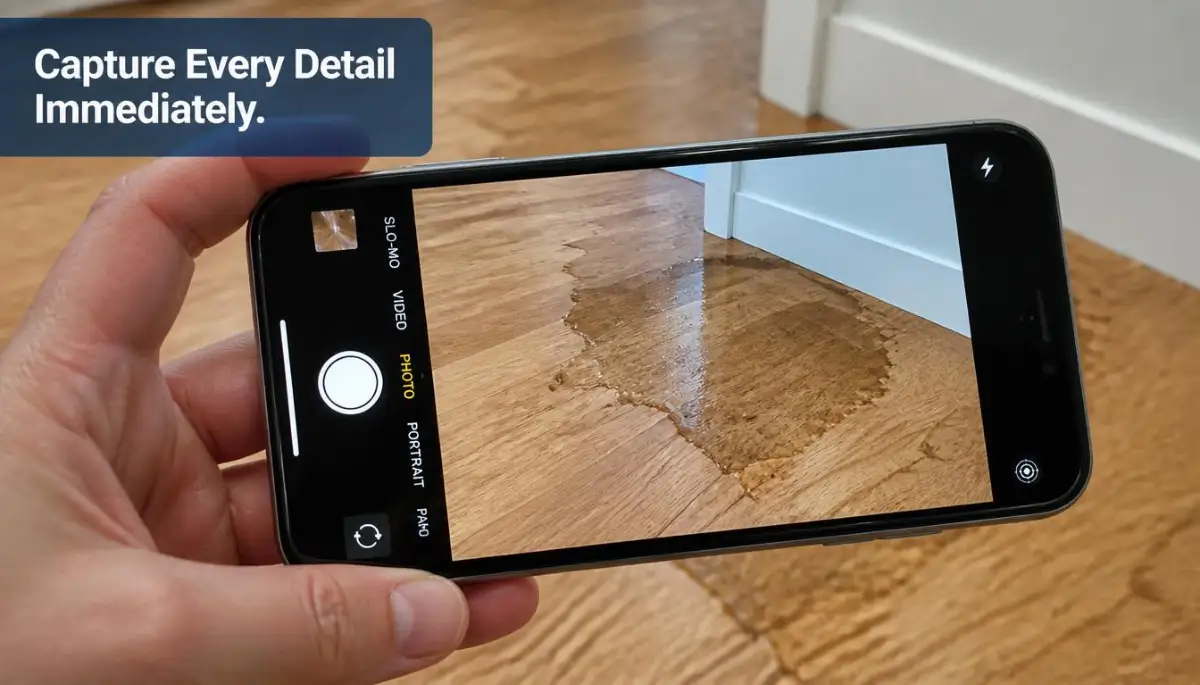
You might think you have a good memory, but in three months, you will forget the exact height of the water line on your wall. This is why you must photograph everything. Treat your home like a crime scene. Do not move anything yet.
Start from the outside and work your way in. Take wide-angle shots of the entire room. Then, move closer. Take photos of the specific damage from different angles. Use a ruler or a common object like a coin to show the scale of the damage. If there is a crack in the wall, hold a ruler next to it so the adjuster can see how wide it is.
Video is your best friend here. Walk through your home and narrate what you see. Talk out loud. Say things like, "I am in the kitchen, and the water has soaked into the bottom of these cabinets." This adds a layer of human honesty to your evidence. It shows the adjuster exactly what you saw the moment it happened.
Creating a Master Inventory of Lost Items
This is where many claims lose their value. People forget the small things. They remember the TV and the sofa, but they forget the books, the curtains, and the clothes in the closet. To get a full settlement, you need a detailed list.
Create a simple spreadsheet or use a notebook. List every single item that was touched by the damage. Include the brand name, the age of the item, and what you think it would cost to buy a new one today. If you have old receipts in your email or on your phone, find them.
Pro Tip: Look through your old family photos or social media posts. Sometimes, a picture of a birthday party in the background can prove you owned a specific piece of furniture or an expensive rug. This is "accidental evidence" that works wonders for your claim.
Understanding Your Policy: The Science of What is Covered
Insurance policies are not written in plain English. They are full of legal terms that can make your head spin. However, you need to understand two main things: Actual Cash Value (ACV) and Replacement Cost Value (RCV).
ACV means the insurance company will pay you what the item was worth right before it was damaged. This includes depreciation. For example, if your 5-year-old TV is ruined, they will pay you what a 5-year-old TV costs now. RCV is much better. It pays you what it costs to buy a brand-new version of that item.
Check your policy "Declarations Page." This is a one-page summary of your coverage limits. Look for your deductible. This is the amount you pay out of pocket before the insurance kicks in. Knowing these numbers helps you set realistic expectations. It prevents you from being shocked when the first check arrives.
Communicating with the Insurance Adjuster
The adjuster is the person the insurance company sends to look at your house. They are usually nice people, but remember: they work for the insurance company, not for you. Their job is to find the "fair" price, which often means the lowest price the company can legally pay.
When the adjuster visits, be polite but firm. Have your photos and your inventory list ready. Do not just hand them over; walk the adjuster through the house. Point out the hidden damage, like water that seeped under the baseboards or smoke odors inside the cabinets.
Keep a communication log. Every time you talk to the insurance company, write it down. Note the date, the time, the name of the person you spoke to, and a summary of what was said. If they promise you a phone call by Wednesday and they don't call, you have a record of it. This accountability makes them take your claim more seriously.
Common Myths vs. Reality in Property Claims
There is a lot of bad advice on the internet about insurance. Let’s clear up a few things so you stay on the right track.
- Myth: If I file a claim, my insurance will be canceled immediately.
- Reality: Most states have laws that prevent companies from canceling you just for filing one legitimate claim. However, your rates might go up later.
- Myth: I have to use the repair company the insurance suggests.
- Reality: In almost all cases, you have the right to hire your own contractor. It is often better to find someone you trust to do the work.
- Myth: The first offer from the insurance company is final.
- Reality: The first offer is often a starting point. If you have the evidence to prove the costs are higher, you can negotiate.
Why Detail is Your Secret Weapon
In the world of insurance, "vague" is your enemy. If you say "my kitchen is ruined," the company might offer a basic repair. If you say "the custom cherry wood cabinets and granite countertops have sustained deep water saturation," you are being specific.
Specific words lead to specific payouts. Use the photos you took to describe the "extent" of the loss. If you see mold starting to grow, mention it. If the floor feels soft when you walk on it, tell them. Your goal is to make sure the insurance company sees the full picture, not just the surface level.
Staying Organized for the Long Haul
A property claim can take weeks or even months to finish. It is a marathon, not a sprint. To keep your sanity, get a physical folder or a digital folder on your computer. Put everything there.
Include your policy, your photos, your list of items, all emails, and all receipts. When you feel frustrated, looking at your organized files will give you a sense of power. You are not just a victim of a disaster; you are a project manager bringing your home back to life.
By following these steps, you are building a bulletproof case. You are moving away from the pain of the loss and toward the reality of a full recovery. In the next part of this guide, we will look at how to handle disputes and what to do if your claim is denied. For now, focus on the facts, keep your evidence safe, and stay positive. You have got this.
Mastering the Hidden Details of Your Claim
Documentation is not just about taking a few photos and hoping for the best. To truly succeed, you need to think like a forensic investigator. Most homeowners stop at the visible damage, but the real value of your claim often hides beneath the surface.
Think about water damage. You see a wet carpet, but do you see the moisture wicking up into the drywall? If you do not document that "hidden" moisture, the insurance company will only pay to dry the carpet. Years later, you might find mold growing inside your walls.
To prevent this, you should consider using tools like a moisture meter or an infrared camera. You can often rent these from local hardware stores. Showing a photo of a meter reading that proves high moisture levels inside a wall is "hard evidence" that an adjuster cannot easily ignore.
Another pro-level secret is the independent contractor quote. Never rely solely on the estimate provided by the insurance company’s adjuster. They use software that often defaults to the lowest local prices for labor and materials.
Instead, bring in a local, trusted contractor to give you a detailed, line-item estimate. If their quote is higher than the insurance company's offer, you have a solid basis for negotiation. This helps you avoid the stress of a financial disaster that often follows an underpaid claim. For those who have faced a major financial disaster, knowing how to fight for every penny is a life-changing skill.
Tracking Your "Life Interrupted" Expenses
When your home is damaged, your daily routine breaks. You might have to eat out because your kitchen is gone. You might need to stay in a hotel or drive further to work. These are called Additional Living Expenses (ALE), and they are a standard part of most homeowners' policies.
Most people lose out on thousands of dollars because they do not track these small costs. Every extra mile you drive and every meal you buy counts. Use a dedicated app or a simple envelope to keep every single receipt.
If you are forced to move out temporarily, your stress levels will skyrocket. This stress can even affect your physical health. While you focus on the house, do not forget to take care of yourself. Interestingly, high stress can even impact your immune system and gut health, making the recovery process even harder. Staying organized with your receipts reduces this mental load.
The Art of Persistent Follow-Up
Insurance companies handle thousands of claims at once. Your file is just one among many on an adjuster's desk. To ensure your claim moves forward, you must be the "squeaky wheel."
Set a reminder to check in with your adjuster every three to five days. Ask specific questions like, "What is the status of my structural report?" or "When can I expect the next payment?"
If you feel like the company is dragging its feet, you can look up the National Association of Insurance Commissioners to understand your rights as a consumer. Every state has specific rules about how quickly an insurance company must respond to you. Knowing these rules gives you a huge advantage.

Dangerous Traps That Kill Claim Payouts
One of the biggest mistakes you can make is being too honest in the wrong way. This does not mean you should lie. It means you must be careful with your words. For example, if you tell an adjuster, "The roof has been leaking for a while," they might deny the claim as "long-term wear and tear" rather than "storm damage."
Always focus on the specific event. Instead of saying it has been leaking "for a while," say "I noticed the leak immediately after the heavy wind storm last Tuesday." This connects the damage to a specific, covered event.
Another common pitfall is throwing away evidence. Imagine your water heater bursts and floods your basement. Your first instinct is to throw that old, rusty heater in the trash. Stop! If you throw it away before the adjuster sees it, they may claim they cannot prove the "cause of loss."
Keep the "trash" in your backyard or garage until the adjuster gives you written permission to get rid of it. If you throw away the evidence, you throw away your payout. It is heart-wrenching to lose a claim simply because you were trying to clean up your home.
The Risk of the "Quick Settlement"
In the days after a disaster, you are tired. You just want it to be over. The insurance company knows this. They might offer you a "fast check" within 48 hours.
While it looks tempting, be very careful. Often, these early checks come with a release form. If you sign it, you might be giving up your right to ask for more money later if you find more damage.
Never sign a "final release" until the work is actually done and you are sure no hidden problems exist. Whether you are dealing with a small leak or deciding if buying a home is smarter than renting, understanding the long-term value of your property is key to making smart choices.
Do Not Guess on Values
When the adjuster asks, "How much was that laptop worth?" many people guess. They might say, "Oh, about $800." If the laptop actually cost $1,200, you just lost $400 in five seconds.
If you do not know the price, tell them, "I need to check my records and get back to you." It is better to be slow and accurate than fast and wrong. Use online shopping sites to find the current price of items similar to yours. Print those pages out and add them to your documentation folder.
Your Roadmap to a Restored Home
Filing a property damage claim is one of the most testing experiences a homeowner can face. It feels like you are fighting a giant corporation while your own world is in pieces. But remember, you have the power of documentation and truth on your side.
By following a clear, step-by-step process, you take the guesswork out of the equation. You move from a place of fear to a place of action. Every photo you take, every receipt you save, and every email you log is a brick in the wall of your protection.
You are not just fixing a house; you are rebuilding your sanctuary. The process might be slow, but your attention to detail will ensure that your home is returned to the way it was—or even better.
Don't wait for the insurance company to tell you what they want to pay. Show them what they must pay. Start your inventory today, keep your camera ready, and stay organized. You have the tools, the knowledge, and the strength to see this through to a successful finish. Your future self will thank you for the hard work you put in today.


![The Ultimate Guide to Winning Auto Insurance Claims [Stress-Free]](https://topic36.com/storage/uploads/blogs/1788793033_the-ultimate-guide-to-winning-auto-insurance-claims-stress-free.webp)