The Invisible Weight of Your Four Walls
Think about your typical Tuesday. You wake up, grab coffee, and sit in front of a laptop. You work for hours, maybe grab lunch at your desk, and finish when the sun is already setting.
Lately, you might feel a bit off. Your back aches for no reason. Your mood feels heavy, like a dark cloud is following you.
You tell yourself you are just tired. You think it is just stress from your boss or the commute. But there is a silent thief in your room.
It is the lack of sun. We were born to be outside. Our ancestors spent all day under the sky. Now, we spend 90% of our time inside boxes.
This shift has changed our biology. I see so many people struggling with a strange kind of exhaustion. They sleep eight hours but wake up feeling like they ran a marathon.
Their bones feel "soft" or "creaky." They catch every cold that goes around the office. It feels like your body's battery is at 5% and won't charge.
This is not just "getting older." It is a cry for help from your cells. When you stay inside, you miss out on the most basic fuel your body needs.
It affects your mind too. Have you noticed how grumpy or sad you feel after three days of staying home? That is not a coincidence.
Your brain needs that light to feel happy. Without it, you feel stuck in a gray world. It is a heavy, lonely feeling that many of us ignore until it becomes a real problem.
Why Your Office Window is Not Helping You
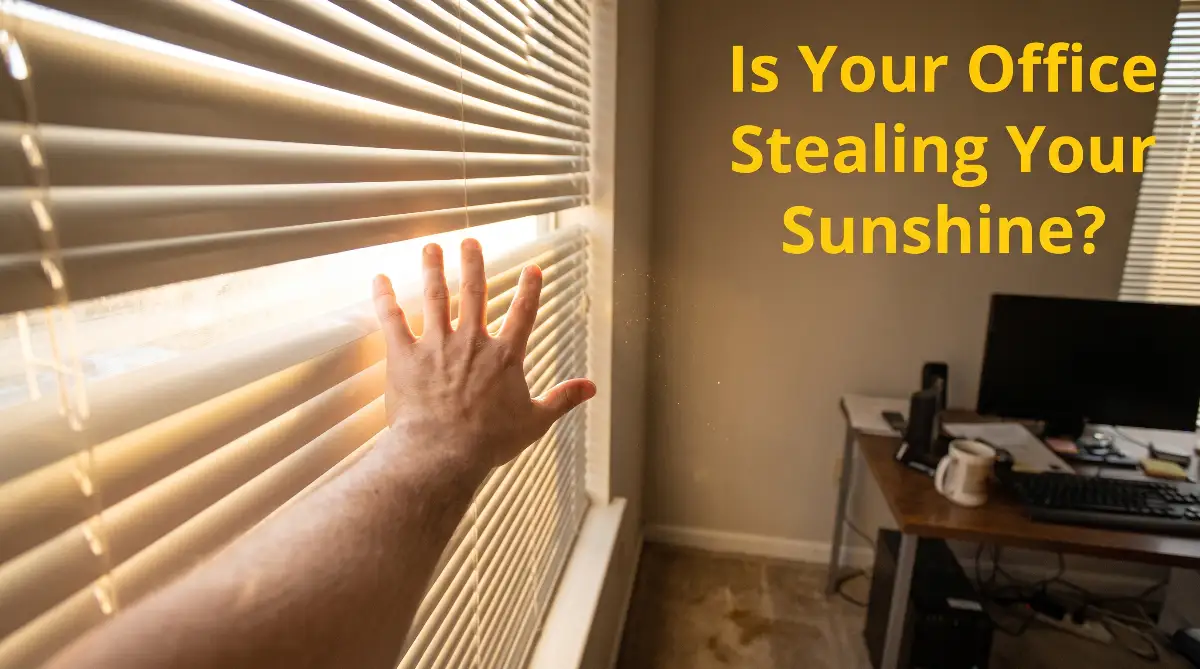
You might think you are safe because your desk is next to a window. You see the sun. You feel the heat on the glass.
But here is a truth that many people miss. Glass blocks the very rays you need. Specifically, it blocks UVB rays.
These rays are the ones that talk to your skin to make Vitamin D. While the light comes through, the "magic" stays outside. You are basically sitting in a light-filled cage.
This is a huge part of the modern indoor trap. We think we are getting enough light, but our skin is starving.
The Problem with the 9-to-5 Shadow
Our work culture is a major risk factor. Most of us work during the peak hours of the sun. The best time to get your "sun fix" is usually between 10 AM and 3 PM.
What are you doing during those hours? You are likely in a meeting or typing an email. By the time you walk out of the building, the sun is too low.
Low sun means the rays have to travel through more atmosphere. This makes them too weak to help your body produce what it needs.
We have traded our health for productivity. We are living in a permanent shadow. This "indoor-first" life is a new experiment for humans, and our bodies are failing the test.
Modern Clothes and the Coverage Issue
Even when we do go outside, we are often covered up. We wear long sleeves for professional looks. We wear hats for style.
In the past, humans had more skin exposed to the sky. Today, only our face and hands see the light. This is not enough surface area.
Think of your skin like a solar panel. If you cover 90% of a solar panel, you won't get much power. Your body works the same way.
Small patches of skin cannot keep up with the demand. Your liver and kidneys need this vitamin to keep your bones strong and your heart steady.
The Sunscreen Paradox in Daily Life
We have been told for years to wear sunscreen every single day. This is good for preventing wrinkles and skin issues.
However, it creates a new challenge for your inner health. Sunscreen with SPF 30 can reduce your Vitamin D production by over 95%.
If you put it on at 7 AM before you leave the house, you are effectively blocking your body’s ability to heal itself all day.
Most people don't realize they need a balance. We need protection, but we also need a few minutes of "raw" sun to keep our systems running. Finding that middle ground is where many modern people fail.
How Your Diet Fails to Fill the Gap
Many people say, "I'll just eat better." They think a salad or a glass of milk will fix the problem.
Sadly, it is very hard to get enough Vitamin D from food alone. Very few foods have it naturally. You would have to eat a massive amount of fatty fish every single day.
For a modern indoor person, the math just doesn't add up. Your diet is a support system, but it is not the primary source.
The sun was always meant to be the main provider. When we cut that off, we create a hole that food cannot easily plug.
The Hidden Impact of Air Quality and Pollution
In big cities, even when you go outside, the air might be working against you. High levels of pollution act like a filter in the sky.
Smog and dust particles can scatter and block UVB rays. This means even if you take a walk, you are getting less than you think.
If you live in a crowded city and spend most of your time in an apartment, your risk is doubled. You are fighting the building walls and the city air at the same time.
It is a silent struggle. You don't see the rays being blocked, but your body feels the absence.
Why Your Body Weight Matters Indoors
Modern life often leads to a more sitting-based lifestyle. This can lead to weight gain for many office workers.
There is a biological link here that many don't know. Vitamin D is fat-soluble. This means it gets stored in fat cells.
If you have a higher body weight, your fat cells might "trap" the vitamin. It stays in the fat and doesn't get into your blood where it is needed.
This means an indoor lifestyle that leads to less movement makes the deficiency even worse. It is a cycle that is hard to break without making a plan.
Understanding the Bone-Muscle Connection
Have you ever felt a dull ache in your legs after sitting all day? Or maybe your lower back feels weak.
This is often where the lack of sun shows up first. Your body uses Vitamin D to absorb calcium. Without it, your bones can't stay dense.
But it also affects your muscles. There are "receivers" for this vitamin all over your muscle tissue.
When you don't have enough, your muscles don't fire correctly. You feel weak or "clumsy." You might trip more often or feel like you have no grip strength.
The Mental Fog of the Modern Worker
One of the biggest complaints I hear is "brain fog." People feel like they are thinking through a thick mist.
They can't focus on their work. They forget simple names or dates. This is a classic sign of the indoor lifestyle taking a toll.
Your brain has many receptors for the "sunshine vitamin." It helps regulate the chemicals that make you feel sharp and alert.
When you live under artificial LED lights all day, your brain loses its natural rhythm. You are physically inside, but mentally, you are drifting away.
Simple Steps to Change Your Indoor Routine
You don't have to quit your job and live in the woods. You just need to be smart about your "light snacks."
Try a "Sun Break" instead of a coffee break. Instead of standing in the breakroom, step outside for ten minutes.
Even ten minutes of direct sun on your arms can make a world of difference. Do this at noon when the sun is highest.
Leave your phone inside. Look at the sky. Let your skin breathe. This small habit can change how you feel by the afternoon.
Rethink Your Commute for Better Health
If you drive to work in a covered car and park in a garage, you see zero sun.
Try parking a bit further away. Or, if you take the bus, get off one stop early. That five-minute walk is your body’s chance to recharge.
Think of it as a daily pill that costs nothing. You are giving your skin the signal to start working.
It is about finding the "cracks" in your indoor life and letting the light in.
The Importance of Testing Your Levels
You cannot fix what you don't measure. Many people guess they have a problem, but they never know for sure.
A simple blood test can tell you exactly where you stand. Most modern workers are shocked at how low their levels are.
Once you have a number, you can take action. You can talk to a professional about how much sun or support you need.
Knowledge is the first step to feeling like yourself again. Don't wait for a major health scare to check your status.
Creating a "Light-Friendly" Home
If you spend your evenings at home, look at your lighting. While artificial light isn't the same as the sun, some types are better than others.
Open your curtains as soon as you wake up. Let every bit of natural light hit your living space.
Even on a cloudy day, being near a window is better than being in a dark corner. Make your home a place that welcomes the outside world.
It helps your eyes and your mood stay in sync with the day.
The Role of Age and Skin Tone
It is important to know that everyone is different. If you have darker skin, you have more natural protection.
This is great for sun safety, but it means you need more time in the sun to make the same amount of Vitamin D.
As we get older, our skin also gets less efficient at making the vitamin. A 60-year-old needs more sun than a 20-year-old.
Recognizing your specific needs helps you build a plan that actually works for you. You are an individual, not a statistic.
The Cycle of Indoor Fatigue
The worst part of this deficiency is that it makes you want to stay inside even more. You feel tired, so you sit on the couch.
You have no energy, so you order food instead of going for a walk. This is the "Fatigue Trap."
Breaking this cycle requires a small push. Just five minutes of outside time can give you the energy for ten more.
Start small. Don't try to change your whole life in one day. Just open the door and step out. Your body will thank you almost instantly.
Final Thoughts for the Modern Resident
Living indoors is a reality for most of us. Our jobs and our hobbies are often tied to screens.
But we cannot ignore our biological roots. We are creatures of light. By making small, intentional changes, we can protect our health.
You deserve to feel strong. You deserve to have a clear mind and a happy heart. Don't let the walls of your office define your health.
Seek the light whenever you can. It is the simplest path to a better, more vibrant version of you.
Mastering Your Daily Light: Beyond the Basics
Many people think getting enough sunlight is just about standing outside for a minute. But if you want to truly fix the gap created by your indoor job, you need a smarter plan. It is not just about the light; it is about how your body handles that light.
One secret many experts talk about is the timing of your exposure. Most of us wait until the weekend to "catch up" on sun. However, your body cannot store sun rays like a battery for a whole week. It needs small, daily "doses" to keep your levels steady.
I often suggest trying a "Morning Light First" rule. When you wake up, open your blinds immediately. Even if it is cloudy, that natural light tells your brain to stop making sleep hormones. This simple act prepares your body to process the stronger midday sun better.
If you are a remote worker, you might find that how generative AI is changing the way developers write code has made you stay at your desk longer than ever. This extra screen time means you need to be even more intentional about stepping away. A quick walk around the block at 11 AM can do more for your health than an hour of sun at 5 PM.
Another advanced tip is to look at your magnesium levels. Many people don't know that Vitamin D cannot work without magnesium. If you are low on magnesium, the Vitamin D stays "asleep" in your blood. You might be getting sun, but your body isn't using it.
Think of magnesium as the key that turns on the engine. You can eat magnesium-rich foods like pumpkin seeds or spinach to help this process. When your gut is healthy, it absorbs these minerals much better. In fact, why your gut bacteria holds the secret to a stronger immune system shows how a healthy belly helps your whole body stay strong.
You should also think about the "surface area" of your skin. If you only show your face to the sun, you are only using a tiny part of your body's power. Try to wear a t-shirt or shorts when you are in your backyard. The more skin that sees the light, the faster your body can create what it needs.
Lastly, pay attention to the "UV Index" on your phone's weather app. If the index is below 3, you probably won't make much Vitamin D. When the index is between 3 and 7, that is your "golden window." Knowing this helps you stop wasting time in weak sun and focus on the times that actually matter.

The Traps That Keep Us Tired and Weak
It is very easy to fall into bad habits when you spend all day in an office or a modern home. One of the biggest mistakes is the "Window Glass Myth." I have seen people sit by a sunny window for hours thinking they are getting their daily dose.
As we mentioned before, glass filters out the UVB rays. You feel the heat, but you aren't getting the nutrients. According to research from the National Institutes of Health, sitting behind glass only provides warmth, not the biological benefits of the sun. It’s like eating a plastic apple; it looks right, but it gives you nothing.
Another common pitfall is the "All-or-Nothing" mindset. Some people spend all week indoors and then spend six hours in the sun on Saturday. This is actually dangerous and unhelpful. Your skin gets stressed, and your body can only process so much Vitamin D at once.
It is much better to get 15 minutes of sun every day than 100 minutes once a week. Think of it like watering a plant. If you give a plant a gallon of water once a month, it will die. It needs small amounts regularly to stay green and healthy.
Many people also rely too much on basic multivitamins. They think one small pill can replace the sun. But many of these pills have very low amounts that don't reach your blood effectively. If you don't get a blood test first, you are just guessing.
Taking too much without a doctor's advice can also be a mistake. It is a balance. If you are looking at your living situation, you might wonder is buying a home smarter than renting. While that is a money question, think about the light in your living space too. A home with poor natural light can actually hurt your long-term health more than a high rent.
We also tend to ignore the "Sunscreen Blanket." While skin safety is important, putting on heavy SPF before you even step outside for a 5-minute walk is a mistake. Your skin needs a tiny bit of "raw" time. Try to get 10 minutes of light before you put on your lotion. This gives your body a head start without risking a burn.
Lastly, don't ignore the signs of "Winter Blues." In colder months, we stay inside even more. We wear heavy coats and scarves. During these times, the risk of a deep deficiency is at its highest. If you feel sad or slow during the winter, it isn't just the cold weather; it is your body starving for light.
Your Roadmap to a Brighter Lifestyle
It is time to take back your health from the "indoor trap." You don't need a total life makeover to see results. You just need to make peace with the sun and understand its value.
Start tomorrow morning. Instead of scrolling on your phone in bed, go to the window. If you have a balcony or a porch, step outside for just two minutes. Let the fresh air and the early light hit your face. It is the best way to "reset" your internal clock.
If you work in a cubicle, set a timer on your computer. Every two hours, stand up and walk to a door that leads outside. Even if you just stand there for three minutes, it breaks the cycle of "indoor fog." Your brain will feel sharper, and your mood will lift.
Think of your body as a garden. You need soil (good food), water (hydration), and most importantly, light. Without all three, the garden will wilt. You have the power to change how you feel by simply changing where you stand.
I encourage you to talk to your doctor about a simple test. Knowing your "number" gives you a goal to reach. It turns a mystery into a plan. Once you see your levels go up, you will be amazed at how much energy you actually have.
You will notice that your back hurts less. You will find that you don't get as many headaches. You might even find that you sleep better than you have in years. All of this is possible just by respecting the natural relationship between humans and the sky.
Don't let the walls of modern life hold you back. The sun is free, it is powerful, and it is waiting for you right outside your door. Take that first step today. Your future self will be much happier, stronger, and more vibrant because you chose to let the light in.
A Simple Daily Checklist for Success
To make this easy, here is a small list you can follow every day:
- Morning: Open all curtains immediately after waking up.
- Midday: Spend at least 15 minutes outside between 11 AM and 2 PM.
- Work: Take one "light break" every afternoon to clear your head.
- Nutrition: Include some healthy fats in your lunch to help Vitamin D absorption.
- Environment: If possible, move your desk or chair closer to a source of natural light.
By following these small steps, you are building a shield against the risks of an indoor lifestyle. You are choosing health over convenience. And that is a choice that pays off every single day for the rest of your life.
![The Secret to Perfect Home Office Ergonomics [Step-by-Step Blueprint]](https://topic36.com/storage/uploads/blogs/1787565193_the-secret-to-perfect-home-office-ergonomics-step-by-step-blueprint.webp)