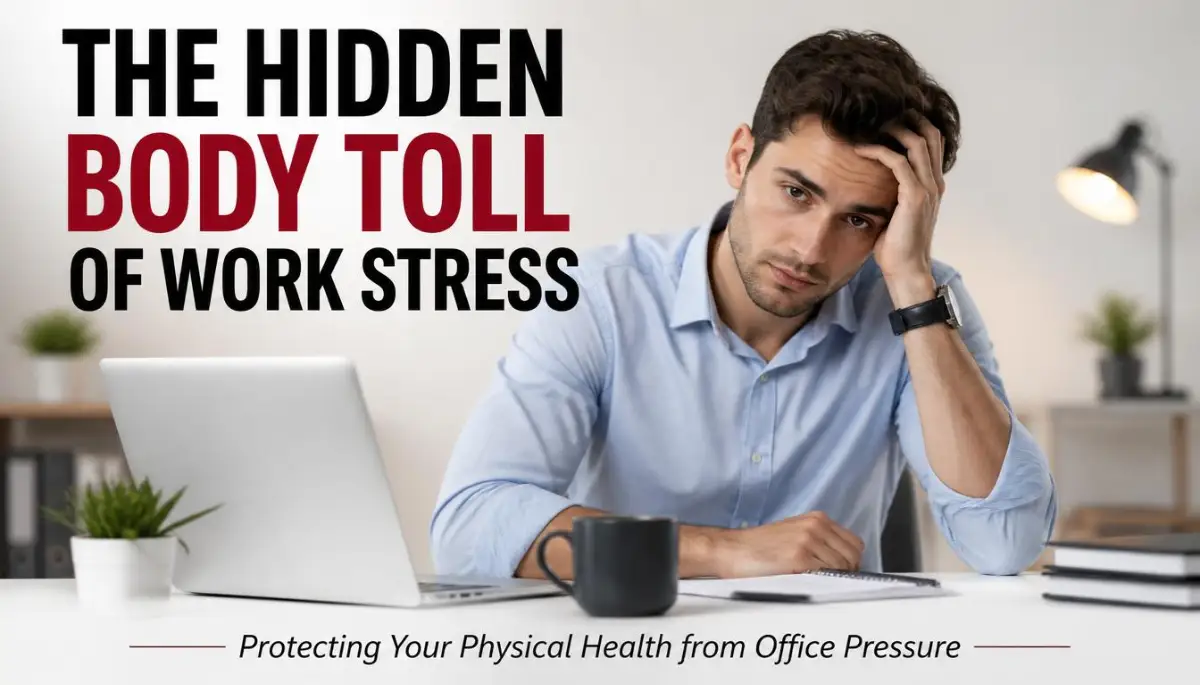
The Silent Toll: When Your Job Starts Eating Your Health Alive
You wake up on a Monday morning with a heavy feeling in your chest. It is not just the dread of a long meeting or a pile of emails.
Your neck feels like it is made of stone. Your stomach is already turning in knots before you even take your first sip of coffee.
Many of us tell ourselves that this is "just part of the job." We think that if we work harder or push through the pain, it will eventually go away.
But your body is trying to tell you something very important. It is sounding an alarm that your mind might be trying to ignore.
Chronic workplace stress is not just a mental state. It is a physical attack on your organs, your muscles, and your immune system.
I have seen so many talented people lose their spark because they thought they could outrun the pressure. They ignored the headaches and the back pain until they could no longer get out of bed.
Does your heart race every time your phone pings with a notification? Do you find yourself grinding your teeth while typing a simple report?
These are not just small annoyances. They are the ways your nervous system reacts to a constant state of threat in the office.
We are living in a time where the boundary between "home" and "work" has vanished. This means your body never truly gets the signal to relax and heal.
If you feel like you are drowning in deadlines, you are not alone. But you must understand that your health is the only thing you cannot replace.
The Biological Chain Reaction: How Mind Stress Becomes Body Pain
When you face a difficult boss or a tight deadline, your brain does not see a "work task." It sees a predator.
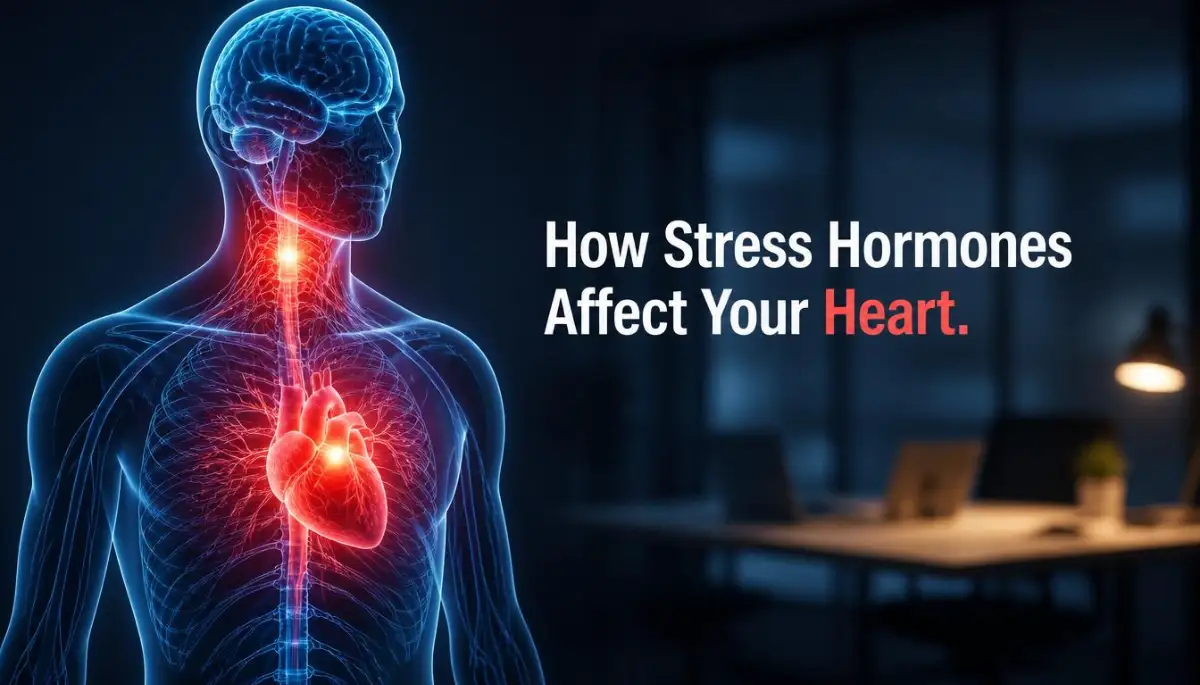
Your brain triggers the release of cortisol and adrenaline. These hormones are meant to help you run away from a lion, not sit in a cubicle for eight hours.
Because you are sitting still, these chemicals have nowhere to go. They stay in your blood, causing your heart to pump faster and your blood pressure to rise.
Over time, this constant high-pressure state damages your blood vessels. This is why long-term work stress is linked to a higher risk of heart problems.
The Muscle Tension Trap
Have you noticed how your shoulders seem to touch your ears by 3:00 PM? This is a natural defense mechanism.
Your body tenses up to protect itself from physical harm. Since the "harm" is actually a stressful spreadsheet, the tension never releases.
This leads to chronic tension headaches and lower back pain. Many people spend a lot of money on massages, but the pain returns because the stress is still there.
Your muscles stay in a state of "guarding." This drains your energy and makes you feel exhausted even if you have done no physical labor.
Why Your Gut Reacts to Your Boss
The connection between your brain and your stomach is very strong. Have you ever felt "sick to your stomach" before a big presentation?
Stress shuts down your regular digestion to save energy for "fighting." If you are stressed every day, your digestion is always struggling.
This can lead to issues like acid reflux, bloating, or even more serious gut conditions. Your body simply cannot process food properly when it is in survival mode.
Breaking the Cycle: Practical Ways to Protect Your Body
You do not have to quit your job to save your health. You just need to change how your body handles the pressure.
The goal is to teach your nervous system that it is safe. Small, frequent actions are better than one long vacation every year.
Step 1: The Power of Micro-Breaks
Most people think they need an hour-long break to feel better. In reality, your body benefits more from two-minute resets.
Every hour, stand up and walk away from your screen. Look at something far away to relax your eye muscles.
Take three deep breaths where your exhale is longer than your inhale. This simple act tells your brain to turn off the "fight or flight" mode.
It signals to your heart that there is no immediate danger. This lowers your heart rate and reduces the amount of cortisol in your blood.
Step 2: Setting Physical Boundaries
Your body needs a "transition zone" between work and rest. If you work from home, this is even more important.
Never work in the same place where you sleep. Your brain needs to associate your bed with rest, not with stress.
When you finish your work day, do something physical to "close" the stress loop. This could be a 10-minute walk or a quick stretching session.
This physical movement helps burn off the extra adrenaline sitting in your system. It tells your muscles that the "battle" is over for the day.
Step 3: Hydration and Brain Fog
Stress makes you lose water faster, and most office workers drink too much caffeine. Caffeine mimics the symptoms of stress by raising your heart rate.
Try to balance every cup of coffee with a large glass of water. This helps clear out stress hormones through your kidneys.
Dehydration makes brain fog worse. When you are hydrated, your brain can handle complex tasks with less effort.
This reduces the mental strain, which in turn reduces the physical stress on your body. It is a simple win for your health.
Myth vs. Reality: Workplace Health
The Role of Sleep in Healing Stress Damage
Your body does almost all of its repair work while you are asleep. Stress is the biggest enemy of high-quality rest.
When you are stressed, your body stays in a state of hyper-vigilance. You might sleep for eight hours but wake up feeling tired.
This is because your brain didn't enter the deep stages of sleep. Without deep sleep, your muscles stay tight and your brain cannot clear out toxins.
To fix this, stop looking at work emails at least two hours before bed. The blue light from your phone and the stress of a message keep your brain awake.
Try reading a physical book or listening to calm music. Give your body the chance to lower its temperature and prepare for healing.
Recognizing the Early Warning Signs
Many people wait until they have a major health crisis to change. You can be smarter than that by watching for early signs.
Are you getting more colds or infections than usual? Stress weakens your immune system, making it harder to fight off viruses.
Do you have a persistent skin rash or "stress hives"? Your skin is often the first place internal stress shows up.
Is your appetite changing? Some people stop eating when stressed, while others crave sugar for a quick energy boost.
These are all signals that your workload is taking a physical toll. Listen to these signs before they turn into something more permanent.
Pro Tip: The "Five-Sense" Reset
If you feel a panic attack or extreme stress coming on at your desk, try this. It is a grounding exercise that pulls your brain out of the stress loop.
- Notice 5 things you can see. (A pen, a window, a chair).
- Notice 4 things you can touch. (The fabric of your pants, the desk).
- Notice 3 things you can hear. (The AC hum, distant traffic).
- Notice 2 things you can smell. (Coffee, fresh air).
- Notice 1 thing you can taste. (The mint in your mouth).
This forces your brain to focus on the present moment. It breaks the cycle of worrying about the future or the past.
Final Thoughts for This Section
Your career is a marathon, not a sprint. If you burn out your body in the first few miles, you will not finish the race.
Understand that taking care of your physical health is not "lazy." It is a requirement for being a high-performing professional.
In the next part of this guide, we will look at more advanced ways to restructure your work life. We will talk about nutrition and long-term habits.
For now, take a deep breath. Your health matters more than any deadline. Stay tuned as we explore how to build a body that can handle anything.
Mastering Your Body’s Response to Daily Pressures
The first part of our journey focused on identifying how work pressure attacks your system. Now, we need to look at the advanced tools you can use to build a permanent shield for your health.
One of the most powerful secrets used by high-level performers is understanding Heart Rate Variability (HRV). This is not just about how fast your heart beats, but the timing between those beats.
When you are under constant stress, your heart rhythm becomes very rigid and predictable. A healthy body has a heart that reacts and changes every second.
You can improve this by using specialized breathing techniques like "Box Breathing." Inhale for four seconds, hold for four, exhale for four, and hold for four.
This simple pattern forces your nervous system to balance itself. It moves you from a state of panic to a state of "rest and digest."
Another expert tip involves the Vagus Nerve, which is the longest nerve in your body. It connects your brain directly to your heart and your gut.
When you stimulate this nerve, you send a direct "shut down" signal to your stress response. You can do this by splashing cold water on your face or even by humming a low tune.
These small physical hacks tell your brain that the "threat" at work is not a life-or-death situation. It allows your internal organs to function normally even when emails are piling up.
Understanding this connection is why your gut bacteria holds the secret to a stronger immune system. When your gut is healthy, your body produces more serotonin, which helps you stay calm under pressure.
Many people don't realize that 95% of your "feel-good" hormones are made in your stomach, not your brain. If work stress has ruined your digestion, you are literally losing your ability to feel happy.
Advanced health management also means looking at your Cortisol rhythm. This hormone should be high in the morning and low at night.
Stress flips this rhythm, making you feel tired in the morning and "wired" at midnight. To fix this, try to get 10 minutes of natural sunlight in your eyes within an hour of waking up.
This sets a biological timer in your brain. It ensures your body knows when to be active and when to start the healing process.
Also, consider your office environment. The blue light from your monitors can keep your stress levels high even after you leave.
Using blue-light-blocking glasses or "night mode" on your devices can help. This prevents your brain from thinking it is still noon when you are trying to relax at home.
By taking these small but advanced steps, you are not just "coping" with stress. You are training your body to be resilient and strong.

The Invisible Traps: Why Your Current Strategy Might Be Failing
Most people handle workplace pressure by trying to ignore it until they break. This "toughing it out" method is actually a form of Toxic Resilience.
You might think you are being a hero by working through a fever or a migraine. In reality, you are telling your body that its needs do not matter.
This leads to a complete shutdown of your immune system over time. Many people also fall into the trap of using "false relaxants."
Relying on alcohol or heavy comfort foods after a hard day doesn't actually lower your stress. These things cause internal inflammation, which adds even more physical strain to your heart and liver.
Another major mistake is the "Caffeine Loop." You drink coffee to fight the fatigue caused by stress, but the coffee raises your blood pressure even more.
This creates a cycle where your body never gets a chance to reach a neutral state. You are constantly "on," and your organs are paying the price in real-time.
Studies from major health institutions like Harvard Health Publishing show that this chronic state of "high alert" leads to permanent inflammation. This inflammation is the root cause of many chronic illnesses we see today.
People also make the mistake of thinking that modern tools will solve the problem automatically. For example, how generative AI is changing the way developers write code can reduce some tasks.
However, if you don't change your mindset, you will just fill that saved time with more stressful work. Technology is a tool, but it cannot fix a broken work-life boundary.
Ignoring the "micro-signals" is perhaps the most dangerous error of all. Small signs like a twitching eye, itchy skin, or a slightly faster pulse are warnings.
If you ignore these warnings, your body will eventually use a "sledgehammer" to get your attention. This often comes in the form of a heart attack, a stroke, or total burnout.
Don't wait for your body to give up on you before you start giving it what it needs. A healthy career cannot exist inside a sick body.
Moving Toward a Future of Strength and Balance
Taking care of yourself is the most professional thing you can do for your career. It shows that you are a person of high value who understands long-term success.
Start today by choosing one small thing to change in your daily routine. Maybe it is a three-minute walk or a commitment to drink more water instead of that fourth cup of coffee.
Remember that your worth is not tied to how much stress you can carry. It is tied to how well you manage your energy and your health.
We live in a world where everything moves fast, but your body still operates on ancient biological rules. You cannot cheat these rules, but you can learn to work with them.
Think about your future self. Do you want to be someone who has a great career but cannot enjoy it because of poor health?
Or do you want to be someone who is vibrant, energetic, and ready to face any challenge? The choice is made in the small decisions you make every single hour.
You have the power to rebuild your physical health even if work feels overwhelming right now. It starts with a single deep breath and the courage to say "my health comes first."
If you are facing other pressures, like figuring out how to rebuild your credit score after a major financial disaster, remember the same rules apply. Small, consistent steps lead to massive long-term healing.
You are the pilot of your own life and the guardian of your own body. Treat yourself with the same kindness and respect you would give to a dear friend.
As you move forward, keep your head high and your boundaries strong. You are building a life that is not just productive, but truly worth living.
Your physical health is the foundation of everything you love. Protect it, nurture it, and watch how your whole life transforms for the better.
![The Secret to Perfect Home Office Ergonomics [Step-by-Step Blueprint]](https://topic36.com/storage/uploads/blogs/1787565193_the-secret-to-perfect-home-office-ergonomics-step-by-step-blueprint.webp)