
Why Does Saving Money Feel Like an Impossible Task?
Have you ever looked at your bank account at the end of the month and felt a sudden pit in your stomach? You started the month with a plan. You promised yourself you would put away a decent amount.
But then, life happened. A couple of dinners out, a random sale at your favorite store, and a few small "treat yourself" moments later, the money is gone. It feels like your bank balance has a leak that you just can't plug.
This cycle is more than just a lack of math skills. It is a deep, emotional struggle that leaves many of us feeling guilty and stressed. You might even feel like you are failing at being an adult.
I know that feeling of staring at a screen, wondering where the last hundred dollars went. It is frustrating and can keep you up at night. You want security, but your brain seems to want something else entirely.
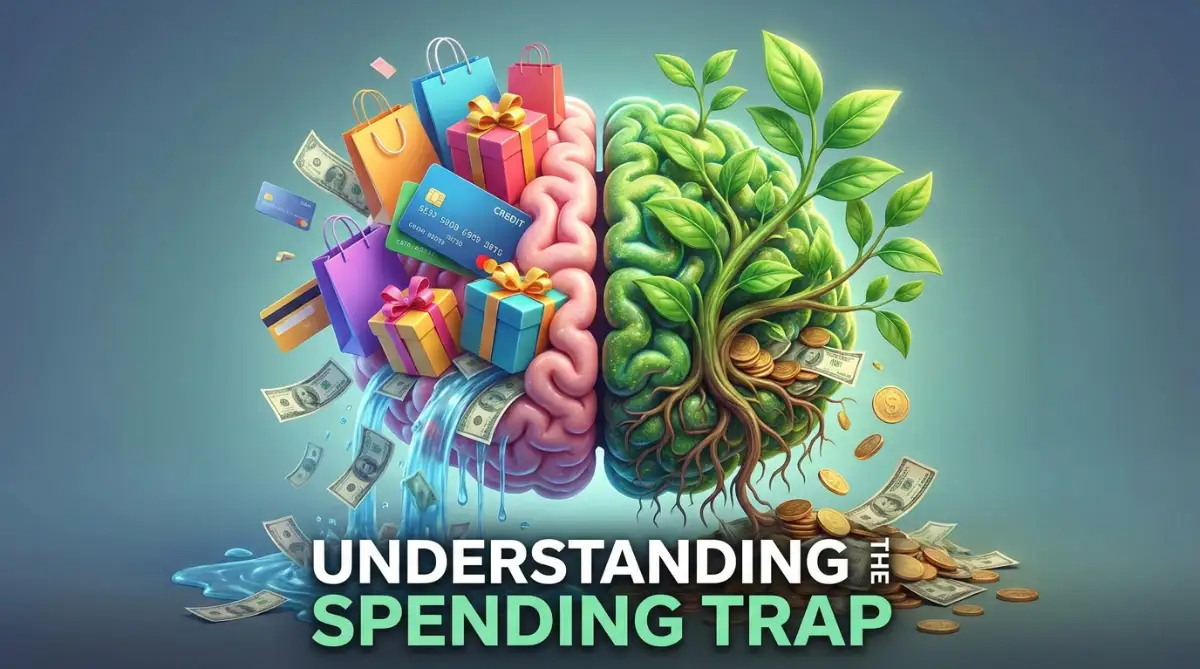
The truth is, your brain is often wired to work against your long-term goals. We are built for survival in the moment, not for planning twenty years ahead. This creates a constant war between your "present self" and your "future self."
When you fail to save, you aren't just losing money. You are losing peace of mind. You are losing the ability to handle emergencies without panic.
We need to stop blaming our math and start looking at our minds. It is time to understand why your brain keeps hitting the "spend" button when you know you should hit "save."
The Hidden Science of Your Empty Bank Account
To fix your savings, you have to understand the "glitches" in human thinking. These are not character flaws. They are psychological patterns that almost everyone deals with.
The Trap of "Right Now" (Present Bias)
Our ancestors did not have savings accounts. They had to eat whatever they found immediately to survive. This created something scientists call Present Bias.
This means we value small rewards right now much more than big rewards later. Your brain sees a $50 steak today as more valuable than $5,000 in a retirement fund years from now.
It is hard for our minds to connect with a version of ourselves that doesn't exist yet. To your brain, your "future self" feels like a complete stranger. And why would you give your hard-earned money to a stranger?
Why Losing Money Hurts More Than Saving Helps
There is a concept in psychology called Loss Aversion. Studies show that the pain of losing $100 is twice as strong as the joy of finding $100.
When you put money into a savings account, your brain sometimes views it as a "loss." You feel like you are losing the ability to buy something you want.
Even though the money is still yours, you can't touch it or use it for fun. This creates a feeling of deprivation. To avoid that "pain," we spend the money instead to get a quick hit of dopamine.
The "Keeping Up" Mirror
We are social creatures. We look at what our friends and neighbors are doing to see if we are doing okay. This is often called Social Proof.
If everyone around you is driving a new car or going on fancy vacations, your brain thinks you should too. You spend money you don't have to impress people you might not even like.
Social media has made this much worse. You see the "highlight reels" of others and feel like you are falling behind. This leads to "status spending," which kills your ability to save consistently.
Practical Steps to Rewire Your Brain for Wealth
Knowing the problem is only half the battle. You need a plan to outsmart your own biology. Here are some simple, effective ways to start saving without feeling miserable.
Make Saving Invisible with Automation
Since we know our "present self" is impulsive, we need to take the choice away. Automation is the most powerful tool in your financial kit.
Set up your bank account to move a small amount of money to savings the very minute you get paid. If you never see the money in your checking account, you won't miss it.
This bypasses your willpower entirely. You don't have to "decide" to save every month. The decision is already made for you.
The 72-Hour Rule for Impulse Control
Most of our bad spending happens in the heat of the moment. You see something, you want it, and you buy it. This is a purely emotional reaction.
To break this, use the 72-Hour Rule. If you see something you want to buy that isn't a necessity, you must wait three full days before buying it.
During those 72 hours, the emotional "high" of the purchase will fade. You will start to think logically again. Most of the time, you will realize you don't actually need the item.
Give Your Savings a Name and a Face
Remember how I said your "future self" feels like a stranger? You can fix that by making your goals more real.
Don't just have a "Savings Account." That is boring and abstract. Instead, name your accounts based on what they are for.
Call one "My Dream Home Fund" or "Peace of Mind Emergency Fund." When you give money a purpose, it becomes much harder to spend it on something silly.
You could even put a picture of your goal on your fridge or as your phone wallpaper. This keeps the "big prize" at the front of your mind.
The "Anti-Budget" Strategy
Many people hate budgeting because it feels like a diet. It feels like you are constantly saying "no" to yourself.
Try the Anti-Budget instead. Figure out your total savings goal for the month. Take that out first.
Then, spend whatever is left however you want. As long as your savings are tucked away, you don't have to feel guilty about the rest. This removes the mental stress of tracking every single penny.
Dealing with Decision Fatigue
We make thousands of choices every day. By the time you finish work, your brain is tired. This is called Decision Fatigue.
When your brain is tired, you are much more likely to make bad financial choices. This is why you might order expensive takeout instead of cooking.
To fight this, try to make your big financial decisions on weekend mornings when you are fresh. Avoid shopping or looking at sales late at night.
Your willpower is like a battery. It drains throughout the day. Protect your savings by not testing your willpower when your battery is low.
The Power of Small Wins
Many people stop saving because they think they can't save enough to matter. They think, "If I can only save $20, why bother?"
This is a dangerous mindset. Saving is a habit, not just a number.
Even saving $5 a week builds the "saving muscle" in your brain. Once that habit is strong, increasing the amount becomes easy.
Celebrate those small wins. Watch that balance grow from $10 to $50 to $100. That progress creates a positive feedback loop in your brain.
Using "Mental Accounting" to Your Advantage
We naturally put money into different "buckets" in our heads. We treat a $50 tax refund differently than $50 we earned from working overtime.
Use this to your advantage. Whenever you get "extra" money—like a gift or a small bonus—put it directly into savings.
Since your brain already sees it as "extra," you won't feel the same pain of loss that you feel with your regular paycheck.
The "Why" Behind the Buy
Before you swipe your card, ask yourself one simple question: "Will this item make my life better a month from now?"
Often, the answer is no. Most things we buy give us a few minutes of joy, followed by hours of clutter or regret.
By pausing to ask "why," you force your logical brain to take over from your emotional brain. This simple pause can save you thousands of dollars over a year.
Building a Support System
It is hard to save if your friends are always asking you to go to expensive brunches. You don't have to get new friends, but you should be honest with them.
Tell them you are working on a savings goal. You might be surprised to find that they feel the same way.
Instead of going out for dinner, suggest a potluck or a walk in the park. Surrounding yourself with people who respect your goals makes the process much easier.
Saving money isn't just about math. It is about knowing yourself. It is about building a life that feels good, not just one that looks good to others.
By understanding these psychological barriers, you can finally stop fighting yourself. You can start building the security and freedom you deserve.
Master the Art of Saving: Advanced Psychological Hacks
Now that we understand why our brains struggle with money, it is time to look at the tools the pros use. These are not just basic tips. These are ways to change how you think about every dollar you earn.
Saving money is more about identity than it is about math. If you see yourself as a "spender," you will always find a reason to spend. You need to flip the switch in your mind.
Start telling yourself, "I am the kind of person who always has a financial cushion." This small shift changes your choices. When you are a "saver," you don't feel like you are missing out when you skip a sale.
Creating Friction in Your Spending Path
One of the best ways to stop bad habits is to make them hard to do. In psychology, this is called Environmental Design. If you want to eat less junk food, you don't keep it in the house.
The same rule applies to your money. Remove your saved credit card info from your favorite online stores. Making yourself type in those 16 digits every time gives your brain a chance to cool down.
You should also move your savings account to a completely different bank than your checking account. If you have to wait two days for a transfer to go through, you are much less likely to spend that money on a whim.
The Magic of Temptation Bundling
Sometimes, we need a little bribe to do the right thing. Temptation Bundling is a trick where you only let yourself do something you love while doing something you usually avoid.
For example, you could say you are only allowed to watch your favorite Netflix show while you are reviewing your weekly budget. Or, you only buy that fancy coffee if you move $10 into your "Emergency Fund" at the same time.
This links the "pain" of saving with the "pleasure" of an activity you enjoy. Over time, your brain starts to look forward to the saving process because it knows a reward is coming.
Visualizing Your Future Self
As I mentioned before, your brain treats your future self like a stranger. You can bridge this gap by spending five minutes a day imagining your life in ten years.
Think about the house you want to live in or the stress-free mornings you want to have. The more real your future feels, the easier it is to save for it.
If you are currently struggling because of past mistakes, don't lose heart. You can learn how to rebuild your credit score after a major financial disaster and start fresh with these new mental tools.
The 1% Growth Strategy
Many people fail because they try to change everything at once. They go from saving nothing to trying to save 30% of their income. This almost always leads to burnout.
Instead, try the 1% Rule. Increase your savings by just 1% every single month. You won't notice the difference in your daily life, but the math adds up quickly.
In one year, you will be saving 12% more than you are now. This slow and steady approach is much more likely to stick because it doesn't trigger your brain's "panic mode."

Heartbreaking Mistakes That Keep People Broke
Even with the best plan, there are hidden traps that can pull you back into the cycle of debt. These aren't just errors; they are emotional pitfalls that can ruin your progress.
Falling for the "Sale" Trap
Retailers are experts at psychological warfare. They use bright red signs and "Limited Time Only" stickers to make you feel like you are losing money by not buying.
Remember: You do not save money by spending it on a sale. If a $100 item is on sale for $70, you didn't save $30. You spent $70.
If you weren't planning to buy that item anyway, that $70 is a total loss. Don't let a "good deal" trick you into sabotaging your long-term freedom.
The Danger of Lifestyle Creep
As people earn more money, they usually start spending more. This is known as Lifestyle Creep. You get a raise, and suddenly you feel like you "need" a better car or a bigger apartment.
This is the number one reason why even high-earners can live paycheck to paycheck. They are running on a treadmill that keeps getting faster.
Before you commit to a big new expense, ask yourself if it really adds value to your life. For instance, many people wonder is buying a home smarter than renting when they see their income go up.
Always look at the hard facts before making a choice that ties up your cash for years. Sometimes, staying in a smaller place and investing the difference is the real path to wealth.
The "All or Nothing" Mindset
Have you ever had a "bad" spending day and then decided to spend even more because the day was already "ruined"? This is like popping the other three tires on your car just because you got one flat.
One mistake should not lead to a week of bad choices. Forgive yourself quickly and get back on track immediately.
According to research from the American Psychological Association, stress is one of the leading causes of poor financial decisions. When you feel guilty, you are more likely to spend more money to cope with that guilt.
Hiding from the Numbers (The Ostrich Effect)
When things get tight, it is tempting to stop checking your bank balance altogether. You stick your head in the sand like an ostrich and hope the problem goes away.
This only makes the anxiety worse. Information is power. Even if the numbers are bad, knowing them allows you to create a plan.
Checking your accounts daily takes away the "scary" power that money has over you. It turns a big, emotional monster into a simple set of data points that you can manage.
Your Roadmap to a Stress-Free Financial Life
You have the power to change your financial story starting right now. It doesn't matter how much you have in the bank today. What matters is the direction you are moving in.
The One-Week Cash Challenge
If you want to reset your brain, try using only cash for one week. Research shows that spending physical cash activates pain receptors in the brain that credit cards do not.
When you see those twenty-dollar bills leaving your wallet, you feel the "loss" more deeply. This is a great way to "shock" your system and become aware of where your money is going.
Audit Your Subscriptions
We often lose small amounts of money every month to things we don't even use. A $10 app here and a $15 streaming service there can add up to hundreds of dollars a year.
Take 20 minutes this weekend to look through your bank statements. Cancel anything you haven't used in the last 30 days. It is one of the easiest "wins" you can get.
Focus on the "Big Three"
While skipping a latte is fine, the biggest wins come from managing your largest expenses: Housing, Transportation, and Food.
If you can find a way to save $200 on rent or $100 on groceries, it has a much bigger impact than saving $5 on a coffee. Look for the big levers first.
A Final Word of Encouragement
You are not your bank account. Your worth is not defined by how much you save. However, having savings gives you the freedom to live life on your own terms.
It gives you the power to say "no" to a job you hate or "yes" to an adventure you love. Saving is not about restriction; it is about buying your future freedom.
Start small. Be kind to yourself when you mess up. Keep your eyes on the person you want to become.
You have all the psychological tools you need to succeed. Now, take the first step. Open that savings account, set the automation, and watch your new life begin.
![The Secret Truth Behind Student Loan Forgiveness [Step-by-Step]](https://topic36.com/storage/uploads/blogs/1791388180_LVR3XS4A.webp)

![The Ultimate Blueprint to Fix a Denied Loan Application [Step-by-Step]](https://topic36.com/storage/uploads/blogs/1788883415_the-ultimate-blueprint-to-fix-a-denied-loan-application-step-by-step.webp)