The Hidden Weight of a Cluttered Space: A Personal Confession
I remember staring at my bedroom closet, feeling completely paralyzed and exhausted. Clothes were spilling out of every single drawer, yet I somehow had absolutely nothing to wear.
My heart would race with intense anxiety every time I opened that bedroom door. The mess was a constant, loud reminder of things I had failed to manage.
I spent my entire weekends cleaning, reorganizing, and buying expensive plastic storage bins. I thought better storage was the magic answer to all my problems.
But by Wednesday, the chaotic mess was magically back, totally mocking my hard efforts.
I felt like a complete failure in my own home, constantly drowning in stuff I barely even used. It felt like my belongings were silently controlling my life and draining my energy.
Does this exhausting cycle sound familiar to you? You are definitely not alone in this everyday struggle.
Millions of people wake up every single morning feeling overwhelmed before they even step out of bed. A messy room creates a messy mind, making it incredibly hard to focus on the things you actually love.
We hold onto old clothes hoping we will fit into them again, or keep unwanted gifts out of pure guilt. This emotional baggage slowly turns our safe spaces into stressful storage units.
The worst part is the constant, nagging feeling that you should be cleaning instead of relaxing. You cannot fully enjoy a movie night with your family when a pile of unfolded laundry is staring right at you from the corner of the room.
Your home should be your personal sanctuary, a quiet place where you can recharge after a long day. Instead, for many of us, it becomes a second full-time job that pays zero dollars and causes endless frustration.
Breaking the Cycle: Why Traditional Cleaning Always Fails
Before we talk about the real solution, we need to understand why our past attempts have failed. Traditional cleaning usually focuses on finding new places to hide our old junk.
We buy fancy boxes, over-door hangers, and huge plastic bins. We spend hours playing Tetris with our belongings, stuffing things into closets until the doors barely close.
Organizing clutter is just hiding the problem, not solving it. When you just shift piles from the bedroom to the garage, you are only delaying the inevitable mess.
Eventually, the boxes overflow, the closet doors burst open, and you are right back exactly where you started. You end up wasting money on storage solutions for items you do not even need or want anymore.
This is exactly why we need a complete mindset shift, not just another trip to the container store. We have to address the root cause of the mess, which is our emotional attachment to physical objects.
The Realization That Changes Everything
The true secret to a permanently tidy space has nothing to do with fancy storage hacks. It has everything to do with learning how to let go of things with gratitude.
When you change your relationship with your belongings, your entire environment shifts. You stop managing items and start curating your ideal lifestyle.
The Core Philosophy: Designing Your Dream Life
To truly transform your living space, you must start with a very clear vision. You cannot successfully tidy up if you do not know what kind of life you are trying to build.
Close your eyes and imagine walking into your home after a very stressful day at work. What does the air feel like? What do you see on the counters?
Maybe you want a calm, minimal space where you can practice yoga in the mornings. Or perhaps you want a cozy, organized living room where you can host friends without feeling embarrassed.
Write this vision down on a piece of paper. Be as incredibly specific and detailed as possible about your dream lifestyle.
When the organizing process gets physically and emotionally tough, this vision will be your motivation to keep going. It reminds you that you are not just throwing things away; you are making room for your future self.
Step 1: The Magic of Decluttering by Category, Not Room
This is the biggest mistake most people make when they decide to clean their house. They say, "Today, I will clean the bedroom," or "I will tackle the kitchen this weekend."
Cleaning by location is a guaranteed way to fail because our belongings are scattered everywhere. You might have coats in the hallway, the bedroom closet, and the car trunk.
If you only clean the bedroom closet, you never get a true sense of exactly how many coats you own. You will just keep shuffling the same items from room to room for the rest of your life.
Instead, you must gather every single item of one specific category in one place.
The Mountain of Reality
Let us start with clothing, which is usually the easiest category for people to process. You need to take every single piece of clothing you own and pile it onto your bed.
Yes, fetch the coats from the hallway, the gym clothes from the car, and the out-of-season clothes from the attic. Build a massive mountain of fabric right in the middle of your room.
Seeing the sheer volume of things you own all at once is a very powerful shock to the system. Most people are completely horrified to realize they own forty t-shirts or twenty pairs of jeans.
This "shock therapy" is highly intentional and deeply necessary. It forces you to confront your buying habits and breaks the illusion that you "have nothing to wear."
Step 2: The Art of the Joy Check
Now comes the most famous and highly misunderstood part of this entire method. You must pick up each item, one by one, and hold it firmly in your hands.
You cannot just look at a shirt on a hanger and say, "Yes, I will keep that." You must physically touch the item to feel your body's natural, immediate reaction to it.
Ask yourself one simple question: Does this item spark joy?
Does it make you feel confident, happy, and excited to wear it? If the answer is a clear, enthusiastic yes, you keep it.
If it brings up feelings of guilt, sadness, or indifference, it is time to let it go.
I used to hold onto expensive jeans that were three sizes too small, hoping I would fit into them again someday. I finally realized that keeping them was only making me feel terrible about my current body every single morning. Letting them go felt like a massive weight lifting off my chest!
Dealing with the Guilt of Letting Go
Many people struggle with throwing away items that were expensive or given as gifts. We feel like we are throwing away the person's love or wasting our hard-earned money.
You have to realize that the true purpose of a gift is the joy of giving and receiving in that exact moment. Once the gift is opened and appreciated, it has fully served its intended purpose.
You do not have to keep an ugly sweater forever just because your aunt bought it for you.
For items you bought but never used, their purpose was simply to teach you what you do not like. Thank the item for the lesson it taught you, and confidently place it in the donation bag.
Saying "thank you" to an inanimate object might feel silly at first. But this simple act of gratitude completely removes the guilt of getting rid of things.
Step 3: Mastering the Storage System
Once you have finally discarded everything that no longer serves you, it is time to put the remaining items away. The golden rule here is that every single item must have a specific, designated home.
Clutter happens when items are left out because they have nowhere to go. If your keys, mail, and bags have a fixed spot, your counters will always remain perfectly clean.
Visibility is the key to maintaining your newly organized space. If you cannot easily see an item, you will completely forget that you own it.
The Game-Changing Folding Technique
Most of us grew up stacking our shirts flat on top of each other in tall, wobbly piles. When you want the shirt at the very bottom, you pull it out and ruin the entire stack.
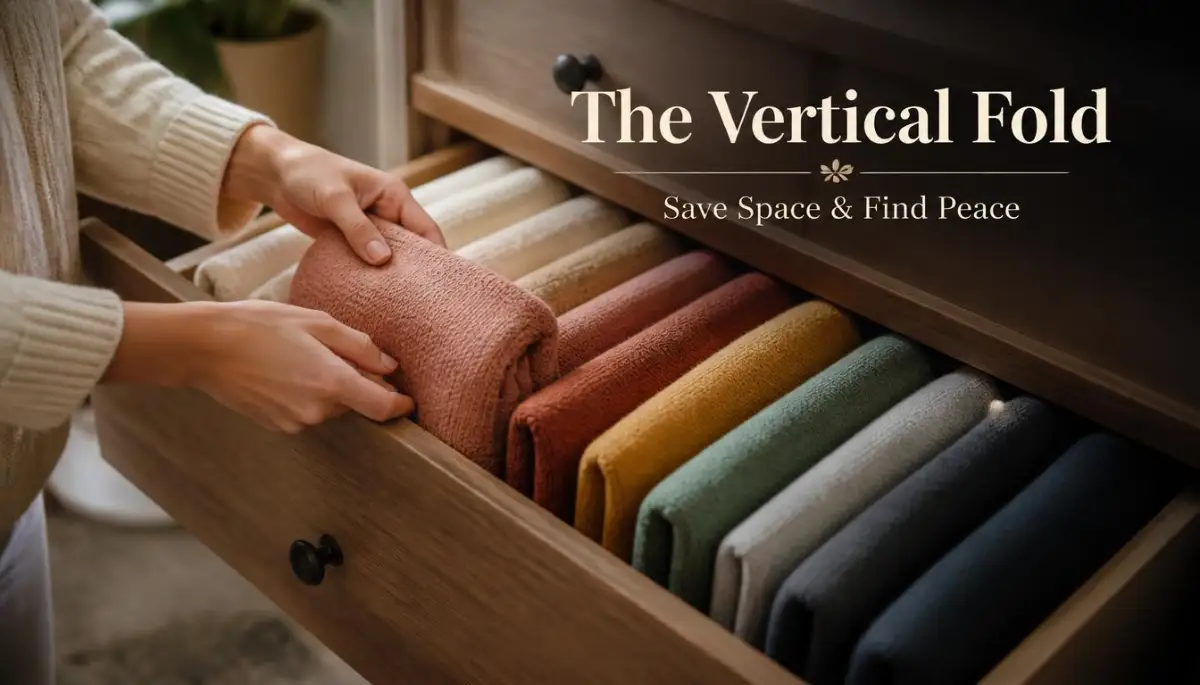
Instead, you need to learn how to fold your clothes so they stand upright on their own. This allows you to store them vertically in your drawers, just like the spines of books on a shelf.
When you open your drawer, you should be able to see every single piece of clothing at a single glance. It saves a massive amount of space and makes getting dressed in the morning incredibly fun.
Want to see this famous space-saving technique in action? Watch this quick, step-by-step visual breakdown below to master the perfect fold right now.
Treating Your Closet Like a Boutique
Hang your remaining clothes so they rise from left to right. This means placing your longest, darkest, and heaviest items on the far left side.
As you move to the right, the items should get lighter in color and shorter in length. This simple visual trick creates an uplifting, positive feeling every time you open your closet doors.
Your closet should look and feel like a high-end luxury boutique, filled only with your absolute favorite items.
Myth vs Reality: Breaking Down the Misconceptions
People often misunderstand the core purpose of a deep home organization journey. Let us clear up some common myths that might be holding you back from starting.
Myth: You have to throw almost everything away and live in an empty room.
Reality: You can keep a thousand items if every single one of them genuinely makes you happy. It is about keeping what you love, not just focusing on what to discard.
Myth: The process is quick and can be done in a single lazy afternoon.
Reality: A proper, deep organization of your entire home is a massive event that can take several weeks or months. It is a one-time marathon, not a quick daily sprint.
Myth: You need to buy matching, expensive storage containers for everything to look good.
Reality: Shoeboxes and sturdy apple boxes are often the absolute best storage tools. You likely already have everything you need right inside your home.
A Quick Comparison
To understand why this mindset shift works so well, look at the difference in approach:
Step 4: Tackling the Books and Papers
Once you conquer your clothing, you move on to books. This is where things get quite difficult for the avid readers among us.
Take every single book off your shelves and pile them on the floor. Tap them lightly to "wake them up," as they have likely been sitting untouched for years.
Do not start reading the books while you are sorting them. Reading totally clouds your judgment and slows down your momentum completely.
Just hold the book and ask if having it on your shelf brings you happiness. Keep the books that belong in your personal hall of fame, and donate the rest to someone who needs them.
The Nightmare of Random Papers
Papers are the absolute worst type of clutter because they hold zero emotional value but cause massive anxiety. Old bills, manuals, expired coupons, and credit card offers pile up everywhere.
The rule for papers is incredibly strict and wonderfully simple: Dispose of almost all of them.
Unless a paper is currently in use, needed for a limited time (like a warranty), or must be kept indefinitely (like a birth certificate), throw it out.
Create one single box or folder for "pending" papers that need your immediate action. Once you pay the bill or reply to the letter, get rid of the paper immediately.
Digitalize as much as you possibly can. You can easily find the manual for your coffee maker online; you do not need the physical booklet taking up drawer space.
The Psychological Shift of Taking Control
As you progress through these categories, something magical starts to happen inside your brain. You begin to trust your own decision-making skills on a much deeper level.
You learn how to identify exactly what you value in life and what is just background noise. This newfound clarity often spills over into your career, relationships, and personal goals.
People who successfully complete this major tidying festival often report losing weight, changing bad jobs, or ending toxic relationships. When you take complete control of your physical environment, you take control of your entire life.
You stop living in the past (holding onto old memories) or fearing the future (keeping items "just in case"). You finally start living happily and fully in the present moment.
Your home becomes a highly supportive environment that pushes you toward your goals, rather than an anchor holding you back
Advanced Secrets to Keeping Your Space Spotless Forever
Once you have completed your massive sorting festival, the real challenge begins. You might be wondering how on earth you are supposed to keep your home looking this perfect every single day.
The good news is that maintaining a joy-sparking home is actually quite simple once the heavy lifting is done. You no longer have to spend your weekends deep cleaning or reorganizing the same messy drawers.
But to protect your newly organized space, you must develop a strong "gatekeeper" mindset. You have to be incredibly strict about what new items you allow to cross your front door.
We live in a world that constantly pushes us to buy more things we do not actually need. It is completely normal to feel tempted by massive sales or flashy online advertisements.
Before making any new purchase, pause and ask yourself if this new item will truly add long-term happiness to your life. If you just buy things out of boredom, your house will quickly fill up with useless clutter again.
The "One In, One Out" Philosophy
To ensure your closets and drawers never overflow again, adopt a very simple household rule. Every time you bring a new item into your home, an older item must leave.
If you buy a beautiful new winter coat, you must donate an old jacket that no longer serves you. This strategy completely stops the silent accumulation of stuff that slowly takes over our living spaces.
It also forces you to think deeply before you spend your hard-earned money. If you are not willing to part with something old, you probably do not love the new item enough to buy it.
This mindful approach to shopping has been proven to significantly reduce impulsive buying behaviors. In fact, understanding the psychological triggers of consumerism helps us build healthier spending habits over time.
Mastering the Daily Reset Routine
An organized home does not mean a home that never gets messy. Life happens, children play, and we sometimes leave our jackets on the back of a dining chair after a long day.
The secret to long-term success is creating a "daily reset" routine that takes less than ten minutes. Because every single item now has a specific home, putting things away requires almost zero mental effort.
Before you go to bed, simply walk through your living room and return any stray items to their proper places. Put the remote control in its basket, hang up your coat, and put your reading glasses in their case.
When you wake up the next morning, you will walk into a perfectly calm and clean environment. A tidy room naturally invites the sunshine in, allowing you to easily maximize natural light and make your space look huge.
Starting your morning in a peaceful space sets a highly positive and productive tone for the rest of your entire day.
Tackling the Ultimate Boss: Sentimental Items
Most organizing methods fail because they ask you to sort through family photos and childhood memories on the very first day. This is a massive mistake that will drain your energy instantly.
Sentimental items are the absolute hardest things to let go of because they are tied closely to our personal identities. You must save this category for the very end of your tidying journey.
By the time you reach your boxes of old letters and photographs, your decision-making skills will be incredibly sharp. You will easily be able to tell the difference between a truly precious memory and just an old piece of paper.
Remember, your beautiful memories live inside your heart and mind, not inside a dusty cardboard box.
If you have a special concert ticket or a beautiful postcard, do not just leave it in a dark drawer. Frame it, display it proudly, and let it bring you genuine happiness every time you walk past it.
The Silent Traps That Destroy Your Hard Work
Even with the best intentions, it is dangerously easy to fall back into our old, messy habits. The journey to a permanently clean home is filled with hidden emotional traps that can totally derail your progress.
Many people start their decluttering journey with intense motivation but completely burn out within the first week. Understanding these common pitfalls will help you stay focused and protect your mental peace.
Let us look closely at the biggest mistakes that ruin our organizing efforts and how you can smartly avoid them.
The "Maybe" Box Illusion
One of the most dangerous things you can do while sorting your belongings is creating a "maybe" pile. When we feel overwhelmed by a tough decision, our brain naturally looks for an easy way out.
We tell ourselves we will put the item in a box and decide what to do with it later. This is a complete lie we tell ourselves to avoid feeling guilty.
A "maybe" box is just a temporary hiding spot for delayed decisions. It sits in the corner of your room, gathering heavy dust and silently causing you stress.
You must be brave enough to make a final decision in the present moment. Either the item sparks absolute joy and you keep it, or it does not, and you let it go with a grateful heart.
Organizing Other People’s Things
When you discover the magic of a clean space, you will naturally want your family members to experience it too. You might start looking at your partner's messy closet or your children's overflowing toy bins with heavy frustration.
Do not ever throw away someone else's belongings without their clear permission. This breaks their trust completely and often makes them hold onto their clutter even tighter out of fear.
Instead, you must focus entirely on your own belongings and your own personal space. When your family sees how happy, calm, and relaxed you are, they will naturally become curious about your new lifestyle.
Lead quietly by example, rather than forcing your new habits onto the people you love. Just like building products that people actually love, creating a harmonious home system requires patience, understanding, and solving the real needs of the user.
Buying Storage Bins Before Sorting
This is perhaps the most common and financially damaging mistake people make when trying to clean up. We get excited, drive to the store, and buy hundreds of dollars worth of matching plastic bins and fancy baskets.
We try to force our chaotic mess to fit into these beautiful new containers. But buying storage first is like trying to put a roof on a house before you have even poured the concrete foundation.
You cannot possibly know what kind of storage you need until you know exactly what you are keeping. Once you discard the things you no longer need, you will be shocked to find you already have plenty of storage space.
Instead of buying new plastic, look around your house for empty shoeboxes or sturdy gift boxes. This reduces unnecessary spending and helps combat the massive environmental impact of household waste that ends up in landfills.
Fixing the Symptoms Instead of the Root Cause
When we just hide our mess in the closet, we are only treating the symptoms of a disorganized life. We ignore the emotional reasons why we buy too much and hold onto things we dislike.
This is very similar to how we try to fix a slow internet connection by just restarting the router, instead of finding the real interference blocking our signal.
If you do not address your emotional attachment to physical objects, your clutter will always come back to haunt you. You have to be deeply honest with yourself about why you are afraid to let things go.
Usually, we hold onto things because of a strong attachment to the past or a deep fear of the future. Recognizing this fear is the first major step to finally breaking totally free from it.
Common Questions About Mindful Decluttering
As you dive deeper into this transformative process, you will naturally have some very specific questions. Let us answer some of the most common concerns people have when they start organizing their homes.
Do I have to fold my socks and underwear a specific way?
While it might sound a bit silly, treating your smaller clothing items with respect actually makes a huge difference. Folding your socks neatly instead of tying them into tight potato shapes extends their life and keeps your drawers looking beautiful. It only takes two extra seconds but brings a surprising amount of daily satisfaction.
What should I do if I share a very tiny bedroom?
When space is heavily restricted, vertical storage becomes your absolute best friend. Use the back of your doors, store off-season clothing under the bed in flat boxes, and keep only what you truly love in your daily closet. A smaller space just means you have to be slightly more intentional about what you allow inside it.
How do I handle very expensive items I never actually used?
This is incredibly painful for many of us, but keeping an unused expensive item only multiplies your financial guilt every time you see it. The money is already gone, and storing the item will not magically bring your cash back. Sell the item online to recover some value, or donate it so someone else can truly enjoy it today.
Can I keep digital clutter instead of physical clutter?
While scanning papers and storing photos on a hard drive saves physical space, digital clutter can still cause massive mental stress. Thousands of unread emails and messy desktop folders will quietly drain your daily focus. You should definitely apply the exact same "joy-checking" principles to your digital files and online subscriptions.
Your Fresh Start Begins Today
Transforming your home is never just about having a perfectly clean living room to show off to your neighbors. It is a deeply personal journey of self-discovery and learning how to surround yourself only with things that make you happy.
When you clear the physical noise from your environment, you make room for new opportunities, better relationships, and intense mental clarity. You stop wasting your precious weekends managing piles of stuff and start spending time on your true passions.
Taking complete charge of your physical environment is incredibly empowering, much like taking control of your financial future. Both actions require you to face your fears, create a solid plan, and stick to your personal values.
Do not try to rush this process or be too hard on yourself if you get stuck along the way. Celebrate the small, quiet victories, like finally seeing the back of your bedroom closet or enjoying a perfectly organized kitchen drawer.
If you ever feel completely lost, just come back to the core question: Does this item support the future life I am actively trying to build? For more everyday guides on improving your lifestyle, feel free to explore our homepage resources anytime.
I know exactly how overwhelming that mountain of clutter can feel when you are standing right in front of it. But I promise you, once you push through the initial fear and start letting go, an incredible sense of freedom takes over. My own life changed the day I stopped making excuses for my mess, and I know your beautiful breakthrough is waiting for you too!
Disclaimer: The information provided in this article is for educational and informational purposes only. It does not constitute professional organizational, mental health, or financial advice. We strongly recommend consulting with a certified professional for specific needs. We may earn a small commission from third-party links, but this does not influence our editorial integrity or recommendations.


![The Real Science Behind Pomodoro Deep Focus [Save Time & Energy]](https://topic36.com/storage/uploads/blogs/1787118732_the-real-science-behind-pomodoro-deep-focus-save-time-energy.webp)