
Escaping the Digital Trap: My Battle with the Endless Scroll
I still remember the exact morning I woke up and instantly felt a heavy, unexplainable weight on my chest. Before my feet even touched the bedroom floor, my hand was already blindly reaching for my phone on the nightstand. I spent the next forty-five minutes scrolling through perfectly edited photos, random viral videos, and angry internet arguments. My heart started racing, and my natural good mood was completely ruined long before I even tasted my morning coffee. That was the exact moment I realized my digital habits were secretly destroying my everyday mental peace. I felt absolutely exhausted, randomly anxious, and constantly behind in life, even though I was actually doing perfectly fine.
You are definitely not alone if you feel this exact same way every single morning. Millions of ordinary people wake up and immediately hand over their emotional control to a glowing rectangle. This constant flood of random information creates a deep sense of inadequacy and endless worry in our minds. We naturally compare our normal, messy real lives to the highly polished highlight reels of absolute strangers.
As a direct result, ordinary beautiful moments start to feel incredibly boring. True, quiet happiness suddenly seems completely impossible to reach. Your brain is simply tired of processing thousands of strong opinions, shiny images, and loud notifications every single hour.
This heavy mental burden silently chips away at your confidence without you even noticing. We walk around feeling constantly drained, wondering why we cannot focus on our actual goals. The truth is, our minds were never designed to carry the heavy emotional weight of the entire world inside our pockets.
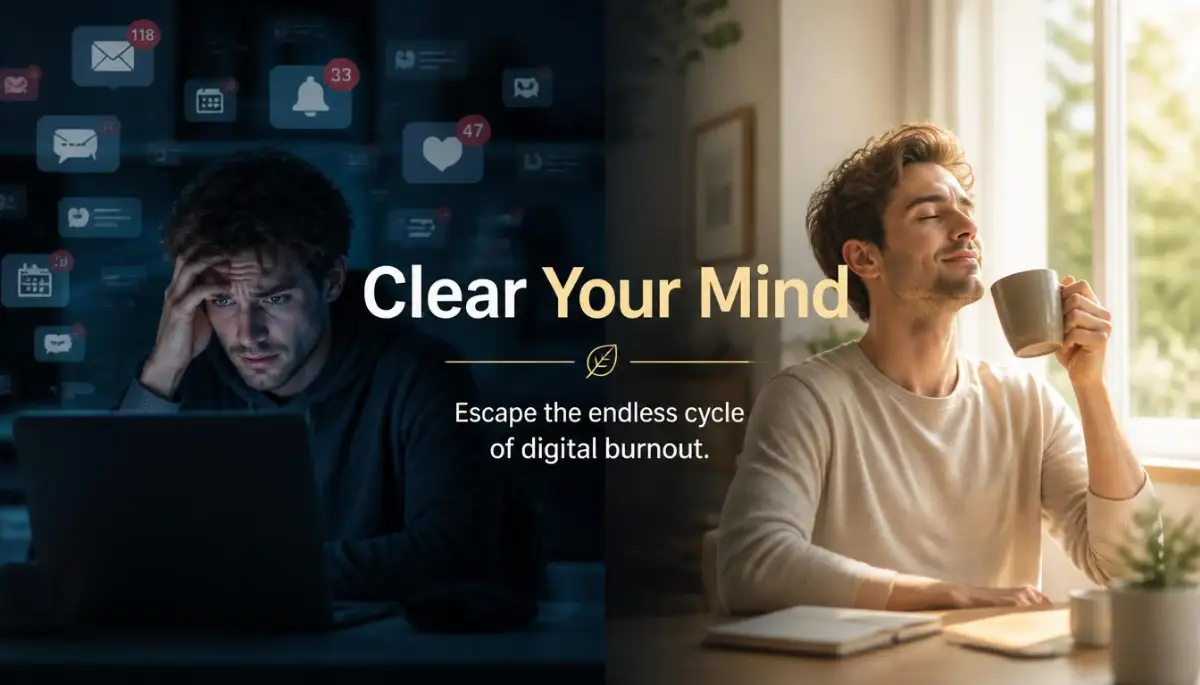
Unlocking Mental Clarity: The Science Behind Stepping Away
Taking a break from your digital feeds is not just a popular internet trend. It is a highly effective way to naturally reset your brain chemistry and find actual peace. When we constantly stare at screens, we force our minds into a permanent state of high alert.
By actively choosing to log off, you give your nervous system a much-needed chance to finally breathe. Let us explore exactly how creating healthy boundaries transforms your daily emotional reality.
Understanding the Dopamine Trap and Your Attention Span
Every single time you get a new notification, your brain releases a tiny hit of dopamine. This is the exact same chemical that makes you crave sugary junk food. Over time, your mind builds a strong tolerance, demanding more and more scrolling just to feel completely normal.
This endless cycle completely shatters your natural attention span. You might notice that watching a regular movie or reading a single page of a book suddenly feels incredibly difficult. Your brain is desperately looking for that fast, cheap digital reward.
Breaking this cycle requires intentional time away from the screen. When you stop feeding your brain these instant rewards, your natural ability to focus slowly begins to return. You will find yourself actually enjoying slow, quiet activities again.
Myth vs Reality: The Honest Truth About Logging Off
People often hesitate to step away from their feeds because they believe false stories about going offline. Let us clear up some of the most common misunderstandings right now.
- The Big Myth: You will completely lose touch with your close friends and become isolated.
- The Actual Reality: You will actually form much deeper connections because you will start having real conversations instead of just sending funny pictures.
- The Big Myth: You will miss out on incredibly important breaking news and fall behind.
- The Actual Reality: Truly important news will always reach you through your friends or family, while you successfully avoid the daily negative noise.
If you want to understand exactly how endless scrolling damages your attention span, this quick visual breakdown is an absolute game-changer. Watch this amazing explanation to see what happens inside your brain when you finally put the phone down.
Designing a Realistic Offline Routine You Can Actually Maintain
Trying to completely abandon your phone for an entire month usually leads to massive failure. The key to long-term success is building small, manageable habits into your normal daily life. Think of it like learning to swim; you do not jump into the deep end on your first day.
You need to replace your bad digital habits with highly rewarding physical activities. If you just sit on the couch staring at the wall, you will inevitably grab your phone again.
Morning Habit Adjustments for Immediate Calmness
The way you spend the first hour of your day determines your emotional state for the rest of the afternoon. If you start by looking at other people's perfect lives, you naturally set yourself up for sudden anxiety. Instead, try creating a completely screen-free morning environment.
I actually bought a cheap battery-powered alarm clock so I could charge my phone in the kitchen overnight. My biggest mistake early on was keeping the phone in my bedroom, which always led to late-night scrolling. Once I moved the charger to another room, my sleep quality improved drastically and my morning anxiety completely vanished.
Use your new free time to gently stretch, drink a large glass of water, or simply look out the window. This slow, intentional start tells your nervous system that you are safe and fully in control.
Comparing the Two Different Lifestyles
To make things perfectly clear, let us look at how different your life can be when you establish strong digital boundaries. This simple breakdown shows the massive contrast between two completely different ways of living.
Conquering the Phantom Ring and Fear of Missing Out (FOMO)
Have you ever felt your phone secretly vibrate in your pocket, only to find absolutely no new messages? This strange experience is actually called phantom vibration syndrome. It clearly shows how deeply our nervous system is currently tied to our digital devices.
When you first begin taking daily breaks, the Fear of Missing Out (FOMO) will feel incredibly strong. You will constantly worry that someone is trying to reach you with highly urgent news.
You must actively train your brain to understand that silence is not dangerous. Start by leaving your phone in another room for just twenty short minutes. You will quickly realize that the world continues spinning perfectly fine without your constant digital supervision.
Real-Life Strategy: Discovering Joy in the Mundane Moments
We have become so obsessed with documenting our lives that we forget how to actually live them. Imagine sitting at a local cafe and enjoying a beautiful cup of warm coffee. Your first instinct is probably to take a quick photo to show everyone exactly where you are.
When you finally stop taking pictures of everything, you can actually taste the rich flavor of the coffee. You can clearly hear the soft music playing in the background and notice the weather outside.
This simple practice of being fully present completely changes your everyday emotional reality. You stop performing for an invisible internet audience and start living entirely for yourself.
Restoring Your Capacity for Deep, Meaningful Work
Our modern work environments require intense focus, yet our digital habits actively destroy that exact skill. Every time you switch your attention to check a fast notification, your brain loses its deep momentum. It can actually take twenty whole minutes to regain your complete focus after just one tiny distraction.
By blocking out specific times for completely offline work, you protect your valuable mental energy. You will be amazed at how quickly you can finish difficult tasks when your phone is hidden in a drawer.
This simple change reduces your daily work stress and prevents long-term professional burnout. You finally stop feeling like you are constantly rushing to catch up on simple tasks.
Replacing Empty Scrolling with Fulfilling Physical Hobbies
Nature strongly dislikes an empty space, and so does your active human brain. If you remove your daily scrolling time without adding a new fun activity, you will feel painfully bored. The absolute best way to succeed is to heavily invest in engaging physical hobbies.
Consider learning how to bake fresh bread, paint small canvases, or grow tiny indoor plants. These quiet activities require your hands and your full attention, leaving absolutely no room for a glowing screen.
When you create something real in the physical world, you get a highly authentic sense of deep pride. This real pride feels completely different from the fake satisfaction of getting a random like on a picture.
Evening Wind-Down Techniques for Incredible Rest
Your evening routine is just as important as your morning habits when it comes to mental health. The bright blue light coming from your screen actively tricks your brain into thinking it is still daytime. This strongly stops your body from naturally producing melatonin, the chemical you desperately need for deep sleep.
Try putting your digital devices completely away at least one full hour before you actually go to bed. Use this quiet time to read a printed book, write in a small journal, or talk to your family.
When you successfully improve your sleep quality, your entire psychological state naturally heals itself. You will wake up feeling genuinely rested, highly energetic, and mentally ready to face any daily challenges.
Healing Your Self-Image Through Emotional Distance
One of the most dangerous side effects of endless scrolling is the heavy damage it does to your personal confidence. We constantly look at images of people who seem richer, happier, and much more attractive than us. Our logical brain knows these images are heavily edited, but our emotional brain simply feels highly inadequate.
Stepping away from these fake digital realities allows you to clearly appreciate your own unique journey. You naturally stop measuring your everyday worth based on someone else's carefully chosen highlight reel.
Over time, this healthy emotional distance rebuilds your strong foundational self-esteem. You begin to honestly value your own real-life accomplishments, no matter how small they might seem to others.
The Ripple Effect on Your Personal Relationships
Have you ever tried speaking to a close friend while they stared blankly at their screen? It feels incredibly lonely and clearly shows a massive lack of simple personal respect. When you are constantly distracted, you accidentally send the exact same painful message to the people you love.
Taking regular digital breaks naturally forces you to look up and actually see the people sitting right next to you. You start making strong eye contact, actively listening to their stories, and sharing genuine laughter together.
These small moments of pure connection are the true foundation of long-lasting human happiness. By simply putting your device away, you become a much better partner, parent, and close friend.
Navigating the Initial Discomfort and Restlessness
The first few days of establishing new boundaries will definitely feel somewhat uncomfortable and highly strange. Your hands might literally twitch, looking for the familiar shape of your trusted device. This perfectly normal reaction is just your nervous system adjusting to the new, healthy quietness.
Instead of fighting this strange feeling, completely accept it as a highly positive sign of actual growth. Take deep, slow breaths and remind yourself exactly why you started this journey in the first place.
Very soon, this temporary discomfort will permanently transform into a deep, unshakable sense of inner peace. You are actively taking your real life back from the powerful grip of complex digital algorithms.
Advanced Strategies for Mastering Your Daily Digital Habits
We have already explored how breaking away from constant notifications naturally calms your nervous system. Now, we need to discuss how you can actually maintain these amazing benefits over the long run without feeling miserable. Most people strongly desire mental peace, but they secretly struggle to keep their new boundaries intact after just a few short days.
The real secret to long-term success is not relying on your raw willpower. Instead, you must actively redesign your personal environment so that picking up your phone becomes slightly annoying. Let us look at some highly effective psychological tricks that make logging off feel incredibly easy and natural.
Introducing Deliberate Friction to Your Devices
Your smartphone is brilliantly designed to be as smooth and frictionless as possible. Every single colorful app icon practically begs you to tap it the moment you unlock your screen. To fight back against this clever design, you need to intentionally add tiny speed bumps to your daily tech usage.
Start by completely deleting the social applications directly from your phone's home screen. If you really want to check your feeds, force yourself to log in through a slow mobile web browser instead. This small amount of extra effort gives your brain just enough time to ask if you actually want to scroll.
You can also rely on trusted behavioral psychology techniques by turning your entire phone screen to black and white mode. Bright red notification badges trigger an instant sense of massive urgency in our human brains. When you remove these bright colors, your highly addictive screen instantly looks incredibly boring and lifeless.
Designing Tech-Free Physical Zones in Your Home
Our physical environment strongly dictates our everyday automatic habits. If you always sit on the same exact living room couch while scrolling, your brain secretly connects that specific spot with digital rewards. You have to actively break this invisible mental link by creating strict offline spaces in your house.
Declare your bedroom and your dining table as completely screen-free zones starting today. When you sit down to eat a warm meal, leave your mobile device completely out of sight in another room. You will be absolutely amazed at how quickly your family conversations improve when there are no screens allowed at the table.
If you want to set up a beautiful offline reading corner, pay attention to your environment. Learning how to maximize natural light how to make your tiny room look huge can make your physical space feel much more inviting than any digital feed. A bright, comfortable room naturally encourages you to sit down with a good printed book instead of staring at a glowing screen.
Curating Your Remaining Digital Inputs
Taking a daily break does not mean you have to permanently delete every single online account you own. The ultimate goal is simply to change your relationship with these platforms from mindless consumption to highly intentional use. You must aggressively protect your personal mental space by unfollowing anyone who makes you feel bad about your normal life.
Think of your personal feed as a careful, thoughtful creation. Understanding the real secret to building products that people actually love often involves removing completely unnecessary features, and your digital life works the exact same way. If an account does not bring you genuine joy, loud laughter, or helpful education, instantly remove it from your daily view.
According to current research on media consumption and mental well-being, actively curating your timeline drastically lowers feelings of daily anxiety. You alone have the ultimate power to decide exactly what kind of information enters your precious mind every single day.
Solving Practical Triggers for Mindless Scrolling
Sometimes we accidentally start scrolling simply because we are waiting for something else to finally happen. For example, you might be trying to finish an online work project, but your computer suddenly stops loading pages. In that brief moment of deep frustration, your hand automatically reaches right into your pocket for your phone.
Fixing your basic home office environment actually helps protect your overall mental peace. Taking a few minutes to stop wi-fi drops simple ways to fix your slow internet connection removes that exact frustrating trigger. When your main tasks flow smoothly, you will not feel the sudden urge to seek cheap digital distractions.
Whenever you need fresh inspiration for building a better everyday routine, you can always check out our main lifestyle and tech hub for more helpful guides. Small environmental changes always lead to massive psychological improvements over a long period.
Expert Insight on Habit Tracking: I used to feel incredibly guilty whenever I accidentally broke my daily digital boundaries. My biggest breakthrough happened when I simply started tracking my successful offline hours on a physical paper calendar. Seeing a long chain of successful days written in real ink made me feel incredibly proud. I highly recommend buying a cheap paper calendar to track your own quiet time.

The Hidden Emotional Traps That Ruin Digital Boundaries
Changing your daily habits is completely simple in theory, but it is deeply emotional and messy in real life. People often start their new offline journey feeling highly motivated, only to crash incredibly hard just a few days later. Understanding these common hidden traps will save you from completely abandoning your amazing new goals.
If you do not recognize these subtle mistakes early, you will quickly fall right back into the endless scrolling loop. Let us explore the exact reasons why so many people accidentally fail at giving their minds a proper break.
The Danger of the "All or Nothing" Mindset
The single biggest mistake you can possibly make is trying to become entirely perfect on your very first day. Many people proudly announce they are going completely off the grid, deleting every app they own in a moment of extreme frustration. This dramatic approach almost always fails because it heavily shocks your nervous system.
When you suddenly remove all your digital connections at once, your brain goes into intense withdrawal. You will start feeling incredibly isolated, deeply anxious, and painfully bored within the first few hours. Once this heavy discomfort becomes too much to handle, you will likely download everything back and scroll for five hours straight.
This creates a highly toxic cycle of extreme guilt and massive shame. You must remember that small, imperfect daily limits are always better than completely unachievable rules. Give yourself plenty of grace when you naturally mess up, and just try again the very next morning.
Swapping One Bad Screen for Another
Your brain is incredibly clever when it comes to seeking out easy dopamine hits. If you successfully block your favorite social applications, your mind will immediately start looking for a different glowing rectangle. You might feel very proud of not scrolling, but you end up binge-watching seven random television episodes instead.
This common mistake completely defeats the primary psychological purpose of taking a proper break. True mental rest happens when you actually disconnect from all fast-moving digital media and let your mind wander. Looking at a slightly bigger screen does not heal your shattered attention span or calm your racing heart.
You must intentionally prepare physical, offline backup activities before you even begin your daily break. If you do not have a printed book, a notebook, or a small hobby ready to go, the television will easily win. Studies regarding screen time and sleep quality clearly show that all digital screens equally harm our natural rest patterns.
Keeping Your New Boundaries a Complete Secret
Many people try to change their tech habits entirely in secret, without telling their close friends or family members. This leads to massive misunderstandings when you suddenly stop replying to funny videos or quick messages within two minutes. Your friends might assume you are deeply angry with them, causing highly unnecessary relationship drama.
When you constantly worry about people getting mad at your silence, you cannot actually relax during your offline time. You will feel a strong, heavy pressure to quickly check your screen just to make sure no one is upset. This lingering anxiety completely ruins the quiet peace you are trying so hard to achieve.
Simply tell your inner circle that you are trying out a new daily routine to improve your overall focus. Let them know exactly how they can reach you in a true emergency, like calling your actual phone number. People are generally very supportive when you honestly explain that you are just trying to protect your own health.
Believing the "Just Five Minutes" Lie
The absolute trickiest moment of your day happens when you feel slightly tired and deeply unmotivated. Your brain will softly whisper that checking your timeline for just five quick minutes will not do any real harm. We all know exactly how this specific story ends every single time.
Those five innocent minutes instantly turn into forty-five minutes of staring blankly at strangers arguing online. The powerful algorithms running these platforms are specifically built by brilliant engineers to steal your attention and completely ignore your intentions. You literally cannot win a quick battle against a supercomputer designed to keep you permanently hooked.
If you truly need a short mental break from working, get up and stretch your physical legs instead. Drink a glass of cold water, step completely outside, or pet your dog for a few minutes. These real-world actions actually refresh your tired brain, unlike the false energy you get from staring at a glowing screen.
Reclaiming Your Beautiful, Quiet Reality
Taking absolute control of your digital consumption is one of the most powerful gifts you can ever give yourself. We live in an incredibly loud era where human attention is constantly treated like a cheap product to be bought and sold. By actively choosing to step away every single day, you are bravely reclaiming the true ownership of your own precious mind.
You will suddenly notice that your daily days feel incredibly long, deeply rich, and surprisingly full of hidden magic. The heavy, dark cloud of random internet anxiety will slowly lift, leaving behind a highly focused and profoundly calm version of yourself. You will finally have the required mental energy to chase your actual real-life dreams instead of simply watching other people live theirs.
You do not need to become a perfect digital minimalist to experience these massive psychological benefits. Even just one single hour of intentional, offline quiet time each evening can completely transform how you feel the next morning. Your actual life is happening right now, completely outside the tiny borders of your glowing smartphone screen.
Start building your highly personalized offline routine tonight, without waiting for the absolute perfect moment. Put the device away, take a massive deep breath, and deeply enjoy the beautiful sound of true silence.
I really wish I had understood these simple boundaries years ago, before I wasted so much precious energy worrying about online strangers. Take this important journey one single day at a time, and you will absolutely love the peaceful person you slowly become.
Common Questions About Taking a Digital Break
What actually happens during the first few days of a detox?
During the first few days, you will likely feel highly restless, slightly bored, and surprisingly anxious. Your brain is temporarily missing its usual fast dopamine hits, which completely naturally causes a mild sense of withdrawal. This uncomfortable feeling usually passes very quickly once you replace the scrolling time with fun physical activities.
How long should my daily offline time actually be?
You should aim for at least one full hour of completely uninterrupted offline time every single day. The absolute best times for this break are right after you wake up or directly before you go to sleep. Even starting with just twenty quiet minutes is a massive step in the right right direction.
Will taking these daily breaks ruin my personal friendships?
Taking a break will actually make your real friendships significantly stronger and much more meaningful. While you might miss a few random internet jokes, you will have much deeper, highly focused conversations when you finally meet in person. True friends will always respect your healthy boundaries and highly support your journey.
Can I still use my device for listening to music or reading?
You can absolutely use your device for highly intentional activities like listening to calming music or reading educational articles. The main goal is just to stop the endless, mindless swiping that completely steals your attention. Just make sure you turn off your random push notifications so you do not get accidentally distracted while enjoying your music.
What is the best way to handle severe boredom without my phone?
You must learn to accept that feeling slightly bored is actually a highly positive and completely natural human experience. When you finally allow yourself to feel bored, your brain naturally starts becoming highly creative again. Keep a simple printed book or a small notepad nearby to capture any fun ideas that pop up during your quiet time.
Disclaimer: The information provided in this article is meant for educational and motivational purposes only. It is not intended as a substitute for professional mental health advice, diagnosis, or treatment. Always seek the direct advice of your physician or a qualified health provider with any questions you may have regarding heavy anxiety or psychological distress.
![The Proven KonMari System to Declutter Your Space [Save Time & Money]](https://topic36.com/storage/uploads/blogs/1787468513_the-proven-konmari-system-to-declutter-your-space-save-time-money.webp)

![The Real Science Behind Pomodoro Deep Focus [Save Time & Energy]](https://topic36.com/storage/uploads/blogs/1787118732_the-real-science-behind-pomodoro-deep-focus-save-time-energy.webp)