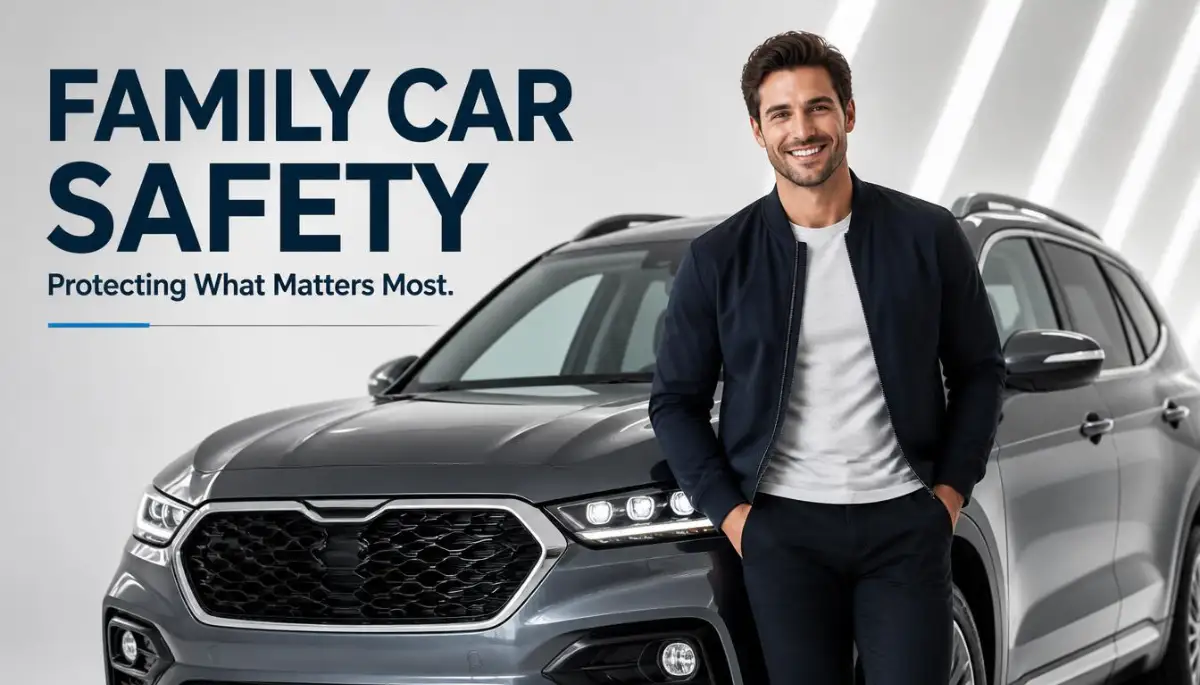
The Hidden Anxiety of Picking the Wrong Family Car
Imagine you are driving home on a rainy Tuesday evening. Your two children are in the back seat, laughing and telling you about their day at school. Suddenly, a car in front of you slams on its brakes. Your heart skips a beat. You press your brake pedal as hard as you can.
In that split second, the only thing that matters is the metal box surrounding your family. Did you pick a car that can think faster than you? Or did you settle for a vehicle that lacks the latest protection?
Many parents feel a deep sense of worry when they browse car dealerships. The stickers on the windows are full of confusing codes and tech jargon. It feels like you need an engineering degree just to understand if the car is actually safe.
We often worry about the "what ifs." What if a distracted driver swerves into our lane? What if we miss a car in our blind spot while the kids are crying? This isn't just about buying a machine; it's about buying a shield for your most precious cargo.
The reality of modern driving is that the roads are more crowded than ever. People are more distracted by phones and giant touchscreens. Relying on your driving skills alone isn't enough anymore. You need a vehicle that acts as a partner in your safety.
Making the wrong choice can lead to years of regret or, worse, a situation where your car couldn't protect your loved ones during a crisis. You deserve to feel confident every time you buckle your kids into their seats. Let’s change that feeling of uncertainty into a feeling of total control.
The Invisible Guard: Automatic Emergency Braking (AEB)
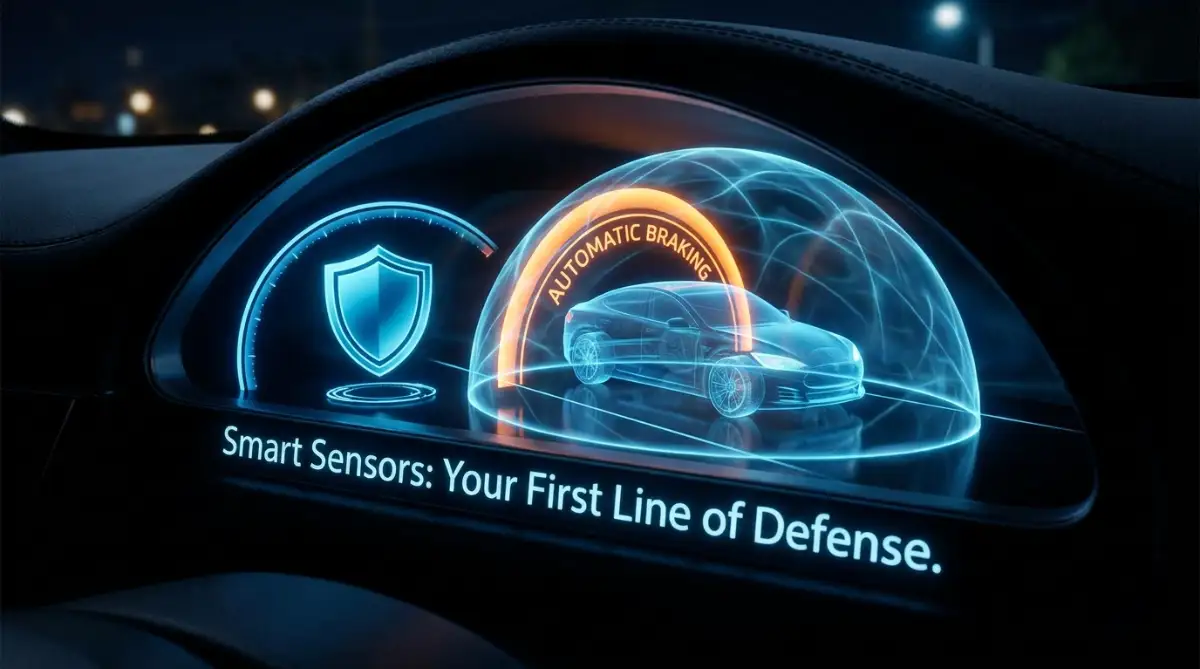
The most important feature you can look for today is Automatic Emergency Braking, or AEB. This system uses cameras, radar, or lasers to scan the road ahead of you. It is like having a co-pilot who never gets tired and never looks at a phone.
If the car detects that a crash is about to happen and you aren't braking, the system takes over. It will apply the brakes automatically to stop the car or at least slow it down significantly. This can be the difference between a minor scare and a life-changing accident.
When you are looking at family cars, check if the AEB works at high speeds and low speeds. Some systems are only for city driving, while others help on the highway. Pedestrian detection is another layer of this tech that can spot a child running into the street before you do.
Your Second Set of Eyes: Blind Spot Monitoring
Changing lanes on a busy highway is one of the most stressful parts of driving with a family. You have to check your mirrors, look over your shoulder, and keep an eye on the traffic ahead. Blind Spot Monitoring (BSM) makes this much easier and safer.
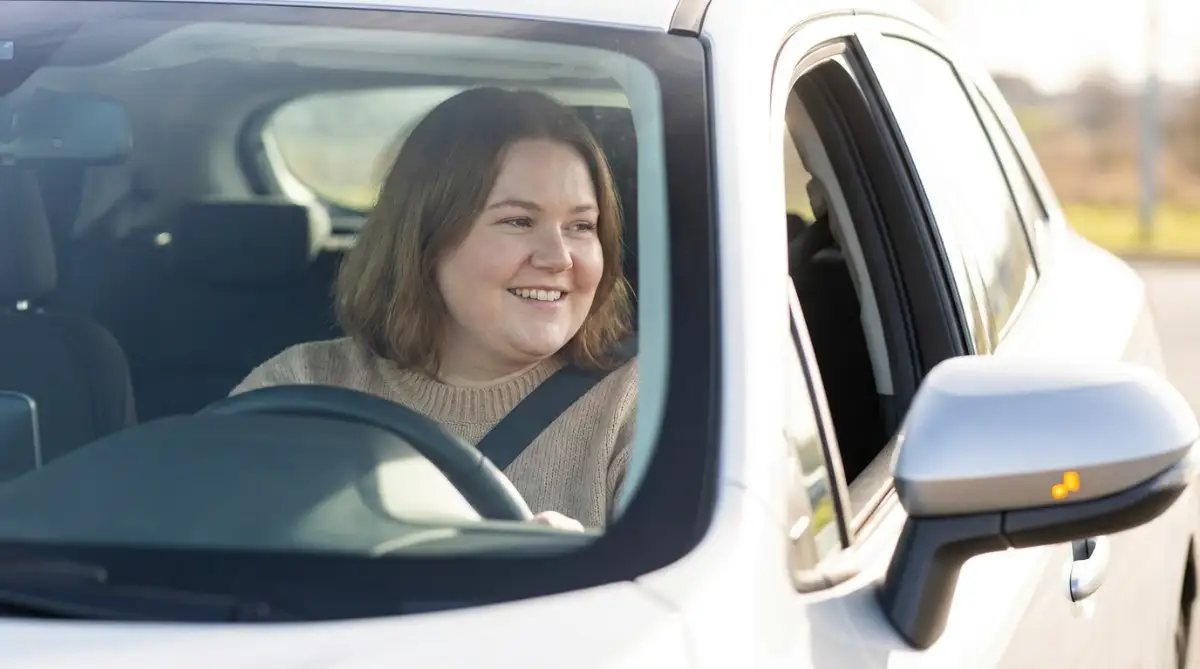
This feature uses sensors on the rear corners of the car. If a vehicle is hiding in the area you can’t see, a bright light appears on your side mirror. Some cars will even give you a steering vibration or a beep if you turn on your blinker while someone is there.
I always tell my friends that this feature is a "must-have" for anyone driving a larger SUV or minivan. These bigger vehicles have bigger blind spots. Having that extra visual confirmation gives you a layer of certainty that mirrors alone cannot provide.
Staying Centered: Lane Keeping Assist and Lane Departure Warning
We have all been there. You reach back to hand a water bottle to your child, and for a second, the car drifts toward the edge of the lane. Lane Departure Warning (LDW) will alert you with a sound or a rumble if you start to drift without a turn signal.
Lane Keeping Assist (LKA) goes a step further. It gently nudges the steering wheel to keep you in the center of the lane. It doesn't drive the car for you, but it acts like a gentle hand helping you stay on the right path.
This is especially helpful during long family road trips when tiredness can start to set in. It keeps the vehicle stable and centered, reducing the physical and mental effort of driving. However, always remember that these systems are meant to help you, not replace your attention.
A New View: The 360-Degree Surround-View Camera
Parking a large family vehicle in a tight grocery store parking lot can be a nightmare. You are worried about hitting a stray shopping cart or, worse, a small child walking behind the car. A standard backup camera is good, but a 360-degree camera is better.
This system combines views from cameras all around the car to create a "bird's-eye view" on your screen. You can see exactly where your tires are and everything that is surrounding the vehicle. It removes the guesswork and prevents those "fender bender" accidents that are so common in family life.
Protecting the Smallest Passengers: Rear-Seat Safety Tech
When we talk about car safety, we often focus on the driver. But for a family, the back seat is the most important part of the vehicle. Modern cars now offer features specifically designed to protect children in the rear.
One of these is the Rear Occupant Alert. It reminds you to check the back seat before you leave the car. This prevents the tragic accidents of children being left in hot cars. It’s a simple sensor-based system that can literally save a life.
Another vital check is the LATCH system (Lower Anchors and Tethers for Children). While all modern cars have them, some are much easier to use than others. Look for a car where the anchors are easy to reach and not buried deep inside the seat fabric.
The Strength You Can't See: Vehicle Structure and Airbags
Tech is great, but the physical build of the car is still the foundation of safety. Modern cars are designed with crumple zones. These are parts of the car that are meant to crush during an impact. This might sound scary, but it’s actually a good thing.
The crushing metal absorbs the energy of the crash so that your body doesn't have to. You want a car made with high-strength steel that keeps the "cabin" (the area where people sit) intact.
Don't forget to check the airbag count. You want more than just front airbags. Look for side-curtain airbags that cover the windows for both the front and back rows. Some newer family vehicles even have an airbag between the front seats to prevent passengers from hitting each other during a side impact.
Smart Lights: Adaptive Headlights and High-Beam Assist
Driving at night in unfamiliar areas can be dangerous, especially when the weather is bad. Adaptive Headlights actually turn with your steering wheel. When you go around a curve, the lights point where you are going, not just straight ahead.
Auto High-Beam Assist is another great tool. It turns on your bright lights when the road is dark but automatically dims them when it sees another car coming toward you. This ensures you always have the best possible vision without blinding other drivers.
Myth vs. Reality: Is a Bigger Car Always Safer?
Myth: "I need the biggest SUV possible because bigger cars are always safer in a crash."
Reality: While size can help in a collision between two vehicles, it isn't the only factor. Large SUVs can be harder to stop and are more likely to roll over in a sharp turn. A mid-sized car with top safety ratings and advanced tech can often be safer than an old, giant truck.
When you are researching, don't just look at the size. Look for the IIHS (Insurance Institute for Highway Safety) Top Safety Pick awards. These tests are very strict and show you how a car actually performs in a real-world crash.
The Importance of Safe Tires and Braking Distance
Even the most advanced car in the world won't save you if your tires are bad. When choosing a family car, ask about the braking distance. This is how many feet it takes for the car to come to a full stop from 60 mph.
Heavy cars take longer to stop. Make sure the vehicle you choose has a high-performance braking system. Also, ensure that the tires provided with the car are rated for all-season safety. Good tires provide the grip your AEB system needs to work effectively.
Mastering Your Vehicle’s Safety Systems for Long-Term Protection
Many people think that once they buy a car with high safety ratings, their job is done. They believe the sensors and cameras will work perfectly forever without any help.
In reality, keeping your family safe is an ongoing process that happens long after you leave the dealership. You need to treat your car’s safety tech like a high-end smartphone or a computer.
One of the best expert secrets is understanding sensor calibration. Your car uses cameras and radar units usually hidden behind the windshield or the front grille.
If you ever have to replace your windshield due to a rock chip, those cameras must be recalibrated. If they are even a tiny bit off, your automatic braking or lane-keep assist might not work when you need it most.
Always ask your glass repair shop if they have the tools to reset these systems. It is a small step that ensures your "invisible shield" stays sharp and accurate.
Another pro tip involves software updates. Modern vehicles are basically rolling computers. Manufacturers often release updates that improve how the safety sensors recognize objects in the dark or in heavy rain.
Checking for these updates during your regular oil changes is a smart move. If you own an EV, you might even get these updates over the air while the car is parked in your garage.
While you are focusing on the tech, don't forget the heart of the car. Learning about simple habits to protect your electric vehicle battery life can keep your car running reliably for years. A car that doesn't break down in the middle of a busy highway is a safer car for your kids.
If you drive a hybrid, the rules are slightly different but just as important. Understanding the ultimate guide to hybrid engine care and longevity ensures that your dual-power system is always ready to give you the speed you need to merge safely into traffic.
Lastly, pay attention to your tire pressure monitoring system (TPMS). Most people ignore that little yellow light on the dashboard.
Under-inflated tires make your car's safety systems work harder. They increase your braking distance and make it harder for the car to steer during an emergency. Check your tire pressure once a month to keep the grip exactly where it needs to be.
Hidden Dangers: Where Most Parents Get It Wrong
It is easy to fall into a false sense of security when you have a car full of fancy gadgets. I have seen many parents make the mistake of over-relying on the technology.
They start to look at their mirrors less because they trust the blind-spot light. They might even glance at their phones more because they think the automatic braking will save them.
This is a dangerous trap. These systems are "driver assists," not "driver replacements." If the sun is hitting a sensor at a certain angle, or if there is thick mud on the bumper, the system might fail.
Another huge mistake is ignoring the weight limit of the vehicle. When you pack for a family vacation, it’s tempting to load the roof rack and the trunk to the brim.
An overloaded car changes how the safety features react. The brakes will take longer to stop the heavy load, and the electronic stability control might struggle to keep the car upright during a sharp turn.
I also see parents buying the most expensive car seats but installing them incorrectly. Even the safest car in the world can't protect a child if the seat is loose.
You should always double-check your work. You can find proper car seat installation guidelines from official safety organizations to make sure your kids are truly secure.
Some people also forget to check if their specific car model has been part of a safety recall. Manufacturers sometimes find flaws in airbags or seatbelts after the car has been on the road for a while.
Ignoring these notices is a risk you shouldn't take. Most recalls are fixed for free by the dealer, so there is no reason to wait.
Many drivers also make the mistake of not customizing the safety settings. Every driver is different. Some people find the lane-keep vibration too strong, so they turn it off entirely.
Instead of turning it off, look through the menu. You can often adjust the sensitivity so it helps you without being annoying. A safety feature that is turned off is a feature that provides zero protection.
Finally, never assume that a high price tag means better safety. Sometimes a mid-range family car has better vehicle safety ratings than a luxury sports car.
Always look at the data, not the brand name. The data tells you the truth about how the car handles a side impact or a roof crush. Brand names just tell you how much you are spending.
Your Safety Action Plan: Moving Forward with Confidence
Choosing and maintaining a safe family vehicle is one of the most loving things you can do for your children. It shows that you are thinking ahead and valuing their well-being above everything else.
Start today by doing a "safety audit" of your current car. Check the tire tread, look for any warning lights, and make sure your child seats don't wiggle more than an inch in any direction.
When you go to buy your next vehicle, take this guide with you. Don't let the salesperson distract you with fancy leather seats or big sunroofs.
Ask the hard questions. Ask about the AEB performance. Ask where the side-curtain airbags are located. Test the 360-degree camera in a tight spot to see if the image is clear.
You have the power to be an informed buyer. You don't have to guess or feel anxious about the roads anymore. With the right features and a little bit of regular care, you can drive with a sense of calm.
Imagine the peace of mind you will feel on your next rainy night drive. You will know that your car is watching the road with you. You will know that your family is wrapped in the best protection possible.
Take that first step today. Research the ratings, learn how your car's tech works, and never stop being a student of safety. Your family is worth every bit of effort you put into this.
Safe driving is not just about luck; it is about preparation. You are now prepared to make the best choice for your home on wheels.
Expert Summary Checklist
To make things easy for you, here is a quick way to remember what we covered:
- Check the tech: Ensure the car has AEB, BSM, and LKA as standard features.
- Maintain the sensors: Keep your windshield clean and recalibrate cameras after any repairs.
- Watch the tires: Proper air pressure is the foundation of all safety systems.
- Stay updated: Always say "yes" to manufacturer software updates for your car's brain.
- Be a pilot, not a passenger: Use the tech to help you, but keep your eyes on the road.
- Verify the fit: Make sure car seats are locked in tight and the LATCH system is used correctly.
![How to Change a Flat Tire in an Emergency [Avoid Being Stranded]](https://topic36.com/storage/uploads/blogs/1787755147_how-to-change-a-flat-tire-in-an-emergency-avoid-being-stranded.webp)