
The Silent Weight of Following the Hype
Imagine waking up on a Tuesday morning. You grab your phone and check your crypto wallet. Your heart sinks. That "next big thing" you bought last week is down 60%. You feel a knot in your stomach. You didn't lose just money; you lost the money you saved for your vacation or your kid’s school fees.
Why does this happen so often? It happens because most of us buy into the hype. We see a shiny logo on Twitter or a fast-talking influencer on YouTube. We click "buy" without really knowing what we are buying. It feels like gambling, doesn’t it? This constant stress and the fear of missing out (FOMO) can really mess with your mental peace. You stay up late, refreshing charts, hoping for a miracle that never comes.
I once talked to a guy named Alex. He was a hard-working father who put his savings into a project because it had a "cool name." He never looked at the whitepaper. When the project vanished, he didn't just lose cash; he lost his confidence. He felt like he wasn't smart enough for this world. But the truth is, Alex was smart. He just didn't have the right map.
Reading a whitepaper feels like trying to read a textbook in a language you don't speak. It’s full of big words and math. It’s scary. But what if I told you that you don’t need to be a coder to understand it? You just need to know where to look. Learning this skill is the only way to stop being a "exit liquidity" for big players and start being a real investor.
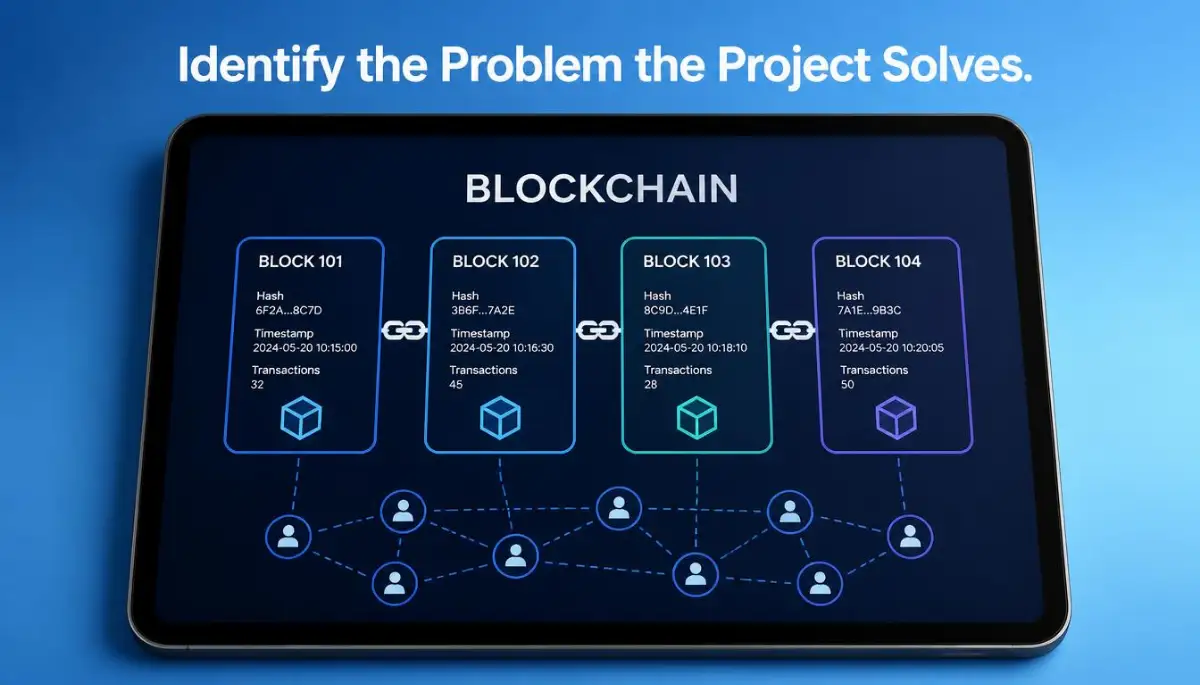
Finding the Heart of the Project: The Problem and Solution
The very first thing you need to look for is the "Why." Every great project starts with a real-world problem. If a project doesn’t solve a problem, it has no reason to exist. It is just a digital ghost.
When you open a whitepaper, skip the fancy intro. Look for a section that describes a pain point. Is it making payments faster? Is it protecting privacy? Is it helping artists get paid? If the problem sounds vague or like it was written by a robot, be careful.
A good project will explain the problem clearly. It will show you why current systems are failing. Then, it will present its solution. The solution should be easy to explain to your friend. If you read the solution three times and still don't get it, the project might be trying to hide its lack of value behind big words.
Decoding the Technology Without Being a Nerd
You might see words like "Proof of Stake," "Sharding," or "Layer 2." Don't let these scare you. Think of the technology as the engine of a car. You don't need to know how to build the engine, but you need to know if it runs on gas or electricity.
In the whitepaper, look for how they plan to achieve their goals. Are they building a new blockchain from scratch? Or are they building on top of Ethereum? This matters because building from scratch is very hard and takes a long time.
Check for security measures. How do they keep the network safe? A project that doesn't talk about security is like a bank with no locks on the doors. You want to see that they have thought about "Bad Actors" and how to stop them.
The Math of Money: Understanding Tokenomics
This is where most people get it wrong. Tokenomics is just a fancy word for "how the money works." Even if the tech is amazing, the coin price can still crash if the math is bad.
First, look at the Total Supply. If there are 100 billion coins, don't expect the price to hit $100 any time soon. Math won't allow it. Then, look at how the coins are given out.
Watch out for the "Big Dump." If the founders and early investors own 70% of the coins, they can sell them all at once and leave you with nothing. You want to see a fair spread. Also, check the "Vesting Period." This is a rule that stops the team from selling their coins for a few years. It shows they are here for the long haul, not just a quick buck.
Who is Steering the Ship? The Team Analysis
A great idea with a bad team will fail. Every single time. You need to know who is behind the curtain. A professional whitepaper will list the core team members.
Don't just take their word for it. Look them up on LinkedIn. Have they worked on successful projects before? Or is this their first time doing anything? If the team is "Anonymous," be very, very careful. While some great projects like Bitcoin have anonymous creators, most anonymous teams in today's world are a huge red flag.
Look for Advisors too. These are experienced people who help the team. If a project has big names helping them, it adds a layer of trust. But verify it! Sometimes scammers put famous people's pictures on their site without permission.
The Roadmap: Dreams vs. Reality
A roadmap is a timeline of what the team plans to do. It’s like a promise. You want to see a roadmap that is realistic.
If a project promises to change the whole world in three months, they are probably lying. Real tech takes time to build. Look for "Milestones" that have already been hit. If the roadmap shows they were supposed to launch an app last month but haven't said anything about it, that’s a sign of poor management.
A trustworthy roadmap is detailed. It shows they are thinking about the future, not just the current price of their coin. It should include things like "Mainnet Launch," "Partnerships," and "Community Governance."
Myth vs. Reality: The Whitepaper Edition
Looking for the "Secret Sauce"
Every project needs a "Moat." A moat is something that makes it hard for other projects to copy them. Why would people use this instead of Bitcoin or Ethereum?
Maybe they have a unique patent. Maybe they have a massive community already waiting. Maybe they have a new way to save energy. If a project is just a "copy-paste" of another project with a different name, it probably won't survive.
Ask yourself: "If I was a big company, would I use this?" If the answer is no, then the project might not have a real future. You want to invest in tools that people actually need.
The Importance of the "Abstract"
The abstract is the summary at the very beginning. An expert reads this first to see if the project even makes sense. It should be a bird's-eye view of everything.
If the abstract is full of hype words like "Revolutionary," "Moon," or "Lamborghini," close the tab. Real developers don't talk like that. They talk about "Efficiency," "Scalability," and "Decentralization." The tone of the writing tells you a lot about the people behind it.
Practical Steps to Take Today
- Pick a Project: Don't start with something tiny. Pick a top 20 project like Cardano or Polkadot and read their paper. Since they are successful, their papers are good examples to learn from.
- Highlight the Hard Parts: Don't get frustrated if you don't know a word. Highlight it and look it up later.
- Check the Github: Most whitepapers link to their "Code Repository" (Github). Even if you can't code, you can see if people are actually working on it. If the last update was a year ago, the project is dead.
- Use Social Media for Fact-Checking: Go to Reddit or X (Twitter) and see what people are saying about the technical parts, not the price.
Final Thoughts on Your First Step
Reading your first whitepaper will be slow. It might take you an hour or two. But think about the time you spend working to earn the money you invest. Isn't two hours of reading worth protecting your hard-earned savings?
By following these steps, you are moving away from the "gamblers" and joining the "investors." You are building a shield against scams. You are taking control of your financial future. In the next part of this guide, we will look even deeper into how to spot the tiny details that separate a 10x gem from a total disaster.
Remember, the goal isn't to understand every single line of code. The goal is to understand the logic and the intent. If the logic is sound and the intent is honest, you have found something worth your time.
Keep your eyes open, stay curious, and never stop asking "Why?" This is how you become an expert.
Mastering the Fine Print: Secrets of the Crypto Elite
Now that you know the basics of what to look for, it is time to act like a detective. Most people stop after reading the first few pages. They see a few charts and think they are experts. But the real secrets are hidden deep in the technical details.
To truly understand a project, you need to check the Github repository. Think of Github as a public diary for coders. A whitepaper can promise the world, but the code tells you if they are actually building it. If you see that the last update was months ago, the project might be a "ghost ship." You want to see "commits" and active discussions between developers.
Another big secret is the Governance Model. This sounds boring, but it is about power. Does the team make all the decisions, or do the coin holders have a vote? If the team keeps 90% of the voting power, it is not really decentralized. It is just a company pretending to be a blockchain. You should look for terms like "DAO" or "On-chain voting."
Understanding the Burn Mechanism is also a pro-level move. Some projects buy back their own coins and "burn" them (destroy them). This reduces the total supply. If the supply goes down while demand stays the same, the price usually goes up. Look for a clear plan on how and when they burn coins. If the whitepaper is silent on this, the project might suffer from "inflation" over time.
You also need to look for Third-Party Audits. A whitepaper is what the team says about themselves. An audit is what an independent expert says about them. Companies like CertiK or OpenZeppelin check the code for bugs. If a project has been audited and passed, it is a huge green flag. It shows they are willing to let experts look under the hood.
If you want to understand how this tech changes things beyond just money, you should read about the real power of blockchain technology explained. It helps you see the bigger picture of what these whitepapers are trying to build.
To keep these results in the long term, you must stay curious. Don't just read the whitepaper once. Go back to it every few months. See if they are sticking to their plan. A successful investor is someone who watches the team’s actions, not just their words.
Think of a whitepaper like a building plan for a house. You wouldn't buy a house just by looking at a drawing, right? You would check the wood, the pipes, and the foundation. Treat your crypto investments the same way. By digging into these advanced areas, you protect yourself from the hype that ruins so many other people.

The Danger Zone: Mistakes That Can Break You
It is easy to get excited when you see a "cool" new project. This excitement is exactly what scammers count on. One of the biggest mistakes people make is falling for "Word Salad." This is when a whitepaper uses hundreds of complicated words but says nothing. If a sentence looks like "Our synergistic hyper-ledger utilizes quantum-sharding to optimize global liquidity," be very careful. Usually, they are just trying to sound smart so you don't ask real questions.
Another painful mistake is ignoring the "Why Now?" factor. Why does this project need to exist today? Many projects try to solve problems that don't actually exist. Or they try to use a blockchain for something that a simple Excel sheet could do better. If the project doesn't have a clear reason for using a decentralized network, it will likely fail. You are looking for a project that solves a "pain point" that nothing else can solve.
Many people also get trapped by The Echo Chamber. They join a project’s Telegram or Discord group and only talk to people who love the project. This is a huge trap. If you only listen to the "fans," you will miss the red flags. An expert investor looks for the "critics" too. Read what people are complaining about. If the team ignores hard questions or bans people for asking about the tech, that is a sign of a weak project.
We also see many people skip the Token Distribution section. This is a massive mistake. If you see that 50% of the coins go to "Marketing" and "Team," you should run away. Why? Because those coins will eventually be sold on the market, pushing the price down. You want to see a project that gives more to the community and the actual network.
If you have already made a financial mistake and are trying to recover, it can feel like a mountain to climb. You might need to learn how to rebuild your credit score after a major financial disaster. Learning from these mistakes is the only way to become a stronger investor. Don't let one bad trade define your whole life.
Finally, the most dangerous mistake is FOMO (Fear Of Missing Out). Scammers write whitepapers to make you feel like you are missing the chance of a lifetime. They use timers, "limited offers," and flashy graphics. But a real, solid project will still be there tomorrow. If a whitepaper feels like a high-pressure sales pitch, it probably is. Slow down. Think. Read it again.
Your Path to Financial Wisdom and Security
Taking the time to study a project shows that you respect your own hard work. You didn't earn your money easily, so you shouldn't give it away easily. When you can read a whitepaper and spot a lie, you have a superpower. Most people in the crypto world are just guessing, but you are now operating with facts and logic.
This journey isn't just about picking "winners." It is about becoming the kind of person who makes smart choices in every part of life. Whether you are looking at a crypto project or deciding if buying a home is smarter than renting, the skill is the same. You look at the data, you weigh the risks, and you make a calm decision.
I want you to feel empowered today. You don't need a PhD in computer science to do this. You just need patience and a clear head. Start small. Pick one project today. Open the PDF. Look for the team. Look for the tokenomics. Even if you only understand half of it, you are already ahead of 90% of the market.
Once you have found a project you trust, remember that safety comes first. Don't leave your coins on an exchange where they can be hacked. Instead, learn about the secret mechanics of cold storage to keep your assets safe for the long term. This is the final step in becoming a true crypto professional.
You have the tools. You have the knowledge. Now, it is time to take action. The crypto world is full of noise, but now you know how to hear the truth. Go out there and build a future that you can be proud of. You’ve got this!
Disclaimer: This article is for informational and educational purposes only. It does not constitute financial, investment, or legal advice. Cryptocurrency investments carry a high level of risk, and you should always perform your own due diligence or consult with a licensed financial advisor before making any investment decisions. The author and this website are not responsible for any financial losses.

![7 Hidden Traps in Decentralized Finance You Must Know [Step-by-Step Defense]](https://topic36.com/storage/uploads/blogs/1788868861_7-hidden-traps-in-decentralized-finance-you-must-know-step-by-step-defense.webp)