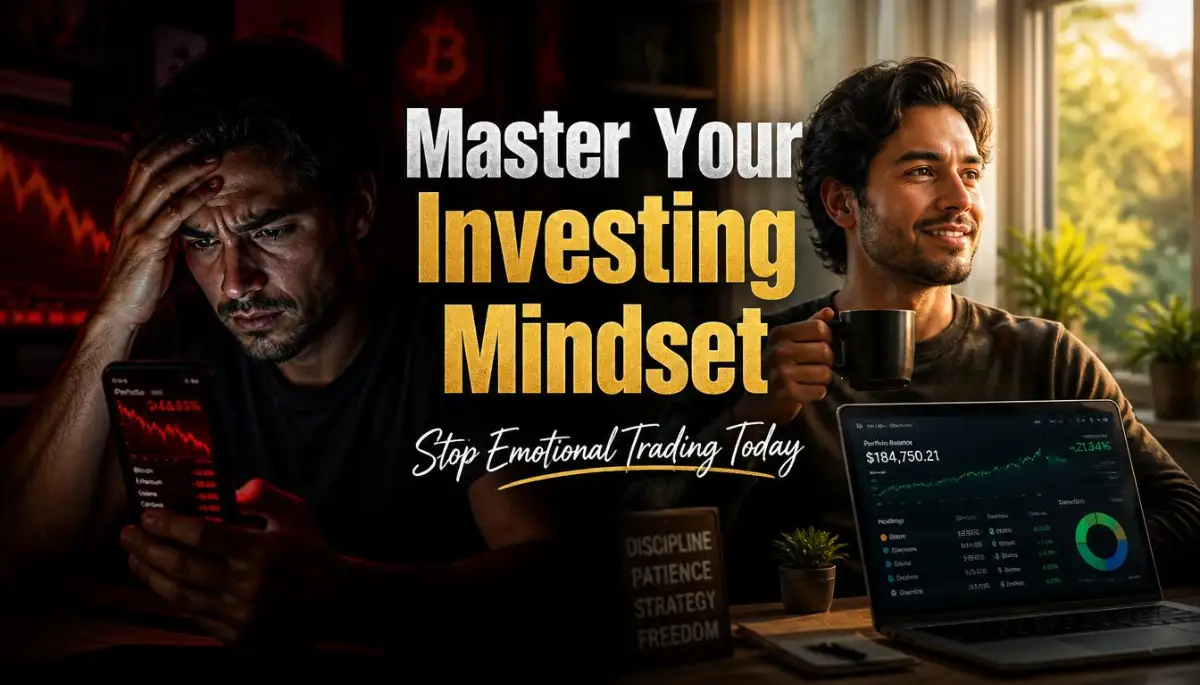
The Reality Behind the Screen: My Silent Battle with the Market
I still clearly remember staring at my phone screen in the middle of the night, my heart pounding heavily in my chest. I had just put a large portion of my hard-earned savings into a trending digital coin because everyone on social media promised it was going straight up. For the first few hours, the green numbers made me feel like an absolute genius. I started doing mental math, imagining all the amazing things I would buy with my future profits.
Then, without any warning, a massive red candle appeared on the chart. The price began to drop so fast that my stomach tied into tight knots. Panic completely took over my mind, whispering that I was about to lose everything I owned. My hands were shaking as I quickly hit the "sell" button at a terrible loss, just to make the painful feeling stop.
The very next morning, I woke up to see that same exact coin had completely recovered and was trading higher than my original entry price. I felt defeated, embarrassed, and completely exhausted.
This emotional rollercoaster is something almost every new market participant experiences in secret. We enter the financial markets expecting a logical journey of growing our wealth over time. Instead, we quickly find ourselves trapped in a stressful cycle of fear, greed, and constant second-guessing.
Every single day, normal people like you and me allow sudden market movements to destroy our peace of mind. We constantly check our phones during family dinners, unable to focus on conversations because our minds are stuck on fluctuating numbers. The constant worry about money drains our daily energy and heavily damages our mental health.
When your financial decisions are driven by high emotions rather than clear logic, investing stops being a tool for freedom. It transforms into a heavy emotional burden that steals your joy, wrecks your sleep, and slowly eats away at your hard-earned money.

Decoding the Mind: Why Smart People Make Bad Money Choices
If you have ever bought a financial asset out of pure excitement or sold it in a moment of pure terror, you are not stupid. Your brain is simply working exactly the way human biology designed it to work over thousands of years.
Our minds are hardwired for survival in the wild, not for reading financial charts on a glowing screen. When we see a market crashing, our brain reacts the exact same way it would if a dangerous animal were chasing us. It triggers a heavy "fight or flight" response.
This biological reaction floods your body with stress hormones. It completely shuts down the logical, decision-making part of your brain. To actually succeed in building wealth, we have to understand these natural psychological traps and learn how to bypass them.
The Invisible Pull of FOMO (Fear of Missing Out)
FOMO is arguably the most dangerous psychological virus for any new market participant. You see your friends, neighbors, or random people online bragging about their massive profits. Suddenly, the money sitting safely in your bank account feels like a huge missed opportunity.
This feeling attacks the reward center of your brain. It creates an intense, burning urge to jump into a rising market just so you do not feel left behind. You abandon all your research and buy at the absolute top of the market cycle.
Think about buying a heavily overpriced concert ticket just because all your friends are going. You know it is a bad deal, but the social pressure and fear of being excluded force your hand. The financial markets use this exact same psychological trigger to take money from the impatient and give it to the patient.
Loss Aversion: Why Losing Hurts Double
Psychological studies show a fascinating truth about human beings. The emotional pain we feel from losing $100 is twice as strong as the joy we feel from gaining $100. This is known as loss aversion.
When your portfolio drops by 10%, every alarm bell in your head goes off. You feel an overwhelming urge to stop the bleeding immediately. This intense emotional pain causes beginners to abandon amazing, high-quality assets during temporary market dips.
On the flip side, loss aversion also makes people hold onto terrible investments for way too long. We refuse to sell at a loss because selling makes the failure feel real. We hold onto falling assets, desperately hoping they will bounce back, while our money slowly disappears into nothing.
The Illusion of Control in a Chaotic Environment
Myth: If I check my portfolio app twenty times a day and read every single news article, I can control what happens to my money.
Reality: The market does exactly what it wants, regardless of how hard you stare at your screen.
Many beginners suffer from the illusion of control. We genuinely believe that our active worrying and constant monitoring somehow influence the outcome of our investments. This false belief only leads to decision fatigue and extreme mental burnout.
When you stare at a chart all day, every tiny price movement feels like a major event requiring immediate action. You start over-trading, paying massive fees, and making mistakes simply because you feel the need to "do something." True wealth building is usually boring, slow, and requires very little daily action.
An Eye-Opening Look at How Market Psychology Works
If you truly want to master your own mind, you need to understand how professional players view market emotions. This short video perfectly explains the hidden psychological games played in the financial markets and how you can protect yourself from them.
Practical Blueprint: Rewiring Your Brain for Financial Peace
Understanding your psychological flaws is only half the battle. Now, we must actively build a system that prevents those emotions from touching your actual money.
You cannot stop yourself from feeling fear or greed. You are human, and those feelings will always appear when money is on the line. What you can change is how you react to those feelings.
We need to create a barrier between your sudden emotional impulses and your buy or sell buttons. Here are the most effective, science-backed methods to completely transform your investing habits starting today.
Create Your "Cold State" Rulebook
Psychologists talk about the difference between a "hot state" and a "cold state." A hot state is when you are highly emotional, stressed, or overly excited. A cold state is when you are calm, relaxed, and thinking with pure logic.
You must make all your financial decisions while in a cold state. Grab a physical pen and a piece of paper. Write down exactly when you will buy, what assets you will buy, and exactly when you plan to sell them.
Once the rules are written on paper, they become your financial boss. When the market goes crazy and you enter a hot state, you do not trust your feelings. You simply look at your paper and follow the rules you created when you were calm and rational.
I actually learned this the hard way after losing a big chunk of my portfolio during a sudden market crash. I realized my biggest mistake was keeping my trading app right on my phone's home screen, constantly begging for my attention. My Pro Tip for you is to delete the app from your phone completely and only log in from a laptop on Sunday evenings to check your progress. This one simple change completely cured my anxiety and stopped my impulsive trading overnight.
Implement the Mandatory 24-Hour Cooling Period
Impulse buying destroys more beginner portfolios than actual market crashes. You see a flashy headline about a new coin, your heart rate jumps, and you want to buy it instantly.
To break this toxic cycle, you must introduce friction into your process. Force yourself to wait exactly 24 hours before making any unplanned purchase. If the investment is truly a great long-term opportunity, it will still be a great opportunity tomorrow.
During this waiting period, the intense emotional high will slowly fade away. Your logical brain will turn back on. More often than not, you will wake up the next morning and realize that the "once in a lifetime opportunity" was just clever marketing designed to steal your money.
Master the Art of Position Sizing
There is a simple psychological test to know if you are investing too much money. If you are losing sleep over your portfolio, or if a 5% drop ruins your entire day, your position size is completely wrong.
Beginners often go "all in" because they are blinded by the greed of massive potential profits. They never stop to imagine how they will feel if the asset drops by fifty percent. When you invest money you actually need for rent or groceries, fear takes the steering wheel.
Start by only risking an amount of money that you could completely lose without changing your daily lifestyle. When your position size is small and manageable, you automatically remove the intense emotional pressure. You can finally watch the market move up and down with a clear, peaceful mind.
Escape the Social Media Hype Machine
Your environment shapes your thoughts much more than you realize. If you spend your days scrolling through social media feeds filled with people shouting about the next big coin, your brain will naturally become highly anxious.
Social media algorithms are designed to trigger strong emotional reactions. They feed you sensational headlines, extreme predictions, and exaggerated success stories. This creates a deeply distorted view of reality.
Protect your mindset by aggressively unfollowing hype accounts. Stop consuming highly emotional content. Instead, replace that noise with long-form educational books, calming hobbies, and conversations with people who have successfully preserved their wealth for decades.
Understanding the Reality of Market Cycles
Everything in the financial world moves in repeating patterns and cycles. There are periods of extreme optimism where everything goes up, and periods of deep pessimism where everything crashes.
When you do not understand these cycles, every market drop feels like the end of the world. You panic because you lack historical perspective.
Take the time to study past market charts. Notice how every single major crash in history was eventually followed by a recovery period. When you understand that market corrections are a totally normal and healthy part of the system, they stop being scary. You stop viewing red days as a threat to your survival, and you start seeing them as regular business events.
Next-Level Strategies for a Bulletproof Mindset
Now that we understand why our brains panic during market crashes, we need to build a permanent defense system. You cannot just rely on pure willpower to survive in the financial markets. Willpower eventually runs out when you are tired, hungry, or stressed from your daily job.
Instead, we have to create intelligent habits that completely remove your emotions from the wealth-building process. This is exactly how professional traders maintain their absolute peace of mind during wild market swings. They do not have stronger emotions than you do; they just have much better systems in place.
Let me share a few advanced techniques that totally changed the way I interact with my own portfolio. These are highly practical steps you can implement this weekend to protect your money from your own mind.
The Magic of Complete Automation
The absolute best way to stop emotional investing is to take the buying power out of your own hands. If you have to manually log into an app and click "buy" every single week, you will constantly second-guess yourself. You will stare at the price, wonder if it is too high, and eventually skip your planned purchase out of fear.
By setting up an automatic purchasing system, you completely bypass your emotional roadblocks. You simply tell your platform to buy a set dollar amount of your chosen asset every single Monday morning. It happens automatically while you are sleeping, eating, or spending time with your family.
Research published by the American Psychological Association on decision fatigue shows that humans have a limited amount of mental energy each day. By automating your investments, you save all that precious mental energy for your actual career and personal life. You never have to worry about timing the perfect market bottom again.
Journaling Your Financial Thoughts
Most beginners only track their profits and losses. Professionals, on the other hand, actively track their daily emotions and mental states. Keeping a simple trading journal is one of the most powerful habits you can build.
Before you make any unplanned move in the market, force yourself to write down exactly how you are feeling in a physical notebook. Are you feeling angry because you missed a previous run-up? Are you feeling panicked because a news article scared you?
Once you put those raw feelings onto paper, they instantly lose their power over you. It is a lot like trying to maximize natural light in a tiny room; clearing out the mental shadows instantly gives you a much better perspective. You will quickly notice patterns in your behavior and realize that your worst financial choices always happen when you are tired or stressed.
Upgrade Your Biological Hardware
We rarely talk about how our physical health impacts our financial choices, but the connection is massive. You are trying to make complex, high-stakes decisions with a brain that is running on four hours of sleep and three cups of coffee. When your physical body is highly stressed, your mind naturally defaults to fear and panic.
Studies from the Harvard Medical School on sleep deprivation clearly show that lack of rest destroys our ability to accurately measure risk. When you are exhausted, every small market dip feels like an absolute catastrophe.
If you want to stop making emotional money mistakes, start by fixing your sleep schedule and drinking more water. Think of your brain like a machine processing data. When your brain is completely overloaded with physical stress, it acts like a slow internet connection dropping important packets of information. Keep your physical hardware healthy so your logical software can run smoothly.
Master Your Platform Education
A huge part of market anxiety comes from simply not understanding the tools we are using. Beginners often leave their life savings on random digital platforms without knowing how the technology actually functions behind the scenes. This creates a deep, hidden layer of stress because you know you are not in full control.
Take a weekend to truly study the platforms that hold your assets. You need to deeply understand the differences between cefi vs defi so you can make informed choices about your own security. When you know exactly how to protect, move, and store your investments safely, a massive weight of anxiety will lift off your shoulders.

The Hidden Mindset Traps That Destroy Portfolios
Even with a great system in place, there are several dangerous psychological pitfalls hiding in the shadows. The financial markets are specifically designed to test your patience and expose your deepest emotional weaknesses.
I have watched so many smart, hardworking people lose their savings simply because they fell into these completely predictable traps. By identifying these common mistakes right now, you can actively recognize them before they drain your bank account.
The Destructive Cycle of Revenge Trading
Let’s imagine a highly realistic scenario. You buy a digital asset, and within two days, the price unexpectedly drops by twenty percent. You get scared, sell your bags at a painful loss, and feel terrible about yourself.
Suddenly, a massive feeling of anger takes over. You feel an intense need to "win back" the money you just lost to the market. You immediately buy a completely different, highly risky asset hoping for a quick bounce, completely throwing your written rules out the window.
This is known as revenge trading, and it is the fastest way to hit zero. The market does not know who you are, and it does not care that you lost money. When you trade out of pure anger, you are guaranteed to make poor choices. If you take a loss, your only job is to completely walk away from the screen for at least forty-eight hours to cool down.
Blindly Trusting the Social Media Hype Machine
Every day, hundreds of social media influencers promise that their specific coin or stock is going to change the world. They use flashy graphics, loud music, and aggressive marketing to make you feel like you are missing the biggest opportunity of a lifetime.
The harsh reality is that most of these influencers are simply using you as exit liquidity. They buy an asset quietly, hype it up to their millions of followers, and then sell their bags while you are busy buying. The SEC officially warns investors about trusting social media rumors for this exact reason.
Never buy a financial asset just because a person on the internet told you to do it. You need to research the core value of what you are actually holding. Much like building products that people actually love, a good investment must have real-world utility and long-term demand. Ignore the loud noise and focus strictly on the quiet fundamentals.
Falling Victim to Confirmation Bias
Confirmation bias is a sneaky trick your brain plays on you when you are desperately hoping your bad investment will turn around. Instead of looking at objective market data, you only search for news articles and opinions that support what you want to believe.
If you hold a terrible asset that is dropping every single day, you will actively ignore the experts warning you about the danger. Instead, you will dig deep into internet forums to find one random person claiming the asset is about to explode in value.
This creates a dangerous echo chamber where you completely lose touch with reality. The behavioral science department at Cornell University highlights that overcoming this bias requires actively seeking out information that proves your current beliefs wrong. If you want to buy a coin, challenge yourself to find three logical reasons why it might completely fail before you hit the purchase button.
The Deadly "Boredom Trade" Habit
Many beginners treat their investment apps like mobile games. They log in during their lunch break, feel a little bored, and decide to buy or sell something simply to feel a rush of dopamine.
They believe that being an active participant means they have to physically do something every single day. This constant tinkering heavily damages your long-term returns through endless trading fees and poor timing.
True wealth building is incredibly boring. It consists of buying high-quality assets and quite literally doing nothing for years at a time. If you feel the intense need to play a game, download a puzzle app on your phone. Keep your serious financial portfolio completely separated from your daily entertainment needs.
Your Roadmap to Stress-Free Investing
If you have made any of these emotional mistakes in the past, please take a deep breath and forgive yourself. You are fighting against thousands of years of human evolution, and it is completely normal to stumble along the way.
The great news is that you now have the exact knowledge required to build an unbreakable investing mindset. You know how to recognize the dangerous signs of fear and greed before they take over your logical brain.
Start small by simply setting up an automated purchase plan and deleting the price-checking apps from your mobile phone. Spend your newfound free time reading educational books or browsing helpful platforms like topic36.com to expand your general knowledge.
I personally know how terrifying it feels to watch your hard-earned money bounce around on a glowing screen. But I promise you, once you establish strict rules and learn to trust your long-term plan, that heavy anxiety will completely disappear. Take control of your mindset today, and your future self will be incredibly thankful for the peace and financial freedom you built.
Common Questions About Market Psychology
Why do I always want to sell exactly when the market is at its lowest?
This happens because of a biological survival response called loss aversion. When your portfolio drops heavily, your brain registers it as a physical threat to your safety and screams at you to escape the danger. You can fix this by looking at long-term historical charts to remind your brain that temporary dips are totally normal.
How often should a beginner actually check their portfolio?
For true peace of mind, you should only check your long-term investments once a week or even once a month. Checking prices multiple times a day only feeds your anxiety and tempts you to make terrible emotional decisions.
Is it normal to feel anxious after buying a new crypto asset?
Yes, feeling a sudden wave of doubt after a purchase is extremely common for beginners. This is why using a 24-hour mandatory cooling-off period before buying is so effective. It ensures you are acting on solid logic rather than sudden excitement.
Can reading too much financial news actually hurt my investments?
Absolutely. Financial media companies make their money by keeping you in a constant state of panic and urgency so you keep clicking their articles. Limiting your media consumption helps you stay focused on your own personal strategy without getting distracted by daily noise.
What should I do if I already made a massive emotional mistake?
Do not try to aggressively win the money back, as this always leads to even bigger losses. Accept the painful lesson, write down exactly what triggered your emotions, and use that knowledge to refine your written trading rules for the future.
Disclaimer: The content provided in this blog post is strictly for educational and informational purposes only. I am not a certified financial advisor, and nothing in this article should be considered professional financial or investment advice. Cryptocurrency and financial markets are highly volatile and carry significant risks. Always do your own thorough research and consider consulting with a licensed professional before making any financial decisions.

![7 Hidden Traps in Decentralized Finance You Must Know [Step-by-Step Defense]](https://topic36.com/storage/uploads/blogs/1788868861_7-hidden-traps-in-decentralized-finance-you-must-know-step-by-step-defense.webp)