The Silent Weight of Market Uncertainty
Have you ever woken up at 3:00 AM just to check your phone? You feel that heavy knot in your stomach as you look at the red numbers on the screen.
The digital market can feel like a stormy ocean. One moment you are riding a high wave, and the next, you feel like you are sinking.
This is the reality for thousands of people trying to grow their wealth today. It is not just about the money; it is about the peace of mind you lose.
I have talked to many people who feel like they are gambling rather than investing. They see their hard-earned savings disappear in a matter of hours.
This constant stress affects your sleep, your mood, and even your relationships. You start to wonder if you made a huge mistake.
It is hard to stay calm when everyone on social media is screaming about the next big thing. You feel the "Fear Of Missing Out" (FOMO) pulling you in different directions.
Then, when the market drops, you feel the "Fear, Uncertainty, and Doubt" (FUD) taking over. It is an emotional roller coaster that never seems to stop.
But here is the truth: you don't have to live this way. There is a path to participating in these markets without losing your sanity.
We need to stop treating digital assets like a lottery ticket. We need to start treating them with the respect that any financial asset deserves.
Managing risk is the difference between a person who survives the storm and one who gets lost at sea. It is time to take back control of your financial future.
Building Your Financial Shield: A Practical Guide
To survive in a market that moves fast, you need a solid plan. Think of this plan as your seatbelt.
It won't stop the car from moving fast, but it will keep you safe if there is a sudden stop. Let’s look at how we can build that safety net for you.
The Golden Rule of Position Sizing
Many people make the mistake of putting all their money into one single asset. They hear a tip from a friend and move their entire savings account.
This is the fastest way to experience extreme stress. Instead, you should practice "Position Sizing."
This means you only put a small percentage of your total wealth into any single digital asset. Even if that asset goes to zero, your life doesn't change.
Pro Tip: Never invest money that you need for rent, groceries, or emergencies. Only use "risk capital" that you are okay with seeing fluctuate.
Why Diversification is Your Best Friend
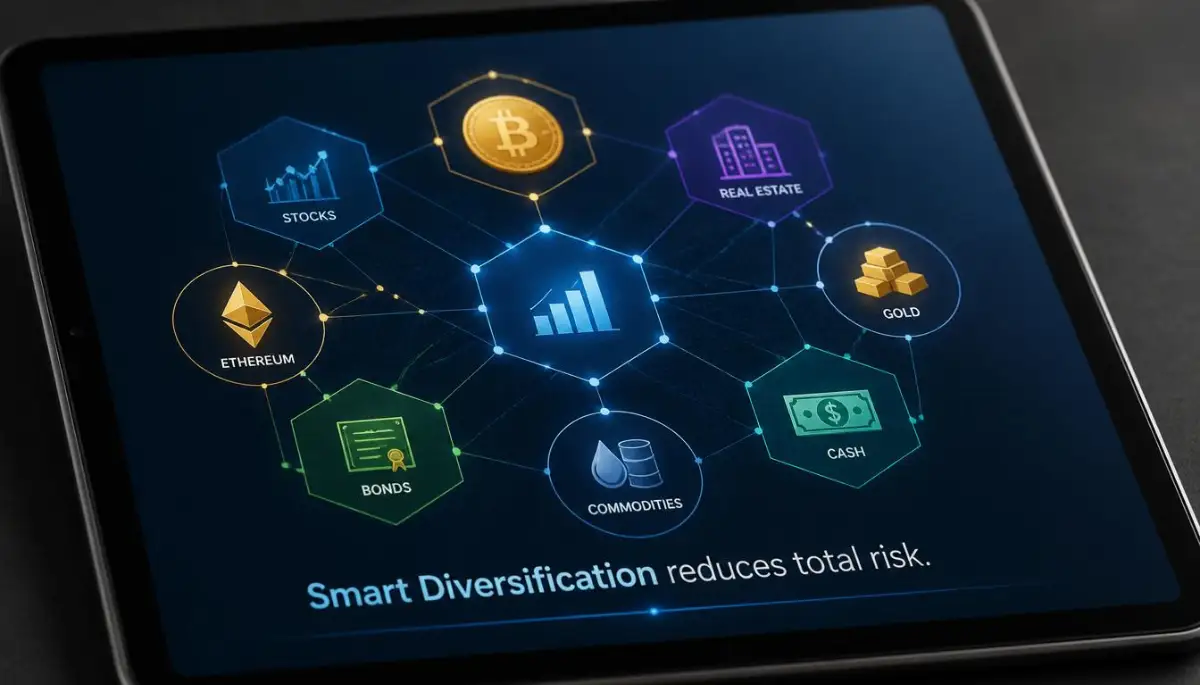
You might have heard the old saying, "Don't put all your eggs in one basket." In the digital world, this is even more important.
Digital markets are made of many different sectors. Some are for storage of value, while others are for smart contracts or privacy.
If you spread your investments across these different sectors, you reduce your risk. If one sector has a bad day, another might be having a great day.
This balance helps keep your total portfolio value more stable. It turns the wild mountain peaks into gentle hills.
Setting Your "Exit Doors" Before You Enter
Imagine walking into a building that is on fire, but you don't know where the exits are. That is what trading without a "Stop-Loss" feels like.
A stop-loss is an automatic order that sells your asset if the price drops to a certain level. It protects you from losing more than you can afford.
Before you even buy an asset, you should decide at what price you will leave. This removes the emotion from the decision.
When the price hits that mark, the computer does the work for you. You don't have to sit there crying over a screen, wondering what to do.
Understanding the "Myth vs. Reality" of Market Wins
Let’s look at some common beliefs that lead to high risk.
The Science of Staying Calm
Managing risk is 20% math and 80% psychology. Your brain is wired to feel pain more intensely than joy.
When you see a 10% drop, your brain reacts as if you are being chased by a predator. This is called "Loss Aversion."
To fight this, we need to use logic. Look at the long-term history of the markets rather than the 5-minute chart.
History shows that markets move in cycles. There are periods of growth and periods of correction.
If you understand this cycle, you won't panic when the price goes down. You will see it as a natural part of the process.
Keep a Trading Journal
I highly recommend writing down why you are making an investment. Write it down in a simple notebook or a digital file.
Write your entry price, your exit price, and your reason for the move. When things get crazy, read your own words.
This helps you stay grounded in your original logic. It prevents you from making "panic moves" based on a tweet or a news headline.
The Power of "Dollar Cost Averaging"
Instead of trying to "time" the market perfectly, try a simpler method. This is called Dollar Cost Averaging (DCA).
You invest a fixed amount of money at regular intervals, like every week or every month. Sometimes you buy when the price is high.
Other times, you buy when the price is low. Over time, your average cost stays balanced.
This strategy is great because it takes the "guessing game" out of the equation. You don't have to worry if today is the "right" day to buy.
Protecting Your Digital Entrance
Risk management isn't just about price charts. It is also about technical security.
If you lose access to your digital wallet, your risk management plan doesn't matter. You must treat your security like a bank vault.
Use strong, unique passwords for every account. Never share your private keys or recovery phrases with anyone.
Expert Insight: Use hardware wallets for long-term storage. Keeping your assets on an exchange is higher risk than holding them yourself.
We also need to talk about "Two-Factor Authentication" (2FA). Always use app-based 2FA rather than SMS-based 2FA.
Hackers can sometimes steal your phone number, but it is much harder for them to steal your physical phone. This small step adds a massive layer of safety.
Avoiding the Trap of Leverage
Many new investors are tempted by "leverage" or "margin trading." This is when you borrow money to trade more than you have.
While this can increase your wins, it can also wipe you out in seconds. In a volatile market, leverage is like throwing gasoline on a fire.
If the price moves just a little bit against you, you can lose everything. For most people, staying away from leverage is the best risk management strategy.
Stick to "spot" trading where you actually own the asset. This way, even if the price drops, you still have the same amount of the asset.
You only lose if you sell at a lower price. With leverage, the exchange can force you to sell, leaving you with nothing.
Filtering the Noise
We live in an age of information overload. Every "influencer" has an opinion on where the market is going.
Most of these people are not experts. They are looking for views and engagement.
To manage your risk, you must limit your information sources. Choose two or three high-quality, data-driven sources.
Ignore the "moon" talk and the "doom" talk. Focus on the facts, the technology, and the actual adoption of the assets you hold.
If you can't explain why you own an asset in three simple sentences, you probably shouldn't own it. Knowledge is your strongest weapon against risk.
The Importance of Liquid Reserves
Always keep some "dry powder." This is a term for cash or stable assets that you don't invest.
Having liquid reserves means you aren't forced to sell your investments when you need money for a real-life emergency.
It also gives you the power to buy more when the market has a major crash. If you are "all in," you can't take advantage of low prices.
A healthy financial life requires balance. Your digital assets should be only one part of your overall financial picture.
Think about your savings, your insurance, and your physical assets too. When your life is balanced, you make better financial decisions.
You won't feel desperate. Desperation is the enemy of good investing.
By following these steps, you are no longer just a spectator. You are a disciplined participant who knows how to stay safe.
The digital market will always be volatile. But with these strategies, that volatility no longer has to be a threat to your peace.
You can watch the waves go up and down from the safety of your well-built ship. That is the true goal of financial risk management.
Moving Beyond the Basics of Asset Protection
Now that we have covered the foundation, it is time to look at how the pros handle their money.
Managing risk is not just about avoiding losses. It is about staying in the game long enough to see the wins.
Many people start with good intentions but lose their way when things get complicated.
I want to show you the methods used by people who have survived multiple market cycles.
These are not "get rich quick" tricks. They are logical ways to keep your wealth growing while others are panicking.
By the end of this guide, you will have a clear mental map of how to navigate even the craziest market moves.
The Power of Periodic Portfolio Rebalancing
One of the best-kept secrets of long-term success is "Rebalancing."
Imagine you start with 50% in stable assets and 50% in a high-growth digital coin.
If that coin doubles in price, it might now make up 75% of your total money.
This sounds great, right? But now you are much more exposed to a crash in that one coin.
A professional investor would sell some of that coin and move it back into stable assets.
This brings the ratio back to 50/50. It forces you to "buy low and sell high" without even thinking about it.
You are taking your profits and putting them into a safe place. This ensures that a single bad day doesn't wipe out months of progress.
Rebalancing also helps you keep your emotions in check. You aren't guessing when to sell; you are following a pre-set rule.
I recommend checking your ratios once a month or once a quarter. Don't do it every day, or you will drive yourself crazy with fees and stress.
Using Market Sentiment as a Tool
Have you ever noticed that the best time to buy is usually when everyone else is scared?
And the most dangerous time to buy is when everyone is posting screenshots of their gains?
Professional traders often look at something called a "Fear and Greed Index."
When the index shows "Extreme Greed," it is often a sign that the market is overvalued.
When it shows "Extreme Fear," it might mean the worst of the selling is over.
You can also look at historical market cycles and volatility studies to see how prices have behaved in the past.
This doesn't mean you can predict the future. But it does give you a sense of the "temperature" of the market.
If the room is too hot, you might want to step outside for a bit. If it is freezing, it might be time to look for opportunities.
Always remember that the crowd is usually wrong at the most important turning points.
Understanding Asset Correlation
This is a big one that many people miss.
If you own five different digital assets, but they all go down at the same time, you aren't diversified.
In the digital world, many smaller assets follow the price of the biggest ones like Bitcoin.
If Bitcoin drops, everything else often drops even harder. This is called "High Correlation."
To manage risk, you should look for assets that don't always move in the same direction.
This might mean keeping some of your wealth in traditional savings or even other types of digital technology.
Learning about the real power of blockchain technology explained can help you find projects with actual utility.
Projects with real-world use cases sometimes hold their value better than purely speculative ones.
Your goal is to build a "team" of assets where each member has a different job.
Developing Your Own Investment Thesis
Before you put a single dollar into a project, ask yourself: "Why am I doing this?"
Write it down. This is your "Investment Thesis."
It should be based on facts, not just a feeling or a recommendation from a YouTube video.
If your reason for buying was that the project has a new partnership, check if that partnership is still active.
If the reason changes, your investment should change too.
This keeps you from holding onto a "sinking ship" just because you hope it will come back up.
Hope is a very poor financial strategy. Data and logic are much better friends to have.
Tax Planning: The Hidden Risk
Most people forget that the government is their "unspoken partner" in every trade.
If you make a lot of money and then lose it, you might still owe taxes on the gains you made earlier.
This has ruined many people's financial lives. They spend their gains, and then a tax bill arrives that they can't pay.
Keep a small portion of every winning trade in a separate account for taxes.
This is a form of risk management that happens away from the price charts.
If you are dealing with a tough financial situation, you might need tips on how to rebuild your credit score after a major financial disaster.
Being smart with your taxes is just as important as being smart with your trades.

The Emotional Trap of "Revenge Trading"
We have all been there. You lose money on a trade, and you get angry.
You want that money back right now. So, you make a bigger, riskier trade to "fix" the loss.
This is called "Revenge Trading," and it is a one-way ticket to a zero balance.
When you trade with anger, you aren't looking at charts anymore. You are gambling against the market.
The market doesn't care about your feelings or your losses. It will take the rest of your money without hesitation.
If you have a big loss, the best thing to do is walk away from the computer.
Take a walk. Talk to a friend. Do anything except look at the market.
You need to let your brain cool down before you make another decision.
People who can't control their emotions will always lose their money to those who can.
The Danger of the "Cheap Coin" Illusion
I see this mistake every single day. A new investor sees a coin that costs $0.00001.
They think, "If it just goes to $1, I will be a millionaire!"
This is almost always a trap. The price of a coin doesn't tell you how "cheap" it is.
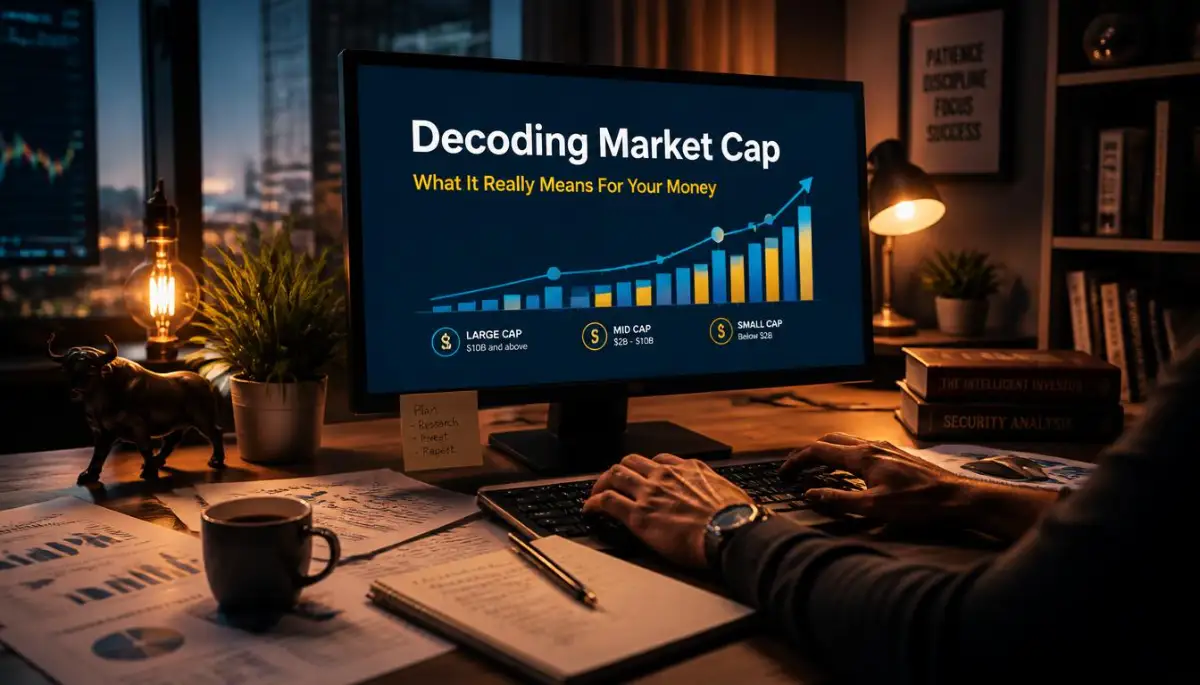
You have to look at the "Market Cap" and the total supply of the coins.
If there are trillions of coins, it will never reach $1. It is mathematically impossible.
Focusing on the price instead of the value is a very dangerous way to invest.
It often leads people to buy junk projects that have no real future.
Always look at the official data from financial regulators to understand how to spot scams and bad actors.
Protecting your capital means staying away from things that look too good to be true.
Neglecting Technical Security
You can be the best trader in the world, but if your account gets hacked, it is all for nothing.
Many people leave their life savings on an exchange with a weak password.
This is like leaving a pile of cash on your front porch and hoping nobody takes it.
You must take ownership of your digital security. This is a non-negotiable part of risk management.
I strongly suggest learning about the secret mechanics of cold storage.
Moving your assets to a place where only you have the keys is the ultimate safety move.
It also prevents you from "panic selling" because it takes a little more effort to move the funds.
This extra step can be the thing that saves you from a bad emotional decision.
Over-Monitoring the Market
Checking your portfolio 50 times a day is a form of self-torture.
The more you look at the price, the more likely you are to make a mistake.
Every small dip starts to look like a disaster. Every small pump starts to look like a moon mission.
Set alerts for specific price levels and then put your phone away.
Live your life. Spend time with your family. Go to work.
Your investments should work for you; you shouldn't be a slave to your investments.
If you can't sleep because of your positions, they are too big. Scale back until you can sleep peacefully again.
Your Path to a Secure Financial Future
Managing risk is a journey, not a destination. You will make mistakes, and that is okay.
The goal is to make small mistakes so that you never make a fatal one.
Start by taking one small step today. Maybe it is setting up 2FA, or maybe it is selling 5% of a risky asset.
Every small action builds your "safety wall." Over time, this wall becomes impossible for the market to break.
You are building a future where you have options and freedom.
Don't let the noise of the world distract you from your plan.
Stay calm, stay disciplined, and keep learning. The people who win in the long run are the ones who refuse to quit.
I believe you can master this. You have the tools and the knowledge now.
Take a deep breath and start making those smart choices today. Your future self will thank you for the care you took with your money.

![7 Hidden Traps in Decentralized Finance You Must Know [Step-by-Step Defense]](https://topic36.com/storage/uploads/blogs/1788868861_7-hidden-traps-in-decentralized-finance-you-must-know-step-by-step-defense.webp)