
Trapped in the Shadows: The Hidden Toll of a Dim Apartment
Have you ever woken up in your apartment, looked around, and felt an immediate sense of heaviness? You check your phone and see the sun is shining brightly outside, but inside your room, it looks like a gloomy evening.
This is a reality for so many of us living in compact city apartments or smaller homes. We pay hard-earned money for our personal spaces, only to feel like we are living inside a cave.
When your living space lacks natural sunlight, it does not just affect the aesthetic of your home. It slowly drains your daily energy. You might find yourself feeling sluggish in the middle of the afternoon, struggling to focus on your work, or simply feeling down for no obvious reason.
I know exactly how frustrating this can be. You buy beautiful furniture and expensive decor, but without proper lighting, everything just looks flat and lifeless. The walls seem to close in on you, making an already small room feel incredibly tight and suffocating.
Have you ever wondered why you prefer sitting by the window when you visit a cafe? Human beings naturally crave sunshine. Our bodies rely on it to regulate our sleep cycles and boost our mood.
When we are deprived of it in our own homes, our mental health takes a quiet, invisible hit. But here is the good news: you do not need to knock down walls or move to a glass penthouse to fix this.
You just need to trick the light. With a few smart design choices, you can grab whatever little sunlight enters your window and stretch it across your entire room. Let us explore exactly how to do that.
The Science of Illumination: Cheating Space with Design
If you want to completely transform your dark room, you have to stop thinking about decorating and start thinking about physics. Natural sunlight is basically a bouncing ball.
When it enters your room through a window, it hits the first surface in its path. If that surface is dark and heavy, the light stops right there. It gets absorbed, and the rest of your room stays dark.
But if that surface is reflective, glossy, or light-colored, the light bounces off it and hits another wall. Your goal is to keep that light bouncing for as long as possible. Let us break down the exact steps to turn your tiny space into a bright, airy sanctuary.
Step 1: The Strategic Magic of Mirrors
We all know that mirrors make a room look bigger. But most people use them completely wrong when trying to increase brightness.
Hanging a small mirror above your bed might look pretty, but if it is not facing a light source, it will not do much for your room. To really maximize natural light, you need to treat your mirrors like actual windows.
The Perpendicular Rule
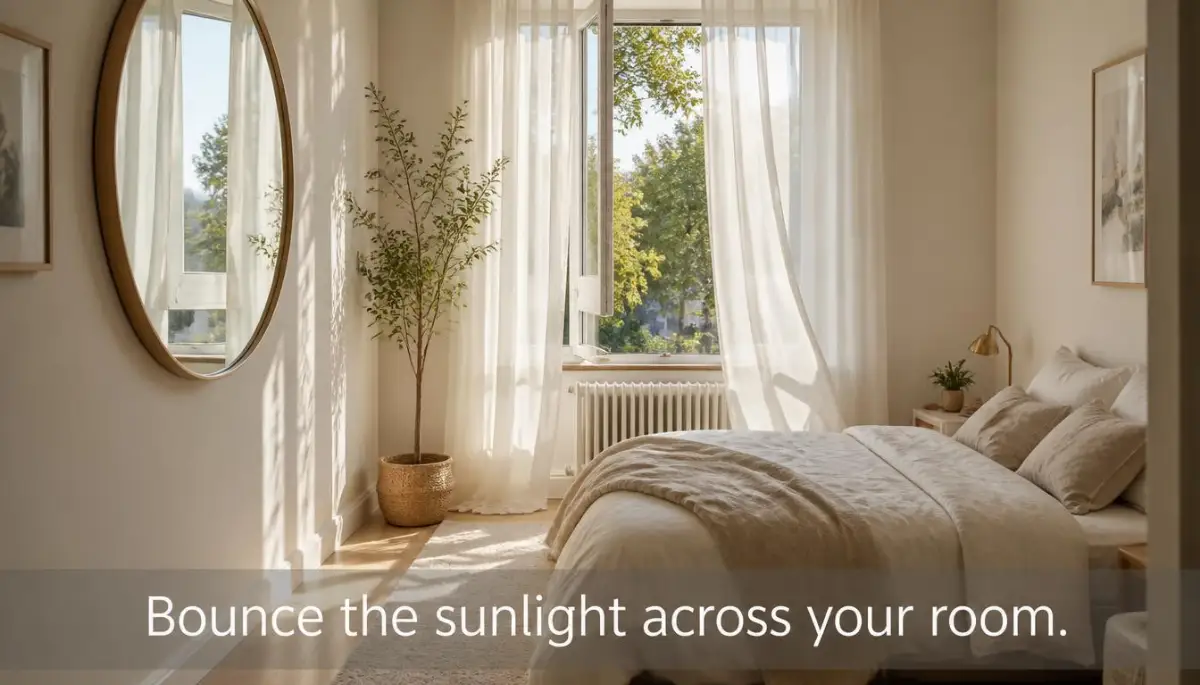
The absolute best place to put a large mirror is on the wall adjacent to your window. If you place a mirror exactly perpendicular to the glass, it catches the incoming sunlight at an angle and throws it deep into the darkest corners of your room.
Imagine playing pool. You hit the ball against the side cushion so it bounces into the corner pocket. Sunlight works exactly the same way.
Myth vs. Reality: The Mirror Trap
- The Myth: Putting a mirror directly opposite the window is the best way to get light.
- The Reality: While this does bounce light back, it often just bounces it straight back out the window it came from. It can also create a harsh, blinding glare. An angled or adjacent placement provides a much softer, more ambient glow across the entire space.
Step 2: Mastering Light Reflectance Value (LRV)
If you have ever stared at a paint color chart in a hardware store, you might have felt overwhelmed. But there is a secret number on the back of those paint chips that professional designers use. It is called the Light Reflectance Value, or LRV.
LRV measures how much light a paint color reflects on a scale from 0 to 100. Absolute black has an LRV of 0, meaning it absorbs all light. Pure white has an LRV of 100, meaning it bounces everything back.
Why LRV Matters for Small Spaces
If your room is small and dark, you should strictly use paint colors with an LRV of 60 or higher. This ensures that the walls are actively helping you bounce sunlight around, rather than swallowing it up.
Expert Insight: You do not have to paint your walls stark hospital white to get a high LRV. Soft creams, pale greys, buttery yellows, and even very light blush pinks can have LRVs in the 70s. This allows you to add warmth and personality to your room while still keeping it bright.
Step 3: Rethinking Your Window Treatments
Take a close look at your windows right now. Are your curtains blocking the edges of the glass even when they are fully open?
In a small space, every single inch of glass is precious. Heavy, thick drapes that bunch up at the sides are stealing your sunlight.
The High-and-Wide Illusion
Here is a brilliant trick you can do this weekend. Take your curtain rod down and reinstall it. Move it much closer to the ceiling, and extend it at least 6 to 10 inches wider than the window frame on both sides.
When you open your curtains now, the fabric will rest against the solid wall, not the glass. This completely exposes the entire window, allowing maximum sunlight to pour in.
Step 4: The Rule of Visual Weight in Furniture
When you live in a tight apartment, the furniture you choose can either make the room feel airy or incredibly heavy. Visual weight refers to how dense and solid an object appears to the eye.
If you put a massive, dark block of a sofa right in the middle of your living room, it acts like a wall. It stops the flow of light instantly. The floor around it falls into deep shadow, making the room feel cramped and tiny.
Choose Leggy Furniture
To fix this, swap out heavy, boxy items for furniture that sits elevated on legs. A sofa with exposed wooden or metal legs allows light to flow freely underneath it.
When you can see the floor continuing under your couch or bed, your brain automatically registers the room as being larger and more spacious. It is a simple optical illusion that works perfectly every single time.
Transparent Materials Are Your Best Friend
If you need a coffee table or a desk, consider buying one made of glass or clear acrylic. These materials have virtually zero visual weight.
Sunlight simply passes straight through them. It feels like they take up no space at all, leaving your room looking uncluttered and highly illuminated.
Step 5: High-Gloss Finishes for the Win
We talked about painting your walls with high LRV colors, but what about your furniture and decor? Matte finishes are very trendy right now, but they absorb light.
If you are fighting a dark room, you need to introduce glossy, reflective surfaces wherever you naturally can. This does not mean your home has to look like a shiny disco ball.
Subtle Touches of Shine
Think about adding a high-gloss white TV unit instead of a matte black one. Swap out dull wooden picture frames for sleek metallic ones.
Even your kitchen backsplash makes a massive difference. Glossy ceramic subway tiles will catch the morning sun and bounce it around your kitchen beautifully.
Pro Tip: Pay attention to your doorknobs and cabinet handles. Upgrading dark, matte iron hardware to polished brass or shiny chrome is a very cheap way to add tiny little light-reflectors all over your home.
Step 6: The Power of Light-Colored Flooring
People spend so much time worrying about their walls and windows that they completely forget to look down. Your floor is the second largest surface area in your home, right after your walls.
If you have dark mahogany wood floors or a deep grey carpet, you are fighting a losing battle against the shadows. Dark floors soak up sunlight like a sponge.
The Rug Solution
Now, I know you probably cannot rip out your apartment flooring and install new white oak panels today. But there is a very easy workaround.
Invest in a massive, light-colored area rug. A large cream, pale grey, or soft beige rug can instantly cover up a dark floor.
Because the rug is horizontal, it catches the sunlight pouring down from the window and reflects it straight up toward the ceiling. This creates a beautiful, ambient glow that instantly lifts the entire mood of the room.
Step 7: Trimming the Outside Obstructions
Sometimes the problem is not inside your house at all. Sometimes, the sunlight is being blocked before it even reaches your glass.
Step outside or stick your head out of your window. What is directly in front of it?
If you have overgrown bushes, tall potted plants on the balcony, or tree branches hanging down, they are acting like a natural shield. You would be amazed at how much brighter a room gets simply by trimming a tree branch that is a few feet away from the glass.
Keep your window sills completely clear. It is tempting to line up a dozen cute little succulent plants on your windowsill, but each of those little pots is casting a shadow into your room. Move the plants to a side table and let the glass do its job.
By applying these simple, practical steps, you can completely change the atmosphere of your home. You do not have to live in the dark. With a little bit of strategic planning, you can invite the sunshine back into your life, making your small space feel open, happy, and full of energy.
Beyond the Basics: Next-Level Tricks for Maximum Brightness
You have already learned how mirrors and paint colors can completely change a room. Now, let us look at some pro-level secrets that interior designers use to manipulate sunlight. These are the hidden details that turn a slightly bright room into a glowing, airy sanctuary.
First, let us talk about your window sills. Most people completely ignore the inner frame of their windows. If your window sills are painted a dark color or left as natural dark wood, they are actually eating the sunlight before it even enters your room.
The High-Gloss Sill Hack
Take a weekend afternoon and paint the inner frame and sill of your windows with a pure, high-gloss white paint. This acts like a mini runway for the sun. The glossy surface instantly catches the downward rays and shoots them straight up onto your ceiling.
This simple trick mimics a concept called a "light shelf," which is heavily used in commercial architecture. By reflecting light up toward the ceiling, you create a soft, ambient glow that reaches much deeper into the room. If you want to learn more about the exact physics behind this, the US Department of Energy offers an excellent breakdown on the principles of daylighting in buildings.
Remove Your Window Screens in Winter
Here is a controversial but highly effective tip. Window screens are essential in the summer to keep bugs out when you have the glass open. But during the cold winter months, those screens are just sitting there, blocking up to thirty percent of your natural light.
The tiny wire mesh acts like a heavy filter. Taking them off and storing them away during the colder months instantly makes your view sharper and your room noticeably brighter. It feels like taking off a pair of sunglasses indoors.
The Magic of Interior Glass Doors
If you live in a tiny apartment, solid wooden doors are your worst enemy. A solid door between a dark hallway and a bright bedroom completely blocks the flow of light. It chops your home up into tiny, isolated boxes.
Whenever possible, swap out solid interior doors for French doors or doors with frosted glass panels. A glass door allows the sunshine from a bright room to naturally spill over into a dark hallway. This creates a beautiful, seamless transition of light throughout your entire home.
Of course, making structural changes like swapping doors is much easier if you actually own your property. If you are currently renting a dark apartment and feeling frustrated, you might be considering a big move. Weighing your options carefully and understanding is buying a home smarter than renting the real money facts can help you decide if it is time to invest in a home with better natural architecture.
The "Jewelry" of the Room
Think of metallic decor as the jewelry of your room. You do not need large, overwhelming pieces of silver or gold to make a difference. Small, strategic touches of metal will catch the light from across the room and create tiny, sparkling reflections.
Strategic Metallic Placement
Place a shiny brass lamp on a side table directly opposite a window. Add a few silver candlesticks to your dining table. Even a polished copper tray on your coffee table will act as a mini reflector.
These small items bounce sunlight into the darkest corners of your space. They add layers of brightness without forcing you to paint everything white.
Outdoor Surroundings and Solar Impact
We often forget that the outside of our home heavily dictates the inside. The way the sun hits your building changes throughout the day, and you need to manage it wisely.
For example, if you have a concrete patio right outside your window, it acts as a massive reflector. It bounces harsh, hot light straight into your living room. Conversely, a dark brick wall next door will swallow the light before it reaches you.
Managing your home's energy and light is a daily habit. Much like practicing simple habits to protect your electric vehicle battery life, maximizing your home's natural resources requires awareness. By keeping the area immediately outside your windows clean and bright, you invite better light indoors.
Design Disasters: What is Secretly Stealing Your Sunshine?
Now that we know exactly what to do, we need to talk about what to avoid. Sometimes, we accidentally sabotage our own homes because we follow popular internet trends without thinking about our specific living situation.
There are a few massive mistakes that people make when trying to decorate small, dark spaces. Let us break them down so you can avoid these costly errors.
The "Moody" Paint Trap
We have all seen those gorgeous, dark green or charcoal grey bedrooms on social media. They look incredibly cozy, sophisticated, and dramatic in photographs. But here is the secret those photos hide: those rooms usually have massive, floor-to-ceiling windows.
If you paint a small room with standard windows in a dark, moody color, you are essentially building a beautiful cave. Dark paint absorbs light instantly. It will make your walls feel like they are shrinking toward you.
A Real-Life Example
Imagine a friend who paints her small, north-facing bedroom navy blue. North-facing rooms already get the weakest, coolest sunlight of the day. By adding a dark color, she has completely killed whatever little light was trying to survive.
If you truly love dark colors, use them as small accents. Paint a single piece of furniture navy blue, or use dark throw pillows. Never wrap a small, poorly lit room in a dark color unless you want to feel like you live underground.
The Bookshelf Barricade
Furniture placement is just as important as the furniture itself. One of the most common mistakes is placing tall, heavy furniture directly in the path of a window.
A tall bookshelf placed perpendicular to a window acts like a brick wall. It catches the light on one side and casts a massive, deep shadow across the rest of the room. This chops the room in half visually.
Keep the Path Clear
You must treat the natural light coming from your window like a flowing river. You want that river to flow as far into the room as possible. Always place your lowest furniture—like beds, low dressers, and coffee tables—closest to the windows.
Keep your tall wardrobes and high bookshelves on the walls furthest away from the light source. This simple rearrangement can make a room feel twice as large in just ten minutes.
Over-Layering Heavy Textiles
Winter weather often makes us want to buy chunky knit blankets, thick velvet curtains, and massive, dark area rugs. While these textures feel wonderful to the touch, they are optical black holes.
Heavy, matte fabrics absorb sunlight. If your room is full of velvet, suede, and thick wool, the light simply sinks into the materials and disappears.
Swap for Breezy Fabrics
Instead of velvet, opt for smooth cotton, light linen, and sheer silks. These materials reflect light much better and give the room a crisp, airy feeling. You can still be cozy without suffocating your room in heavy textures.
The Hidden Cost of Artificial Dependency
When your room is naturally dark because of bad design choices, you are forced to turn on the overhead lights at two in the afternoon. Living under artificial light all day has a hidden, heavy cost.
First, it completely disrupts your body's natural sleep cycle. Our brains need natural daylight to know when to be awake and when to rest. A comprehensive study on the impact of daylight on human health clearly shows how poor indoor lighting directly contributes to fatigue and poor mood.
Second, it hits your wallet. Constantly running electric lights during the day drives up your utility bills significantly. Over time, these unnecessary expenses can really hurt your monthly budget.
Financial stress combined with a gloomy living space is a terrible combination. If you have recently faced money struggles, learning how to rebuild your credit score after a major financial disaster is a great step to take alongside lowering your daily home expenses. Fixing your home's natural light actually helps your bank account in the long run.
Your Blueprint for a Happier, Brighter Home
Transforming a dark, cramped apartment into a bright and beautiful space does not require a massive renovation budget. It simply requires a change in perspective. You are now equipped with the exact tools and optical illusions that professional interior designers use every single day.
You know how to bounce light with strategic mirrors. You understand the importance of light reflectance values when choosing your paint. You know exactly why sheer curtains and leggy furniture make a room feel instantly larger.
Most importantly, you know exactly what design traps to avoid. You will no longer fall for trendy, heavy decor that secretly steals your sunshine.
Your Action Plan for Tomorrow Morning
Do not wait for a major renovation to start seeing changes. You can make a massive difference in your home within the next twenty-four hours.
Step 1: The Curtain Check
When you wake up tomorrow, look at your curtains. Pull them completely past the edge of the window frame. Let every single inch of glass see the sun.
Step 2: The Mirror Move
Find one mirror in your house that is currently facing a blank wall. Move it. Place it adjacent to a window so it can catch the morning light and throw it across the room.
Step 3: The Clutter Clear-Out
Look at your window sills. Remove the stacks of books, the tall vases, and the big potted plants. Clear the path for the sunlight to enter freely.
Living in a small space does not mean you have to sacrifice your comfort or your mental health. By working with the light instead of against it, you can create a home that feels open, inviting, and full of life.
You deserve to wake up in a space that makes you feel energized and happy. Take these simple steps today, and watch as your tiny, dark room transforms into your favorite place in the world.
Disclaimer: The interior design strategies and home improvement tips shared in this article are for informational and educational purposes only. Always consult with a professional contractor or landlord before making any structural changes, painting, or heavy installations in your home. We are not responsible for any damage or lease violations resulting from the application of these tips.
![The Secret to Sustainable Composting for Home Gardens [Step-by-Step]](https://topic36.com/storage/uploads/blogs/1787757524_the-secret-to-sustainable-composting-for-home-gardens-step-by-step.webp)