Losing Sleep Over Stolen Funds? My Wake-Up Call with Digital Banking
I remember staring at my banking app at two in the morning, completely paralyzed by a sudden negative balance. My hard-earned savings had vanished without a single alert or explanation from my trusted local bank. I immediately called customer service, only to be placed on endless hold by a robotic voice while my anxiety went through the roof. I felt entirely helpless, realizing that a massive corporation had total control over my financial survival. That terrifying night forced me to look for a financial system where I actually had absolute control. I desperately needed a setup where nobody could quietly freeze or drain my accounts behind closed doors.
Regular people face this silent financial dread every single day across the globe. You probably check your mobile banking app multiple times a week just to ensure your paycheck is still safely sitting there. We trust these massive financial institutions with our life savings, yet they operate in complete darkness. When a sudden "maintenance issue" blocks your access, your heart skips a beat.
You cannot buy groceries, pay for emergency medical bills, or simply transfer money to a family member in need. This lack of control completely destroys your peace of mind on a daily basis. Regular families are suffering heavily from hidden fees, unexplained transaction delays, and sudden, shocking account closures. You work incredibly hard to earn your paycheck, but the system holding it treats you like just another account number in a giant database.
People are completely exhausted from feeling like they have to ask a manager's permission to use their own money. The constant fear of identity theft or a centralized banking hack keeps many hard-working individuals awake at night. We are living in an advanced digital era, yet our financial safety nets feel incredibly fragile and outdated. You deserve a system where your money is mathematically protected, not just guarded by an empty promise from a corporate entity.
The Mechanics Behind the Magic: How Decentralized Systems Protect Your Money
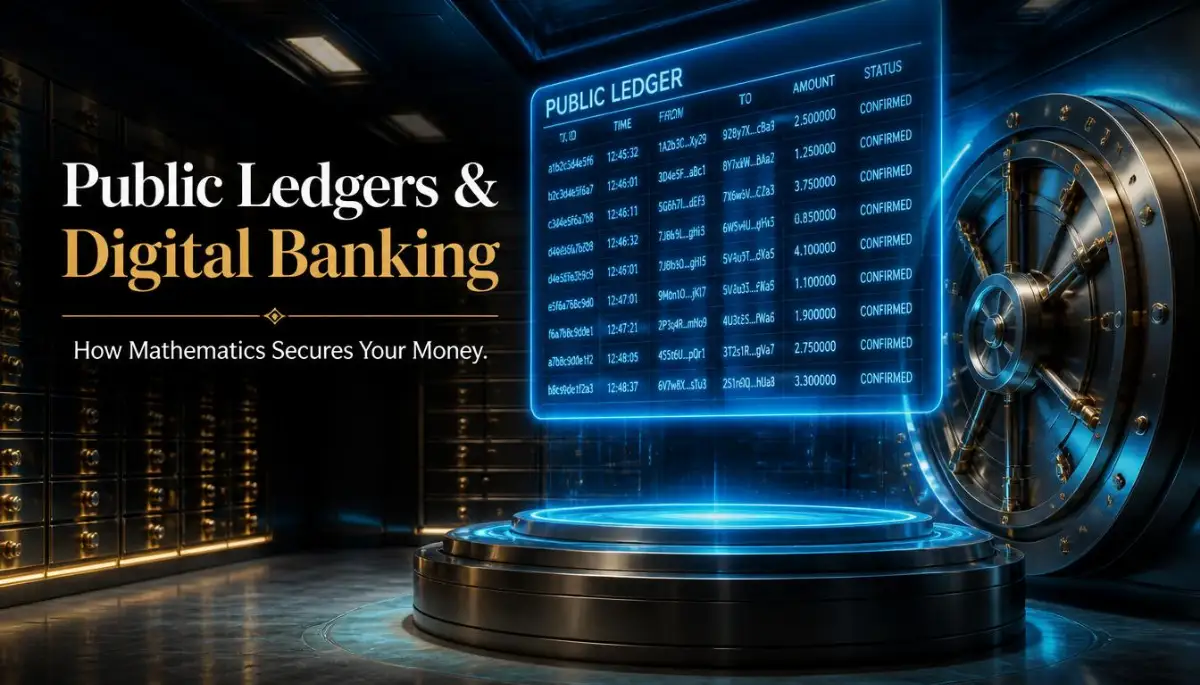
If we want to fix these massive banking anxieties, we need to understand exactly how open financial technology operates. A public ledger is essentially a shared digital notebook that records every single transaction in real-time. Instead of one bank keeping this notebook locked in a private vault, thousands of independent computers hold an identical copy.
This means that if someone tries to cheat and erase a transaction, all the other computers will instantly reject the lie. This decentralized approach creates a financial environment built on mathematical truth rather than blind corporate trust. Let us explore exactly how this technology ensures your money stays exactly where it belongs.
The Glass Vault Analogy: Understanding Open Ledgers
Imagine a traditional bank as a large brick building with blacked-out windows. You hand your money to the teller, and they take it into a back room where you can never see it again. You just have to hope they are managing it properly and keeping accurate records.
Now, imagine a public ledger as a massive vault made entirely of bulletproof glass sitting in the middle of a busy town square. Everyone walking by can clearly see the money moving from one transparent box to another. However, absolutely nobody can break the glass to steal or alter the contents.
This level of absolute openness means that any suspicious activity is instantly visible to the entire world. Auditors, everyday users, and security experts can continuously verify that the system is functioning perfectly. This removes the dark corners where financial fraud typically hides.
Cryptographic Locks: Why Your Funds Stay Untouched
Open visibility sounds great, but how do we stop thieves from simply reaching in and taking the funds? The answer lies in advanced cryptography, which acts as an unbreakable digital padlock. When you hold funds on a public ledger, you are given a unique set of mathematical keys.
Your "public key" is like a slot on a mailbox where anyone can drop money in. Your "private key" is the actual physical key needed to open that mailbox and spend the funds. As long as you never share your private key, it is mathematically impossible for anyone else to touch your money.
Even the smartest hackers in the world cannot guess this private key because of the sheer complexity of the underlying math. This shifts the security power directly into your hands, completely bypassing the need for a bank manager to guard your wealth.
Watch this exact breakdown of how these digital keys secure your everyday transactions and prevent unauthorized access:
How Decentralization Prevents Single Points of Failure
Traditional digital banking relies heavily on a central server to process your debit card swipes and online transfers. If a severe storm knocks out power to that server, or if a targeted hacker takes it offline, your financial life comes to a sudden halt. You are left entirely stranded at the checkout counter, unable to buy necessities.
Public ledgers completely eliminate this single point of failure by spreading the workload across the globe. These networks are supported by thousands of independent computers, often referred to as nodes. If one node goes offline due to a power outage, the thousands of other nodes instantly pick up the slack without missing a beat.
This guarantees an incredible level of uptime, meaning your money is always accessible exactly when you need it. You never have to wait for a bank to open on a Monday morning to access your own hard-earned funds.
Myth vs Reality: Are Public Ledgers Actually Safe for Daily Banking?
Many people hear the word "crypto" or "ledger" and immediately assume it is a lawless, dangerous place for their money. This is a massive myth created by a lack of proper education and sensationalized news headlines. The reality is that major public ledgers are the most highly audited and continuously monitored financial networks in human history.
- The Myth: Hackers can easily break into the main ledger and steal everyone's money at once.
- The Reality: Hacking a major decentralized ledger requires taking over 51% of the global network simultaneously, an effort so expensive and complex that it is practically impossible.
- The Myth: Because it is public, everyone knows exactly who you are and how much you have.
- The Reality: Transactions are tied to random strings of numbers and letters, not your actual name or home address.
This brilliant balance allows the network to confirm that funds exist without exposing your deeply personal identity to strangers. You get the perfect mix of absolute privacy for yourself and total transparency for the system.
I used to think that storing my funds on a hardware wallet was way too complicated, but I quickly realized it is actually easier than opening a traditional checking account. My biggest mistake early on was ignoring self-custody entirely, which left me vulnerable to platform crashes and frozen accounts. Taking the time to learn basic security steps gave me more financial confidence than I ever had with a regular bank.
Tracking Every Penny Without Exposing Your Identity
One of the biggest concerns everyday users have is how transparency affects their personal privacy. If a ledger is entirely open to the public, does that mean your nosey neighbor can see exactly what you spend your money on? The answer involves a clever system called pseudonymity.
When you use a digital wallet on these networks, you are never asked to upload your passport, provide your social security number, or give your home address. Your identity is simply a long, random string of cryptographic characters. Anyone can look at the ledger and see that "Wallet A" sent money to "Wallet B."
However, unless you openly tell someone that you own "Wallet A," they have absolutely no way of connecting that digital activity to your real-life identity. This provides a powerful shield against identity theft, which is a massive problem in traditional banking systems. Hackers cannot steal your personal data from a ledger because that data simply does not exist there.
Consensus Mechanisms: The Digital Security Guards
In a normal bank, a human being or an automated corporate software approves or denies your transaction. If they make a mistake, or if they decide they simply do not like your transaction, your money gets stuck. Public ledgers use something far more reliable called a consensus mechanism.
This is essentially a mathematical voting system where all the computers on the network must agree that your transaction is valid. Before any money actually moves, these computers check the public history to ensure you actually have the funds you are trying to send. If someone tries to send fake money, the network immediately sees the error and rejects the transfer.
This completely solves the ancient banking problem of "double-spending," where a fraudster tries to spend the same digital dollar twice. Because the entire network must agree, there is no single corrupt manager who can be bribed to approve a fake transaction.
Traditional Banking vs Public Ledger Systems
This clear comparison shows exactly why millions of people are eagerly shifting their savings into systems they can personally verify. You no longer have to blindly trust an institution that repeatedly fails to protect consumer data.
Real-Life Scenarios: When Traditional Banks Fail and Ledgers Save the Day
Let us look at a very common, frustrating scenario that almost everyone has experienced at least once. Imagine you are trying to send emergency funds to a family member who lives in a different country. You go to your traditional bank app, enter their details, and hit send.
Suddenly, your bank flags the transaction as "suspicious activity" simply because it is an international transfer. They freeze your entire account, forcing you to wait days just to speak with a fraud prevention specialist. Your family member is left stranded, waiting for money that is locked inside a corporate server.
Now, compare this absolute nightmare to sending money via a decentralized public ledger. You enter your family member's receiving address and authorize the transaction with your private key. Within minutes, the global network mathematically verifies the transfer, and the funds arrive perfectly safely.
There are no geographical borders, no sudden account freezes, and absolutely no middleman demanding a high percentage fee. The transparent nature of the system ensures that both you and your family member can track the exact status of the money in real-time.
The Psychological Relief of Absolute Financial Independence
We often talk about the technical side of cryptography, but we rarely discuss the massive mental health benefits of these systems. When you finally take true ownership of your digital assets, a profound sense of relief washes over you. You are no longer nervously checking your bank app on a Sunday evening, wondering if a sudden server update will lock you out.
You know exactly where your money is, and you know exactly what is required to move it. This psychological freedom is the true value of decentralized technology. It transforms you from a dependent customer into a fully independent financial actor.
You can confidently build your savings, knowing that your wealth is secured by the exact same mathematics that protect highly classified military communications. You finally gain the peace of mind that comes from absolute transparency, unbroken uptime, and unbreakable cryptographic security.
Taking Command of Your Digital Wealth: Pro-Level Security Habits
Once you understand how decentralized networks mathematically protect your funds, it is time to upgrade your daily habits. Just relying on the technology itself is not enough if you practice poor personal security. You need to create a personal environment where your digital money is completely untouchable by outside threats.
I want to share some incredibly practical methods that advanced users rely on every single day to keep their accounts completely safe. These are not overly complicated technical tasks that require a computer science degree. Instead, they are simple, logical shifts in how you handle your digital privacy.
The Power of Cold Storage Devices
Most people start their journey by keeping their funds on a digital exchange or a software app on their mobile phone. While these are incredibly convenient for daily spending, they are still connected directly to the internet. This permanent online connection creates a tiny window of risk where sophisticated malware could potentially grab your information.
To completely shut this window, experts recommend moving long-term savings into something called a cold storage wallet. This is a small physical device that looks almost exactly like a standard USB thumb drive. Its only job is to generate and store your private cryptographic keys completely offline.
When you want to send money, you plug this device into your computer and approve the transaction by pressing a physical button. The device signs the digital math equation offline and only sends the completed signature back to your computer. This means your private key never actually touches the internet, keeping your wealth entirely isolated from remote hackers.
Mastering the Art of Multi-Signature Accounts
If you are managing funds with a spouse or running a small business, relying on a single private key can feel incredibly risky. What if that one person loses access or accidentally misplaces the recovery phrase? Public ledgers offer a brilliant built-in solution for this exact problem, commonly known as multi-signature setups.
Think of this like a high-security bank vault that requires three separate managers to turn their keys at the exact same time. You can easily program your digital wallet to require two out of three specific devices to approve any outgoing transaction.
For example, you could set it up so that a transaction requires approval from your smartphone and your partner's laptop. If a thief somehow steals your smartphone, they still cannot move a single penny because they do not have your partner’s device. This mathematically eliminates single points of failure within your own household.
Establishing an Ironclad Recovery Routine
When you set up a new digital wallet, the software will generate a master password, usually a list of 12 to 24 random English words. This sequence is your ultimate backup plan, often called a recovery phrase. If your phone breaks, burns in a fire, or falls into a lake, this list of words will instantly restore your entire account on a brand new device.
Because this phrase is so incredibly powerful, you must treat it like physical gold. You should never rely on your memory alone, as human memory is completely unreliable under heavy stress. Instead, write these words down clearly on a thick piece of high-quality paper using a waterproof pen.
Many people take this a step further by engraving their recovery words into small plates of stainless steel. This ensures that your backup plan can survive a house fire, a major flood, or years of physical wear and tear. You are effectively building an indestructible safety net for your financial future. When you focus on designing a routine that genuinely works for you, maintaining these backups becomes completely stress-free.
Network Congestion and Verifying Your Transfers
Sometimes, open financial networks experience a massive rush of users trying to send money all at once. During these busy periods, your transaction might take a few extra minutes to confirm on the public ledger. Many beginners panic in this exact moment, assuming their money is lost forever in cyberspace.
Understanding how the network processes data helps eliminate this unnecessary anxiety entirely. Before a transfer becomes permanent, it sits in a temporary digital waiting room where computers verify the math. As long as you entered the correct receiving address, your transaction will either process successfully or safely return to your wallet.
You can actually monitor this process live by pasting your transaction ID into a public block explorer website. It is incredibly important to ensure you have a highly stable connection before sending large amounts of money. Implementing simple steps for ensuring a stable connection during transactions will prevent your app from timing out right when you hit the send button. If you want to dive deeper into how secure connections protect data, reading up on understanding basic cryptography standards is incredibly helpful.

Silent Traps That Can Drain Your Digital Savings
Even with the most advanced mathematical security in place, human error remains the biggest threat to any financial system. We are so used to traditional banks hitting the "undo" button when we make a mistake that we carry these sloppy habits into decentralized networks. On a public ledger, there is absolutely no customer service desk to call if you accidentally send your funds to a scammer.
If you make a permanent mathematical error, your money is completely gone, and no authority can reverse the math. Understanding these common pitfalls before you make them is the absolute best way to protect your hard-earned wealth. Let us look closely at the everyday mistakes that cost innocent people their entire life savings.
The Cloud Storage Disaster
One of the most devastating mistakes you can ever make is storing your 12-word recovery phrase on an internet-connected device. People often take a quick photo of their backup words and leave it sitting in their mobile camera roll. Others copy and paste the words into an email draft, a digital notes app, or a cloud drive folder for "safe keeping."
This entirely defeats the purpose of decentralized security because you are handing your ultimate master key over to a centralized server. Hackers constantly scan cloud storage accounts looking for images that contain standard backup words. The moment they find your photo, they can recreate your wallet on their own computer and empty your account in seconds.
Your recovery phrase must remain entirely offline from the exact moment it is generated. Treat your digital security exactly like you would organize your environment for better focus—keep the clutter out and the important things in plain sight offline.
Falling for the Fake Customer Support Illusion
Because decentralized networks do not have official help desks, thousands of scammers pretend to be "network administrators" on social media. If you post a question on Twitter or a community forum asking for help with a delayed transaction, these thieves will instantly reply. They often use highly professional logos and verified checkmarks to make themselves look incredibly official.
They will politely ask you to verify your account by typing your master backup phrase into a special support link. They use very empathetic, friendly language to make you feel like they genuinely want to help you fix your problem. You must understand that a legitimate developer will absolutely never ask for your private recovery words.
The moment you type those words into their fake website, they steal everything you own instantly. You have to train yourself to aggressively ignore random direct messages from anyone claiming to be financial support. The Federal Trade Commission offers excellent guides on how to recognize and avoid modern phishing scams that you should definitely read.
The Danger of Blindly Signing Approvals
When you interact with advanced digital banking apps, they often ask for permission to access the funds inside your wallet. The prompt usually pops up on your screen quickly, looking like a standard terms of service agreement. Many users simply smash the "Approve" button without actually reading what the smart contract is asking to do.
Some malicious websites code these approvals to request unlimited access to every single dollar you hold. If you approve this blind request, the scammers can legally drain your account days or weeks later without any further interaction from you.
You must slow down and treat every single digital prompt like a legally binding contract. Always read the exact limits the application is requesting before you use your private key to sign the approval. Taking five extra seconds to read the screen can easily prevent a complete financial disaster. Establishing strict password and identity security guidelines for your own household creates a massive protective barrier.
The 'Test Transaction' Oversight
Imagine you are trying to move a large portion of your life savings from an exchange into your personal hardware vault. The receiving address is an intimidating string of randomly generated letters and numbers that looks completely unreadable. A major mistake beginners make is copying this long address and immediately sending their entire life savings on the very first try.
If there is a hidden piece of malware on your computer, it might quietly change the address when you hit the paste button. This is known as clipboard hijacking, and it tricks you into sending your money directly into a hacker's wallet instead of your own.
To completely avoid this nightmare, always send a tiny micro-transaction first as a safe test. Wait for that small amount of money to officially appear in your personal wallet and verify the exact math. Once you confirm the path is entirely clear and safe, you can confidently send the remaining large balance. By consistently accessing reliable daily resources, you can stay updated on the latest security practices.
Securing Your Complete Peace of Mind Today
Shifting your mindset from traditional banking to a fully transparent, user-controlled system initially feels like a massive leap. However, the incredible freedom that comes with absolute ownership of your digital assets makes the learning curve entirely worth it. You are finally stepping out of a system where hidden fees, sudden account freezes, and zero transparency dominate your daily life.
By utilizing the open nature of public ledgers, you are holding your wealth in an environment built on unbreakable mathematical truth. Nobody can quietly inflate your money, silently censor your transactions, or deny you access on a weekend. You hold the master keys to your own digital vault, giving you a level of financial independence that previous generations could only dream about.
If you practice basic digital hygiene and keep your master phrases safely offline, this technology will serve you incredibly well for decades. The power has finally shifted away from giant corporate buildings and placed directly back into the palm of your hand.
I remember the exact moment I successfully moved my savings entirely offline and watched the transaction clear on the transparent network. A massive weight lifted off my shoulders because, for the first time in my life, my money was finally my own. I strongly encourage you to take one small step today towards securing your funds mathematically, because your peace of mind is totally worth the effort.
People Also Ask About Ledger Security
Are public ledgers completely anonymous?
No, they are actually pseudonymous, meaning your identity is hidden behind a random string of numbers and letters. While people can easily see the transactions moving across the network, they cannot immediately connect that digital activity to your real-life name.
What actually happens if I lose my private keys?
If you completely lose both your hardware device and your written backup phrase, your funds are permanently locked on the network. Because the system is decentralized, there is no CEO or customer service team that can reset your password or recover the money for you.
Can a decentralized network get shut down by the government?
Because the network is run by thousands of independent computers spread globally, it is virtually impossible for a single entity to simply turn it off. Even if one specific region bans the technology, the rest of the global nodes will continue processing transactions without any interruption.
How much does it actually cost to use these open networks?
Transaction fees vary depending on how busy the network is at the exact moment you are trying to send money. Unlike traditional banks that charge high flat fees for international wires, you only pay a variable network fee to the computers processing the math.
Do I need to be a professional tech expert to use this safely?
Absolutely not, as modern wallet applications have become incredibly user-friendly and intuitive over the last few years. As long as you follow basic safety rules like keeping your backup words entirely offline, the software handles all the complicated cryptography for you automatically.
Disclaimer: The information provided in this article is for educational and informational purposes only and should not be construed as financial, investment, or legal advice. Digital assets and public ledger technologies carry inherent risks, including market volatility and the potential loss of funds due to user error. Always conduct your own independent research or consult with a certified financial professional before making any investment decisions or heavily altering your personal banking strategies.