
The Trap of the Penny Asset
I lost exactly $4,200 during my third month of trading because I bought a digital currency solely because it cost a fraction of a penny. My logic was entirely based on emotion and a lack of basic financial literacy. I looked at the screen and thought that if this tiny token just reached one dollar, I would be a multi-millionaire by Friday. I threw my entire savings into the trade without once looking at the total supply of the asset. A week later, after doing actual research, I realized that for the token to reach one dollar, its total value would have to exceed the entire global economy. That single, painful mistake forced me to learn how market dynamics actually function behind the scenes.
What is Market Capitalization? (At-a-Glance)
Market capitalization (often called market cap) is the total dollar market value of a company's outstanding shares of stock or a cryptocurrency's circulating supply. You calculate it by multiplying the current price of one share (or coin) by the total number of shares (or coins) available in the market. It tells you what a company is actually worth, not just the price of a single slice of the pie.
The Heavy Cost of "Unit Bias"
Every day, ordinary people throw their hard-earned paychecks at cheap stocks and meme coins. They log into their brokerage accounts and see a stock trading for $2 alongside a stock trading for $2,000. Human psychology immediately assumes the $2 stock is a bargain. Financial psychologists call this dangerous trap "unit bias."
This bias destroys portfolios silently. Retail investors accumulate massive bags of worthless assets because they want to own thousands of shares rather than a small fraction of a quality asset. They suffer massive anxiety watching their cheap stocks drop by 50% in a single afternoon.
- Investors buy based on the illusion of cheapness.
- They ignore the underlying mechanics of supply and demand.
- They end up holding heavily manipulated assets with no real liquidity.
- The stress of holding highly volatile, low-quality assets ruins their peace of mind.
People constantly chase the thrill of finding the next big thing. They spend hours scrolling through social media forums looking for a secret ticker symbol. Instead of building stable wealth, they turn their investment accounts into a digital casino.
How Does Market Capitalization Actually Dictate Value?
Evaluating an asset based strictly on its share price is a recipe for disaster. The price tag on a single share tells you absolutely nothing about the actual size, stability, or potential of the underlying business.
You have to look at the entire footprint of the asset. Think of it like evaluating a physical building before a massive renovation. Just as you need a deep understanding of structural limits before building a property extension, you need to understand the structural value of a company before expanding your investment portfolio.
Why is the price per share completely irrelevant?
The share price only represents a single slice of a much larger pie. If a company is worth $100,000 and issues 100 shares, each share is worth $1,000. If that same company issues 100,000 shares, each share is worth $1.
The company is still worth exactly $100,000 in both scenarios. A retail investor who buys the $1 share isn't getting a better deal than the person who buys the $1,000 share. Corporate boards regularly split their stock to artificially lower the share price, making it look more attractive to uneducated buyers.
This tactic is purely psychological. It is a surface-level change designed to increase volume, much like painting the walls and using staging tricks to artificially boost market appeal for an empty house. The underlying value remains exactly the same.
How do you calculate market capitalization correctly?
You determine the market capitalization of an asset by multiplying the current market price of one unit by the total number of outstanding units. Outstanding units are all the shares currently held by all shareholders.
For example, if a tech company trades at $50 per share and has 20 million shares outstanding, the market capitalization is $1 billion. This metric gives you an immediate, realistic picture of how the broader market values the entire enterprise.
Major regulatory bodies consistently urge retail investors to use this metric. Educational resources from the U.S. Securities and Exchange Commission highlight that evaluating a company's total size helps you understand the specific market risks involved with that asset.
What is the difference between circulating supply and fully diluted valuation?
Circulating supply refers to the shares or coins that are actively available to trade by the public right now. Fully diluted valuation (FDV) calculates the market capitalization if every single possible share or token were released into the open market.
This distinction is massive in the cryptocurrency sector. Many digital projects launch with only 10% of their tokens available to the public. The circulating market capitalization might look small and attractive.
However, if you calculate the FDV, you often realize the project is severely overvalued. When the founders unlock and dump the remaining 90% of the tokens onto the market, the price per coin crashes immediately.
The Reality Check: My biggest breakthrough happened when I stopped sorting my watchlist by daily percentage gain and started filtering exclusively by market capitalization. I suddenly saw how highly manipulated low-cap assets were, and it completely changed my risk management strategy. I stopped losing sleep over wild price swings.
Decoding Investment Tiers and Risk Levels
Once I started doing this with my own portfolio, everything shifted. Grouping investments by their total market capitalization allows you to instantly gauge the expected volatility and growth potential.
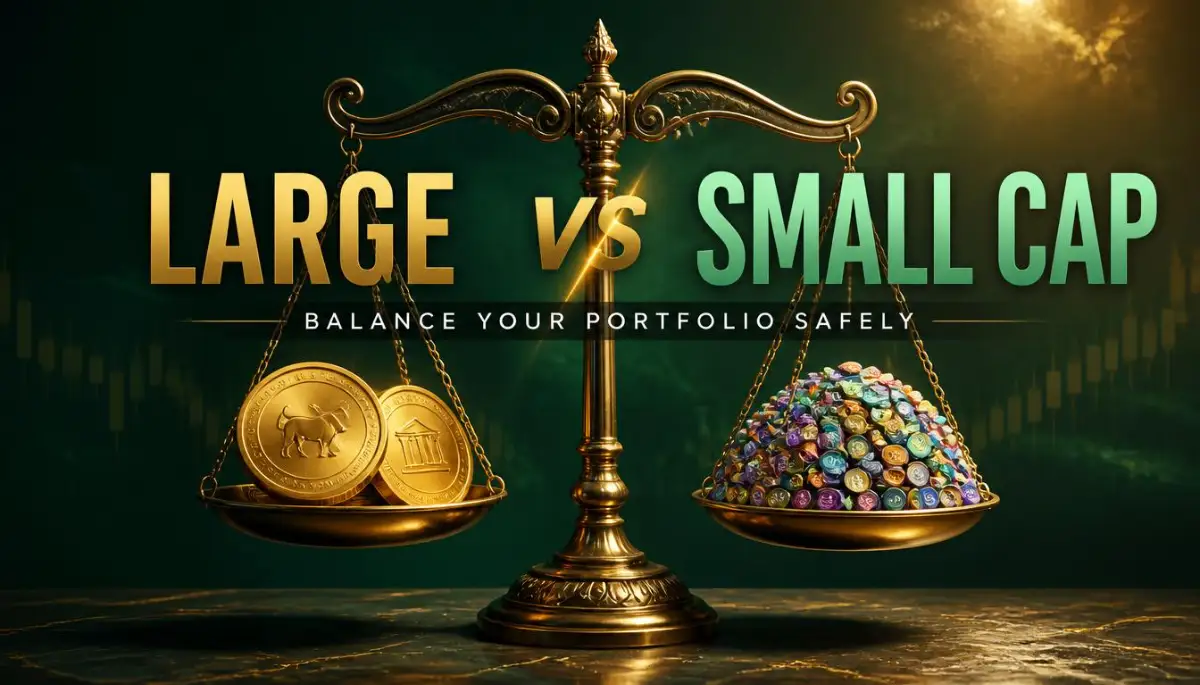
Large-cap companies generally offer stability and steady dividends. Small-cap companies offer explosive growth potential but come with a very high chance of bankruptcy.
You need to inspect every asset meticulously. Treat a new stock exactly how you would approach a physical asset purchase. Using strict, proven ways to inspect an asset's integrity helps you spot red flags before you commit your capital.
The Asset Size Comparison Matrix
Understanding the traditional brackets for market capitalization helps you build a balanced portfolio. Here is a breakdown of how Wall Street categorizes traditional equities based on their total market value.
You can clearly see that chasing a micro-cap asset exposes you to extreme volatility. These tiny assets lack the liquidity needed to absorb large sell orders. A single wealthy investor selling their position can crash a micro-cap stock by 40% in minutes.
Research published by independent financial institutions shows that retail investors who concentrate their holdings in micro-cap stocks drastically underperform the broader market averages over a ten-year period. Proper asset allocation demands a mixture of these different tiers.
Does a massive market capitalization mean the asset is safe?
No asset is entirely immune to market corrections, regardless of its size. A mega-cap company has a proven business model and global reach, but it can still suffer from poor management or sector-wide economic downturns.
Large market capitalization acts as a buffer against total collapse, but it also limits future percentage gains. A company worth $2 trillion simply cannot double in size as quickly as a company worth $2 billion. The laws of mathematics prevent it.
Managing a portfolio of stable, large-cap assets requires immense patience and discipline. It often mirrors the reality of managing physical properties. The process is slow, heavily reliant on long-term trends, and you constantly deal with the hidden maintenance of your investment strategy as economic conditions slowly shift over the decades.
Special Considerations for Cryptocurrency Investors
Digital assets follow the exact same mathematical rules as traditional stocks, but the terminology often confuses new buyers. The crypto market introduces unique variables like infinite inflation, burn rates, and algorithmic supply changes.
If you do not understand how these tokenomics affect the market capitalization, you are essentially gambling in the dark.
Why do crypto token unlocks destroy your investment?
Token unlocks occur when previously frozen tokens are released into the circulating supply. This event dramatically increases the total number of coins available on the market.
If the market capitalization remains stable, an increase in token supply mathematically forces the price of each individual token to drop. You can hold a coin while the project gains total market value, but your personal portfolio still loses money because your slice of the pie was diluted.
How to protect yourself from crypto inflation traps?
Check the tokenomics whitepaper before you buy any digital asset. Look specifically for the schedule of upcoming token emissions.
If a project has an aggressive unlock schedule, avoid it. You want to buy assets where the circulating supply is very close to the fully diluted valuation.
Studies from leading economic research bureaus highlight that highly inflationary digital assets systematically transfer wealth from retail buyers to early venture capitalists. Do not become exit liquidity for institutional insiders.
Here is an excellent visual breakdown explaining exactly how fully diluted valuation impacts the future price of your assets.
Watch this breakdown to understand the math behind token unlocks.
Myth vs Reality: The Cheap Coin Fallacy
The Myth: Buying a cryptocurrency priced at $0.00005 guarantees massive returns because it is easier for the price to double than it is for a $60,000 Bitcoin to double.
The Reality: Growth is strictly bound by market capitalization, not unit price. For a meme coin with a supply of one quadrillion to reach $1, it would require more money than currently exists on planet Earth. A $60,000 Bitcoin requires far less new capital to reach $120,000 than a heavily diluted penny coin requires to hit one cent.
The Pre-Investment Market Capitalization Checklist
You need a strict system to evaluate assets before you risk your money. Relying on gut feelings or social media hype always leads to heavy losses over time.
Use this checklist every single time you find a new stock or digital token you want to purchase.
- Locate the total outstanding supply: Find the exact number of shares or coins currently in existence.
- Calculate the current market capitalization: Multiply the current price by the outstanding supply.
- Compare against industry rivals: Look at the market capitalization of the top three competitors in the same sector.
- Identify the FDV (For Crypto): Determine what the market cap will be when all future tokens are unlocked.
- Assess the growth ceiling: Ask yourself if it is realistic for this company's total value to 2x or 5x based on current global economic conditions.
- Verify liquidity: Ensure there is enough daily trading volume so you can easily sell your position without crashing the price.
Following these specific steps completely removes emotion from your trading strategy. You stop looking at the shiny price tag and start looking at the actual mathematical reality of the business.
Financial professionals never look at the share price in isolation. They look at the total weight the asset holds within the broader market economy.
When you train your brain to see market capitalization first, you instantly spot overpriced traps. You protect your capital, reduce your daily stress, and position yourself to make logical, data-driven decisions that actually build long-term wealth.
Advanced Strategies for Evaluating Total Value
Once you stop staring blindly at the share price, your entire perspective shifts. You begin to analyze digital assets and traditional stocks like a business owner rather than a gambler. Mastering a few specific, high-level screening techniques significantly reduces your risk of buying highly manipulated assets.
The secret lies in understanding how different market segments behave during economic cycles. You cannot treat a three-billion-dollar mid-cap stock the same way you treat a fifty-million-dollar micro-cap crypto token.
Institutional traders use specific liquidity and valuation metrics to determine if an asset is worth holding. You can easily replicate these exact strategies from your living room using free online tools.
Tracking the Volume-to-Market Cap Ratio
Market capitalization tells you the size of the asset, but it does not tell you if anyone is actually buying or selling it. An asset can have a market capitalization of one billion dollars but only see ten thousand dollars in daily trading volume.
This creates a massive liquidity trap. If you buy into that asset and try to sell later, there might not be enough buyers on the other side of your trade. You will be forced to sell your shares at a massive discount just to get your money out.
To avoid this, always check the 24-hour trading volume relative to the total market capitalization.
A healthy asset usually trades between 3% and 10% of its total market capitalization every single day. If a digital currency has a one billion dollar market cap but only sees one million dollars in volume (0.1%), walk away. The market cap is a ghost town, propped up by a few heavy bags that nobody can actually sell.
Sector-Specific Valuation Mapping
A common mistake is comparing the market capitalization of companies across entirely different industries. A technology startup and a traditional utility company operate under completely different profit margins and growth ceilings.
If you are researching a new decentralized finance protocol, you must compare its market capitalization strictly to the top three established decentralized finance protocols.
If a brand-new protocol launches with a fully diluted valuation of $40 billion, but the absolute undisputed leader in that exact same sector only has a market capitalization of $15 billion, the new project is severely overpriced.
Institutional research published in top-tier economic journals confirms that retail investors frequently ignore these sector ceilings. They buy into heavily marketed new projects without realizing the mathematical impossibility of the project overtaking the entire industry overnight.
The Dangers of Low-Float Flooding
Low-float assets are the absolute favorite playground for market manipulators. The "float" refers to the specific number of shares or tokens that are currently available for retail investors to trade on the open market.
Sometimes, a company might have 100 million total shares, but 95 million of them are locked up by corporate insiders, founders, or early venture capital firms.
This leaves a very "low float" of only 5 million shares actively trading. When demand spikes even slightly, that tiny float causes the price per share to skyrocket aggressively.
Retail buyers see the massive green candle and start buying in aggressively, assuming the company is fundamentally strong. They do not realize the price is only rising because the float is artificially choked.
When those insiders finally unlock and sell their 95 million shares into the open market, the retail investors get crushed. The total market capitalization might remain the same, but the share price drops by 90% because the supply suddenly flooded the market.

The Pitfalls: How Emotion Blinds Logic
People lose money heavily when they ignore fundamental math in favor of short-term hype. Social media algorithms aggressively push the most sensational investment stories to the top of your feed.
You see a random influencer claiming a dog-themed coin will hit ten dollars next week. If you don't calculate the market capitalization required for that event to happen, you become prime exit liquidity.
Falling for the "Next Bitcoin" Narrative
Every single day, a new digital asset launches claiming to be the next Bitcoin. The marketing material focuses entirely on how cheap the token is compared to Bitcoin's massive price tag.
New buyers look at a token priced at $0.01 and convince themselves it is a rare, ground-floor opportunity.
They completely ignore that the new token has a maximum supply of ten trillion coins. If that cheap token simply reached a ten-dollar valuation, it would be worth more than the entire gross domestic product of the United States.
You must train yourself to aggressively reject unit bias. The price per coin is the absolute last metric you should look at when evaluating an asset.
Ignoring the Fully Diluted Valuation (FDV) Trap
This mistake single-handedly wiped out thousands of portfolios during the last major cryptocurrency bull market.
Retail investors bought heavily into new gaming tokens because the circulating market capitalization looked tiny and primed for explosive growth.
However, they completely failed to check the project's emission schedule.
Many of these projects only had 2% of their total supply circulating on day one. Their circulating market cap was $50 million, but their fully diluted valuation was $2.5 billion.
Over the next twelve months, the project founders slowly unlocked and sold the remaining 98% of the tokens.
The poor retail buyers watched their portfolio value bleed out daily, confused because the overall project seemed popular. They did not understand that the total pie was getting bigger, but their personal slice was shrinking down to crumbs.
The Comfort of Mega-Cap Complacency
While chasing micro-cap hype is dangerous, leaning too far in the opposite direction can also damage your long-term goals.
Many investors assume that buying a two-trillion-dollar company completely protects them from any downside risk.
They dump their entire life savings into one or two mega-cap technology stocks and stop paying attention. They assume size equals guaranteed safety.
A massive market capitalization heavily insulates a company against sudden bankruptcy, but it does not protect the share price from heavy 30% or 40% corrections during macroeconomic shifts.
When you buy a mega-cap company, you are paying a massive premium for stability. You have to accept that your money will grow much slower compared to smaller, agile competitors. Failing to diversify across different market caps leaves your portfolio completely unbalanced and heavily exposed to sector-specific stagnation.
Quick Answers for Common Questions
Does market cap change every day?
Yes, it changes constantly while the markets are open. Because the calculation uses the current share price, any slight movement up or down in the daily price instantly changes the total market capitalization of the asset.
Can a small-cap company become a large-cap company?
Absolutely, but it usually takes many years of sustained revenue growth. Most small companies fail or get bought out long before they ever reach a large-cap valuation, which is exactly why they carry such high risk.
Is fully diluted valuation only used in crypto?
No, stock market investors also calculate a very similar metric. They look at a company's outstanding stock options and convertible bonds to see how much the current shares might be diluted in the future if those options are exercised.
Why do some cheap stocks have massive market caps?
They simply issued a massive number of shares. A company worth $100 billion might decide to issue 50 billion individual shares, mathematically forcing each single share to trade at just two dollars.
A Clear Strategy for the Road Ahead
When I stopped caring about the price of a single share and started looking exclusively at the total market footprint, my entire trading strategy calmed down. I stopped checking my phone every five minutes and finally started making logical, long-term decisions that actually worked.
Understanding this single mathematical concept acts as a massive shield against bad investments. You instantly recognize when a token is heavily manipulated, and you immediately spot when a company is severely overpriced compared to its actual market share.
You no longer have to guess or rely on social media rumors. The math tells you exactly what you are buying, exactly how much risk is involved, and exactly what kind of realistic growth you can expect over the next five years.
Just a quick thought before you log into your brokerage app: I am simply someone who learned these harsh financial lessons the hard way after taking heavy losses, not a certified financial planner. Before you overhaul your entire investment strategy or throw money at a new sector, it is highly recommended to run your ideas past a registered financial advisor who understands your specific long-term goals.