The Hidden Frustration Behind Our Everyday Money Transfers
I still remember the massive headache I got while trying to receive my very first large international payment for a freelance project. I had worked day and night for weeks, and the client finally sent the funds. But instead of feeling relieved, my anxiety skyrocketed.
The money completely disappeared for five whole days. It was not in my client's account, and it certainly was not in mine. I called my local bank, waiting on hold for almost an hour, only to speak to a representative who told me the funds were "stuck in a clearing house."
I felt completely helpless and frustrated. My rent was due, my grocery bill was piling up, and my own hard-earned money was trapped somewhere in the system. I had to borrow cash from a friend just to survive that week. That was the exact moment I realized how deeply broken our traditional system truly is.
Average people deal with this exact same nightmare every single day. We rely on institutions that operate only during standard business hours, taking weekends and holidays off while our bills certainly do not. You want to send money to a sick relative across the border, but the system tells you to wait until Monday morning.
This constant waiting drains our mental peace. We are forced to pay hidden processing fees, conversion charges, and intermediary cuts just to move our own wealth from point A to point B. The anxiety of seeing "Pending" on your dashboard for days is something no one should have to endure.
Every time we buy a house, rent an apartment, or hire a contractor online, we are forced to trust expensive middlemen to hold our funds. We pay them a large percentage just to guarantee that the other person will not run away with our money.
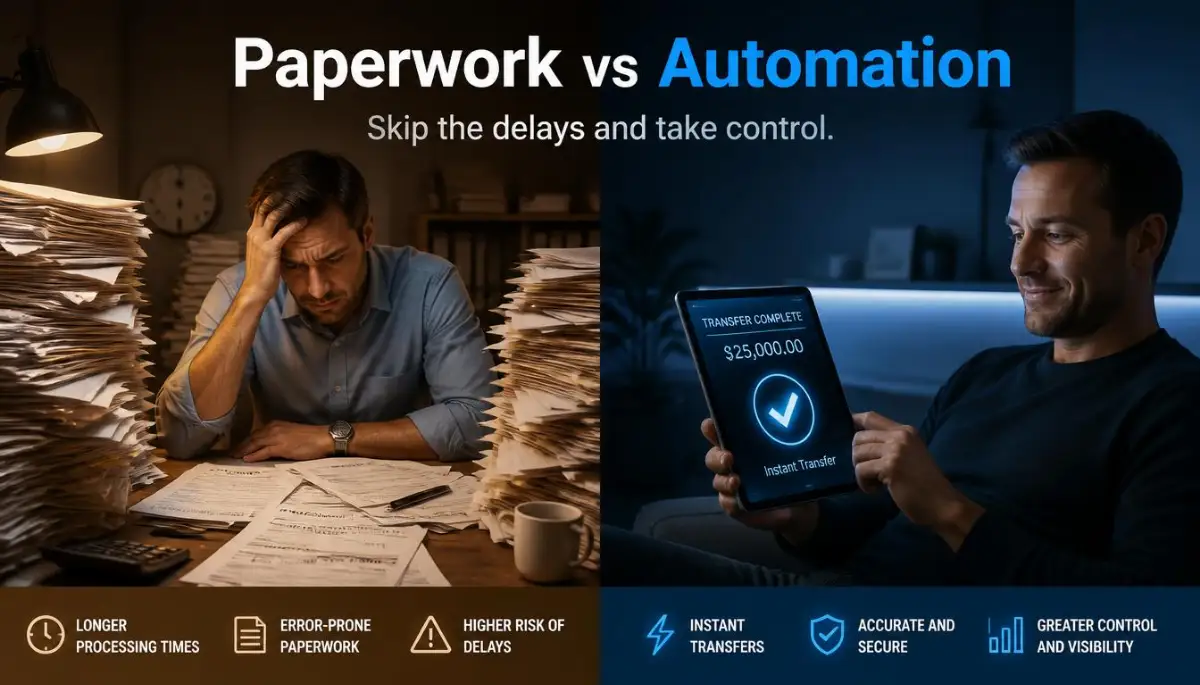
How Automated Digital Agreements Actually Work
We desperately need a system that does not sleep, does not take holidays, and does not charge us just for breathing. This is exactly where automated digital agreements come into play. People often get intimidated by the technical terms, but the core concept is incredibly simple and highly logical.
Think of it like buying a soda from a vending machine. You do not need to negotiate with a cashier, sign a piece of paper, or wait for a manager's approval. You simply drop your coin in, press a button, and the machine automatically dispenses your drink.
Automated digital agreements work exactly the same way, just for your money. They are self-executing rules written straight into a digital ledger. When specific conditions are met, the action happens instantly. No humans involved, no delays, and no room for excuses.
Breaking Down the Invisible Middleman
Let us look at how this directly impacts our daily lives through real-world scenarios. Imagine you are buying a used car from someone you met online. Normally, neither of you trusts each other. You do not want to hand over the cash until you get the title, and the seller will not give you the title until they have the cash.
In the traditional world, you might hire an expensive escrow agent to hold the funds. But with an automated digital setup, you both agree to a set of rules. You deposit your funds into a neutral digital lockbox.
Once the digital title of the car is transferred to your name, the lockbox automatically releases the funds to the seller. If the seller never sends the title, the funds automatically bounce back to your wallet. The entire process takes seconds, and no one has to pay an escrow fee.
Pro Tip: When I first tried setting up one of these automated agreements, I completely ignored the network fees, commonly known as gas fees. I ended up paying way more than I expected for a simple transfer, so my biggest advice is to always check the network congestion before approving any transaction. This small habit will save you a lot of unnecessary expenses.
Escaping the Cross-Border Payment Trap
Another massive relief comes for families sending money back home. Traditional remittance companies take a huge slice of your money. They hide their profits in terrible exchange rates and flat fees.
Want to see exactly how these digital agreements replace traditional banks in real-time? Check out this incredibly simple breakdown that explains the whole process in under 5 minutes.
With automated blockchain agreements, you bypass the remittance company completely. A worker in London can send digital funds directly to their family's wallet in Dhaka instantly. The code verifies the transaction in seconds, and the family receives the full amount immediately.
This level of financial freedom changes lives. People can pay for emergency medical bills instantly instead of waiting days for a wire transfer to clear.
Myth vs Reality: Clearing Up the Confusion
A lot of misinformation spreads when new technology disrupts old industries. Let us clear up some of the biggest misunderstandings right now.
Myth: These automated digital systems are only for tech experts and coders.
Reality: You do not need to know a single line of code. Modern platforms provide simple, user-friendly interfaces where you just click buttons to set your terms, similar to using a mobile banking app.
Myth: The contracts can easily be hacked or changed by the creator.
Reality: Once an agreement is locked onto the decentralized network, it becomes completely unchangeable. No one, not even the person who created it, can alter the rules halfway through the deal.
Myth: It is only useful for trading digital coins.
Reality: These automated rules are being used right now for real estate, supply chain tracking, and even automated insurance payouts.
Structuring Trust Without Human Bias
Human beings are naturally flawed. We make mistakes, we forget things, and sometimes, people act unfairly. A traditional contract relies heavily on a judge or a lawyer to enforce it if something goes wrong.
That means if someone breaks a promise, you have to spend thousands of dollars and months of your life fighting them in court. This legal battle is exhausting and often not worth the effort for smaller amounts of money.
An automated contract entirely removes human bias. The code does not care about excuses. It does not matter if the other party says they are having a bad day or their dog ate their homework.
If the agreed-upon conditions are met, the transaction happens. If they are not met, the transaction fails. This binary system brings absolute fairness to business dealings.
A Real-Life Look at Freelance Escrow
Let us revisit my earlier struggle with freelance payments. Today, the system is dramatically different for those who choose to adapt.
A client and a freelancer can now use a decentralized platform. The client funds the project upfront, and those funds are locked tightly in a digital agreement.
The freelancer works with complete peace of mind, knowing the money is already secured. Once the freelancer submits the approved work, the system reads the approval and instantly deposits the money into the freelancer's wallet.
There are no clearing houses. There are no five-day waiting periods. The freelancer gets paid for their hard work the very second the job is marked complete.
Comparing Traditional vs Automated Systems
To make this even easier to understand, let us put the old way and the new way side by side.
This table clearly shows why major corporations and everyday individuals are shifting their focus. You save time, you save money, and you maintain complete control over your assets.
Revolutionizing Supply Chain Transparency
Let us step outside of just sending money and look at buying physical goods. Have you ever ordered something expensive online and tracked the package obsessively?
Traditional supply chains are messy. A product moves from a factory to a shipping port, to a cargo plane, to a local warehouse, and finally to your door. At every step, different companies use different tracking systems.
When a package gets lost, the shipping company blames the warehouse, and the warehouse blames the airline. No one wants to take responsibility, and you are left fighting for a refund.
Automated agreements fix this entire mess. Every time the package changes hands, an automatic digital signature is logged on the public ledger.
If you agreed to pay the supplier only when the goods reach your local port, the payment is held securely in the digital lockbox. The exact moment the port authority scans the package, the code triggers the release of your payment to the supplier.
Automating Insurance Claims
One of the most frustrating experiences in life is dealing with an insurance company after a disaster. Your flight gets canceled, or your crops are destroyed by a storm, and you desperately need your payout.
Normally, you have to fill out endless forms, wait for an adjuster to review your case, and hope the company does not find a loophole to deny your claim.
Imagine an automated flight insurance policy. You buy a digital policy before your trip. The contract is directly linked to the official global flight database.
If your flight is delayed by more than two hours, the database updates automatically. The contract sees this update and instantly sends the compensation to your phone.
You do not have to call customer service. You do not have to submit any proof. You get your money while you are still sitting at the airport gate. This is not science fiction; this is happening right now.
Securing Peer-to-Peer Lending
Borrowing money from a bank requires a perfect credit score, endless documentation, and waiting for an underwriter's approval. If you do not fit their exact criteria, you are quickly rejected.
Through decentralized finance protocols, you can bypass the bank entirely. You can borrow directly from another person on the internet securely.
You deposit a digital asset as collateral into the automated contract. Once the deposit is verified, the loan amount is instantly sent to you.
As you pay back the loan with interest, the contract logs every payment. When the loan is fully repaid, your collateral is automatically unlocked and returned to you.
If you fail to pay, the contract automatically liquidates a portion of your collateral to repay the lender. The lender never has to hire a debt collector, and you never have to deal with aggressive phone calls. It is completely objective and fair.
Why You Should Pay Attention Now
Many people assume they can just ignore these technological shifts. They think they will just keep using their regular bank accounts and let other people figure out the digital stuff.
But staying entirely dependent on outdated systems means you are actively choosing to pay more fees. It means you are choosing to wait longer for your own money.
By taking a little bit of time to understand how these self-executing agreements work, you give yourself a massive advantage. You protect yourself from inflation, you skip the middleman, and you take back control of your financial privacy.
Start small. You do not need to move your life savings into a digital wallet today. But understanding the mechanics of how trust is being automated will prepare you for a future where traditional banks become obsolete.
Leveling Up Your Digital Strategy: Pro Habits for Everyday Users
Transitioning to automated digital agreements might feel a bit intimidating at first glance. However, once you understand the basic mechanics, you can start using some advanced strategies to protect your assets and save even more money. You do not need a computer science degree to master these habits.
You just need to adopt the mindset of becoming your own bank manager. When you control your own wealth directly, the responsibility falls entirely on your shoulders. Let us look at how the experts handle their digital interactions behind the scenes.
The Secret of the "Micro-Test" Transaction
One of the best habits you can ever develop is sending a tiny test amount before moving any significant funds. Imagine you are about to transfer a large payment for a freelance job or a real estate deposit. Instead of sending the full amount right away, just send a fraction of a penny first.
Wait a few moments and verify that the test amount arrived exactly where it was supposed to. Only after you confirm the safe arrival should you process the main transaction. This simple five-minute habit acts as an incredibly powerful safety net against typos and system errors.
If you are dealing with a faulty connection, you should probably fix your slow internet connection before approving high-stakes financial moves. A stable connection ensures your wallet communicates smoothly with the decentralized network.
Mastering Network Congestion and Hidden Costs
Automated digital networks run on processing fees, commonly known as gas fees. These fees do not go to a bank; they go directly to the computers around the world that are keeping the network secure. These costs fluctuate wildly depending on how many people are using the network at any given moment.
If you try to process an agreement during peak business hours in major global cities, you will pay a premium. The secret is to time your transactions during off-peak hours, like late nights or weekends. Just by waiting a few hours, you can often drop your processing fees by more than half.
You can use various network trackers to monitor these fees in real-time. According to recent research from the National Bureau of Economic Research on blockchain transaction costs, user behavior heavily dictates network congestion. Simply being patient puts more money back into your own pocket.
Understanding "Unlimited Allowances"
This is perhaps the most misunderstood concept for beginners interacting with decentralized applications. When you use a new digital platform to trade or lock up funds, the system will ask for your permission to access your wallet. Most people just blindly click "Approve" without reading the fine print.
Often, these platforms ask for an "unlimited allowance," meaning they want permission to move an infinite amount of your digital assets. It is exactly like going to a restaurant and handing the waiter a blank, signed check instead of just paying for your meal.
You should always manually edit these permissions inside your wallet before clicking approve. Only grant the application access to the exact amount you plan to spend that day. When developers focus on building products that people actually love, they are now starting to make these safety limits much clearer on the screen.
The Cold Storage Vault Strategy
If you are holding a significant amount of value in these automated agreements, you should not leave everything in a standard mobile app. Mobile and browser-based wallets are considered "hot wallets" because they are constantly connected to the internet.
Instead, you should invest in a physical hardware wallet. This is a small, offline device that holds your digital signature securely. Whenever you want to approve a new automated contract, you actually have to plug the device in and press a physical button.
This creates a massive physical barrier against remote hackers and malicious software. Even if someone gains access to your computer, they cannot approve a transaction without holding that physical device in their hands.
The Hidden Traps That Destroy Beginners
We have to have a very honest conversation about the darker side of this technology. Because there are no middlemen, there is also no customer service hotline to call when you make a terrible mistake. The freedom of self-custody comes with a very steep learning curve.
I still get a pit in my stomach when I hear stories of hard-working people losing their savings because they rushed into a digital agreement. These systems execute exactly as they are coded, even if the code was designed to drain your wallet. Let us look at the most dangerous pitfalls you must actively avoid.
The Nightmare of the Lost Recovery Phrase
When you first create a digital wallet to interact with smart contracts, the system generates a list of random words. This is your master recovery phrase. It is the only way to recover your assets if you lose your phone or your computer breaks.
The biggest mistake people make is taking a screenshot of these words and leaving it on their phone. If your phone gets compromised, hackers search specifically for those screenshots first. Once they have those words, your money is gone instantly, and no authority can reverse it.
You must write these words down on a physical piece of paper and lock it away in a safe or a bank vault. Treat that piece of paper as if it were a massive stack of pure gold bars.
Falling for the "Too Good to Be True" Yield Trap
Many new platforms will pop up offering massive financial rewards for locking your money into their automated agreements. They might promise completely unrealistic daily returns to lure in excited beginners.
This is almost always a carefully designed trap. The creators write hidden rules into the digital contract that allow them to drain all the deposited funds the moment enough people participate. Because the code is open source, bad actors are constantly launching these fake platforms.
You must verify that the contract has been officially audited by reputable third-party security firms. The Federal Trade Commission frequently warns consumers about the irreversible nature of digital asset scams. Always stick to established, battle-tested protocols that have safely held funds for long periods.
Ignoring the Network Address
Every digital wallet and automated agreement has a unique identification number, which looks like a long string of random letters and numbers. It is virtually impossible to memorize.
People often try to copy and paste these addresses, but malicious software can secretly change your clipboard data. You might think you are pasting your friend's address, but you are actually pasting a hacker's address.
Always double-check the first four and the last four characters of any address before you hit the send button. Just like you would carefully arrange a room to maximize natural light for a better living space, you must carefully align your digital details for a safe transaction. A single wrong character means your funds are permanently lost in the digital void.
Blindly Trusting Pretty Interfaces
A beautifully designed website does not mean the underlying automated agreement is safe. Hackers are excellent graphic designers. They will build websites that look identical to famous, trusted financial platforms.
When you connect your wallet to these fake sites, the contract they ask you to sign is actually designed to steal everything you own. You might think you are approving a simple trade, but you are actually signing a digital transfer of all your assets.
Always manually type the website address into your browser or use saved bookmarks. Never click on direct links from random emails or social media messages, no matter how authentic they look. For a deeper understanding of navigating the web safely, you can always browse our main platform to stay updated on best practices.
Your Next Steps Toward Financial Freedom
We have covered exactly why the traditional system is failing us and how automated digital agreements provide a permanent solution. The era of waiting days for a wire transfer, paying hidden fees, and trusting expensive middlemen is slowly coming to an end.
You are now standing at the very beginning of a massive financial revolution. The transition might feel a little bumpy right now, but the benefits of taking personal control over your wealth are completely undeniable. The code is transparent, the rules are fair, and the network never sleeps.
Start by downloading a highly rated, self-custodial wallet and exploring how the interface works without actually adding any money yet. Get comfortable with the terminology and practice reading the permission screens. Taking these small, educational steps today will put you years ahead of the general public.
My biggest piece of advice is to just remain curious and stay patient with yourself while learning this new language. I started my journey completely overwhelmed, but taking it one small transaction at a time completely changed my financial life. You have the exact same power in your hands right now, so take a deep breath and start exploring.
Common Questions About Decentralized Agreements
Are these digital agreements legally binding in a real court?
Yes, in many modern jurisdictions, courts are beginning to officially recognize automated digital agreements as legally binding contracts. The unique digital signature provides absolute mathematical proof of your consent. However, you should always consult local regulations for massive purchases like real estate.
Do I need to be rich to start using this technology?
Absolutely not. You can start interacting with these systems using just a few dollars to learn how the mechanics work. Many decentralized networks have processing fees that cost less than a fraction of a cent.
What happens to my automated contract if my internet goes down?
Once you approve a transaction and it is sent to the network, your personal internet connection no longer matters. The global network of computers will process and verify the agreement entirely on its own. You will see the completed result as soon as you get back online.
Is it possible to cancel or reverse a transaction once it starts?
No, and this is by design to prevent fraud and unauthorized charge backs. Once a digital agreement is executed on the public ledger, it is permanently locked in history. This is exactly why sending small test transactions is such a necessary habit.
Can a hacker easily change the rules of an active contract?
No, the decentralized nature of the ledger makes it virtually impossible to alter the rules after they are published. Even the original creator cannot change the core conditions without building a completely new contract from scratch.
Disclaimer: The information provided in this article is strictly for educational and informational purposes only and does not constitute financial, legal, or investment advice. Engaging with digital assets and smart contracts carries inherent risks, including the potential loss of funds. Always conduct your own thorough research and consult with a certified financial advisor or legal professional before making any financial decisions or interacting with decentralized platforms.
![7 Hidden Traps in Decentralized Finance You Must Know [Step-by-Step Defense]](https://topic36.com/storage/uploads/blogs/1788868861_7-hidden-traps-in-decentralized-finance-you-must-know-step-by-step-defense.webp)