The Quiet Worry: Is Your Dream of Solar Power Safe for Your Home?
You have seen the ads. You have heard the neighbors talk about lower electric bills. The idea of waking up and knowing the sun is powering your fridge and TV feels amazing.
But then, you look up at your roof. You start to wonder about the weight. You think about the heavy rain or the strong winds that hit your neighborhood.
Suddenly, that "free energy" dream feels a bit heavy. What if the roof groans under the weight? What if you spend thousands on panels only to find out your house can’t hold them?
I talked to a homeowner recently who felt this exact fear. He spent nights worrying that his older roof would cave in. He didn't want to be the guy who broke his house while trying to save the planet.
This stress is real. Your home is your biggest investment. Adding hundreds of pounds to the top of it isn't a small decision.
We are going to walk through this together. We will look at the signs that show your roof is a hero or if it needs some help first. You deserve to have solar power without the fear of a roof failure.
Why Your Roof’s Backbone Matters More Than You Think
Before we look at the shingles, we need to talk about the "bones" of your house. Your roof has a job to do every day. It holds itself up and keeps the water out.
When we add solar panels, we are asking the roof to do extra work. Each panel can weigh about 40 pounds. A full system might add 1,000 pounds or more to your structure.
This isn't just about the panels sitting there quietly. We have to think about what happens when the wind blows hard. The panels can act like a sail on a boat.
The wind tries to lift them or push them down. Your roof must be strong enough to resist these forces. If the structure is weak, those forces go straight into your walls.
Let’s look at the science of "Load Types." Your roof is built for two main types of loads. First is the Dead Load, which is the weight of the roof materials themselves.
Second is the Live Load. This includes things like snow, wind, or people walking on the roof. Solar panels are a new, permanent "Dead Load" that your builder might not have planned for.
The First Step: Checking the Age and Health of Your Shingles
You wouldn't build a new house on a shaky foundation. The same logic applies to your solar panels. If your roof is nearing the end of its life, it isn't ready for solar.
Most shingle roofs last about 20 to 25 years. If your roof is already 15 years old, you have a choice to make. Solar panels last for 25 to 30 years.
If you put new panels on an old roof, you will have to take them off in five years to fix the roof. This costs a lot of money in labor. It is much smarter to sync these two timelines.
Look for signs of aging from the ground. Are the shingles curling up at the edges? Do you see bald spots where the granules have washed away?
If you see these signs, your roof material is getting brittle. Brittle shingles can crack when workers walk on them to install the racks. This leads to leaks that you won't see until it’s too late.
Pro Tip: If your roof has less than 10 years of life left, replace the roof first. Many solar companies offer a package deal for both.
Investigating the Attic: The Secret Story of Your Rafters
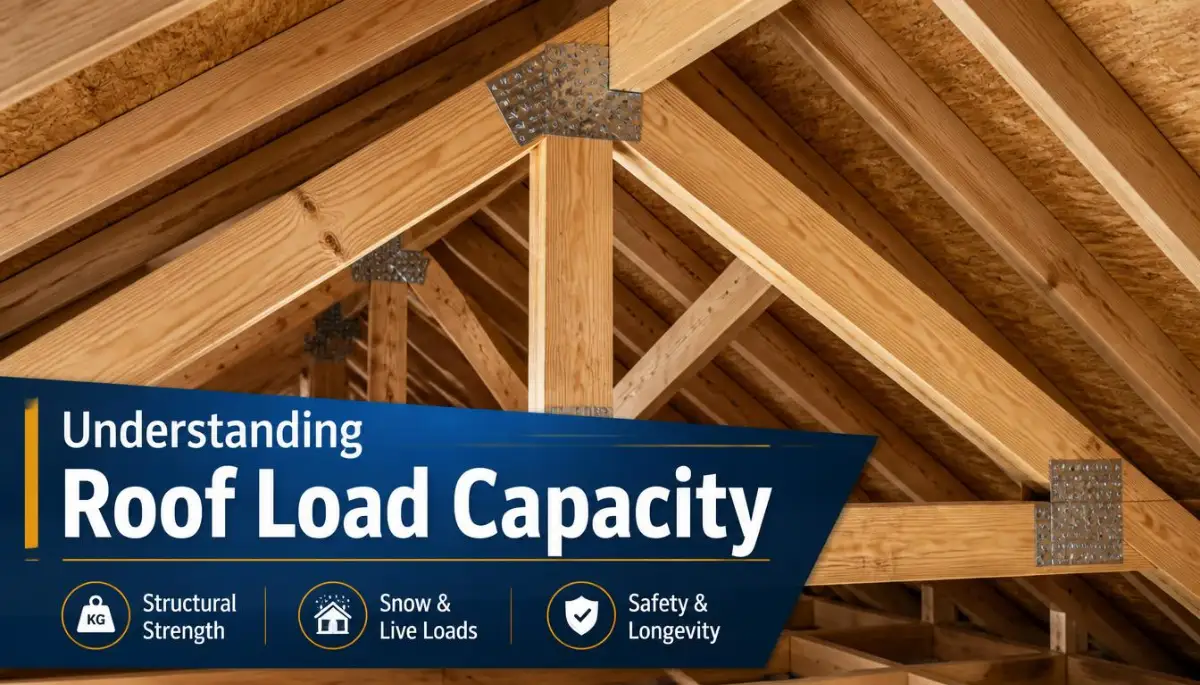
To really know if your roof is strong, you have to go inside. Grab a flashlight and head up to the attic. This is where the truth lives.
We are looking for two types of support: Rafters or Trusses. Rafters are long boards that run from the peak to the walls. Trusses are pre-made triangular frames.
Check the wood for any dark stains. Dark stains mean water has been getting in. Water rots wood and makes it soft like a sponge.
Soft wood cannot hold the heavy bolts used for solar racks. If the bolts don't grip the wood tight, the panels could shift during a storm.
Next, look at the "Ridge Line." This is the very top peak of your roof. Is it straight as an arrow? If it looks like it is sagging in the middle, your structure is already struggling.
A sagging roof is a big red flag. It means the weight of the current roof is already too much for the beams. Adding solar to a sagging roof is asking for a disaster.
Understanding Roof Materials and Solar Compatibility
Not all roofs are created equal when it comes to solar. Some materials are like a perfect match, while others are a bit more difficult.
Asphalt Shingles are the most common. They are easy to work with. Installers just pop a flashing plate under a shingle and bolt it down.
Metal Roofs are actually the best for solar. If you have a standing seam metal roof, the panels can clip directly onto the ribs. No holes are drilled into your roof at all!
Tile or Slate Roofs are beautiful but heavy. They are also very fragile. Workers can easily break these tiles just by walking on them.
If you have tile, you need an expert who knows how to use special "tile hooks." This ensures the weight of the panels doesn't crush the expensive tiles underneath.
Flat Roofs have their own rules. Panels on flat roofs usually sit on "ballast mounts." These are heavy blocks that hold the panels down using gravity instead of bolts.
For a flat roof, the total weight is much higher because of those blocks. You must be 100% sure the concrete or wood structure can handle that massive "point load."
The Myth of the "Standard" Roof Strength
A common mistake people make is thinking, "My house passed inspection, so it must be strong enough." Building codes only require a minimum strength.
In some areas, the code is very basic. It might not account for the extra 3 pounds per square foot that solar adds.
We also have to think about Deflection. This is how much the wood bends when you push on it. Even if the wood doesn't break, too much bending causes cracks in your ceiling.
I always suggest looking at the spacing of your rafters. If they are 16 inches apart, you are usually in good shape. If they are 24 inches apart, the "skin" of the roof might flex too much.
When the roof flexes, the waterproof seals around the solar mounts can break. This is the number one cause of leaks after a solar installation.
Evaluating the "Footprint" of the Solar Array
Where you put the panels matters as much as how many you have. If you put all the panels on one side of the roof, the weight is uneven.
This is called an Asymmetrical Load. It puts a twisting force on the frame of your house. Imagine carrying a heavy suitcase in only one hand for a mile. Your back will start to hurt.
Your house feels the same way. A good engineer will look at how to spread the weight out. They might suggest splitting the panels between the front and back slopes.
This keeps the house balanced. It also helps during high winds. If the wind hits one side, the weight on the other side acts as an anchor.
Warning Signs You Can See from the Sidewalk
You don't always need to be an engineer to see trouble. Take a walk across the street and look at your house with fresh eyes.
Does the roof look "wavy"? When the sun hits it at an angle, do you see dips and bumps? This often means the plywood decking is thin or rotting.
Solar racks need to be bolted into the rafters, but the panels themselves sit over the plywood. If the plywood is weak, it can't support the "feet" of the rack system.
Also, check for "Siding Gaps." If your roof is pushing down too hard, it can cause the siding on the walls to bulge or gap. This is a sign of structural stress.
If you see these things, stop. Do not sign a solar contract until a structural engineer gives you the "okay." A salesperson might say it's fine, but they don't have to live under that roof.
The Role of Local Weather in Structural Safety
We have talked about the weight of the panels. Now we must talk about the weight of the world. Depending on where you live, the rules change.
If you live in the North, you have to worry about Snow Load. A foot of wet snow is very heavy. Now, add that snow on top of your solar panels.
Solar panels are slippery, so snow often slides off. But sometimes it gets caught on the bottom edge. This creates a "snow dam" that puts a massive weight on your eaves.
If you live on the coast, you have to worry about Uplift. During a hurricane or big storm, the wind gets under the panels. It tries to rip the roof off the house.
Your roof structure must be tied down to the walls with "hurricane clips." These are small metal pieces that keep the roof attached to the house when the wind tries to pull it up.
Moving Beyond the Basics: Professional Secrets for a Solar-Ready Roof
So, you have checked your attic and looked at your shingles. Now, let’s talk about the next level of preparation. This is where most homeowners get confused, but I will make it simple for you.
When we talk about adding solar, we are really talking about engineering. One of the best ways to ensure your roof stays strong is a technique called "Sistering Rafters." If an inspector says your rafters are a bit thin, you don't have to replace the whole roof.
Sistering means you take a new, strong board and bolt it directly next to your old, weak one. This doubles the strength of that specific spot. It is a cost-effective way to prepare an older home for the weight of modern solar panels.
The Science of Point Loads and Distributed Weight
Many people worry about the total weight, but experts focus on Point Loads. Imagine a woman in high heels walking on a wooden floor. All her weight is on those tiny heels, which can leave a dent.
Solar racks are similar. The weight of the whole system sits on small "feet" or mounting points. You want to make sure those feet are bolted directly into the center of the rafters, not just the thin plywood.
If the installer misses the rafter by even an inch, the bolt only grips the plywood. Over time, the weight and wind will cause that bolt to wiggle. This creates a tiny hole where water can hide and rot your wood from the inside out.
Why You Should Consider a Professional Engineering Report
While a solar salesperson can give you a quote, they are not always structural experts. I always recommend getting a Stamped Structural Letter from a licensed engineer. They will look at the original blueprints of your house if they are available.
They use math to calculate exactly how much pressure your roof can take. This report is often needed for city permits anyway. Having this document gives you huge peace of mind if you ever decide to sell your house.
When you can show a buyer that an engineer verified the roof, it makes [is buying a home smarter than renting the real money facts] much clearer because you are protecting the home's resale value. You are proving that the house is built to last.
The Role of Thermal Imaging in Roof Safety
Here is a pro-level secret: use a Thermal Camera. You can actually rent these or buy a cheap one that plugs into your phone. On a hot day, look at your roof from the inside of your attic.
If you see "hot spots" on the wood, it might mean there is moisture trapped there. Wet wood is weak wood. You want to find these hidden issues before you cover the roof with panels.
It is also smart to check your home's overall efficiency. If your roof is leaking heat, your solar panels will have to work harder to power your AC. Taking care of your home's "health" is just as important as [simple habits to protect your electric vehicle battery life] because both save you money in the long run.
Understanding the "Wind Uplift" Factor
We often think about panels pushing down, but the wind pulling up is just as dangerous. In many states, the building code requires special Hurricane Ties. These are metal straps that connect your roof to the walls of the house.
If your house was built a long time ago, you might not have these. Adding them is a very smart move before solar goes on. It ensures that a big storm doesn't lift the panels—and your roof—right off the foundation.
For more technical details on how houses handle environmental stress, you can check out the structural guides from the National Institute of Building Sciences. They provide deep insights into how buildings survive extreme weather.
Fatal Errors That Could Sink Your Solar Investment
The biggest mistake I see is people trying to save a few dollars by skipping the permit process. Some "budget" installers might tell you that you don't need a permit for a small system. They are wrong.
A permit ensures that a city inspector looks at the work. Without it, your home insurance might refuse to pay if there is a fire or a collapse. You are essentially gambling with your biggest asset just to save a few hundred dollars.
Another huge pitfall is ignoring the Roof Decking. The decking is the flat plywood under your shingles. If the plywood is 1/2 inch thick, it might be fine for shingles.
But for solar, some engineers prefer 5/8 inch or thicker. If your decking is too thin, it can "oil-can" or pop up and down between the rafters. This movement can break the waterproof seals on your solar mounts and lead to massive leaks.
The Danger of the "One-Size-Fits-Fits-All" Mounting System
Not all mounting hardware is the same. Some companies use cheap, generic rails that are not rated for your specific climate. If you live near the ocean, the salt in the air will eat through cheap metal in just a few years.
Always ask for Anodized Aluminum or Stainless Steel hardware. These materials resist rust and keep the structure strong for decades. If an installer cannot tell you what the hardware is made of, that is a giant red flag.
I have seen homeowners get into a mess because they didn't have their finances ready for unexpected repairs. If you find out your roof needs a $2,000 fix before solar, it can feel like a disaster.
If you are worried about the cost of these repairs, learning [how to rebuild your credit score after a major financial disaster] can help you get better financing terms for your home upgrades. Being prepared financially is just as important as being prepared structurally.
Forgetting About Future Access
Imagine this: you put panels over your entire south-facing roof. Three years later, a pipe in your attic leaks. Now, the plumber can't get to the leak because the solar panels are blocking the way.
You must leave Fire Paths or "walkways" on your roof. This is not just for safety; it is often the law. Firefighters need these paths to vent a roof during a fire.
If you cover every square inch with panels, you are making your home less safe. A professional designer will always leave at least 3 feet of space at the edges and the peak.
Your Path to a Safe and Sun-Powered Home
Going solar is one of the most rewarding things you can do for your home. It feels amazing to watch your meter spin backward. But that joy only lasts if your roof stays strong and dry.
Take the time to do it right. Talk to an engineer, look at your rafters, and don't be afraid to ask the hard questions. A good contractor will be happy to explain how they are keeping your roof safe.
You are not just installing energy equipment; you are upgrading your shelter. Treat your roof with respect, and it will protect your solar investment for a lifetime.
Start today by simply looking in your attic. Once you know your roof is solid, the sky is the limit for your clean energy dreams.
Final Readiness Checklist
- Check the age of your shingles (aim for less than 10 years old).
- Look for sagging or water stains in the attic rafters.
- Verify the spacing between your roof supports.
- Ask your installer for a professional structural stamp.
- Ensure your home insurance is updated for solar equipment.
![The Secret to Sustainable Composting for Home Gardens [Step-by-Step]](https://topic36.com/storage/uploads/blogs/1787757524_the-secret-to-sustainable-composting-for-home-gardens-step-by-step.webp)