My Worst Nightmare: The House That Fooled Me Completely
I still remember stepping into what I honestly thought was the perfect home for my future.
The walls were freshly painted, the floors gleamed in the afternoon sunlight, and my heart raced with pure excitement.
Everything looked absolutely flawless on the surface, almost like a picture straight out of a magazine.
But right before walking out the front door, I noticed a strange, damp odor lingering near the back hallway.
I foolishly ignored it, convincing myself the house just needed the windows open for a few hours.
Fast forward three weeks after I signed the final papers, I found a massive, toxic mold infestation hidden right behind that fresh paint.

That single oversight drained my savings account and completely destroyed my peace of mind.
I started waking up in cold sweats, wondering how I was going to pay for thousands of dollars in surprise repairs.
It is a terrible feeling to realize the place you bought to feel safe has suddenly become your biggest source of anxiety.
We work so incredibly hard, saving every penny we can, just to finally own a place we can call our own.
When you unknowingly buy a property hiding deep structural secrets, it impacts your daily life in ways you cannot imagine.
You find yourself arguing with your family over money, losing sleep over strange noises in the plumbing, and feeling a heavy knot in your stomach every time it rains.
The emotional toll is actually much worse than the financial loss.
Instead of enjoying Sunday mornings with a cup of coffee, you are nervously searching the internet for emergency repair services.
Nobody deserves to experience this kind of stress simply because they trusted what they saw on the surface.
I am writing this because I want to protect you from making the exact same painful mistakes I made.
You need to know how to look past the beautiful staging and see a house for what it truly is.
Becoming Your Own Detective: How to Spot Hidden Traps
Buying a house is probably the largest purchase you will ever make in your entire life.
You cannot afford to let your emotions take over when you are walking through a property.
Instead of looking at how your furniture will fit in the living room, you need to focus on the bones of the house.
Sellers will often try to mask bad odors, cover up water damage, and hide foundation problems just to close the deal.
We are going to walk through exactly what you need to look for, room by room, to ensure you are making a safe investment.
The "Sniff Test": Why Smell is Your Best Weapon
When you first walk into a house, close your eyes for a second and just take a deep breath.
Your nose will often tell you things that your eyes cannot see.
If you smell strong air fresheners, heavy perfumes, or freshly baked cookies in every room, you should instantly be on high alert.
Sellers frequently use these overwhelming scents to mask serious problems like pet urine, cigarette smoke, or dangerous mold.
A healthy house should really just smell neutral, like nothing at all.
If you catch a whiff of something musty or earthy, especially in the basement or bathrooms, you are likely dealing with active moisture problems.
Mold grows in damp, dark places where water is getting trapped behind walls or under floors.
Breathing in these spores can cause severe respiratory issues for your family, turning your dream home into a health hazard.
Always ask the real estate agent to turn off any plug-in air fresheners while you do your walkthrough.
Foundation Failures: Reading the Cracks
The foundation is literally the thing holding your entire investment together.
If the foundation is failing, the rest of the house will slowly tear itself apart.
When you walk around the outside of the house, look closely at the concrete base.
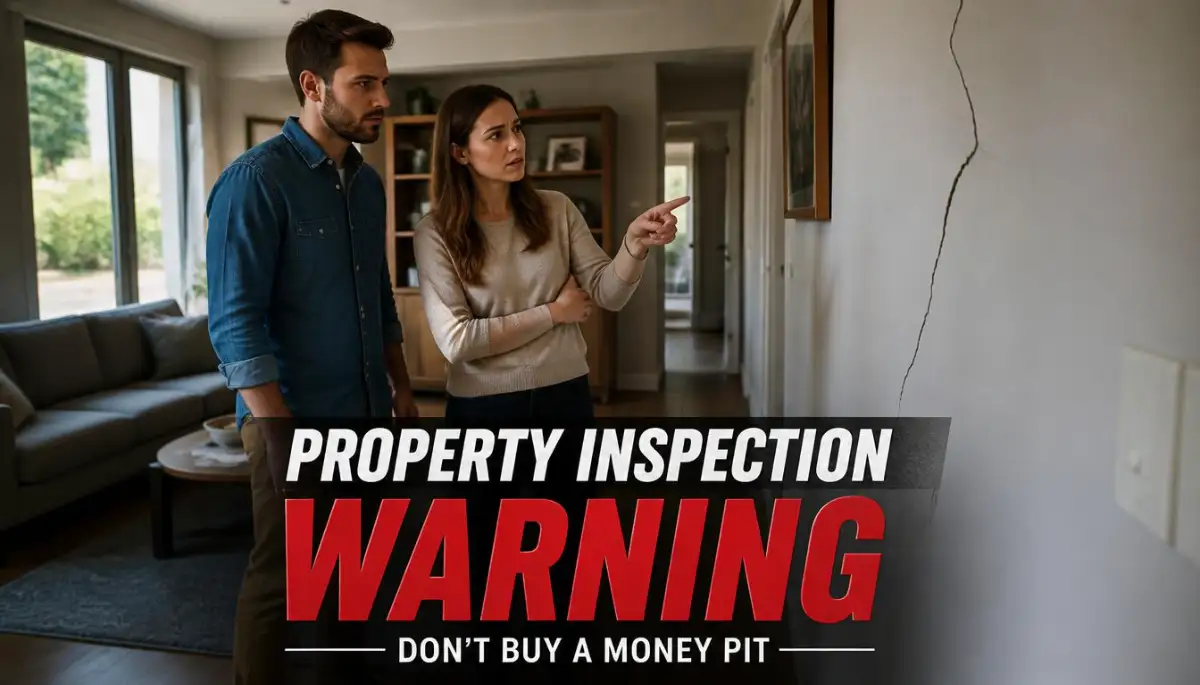
Small, hairline cracks are generally just normal settling, but large horizontal cracks are a massive warning sign.
Horizontal cracks mean the soil outside is putting too much pressure on the walls, pushing them inward.
Inside the house, take a marble with you and set it gently on the hard floors.
If the marble quickly rolls away to one side of the room, you know the floor is severely sloping.
Uneven floors often point directly to rotting floor joists or a sinking foundation.
Are you wondering what structural damage looks like in real life? Watch this short visual guide to learn exactly what to look for on the exterior:
The Silent Destroyer: Uncovering Water Damage
Water is the absolute worst enemy of any residential building.
It can destroy wood, ruin drywall, and invite termites to feast on the structure of the house.
When you are walking through the bedrooms and living areas, look up at the ceiling.
Do you see any strange brown, yellow, or copper-colored rings?
Those rings are water stains, indicating that a pipe is leaking or the roof is failing above you.
Do not let a seller tell you "Oh, that was fixed a long time ago" without seeing actual proof of the repair.
I learned this the hard way when I ignored a tiny water stain on the ceiling of my first apartment. Always touch a suspicious stain to see if it feels damp or soft, because sellers often just paint over active leaks to make them disappear for the tour.
You should also open the cabinets under every single sink in the kitchen and bathrooms.
Check for warped wood, dark spots, or a damp smell inside the cabinet.
These are clear signs of ongoing plumbing leaks that will eventually rot the cabinet entirely.
Testing the Plumbing: Don't Be Afraid to Turn the Knobs
Most buyers simply look at the shiny new faucets and assume everything works perfectly.
You need to actively test the plumbing system while you are touring the house.
Go into the master bathroom and turn on the shower, the sink, and flush the toilet all at the same time.
If the water pressure in the shower drops down to a sad trickle, the house has major plumbing issues.
This usually means the pipes are incredibly old, clogged with mineral buildup, or simply too small for the home.
You should also pay close attention to how quickly the water drains out of the sinks.
A slow drain might just be a simple hair clog, or it could mean tree roots have crushed the main sewer line outside.
Replacing a main sewer line can easily cost you thousands of dollars before you even move your furniture in.
Take your time and listen for any strange gurgling noises coming from the pipes when the water goes down.
Electrical Nightmares: Checking for Fire Hazards
An outdated electrical system is not just an inconvenience; it is a major fire hazard waiting to happen.
Older houses often have wiring systems that simply cannot handle modern appliances like big TVs, microwaves, and computers.
Find the main electrical panel and open the metal door to take a look inside.
If you see a tangled mess of wires, scorch marks, or rust, you need to walk away or demand a full professional inspection.
Walk through the rooms and try turning on multiple light switches.
If the lights flicker, dim, or take a second to turn on fully, the electrical circuits are likely overloaded.
Take a close look at the outlets in the bedrooms and the kitchen.
If they look burnt, painted over, or only have two prongs instead of three, the house needs a complete and expensive rewiring job.
Never compromise on electrical safety, because it directly impacts the lives of everyone sleeping inside.
The Amateur Flipper: Spotting Cheap DIY Work
Many people buy cheap houses, fix them up as fast as possible, and sell them for a massive profit.
While some flipped homes are done beautifully by professionals, many are just quick cover-up jobs.
You need to look closely at the details to see the true quality of the craftsmanship.
Look at the kitchen tiles—are they uneven, or is the grout messy and cracking?
Check the baseboards and trim around the doors to see if there are large gaps or terrible paint jobs.
Open and close the kitchen drawers to see if they glide smoothly or if they get stuck halfway.
If a seller cut corners on the visible things like tile and paint, you can guarantee they cut corners on the things you cannot see.
They probably used cheap plumbing materials or ignored electrical codes just to save a little bit of money.
Do not let gray paint and modern light fixtures distract you from sloppy, dangerous workmanship.
Roof and Exterior: Your First Line of Defense
Before you even step foot inside the property, you should spend a solid ten minutes inspecting the exterior.
The roof protects the entire house from rain, snow, and extreme heat.
Stand across the street and look closely at the rooflines to see if anything looks wavy or sagging in the middle.
A sagging roof usually means the wooden support beams underneath are rotting or broken.
Look for missing shingles, cracked tiles, or thick patches of green moss growing on the roof.
Moss actually holds moisture against the roof, which will slowly eat away at the materials over time.
You should also check the gutters to see if they are securely attached to the house.
If gutters are clogged or broken, rainwater will pour directly down into the foundation, causing exactly the type of structural damage we discussed earlier.
Make sure the dirt and grass around the house slope away from the exterior walls.
If the ground slopes toward the house, every time it rains, water is going straight into the basement or crawlspace.
Windows and Doors: The Secret Alignment Test
You can learn a lot about the structural health of a home simply by opening and closing its doors.
When a foundation shifts or sinks, the wooden frame of the house twists along with it.
Walk through the property and physically open and close every single bedroom and bathroom door.
If a door sticks, rubs hard against the floor, or refuses to latch properly, the frame is no longer square.
While one sticky door might just be swollen wood from humidity, multiple sticky doors point to a shifting foundation.
The same rule applies to the windows in the house.
Try to unlock and slide the windows up and down.
If they are completely jammed or have large diagonal cracks in the glass, the house is putting uneven pressure on the window frames.
Replacing windows is incredibly expensive, and drafty windows will cause your energy bills to skyrocket during the winter months.
Navigating the Attic and Basement
Most buyers stick to the pretty rooms and completely ignore the dusty, dark areas of the house.
The attic and the basement will actually reveal the truest, ugliest secrets of the property.
Take a powerful flashlight with you and poke your head into the attic space.
Look at the wooden beams for dark water stains, which prove the roof is actively leaking.
Check to see if there is enough fluffy insulation, because a lack of insulation will make the house impossible to keep warm.
In the basement, use your nose to check for that damp, moldy smell again.
Look at the concrete walls for a white, chalky substance called efflorescence.
This white powder is left behind when water seeps through the concrete and evaporates, proving the basement floods during heavy rain.
Do not let the real estate agent rush you out of these unfinished spaces.
These are the exact areas where the most expensive problems love to hide.
Taking an extra five minutes to inspect a dark corner could easily save you from a massive financial disaster.
Beyond the Basics: Insider Tactics for a Bulletproof Inspection
Now that we have covered the visible warning signs, we need to talk about the hidden systems that truly run the house.
Most average buyers simply walk through a property, admire the fresh paint, and imagine where their sofa will go.
If you want to protect your savings, you have to think like an experienced investigator who looks behind the beautiful staging.
Sellers often use clever cosmetic tricks, like using bright lamps and mirrors to maximize natural light and make a tiny room look huge, which distracts you from spotting uneven walls or sloping floors.
You should always carry a small, inexpensive outlet tester in your pocket during every single home tour.
This simple device costs less than ten dollars, but it will instantly tell you if an electrical outlet is wired correctly or safely grounded.
Just plug it into a few random outlets in the bedrooms and the kitchen while the real estate agent is talking.
If the little lights on the tester indicate an open ground or reverse polarity, you are looking at a house with dangerous, amateur electrical work.
Another secret weapon is a basic digital infrared thermometer.
You can point this tool at the ceilings and exterior walls to check for sudden, unexplained drops in temperature.
A random cold spot on a wall often means the insulation is completely missing, or worse, there is hidden moisture gathering behind the drywall.
Investigating the Mechanical Heart of the Home
The heating, ventilation, and air conditioning (HVAC) system is the mechanical heart of any property.
Replacing a broken furnace or a massive air conditioning unit will instantly drain thousands of dollars from your emergency fund.
Do not just assume the system works perfectly because the house feels reasonably comfortable during your short tour.
Go down to the basement or utility closet and look closely at the metal manufacturing sticker on the side of the furnace.
If the equipment is more than fifteen years old, it is nearing the end of its natural lifespan and will likely fail soon.
You should also look for a service sticker from a local heating company detailing the maintenance history.
A responsible homeowner will have their system serviced every single year, and that sticker proves they actually cared for the machine.
If there is no service record and the filter looks like it is choking on dust, you should expect major mechanical failures in the near future.
To ensure you are fully protected, you should consider reading the official guidelines provided by the Environmental Protection Agency regarding indoor mold, as poor HVAC maintenance is the leading cause of toxic air quality in older houses.
The Danger of Unpermitted Renovations
One of the biggest secrets in the real estate market is the sheer amount of illegal, unpermitted renovation work.
A homeowner might decide to finish their basement, add a new bathroom, or knock down a wall to create an open floor plan.
If they did this work without pulling the proper legal permits from the city, they likely skipped important safety codes.
When you buy a house, you inherit every single illegal modification the previous owner made.
If the city inspector eventually finds out about that unpermitted bathroom, they can force you to tear the entire thing apart at your own expense.
Always ask your real estate agent to pull the permit history from the local municipal office before you make a final offer.
If the house has a brand new master suite but the city records say it is just a two-bedroom property, you need to walk away immediately.
Taking these extra steps will help you build a solid foundation of knowledge, much like exploring resources on general home lifestyle platforms to become a smarter, more informed consumer.

The Emotional Traps That Ruin First-Time Homebuyers
Buying a home is an incredibly emotional journey, and our feelings often cloud our logical judgment.
When people finally find a property that matches their aesthetic dreams, they tend to start ignoring massive red flags.
The biggest pitfall I see happens when buyers completely waive their right to a professional inspection just to win a competitive bidding war.
They get so scared of losing the house to another buyer that they voluntarily sign away their only safety net.
If you skip the inspection, you are legally accepting the house entirely "as-is," meaning every hidden cracked pipe and rotten beam is now your financial burden.
No house is ever worth risking your entire life savings over a feeling of panic or desperation.
If a seller aggressively pushes you to skip the inspection, it is usually because they are terrified of what a professional will find.
Another terrible mistake is falling in love with a property simply because it has beautiful furniture and expensive decorations.
Staging is a psychological trick designed to make you feel warm, cozy, and completely distracted from the actual structure.
Just like evaluating the real secret to building products that people actually love, a solid house must have excellent underlying quality, not just a pretty exterior wrapper.
I once toured a stunning home with gorgeous modern art on the walls, only to realize later that a massive painting was intentionally hung low to hide a giant hole in the drywall.
Ignoring the Invisible Infrastructure
In today's highly connected environment, a house must function technically just as well as it functions structurally.
Many buyers completely forget to check the invisible infrastructure, like cellular reception and internet wiring.
You might find a charming historic home with beautiful thick plaster walls and solid brick exterior features.
However, nobody wants to move in and immediately struggle with finding simple ways to fix your slow internet connection because those historic walls block every single Wi-Fi signal.
While touring the house, take your phone out and check your cellular data speed in different rooms, especially the basement or home office area.
If you have zero bars of service, you will likely have to spend hundreds of dollars on specialized signal boosters just to make a basic phone call.
Another common oversight is completely ignoring the overall neighborhood dynamics during different times of the day.
A street might look completely peaceful on a quiet Tuesday morning when everyone is away at work.
But if you visit that exact same street on a Saturday night, you might find loud parties, aggressive street parking, or annoying train noises nearby.
The physical house is only half of the purchase; the surrounding environment determines your actual daily quality of life.
Taking a few minutes to read expert advice on managing the financial risks of homeownership can completely change how you view these hidden neighborhood factors.
Your Next Steps: Building a Safe and Secure Haven
The process of finding a safe property does not have to be a terrifying or overwhelming experience.
By educating yourself on these essential warning signs, you have already taken the most important step toward protecting your family.
You are no longer an average buyer who can be easily fooled by fresh paint and sweet-smelling air fresheners.
You now know how to look at the ceiling for hidden water stains, how to test the plumbing pressure, and how to spot a shifting foundation.
The next action you should take is compiling a trusted team of professionals to help you through the final stages.
Never use the home inspector recommended by the seller, because that creates a massive conflict of interest.
You want to hire an independent, highly rated expert who works exclusively for your best interests.
I highly recommend researching guides on finding a qualified professional home inspector through certified national organizations before you even start looking at houses.
Take a notepad with you to every single tour, write down the strange things you see, and ask hard questions without feeling embarrassed.
You have every right to demand transparency when you are making the largest financial commitment of your life.
I genuinely want you to experience the incredible joy of turning a key in a door that belongs entirely to you. My hope is that the home you eventually choose brings you lasting peace of mind, not endless repair bills.
Common Questions Buyers Have Before Closing the Deal
Should I personally attend the home inspection?
You should absolutely attend the entire inspection alongside the professional you hired. Being there in person allows the inspector to physically show you the hidden problems and explain exactly how serious they are. It also gives you the perfect opportunity to ask questions about regular home maintenance.
Who pays for the repairs if bad things are found during the tour?
Everything is negotiable in a real estate transaction before the final contract is signed. If you find a major defect like a broken roof, you can ask the seller to pay for the repairs, reduce the asking price, or offer a financial credit. If the seller refuses to fix a dangerous issue, you usually have the legal right to walk away.
Can a house actually "fail" an official inspection?
A home inspection is not a pass or fail test administered by the government. It is simply a detailed report card of the property's current physical condition. It is entirely up to you as the buyer to decide if the listed defects are deal breakers or simple weekend DIY projects.
What should I do if I spot active mold during my walkthrough?
If you see or smell mold, do not panic, but take it very seriously as a potential health hazard. You should immediately hire a specialized environmental tester to determine the exact type of mold and the source of the moisture. Once you know how the water is getting inside, you can calculate the true cost of remediation.
How long does a thorough property walkthrough normally take?
A casual tour with a real estate agent usually only takes about thirty to forty-five minutes. However, a formal professional inspection should take at least two to three hours for an average-sized property. If an inspector finishes their job in less than an hour, they likely missed dozens of hidden problems.
Disclaimer: The information provided in this blog post is for general educational and informational purposes only and does not constitute official legal, financial, or real estate advice. Always consult with certified home inspectors, real estate attorneys, and local market professionals before making any property investment decisions.