
The Hidden Financial Shock of Buying a Home
You have spent months searching for the perfect house. You looked at dozens of listings and finally found the one that feels like home. Your offer was accepted, and you are over the moon with excitement.
Then, you receive a document from your lender or title company. You look at the final number at the bottom of the page. Your heart sinks. The closing costs are much higher than you ever imagined.
This is a reality many homebuyers face. It is a moment of pure stress. You have already saved for a down payment, and now you need thousands more just to finish the deal.
It feels like you are being hit with a flurry of small fees that add up to a mountain of debt. You might feel frustrated, confused, or even angry. Why is it so expensive just to sign some papers?
Many people feel trapped in this situation. They worry that if they question these fees, the deal might fall through. This financial pressure can ruin the joy of buying a home.
I want you to know that you are not alone in this struggle. It is completely normal to feel overwhelmed by the complexity of real estate math. The good news is that you have more power than you think.
You do not have to accept every fee as a final truth. In the following sections, we will look at how you can take control. We will turn that feeling of dread into a plan of action.
Take Control of Your Loan Estimate Early
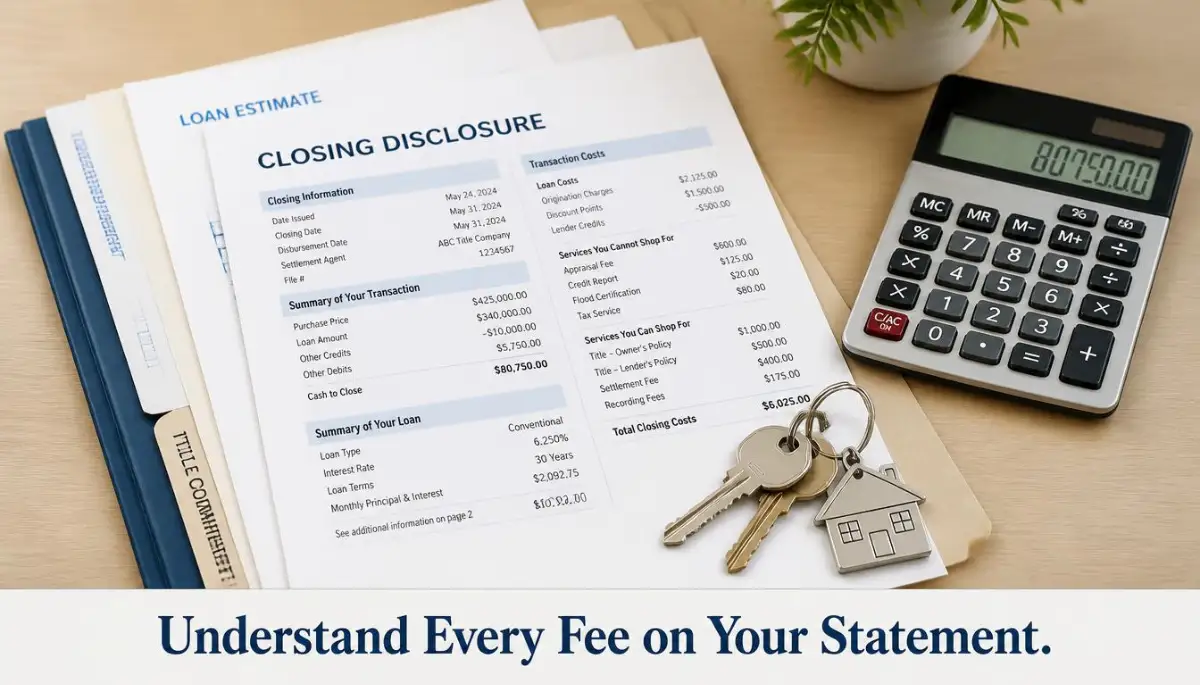
The best way to start saving is to act as soon as you apply for a mortgage. Your lender is required to give you a document called a Loan Estimate.
This document is your roadmap. It lists every fee the lender expects you to pay at the end of the deal. Many buyers just glance at the total and move on. That is a huge mistake.
You need to look at this document line by line. Some fees are fixed, but many others are open for discussion. If you see something you don't understand, ask your loan officer immediately.
Identifying "Junk Fees"
Not all fees are created equal. Some are necessary for the government or the legal process. Others are what we call "junk fees."
These are administrative costs that lenders add to boost their profit. You might see names like "processing fee," "underwriting fee," or "application fee."
You should compare these fees across different lenders. If one lender charges $500 for processing and another charges $1,200, you have room to negotiate.
Don't be afraid to tell your lender, "I see another company is charging less for this service." You will be surprised how often they are willing to match a competitor's price to keep your business.
Shop Around for Third-Party Services
Your lender will give you a list of services you can shop for. This usually includes things like the title search and title insurance.
Most people just go with the company the lender suggests. This is often the most expensive option. Title insurance can cost thousands of dollars.
Take a few hours to call other title companies in your area. Ask for a quote on a "reissue rate" if the seller has owned the home for a short time.
Shopping for your own title company can save you a significant amount of money. It is one of the easiest ways to lower your out-of-pocket costs without changing your mortgage terms.
The Art of Requesting Seller Concessions
One of the most powerful tools in your pocket is the seller concession. This is when the seller agrees to pay a portion of your closing costs.
In a balanced or slow market, sellers are often willing to do this to close the deal. It doesn't mean they are giving you a discount on the price, but it helps your cash flow.
How to Structure the Ask
You can ask for a specific dollar amount or a percentage of the purchase price. For example, you might ask for 3% of the price to be applied to closing costs.
Why would a seller agree to this? Because they want to sell their house. If paying $5,000 of your fees helps them move on to their next home, they will likely say yes.
We often see this work best when the house has been on the market for a while. The seller might be getting anxious and more willing to help you out.
Balancing the Offer Price
Sometimes, you can even offer a slightly higher price for the home in exchange for closing cost help. This allows you to roll your closing costs into your mortgage.
Imagine a house costs $300,000. You offer $305,000 but ask for $5,000 back at closing. You are essentially financing your closing costs over 30 years.
This keeps more cash in your pocket today. It is a smart move if you want to use your savings for new furniture or home repairs instead of administrative fees.
Comparing Lender Credits for Long-Term Savings
If you are short on cash right now, you might consider lender credits. This is the opposite of paying "points" to lower your interest rate.
With lender credits, you agree to a slightly higher interest rate. In exchange, the lender pays some or all of your closing costs.
The Math Behind the Credit
Is this always a good idea? Not necessarily. You need to look at how long you plan to stay in the house.
If you stay for 30 years, that higher interest rate will cost you more than the closing costs. However, if you plan to move in five years, the credit might be a great deal.
Always ask your lender for a comparison. Ask them to show you the "break-even point." This is the month where the extra interest equals the money you saved at closing.
Timing Your Closing Date Correctly
The day of the month you sign your papers actually changes how much you pay. This is due to prepaid interest.
When you close on a home, you must pay interest for the remaining days of that month. If you close on the 5th, you pay 25 days of interest.
The End-of-Month Strategy
If you close on the 28th or 29th, you only pay a few days of interest. This can save you hundreds of dollars on your "cash to close" amount.
Closing at the end of the month is a very popular strategy. Because of this, title companies and lenders are very busy during the last week of the month.
Make sure you schedule your date early. You want to ensure everyone has time to process your paperwork correctly while you reap the savings.
Understanding the Role of Property Taxes
Property taxes are often a large part of your closing costs. Depending on where you live, you might have to put several months of taxes into an escrow account.
You should check if the seller has already paid taxes for the year. If they have, you may owe them a pro-rated amount.
Check for any tax exemptions the current owner has. Sometimes, your taxes might jump up after you buy because the previous owner had a "homestead exemption" that you don't have yet.
Knowledge is power here. Understanding the local tax cycle helps you avoid surprises at the closing table. It allows you to budget more accurately from day one.
The Importance of the Final Walkthrough
You might wonder how a walkthrough relates to closing costs. If you find a problem during the final inspection, you can use it as leverage.
If the seller agreed to fix the sink and didn't do it, don't just wait for a repair. Ask for a closing cost credit instead.
Getting a credit is often better than a quick repair. It gives you the money to hire your own contractor. It also lowers the amount of cash you need to bring to the closing table.
Myth vs. Reality: Closing Cost Negotiations
Why Every Dollar Matters
You might think that saving $200 here or $300 there isn't worth the effort. But real estate transactions involve many moving parts.
If you save on the title search, get a lender credit, and pick the right closing date, those small wins add up. You could easily save $2,000 to $5,000 total.
That is money that stays in your bank account. It is money you can use for your family or your new home. Never feel bad about asking for a better deal.
The professionals involved in your deal do this every day. They expect you to ask questions. Being an informed buyer makes the process smoother for everyone.
I have seen many buyers save enough to cover their first three mortgage payments just by being diligent. You have the same opportunity.
Expert Insight: The Communication Key
My best advice is to keep a polite but firm tone. Use phrases like, "I am looking at ways to minimize my upfront costs. Can we review these fees together?"
This shows you are serious and educated. Most loan officers will work with you because they want to close the loan.
Stay organized. Keep all your quotes in one folder. This makes it easy to compare and contrast when you are on the phone.
Your journey to homeownership should be a happy one. By mastering these negotiation steps, you remove the financial cloud hanging over your head. You can walk into your closing meeting with confidence and a smile.
Mastering the Art of Closing Cost Discounts
Negotiating isn't just about being tough. It’s about being smart and knowing where the "wiggle room" lives in a contract. Many people think the fees on their closing statement are set in stone by law.
In reality, many of those numbers are simply service charges from private companies. If you are working on how to rebuild your credit score after a major financial disaster, you already know that every dollar counts toward your financial recovery. Closing costs should be treated with that same level of care and attention.
One of the most effective ways to lower your costs is to look for a reissue rate on title insurance. This is a secret that many title companies won't tell you upfront. If the seller has bought or refinanced the home within the last few years, the title company can often "reissue" the insurance policy at a 30% to 40% discount.
Ask the seller for a copy of their current title policy. Take that copy to your chosen title company and ask for the reissue rate. This one simple question can save you $500 to $1,000 depending on the home's value.
Leveraging Competition Between Lenders
Lenders want your loan because they make money from the interest over many years. Because of this, they are often willing to drop their internal "origination fees" to win your business.
Don't just take the first offer. Get quotes from a big bank, an online lender, and a local credit union. Show the "Loan Estimate" from one company to another.
Say something like, "Lender A is charging me $800 for an application fee, but you are charging $1,200. Can you match their price?" Most of the time, the loan officer has the authority to waive or reduce these fees on the spot.
The Magic of Government-Backed Programs
If you are a first-time buyer or a veteran, you have access to specialized programs that cap what you can be charged. For example, VA loans strictly limit the types of closing costs a veteran is allowed to pay.
Lenders cannot charge veterans for certain administrative tasks. In these cases, the seller or the lender must cover those costs. This automatically lowers your out-of-pocket expenses.
Even if you aren't a veteran, many state-level programs offer "closing cost assistance." These are often low-interest loans or grants that cover your settlement fees. Always check with your state's housing finance agency before you sign your final papers.
Using Credit to Pay for Closing
If you find yourself short on cash, you can choose a no-closing-cost mortgage. This sounds like a dream, but you need to understand how it works. The lender isn't giving you a gift.
They are simply taking the cost of the closing and adding it to your interest rate. You might pay 0.25% more in interest every month. This is a great move if you only plan to stay in the house for a few years.
However, if this is your "forever home," you might end up paying double the original closing cost in extra interest over thirty years. It is a tool, but use it wisely.
Why You Should Choose a Local Credit Union
Local credit unions often have much lower overhead than giant national banks. They usually offer lower fees for things like appraisals and document preparation.
Because they are member-owned, they focus more on service than on squeezing every penny out of an application. Sometimes, they even offer "flat-fee" closing packages.
This makes your budget much easier to manage. You won't have to worry about a dozen small fees popping up at the last minute. When deciding is buying a home smarter than renting the real money facts, these lower entry costs often tip the scales in favor of buying.

Traps That Can Drain Your Bank Account
The biggest mistake you can make is ignoring the Closing Disclosure (CD) until the day of the meeting. By law, your lender must give you this document three days before you sign.
Most people just look at the monthly payment and ignore the rest. You must compare the CD to your original Loan Estimate. If a fee has increased by more than 10%, or if a new fee appeared out of nowhere, you have the right to challenge it.
Lenders sometimes count on you being too tired or too excited to notice these small changes. If you see a "document review fee" that wasn't there before, call your loan officer immediately. Do not wait until you are sitting at the closing table with a pen in your hand.
Falling for the "Preferred Provider" Scam
Lenders often have a list of "preferred providers" for things like pest inspections, surveys, and title work. They make it sound like using these companies will make the process faster.
In reality, these companies are often the most expensive because they don't have to work hard for your business. They get a steady stream of customers from the lender.
By not shopping around, you are leaving money on the table. Spend thirty minutes on the phone calling local inspectors. You might find a high-quality pro who charges $100 less than the lender's "preferred" choice.
Forgetting the Prepaid Items
Closing costs are not just administrative fees. A large chunk of the money goes toward prepaid items like homeowners insurance and property taxes.
Many buyers forget to shop for the best insurance rate. They just take the first quote their agent gives them. Since you usually have to pay a full year of insurance upfront at closing, a higher premium directly increases your closing costs.
Always get at least three quotes for homeowners insurance. Make sure the coverage levels are the same so you are comparing apples to apples. This lowers both your closing day costs and your future monthly payments.
The Danger of Opening New Credit Lines
This is a mental mistake that affects your wallet. Some buyers get so excited about their new home that they go out and buy furniture on credit before the house deal is finished.
This can change your debt-to-income ratio. If your credit score drops, your lender might change your loan terms at the last second.
This could lead to higher fees or even a higher interest rate. Keep your finances "frozen" until the keys are in your hand. Treat your bank account with the same respect you would give to how generative ai is changing the way developers write code—with precision and total focus on the end goal.
Your Final Path to a Successful Closing
As you reach the end of your home-buying journey, it is time to stay focused. You have done the hard work of finding a home. Now, you just need to cross the finish line without overspending.
Think of the closing process as a final exam. You have all the notes and all the tools. You just need to apply them with confidence.
Start by creating a simple checklist of every fee you have questioned. When you get your final documents, check them off one by one. If a fee was supposed to be removed or lowered, make sure the math is correct.
A Final Checklist for Your Wallet
- Ask for the Reissue Rate: Check if the seller’s title policy can save you money.
- Review the Loan Estimate: Compare it line-by-line with the Closing Disclosure.
- Negotiate Lender Fees: Don't be afraid to ask for "junk fees" to be waived.
- Shop for Insurance: Get three quotes to lower your prepaid costs.
- Check the Closing Date: Try to close at the end of the month to save on daily interest.
Negotiation is not about being aggressive or mean. It is about being a responsible steward of your own money. The people on the other side of the table are professionals. They respect a buyer who knows the details.
When you stand up from that closing table, you want to feel like you got a fair deal. You want to walk into your new front door knowing you kept as much money in your pocket as possible.
Moving Forward with Confidence
You are now equipped with the same secrets that professional real estate investors use. You know how to spot hidden fees and how to ask for discounts.
Take a deep breath. Buying a home is a big step, but you are ready. Use these strategies starting today. Call your lender, email your title company, and speak with your agent.
Your future self will thank you for the thousands of dollars you saved this week. Homeownership is a beautiful journey, and starting it with extra cash in your bank account makes it even better.
You have the power to control your financial story. Go out there and make the best deal possible for you and your family. Your new home is waiting, and now, it’s going to cost you a lot less to get the keys.

![5 Hidden Real Estate Escrow Secrets to Know [Step-by-Step]](https://topic36.com/storage/uploads/blogs/1788794749_5-hidden-real-estate-escrow-secrets-to-know-step-by-step.webp)