
The Invisible Weight of an Always-On Life
Do you remember the last time you sat down for dinner without your phone buzzing? For many of us, that feels like a lifetime ago. We live in a world where our pockets are constantly vibrating with emails, Slack pings, and social media alerts.
It starts the moment you wake up. You reach for your phone before your feet even touch the floor. By the time you’ve brushed your teeth, you’re already stressed about a task that hasn't even started. This constant "on-call" feeling is quietly draining your happiness and stealing your focus.
The mental load is real. You might be physically present at your child’s soccer game or out with friends, but your mind is still in the office. You feel a strange sense of guilt when you aren't "productive." This isn't just a busy schedule; it is a recipe for deep exhaustion.
I talk to people every day who feel like they are drowning in a sea of notifications. They describe a heavy fog in their brain that never seems to lift. They are tired, not because they worked hard, but because they never actually stopped working.
Think about this scenario: You finally finish your long day. You sit on the couch to relax, but your thumb reflexively opens your work email. Suddenly, you see a message that could have waited until morning. Now, your evening is ruined. Your heart rate is up, and you can't stop thinking about a reply.
Does this sound like you? If it does, you aren't alone. We have been conditioned to believe that being "busy" is a badge of honor. But in reality, it is often a sign that we have lost control of our boundaries. We are trading our mental peace for digital noise, and the cost is getting too high.
Building a Bulletproof Shield for Your Personal Time
To fix this, we need to stop waiting for "free time" to happen. It won't just appear. You have to build a structure that protects your energy. This isn't about working less; it is about working better and living more.
Create Your "Digital Sunset" Ritual
Think about how a sunset works. The light slowly fades, signaling the world to rest. Your brain needs the same signal. Most of us go from a bright blue screen directly to our pillows. This keeps your brain in a high-alert state.
Try setting a firm cut-off time. Decide that at 8:00 PM (or whenever suits you), the "digital sun" goes down. This means no more work emails and no more mindless scrolling. Instead, use this time for things that nourish your soul. Read a physical book, listen to music, or just talk to your family.
When you do this, you give your nervous system a chance to calm down. You will find that you sleep deeper and wake up with more clarity. A rested brain is a productive brain.
The Power of Physical Separation
Your environment plays a huge role in how you feel. If you work from home, your laptop shouldn't live on your dining table. When your workspace is everywhere, your "home" feels like it's nowhere.
Designate a specific spot for work. Even if it is just a small corner of a room, make it the only place where work happens. When you leave that chair, you are "off."
If you work in an office, try leaving your work phone or laptop in your bag once you get home. Physical boundaries create mental boundaries. If you can’t see the device, you are much less likely to use it.
Taming the Notification Beast
Every ping on your phone is a tiny hit of cortisol. It interrupts your flow and demands your attention. Most notifications are not emergencies, yet we treat them like they are.
Go into your settings right now. Turn off all non-essential notifications. You don't need to know the second someone likes a photo or sends a non-urgent email.
Instead of being reactive, be proactive. Check your messages on your own terms. Set specific times during the day—perhaps every two hours—to look at your phone. This simple change can save you hours of "switch-tasking" fatigue.
The Science of Why We Can't Let Go
Our brains are wired for connection. In the past, this helped us survive. Today, tech companies use this biology against us. They design apps to keep us hooked. This creates a "fear of missing out" (FOMO) that feels almost physical.
Myth vs. Reality: The Multitasking Lie
When you try to do everything at once, you do nothing well. Scientific studies show that it takes about 23 minutes to get back into a deep state of focus after an interruption. If you get interrupted five times a day, you have lost over an hour of peak brain power.
Why Saying "No" is Your New Superpower
We often say "yes" to extra tasks because we want to be helpful. But every time you say "yes" to something that isn't important, you are saying "no" to your own health and family.
Learn the art of the "positive no." You don't have to be rude. You can say, "I would love to help with that, but my current schedule doesn't allow for it right now." People will actually respect you more when they see you value your time.
The Role of "Micro-Breaks" Throughout the Day
You don't need a month-long vacation to reset. You need small moments of stillness every single day. We often call these "interstitial spaces."
Instead of picking up your phone while waiting for your coffee to brew, just stand there. Look out the window. Let your mind wander. These tiny gaps in the day allow your brain to process information and lower your stress levels.
Redefining Success in a Noisy World
We need to change how we measure a "good day." Is a good day one where you checked 50 emails but felt angry and tired? Or is it a day where you did three important things and had a peaceful dinner?
Success should include your well-being. If you are successful at work but failing at home, you aren't truly winning. True balance is about integration. It is about making sure that the digital world serves you, rather than you serving the digital world.
Pro Tip: The "Phone Hotel" Strategy
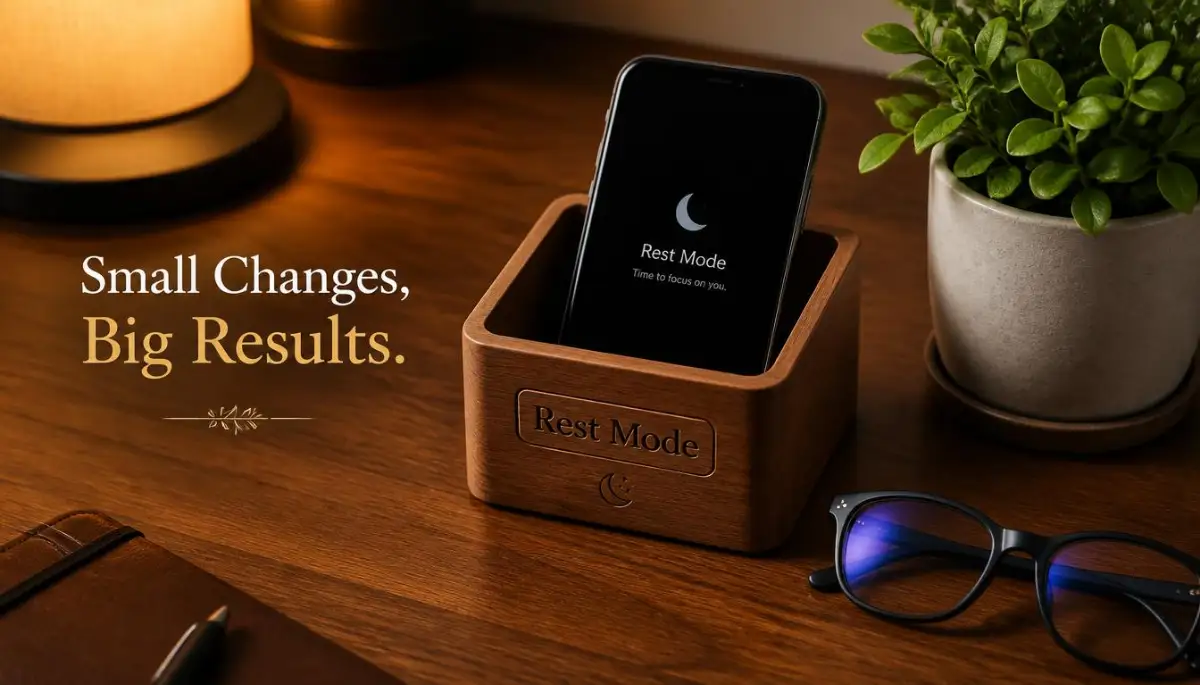
Pick a spot in your house, like a kitchen drawer or a decorative box. When you get home, put your phone in its "hotel." It stays there until the next morning. If someone really needs you, they can call you. This one habit can change your life in less than a week.
Moving Forward with Intent
You won't get this perfect on the first day. There will be days when you fall back into old habits. That’s okay. The goal isn't perfection; it’s awareness.
Start small. Pick one thing from this list. Maybe it’s turning off notifications or setting a digital sunset. Focus on that for three days. Notice how you feel. You deserve a life that belongs to you, not your devices.
When we take back our time, we take back our lives. We become better workers, better parents, and more importantly, happier humans. The world can wait for an hour. Your mental health cannot.
Take a deep breath. Put the phone down after reading this. Go look at the sky or talk to someone you love. This is where your real life begins.
By following these steps, you are not just surviving the digital age. You are thriving in it. You are showing others that it is possible to be successful without losing your soul to a screen. Keep going, and stay mindful of your limits. Your future self will thank you.
Moving Beyond the Basics: High-Level Strategies for Daily Peace
Once you have your notifications under control, it is time to look at the deeper habits that keep you balanced. Many people think balance is a 50/50 split between work and fun. In reality, it is more like a dance where you adjust your weight depending on the music.
One of the most powerful secrets used by top performers is "Energy Management" instead of just time management. We all have times of the day when our brains are sharp and times when we feel like a battery at 1%.
If you try to do your hardest work when your energy is low, you will take twice as long. This leads to working late into the evening, which ruins your personal life. Match your most demanding tasks to your peak energy hours. For most people, this is early in the morning, but for others, it might be mid-afternoon.
Another expert tactic is the "Visual Work Trigger." Our brains love associations. If you wear a specific pair of glasses or a certain sweater only when you are working, your brain starts to "click" into work mode when you put them on.
When you take them off, you are telling your subconscious that the workday is officially over. It sounds simple, but this physical signal helps stop the mental "bleed" of work into your family dinner.
Think of your mental energy like a physical asset. Just as you would follow simple habits to protect your electric vehicle battery life to make it last, you must protect your own internal battery. If you run yourself to 0% every day, eventually, you won't be able to "charge" back up to full capacity.
The Art of the Proactive "No-Fly Zone"
Have you ever tried to have a conversation while someone is looking at their watch? It feels terrible. This is exactly what we do to our loved ones when we keep our phones on the table.
Establish "No-Fly Zones" in your home. These are physical areas or specific times where technology is strictly forbidden. The dining table and the bedroom are the two most important zones.
By keeping the bedroom tech-free, you allow your brain to produce melatonin naturally. This leads to better sleep quality. According to research from the Sleep Foundation, the blue light from screens suppresses sleep hormones and keeps your brain too active.
When you remove the screen, you invite peace back into your private space. You might find that you actually enjoy talking to your partner or reading a paper book again. These small "analog" moments are the building blocks of a happy life.
Mastering the "Closed Loop" System
A major reason we can't stop thinking about work is because of "Open Loops." These are tasks or ideas that aren't finished or written down. They stay in your head like an annoying song that won't stop playing.
Before you finish your day, perform a "Brain Dump." Write down every single thing you need to do tomorrow. Once it is on paper or in a digital planner, your brain feels safe letting it go.
You are essentially telling your mind, "I won't forget this, so you can stop reminding me now." This allows you to truly enjoy your evening without that nagging feeling that you are forgetting something important.
Expert Insight: The 20-Minute Transition Buffer.
Don't jump straight from a high-stress meeting to playing with your kids. You will likely be impatient and distracted. Give yourself 20 minutes of "buffer time." Take a walk, listen to a podcast, or just sit in silence. This acts as a "decompressing chamber" between your two worlds.

The Invisible Traps: Why We Often Fail to Stay Balanced
Even with the best plans, we often fall into "The Availability Trap." This is the belief that if we don't answer a message immediately, we will look lazy or lose our jobs.
In reality, being too available makes your time seem less valuable. When you answer every email within two minutes, you teach people that you have no boundaries. They will continue to interrupt you because you have shown them that it's okay.
Break the cycle of "performative busyness." This is when people stay online late just so their boss sees their "active" status. This doesn't actually produce better work; it just produces tired employees.
Focus on the quality of your output rather than the hours you are "seen" online. Most modern managers actually prefer an employee who is well-rested and sharp over one who is always online but making mistakes.
Neglecting the Financial-Work Connection
Many people stay glued to their screens because they are afraid of financial instability. They feel that working 24/7 is the only way to stay safe. This fear can be a massive barrier to balance.
If you are constantly stressed about money, your work-life balance will always suffer. For example, knowing is buying a home smarter than renting helps you make clear long-term goals. When your finances are organized, you don't feel the desperate need to chase every single overtime hour at the cost of your health.
Similarly, if you have faced hard times, learning how to rebuild your credit score after a major financial disaster can give you the peace of mind needed to unplug. When the "money ghosts" stop haunting you, it becomes much easier to put the laptop away at 5:00 PM.
The "Comparison Trap" on social media is another silent killer. We scroll through Instagram and see people who seem to have "perfect" lives. This makes us feel like we need to work harder to buy more things to keep up.
Stop comparing your "behind-the-scenes" with everyone else's "highlight reel." Your balance is about your happiness, not about how your life looks to strangers on the internet.
Common Mistakes That Ruin Your Progress
The biggest mistake people make is trying to change everything at once. They try to go "monk mode" and delete all their apps on Monday, only to give up by Wednesday.
Balance is built with small, sustainable habits, not extreme changes. If you fail one day, don't throw away the whole week. Just start again the next morning.
Another mistake is using "Screen Time" to relax. If you spend 8 hours looking at a screen for work and then 4 hours looking at a screen for "fun," your brain never gets a break.
Your eyes need to look at things that aren't made of pixels. Go outside and look at the horizon. This is actually a biological requirement for your nervous system to reset. Scientists at Stanford Medicine have shown that being in nature significantly lowers cortisol levels.
Your Action Plan for a New Way of Living
You have the tools now. You know how to set boundaries, how to manage your energy, and which traps to avoid. But knowledge without action is just noise.
Tomorrow, I want you to try one thing. Just one. Maybe it is leaving your phone in another room during dinner. Or maybe it is taking a 10-minute walk without your headphones.
Notice the silence. It might feel uncomfortable at first. That discomfort is just your brain "detoxing" from the constant hits of dopamine that technology provides. Lean into that feeling.
You are the CEO of your own life. Your employer owns your work hours, but they do not own your soul or your time with your family. Reclaim that time with pride.
As you start to set these boundaries, you will notice something amazing. You will have more energy. Your ideas will be fresher. You will laugh more. This isn't just about "working to live"; it is about actually being alive while you are here.
A Final Word on Your Journey to Calm
The digital age is here to stay, but it doesn't have to control you. You can be a high-achieving professional and a present, happy person at the same time. These two things are not enemies; they are partners.
By protecting your peace, you are actually becoming better at everything you do. You are showing the world that you value yourself enough to say "enough."
Go ahead and close this tab now. Take a deep breath. Stretch your arms. Look away from the screen and find something beautiful in your immediate environment. This is your life, and it is happening right now, beyond the screen.