
The Silent Stress of an Empty Bank Account
I remember sitting on my living room floor, staring at a stack of bills with a heavy knot in my stomach. My salary had hit my account just two weeks prior, but somehow, almost all of it was already gone. I felt entirely defeated.
I was working so hard every single day, yet I had absolutely nothing to show for it in my savings account. I kept asking myself where all my hard-earned money went. It felt like I was pouring water into a bucket that had a massive, invisible hole at the bottom.
This financial stress began to bleed into every single part of my life. I started losing sleep, lying awake at night worrying about what would happen if my car broke down or if a medical emergency popped up out of nowhere. I felt irritable around my friends and family.
Whenever my friends invited me out for a simple dinner, my heart would race with anxiety. I would make up awkward excuses to stay home because I was too embarrassed to admit I simply could not afford a restaurant meal.
Does this painful scenario sound familiar to you? You are definitely not alone in this struggle. Millions of ordinary people wake up every morning feeling trapped in this exact same paycheck-to-paycheck cycle.
They work endless hours, get their paycheck, pay their rent and utilities, and suddenly the money just vanishes. This endless loop completely destroys your mental peace. It makes you feel like you are just surviving rather than actually living your life.
The heavy burden of financial insecurity drains your energy. It stops you from dreaming about a better future, buying a home, or even taking a simple, stress-free vacation.

Designing Your Personal Financial Rescue Plan
You do not need a degree in finance to fix this broken cycle and finally find some breathing room. You just need a practical, realistic system that actually matches your daily habits.
Let us break down exactly how you can turn this stressful situation around, step by step. We are going to look at simple, everyday changes that will help you keep more of your own money.
Finding Your Invisible Money Leaks
Before you can build a massive savings account, you must figure out exactly where your cash is escaping right now. We often ignore the small, seemingly harmless purchases we make every single day.
Think about that quick morning coffee run, the online streaming service you never watch, or the convenience store snacks you grab on the way home. These tiny expenses might cost only a few dollars each time.
However, when you add them up over thirty days, they transform into a massive financial leak. Start by grabbing your recent bank statements and a bright yellow highlighter.
Go through every single transaction from the last thirty days and highlight anything that was not an absolute necessity. You will be completely shocked to see how much money you are spending on random, mindless purchases.
Once you see the real numbers staring right back at you, it becomes incredibly easy to cut out those bad habits. You instantly realize that skipping a few random takeout meals can easily pay for your internet bill.
The Golden Rule of Paying Yourself First
Most people follow a completely backwards approach to saving their money. They pay all their bills, spend money on fun weekend activities, and then promise themselves they will save whatever is left over at the end of the month.
The harsh reality is that there is almost never anything left over. Human nature simply pushes us to spend whatever we have available in our checking accounts.
To break this bad habit, you need to completely flip your strategy upside down. You must pay yourself first.
Treat your personal savings account like it is your most important monthly bill. The very moment your paycheck hits your account, immediately transfer a specific amount straight into your savings.
Do not wait even a single day to make this transfer. By moving the money instantly, you force yourself to live on whatever is left over.
You quickly adapt to this new, slightly smaller available balance. It is a brilliant psychological trick that guarantees your savings will grow on autopilot every single month.
The "Wait 48 Hours" Psychological Trick
I used to be a massive victim of late-night online shopping. I would see a flashy advertisement for a new gadget, click the link, and hit the purchase button before I even realized what I was doing.
My home was filled with things I barely used, and my wallet was always empty. Then I started using a simple, life-changing mental rule.
Whenever I get the sudden urge to buy something that is not a basic necessity, I force myself to wait exactly 48 hours. I put the item in my online cart and simply walk away from my computer or phone.
Nine times out of ten, that intense desire to buy the item completely vanishes by the second day. I realize I do not actually need it, and I happily leave my hard-earned money safely inside my bank account.
If you want to speed up your savings rate, you must add this powerful emotional buffer to your shopping habits. It gives your logical brain enough time to step in and save you from instant gratification.
Automate Your Path to Financial Peace
Willpower is an incredibly unreliable tool when it comes to managing personal finances. Some days you feel highly motivated to save, and other days you just want to treat yourself to a giant pizza.
If you rely on your own memory and motivation to transfer money every week, you will eventually fail. The absolute best way to guarantee success is to remove human emotion from the equation entirely.
Set up automatic transfers with your local bank. Tell your banking app to automatically move a fixed amount from your checking to your savings on the exact day you get paid.
You can start incredibly small if things are tight right now. Even an automatic transfer of just twenty dollars a week will begin to build a massive financial safety net over time.
Stop Watching This Without Taking Action!
Are you tired of feeling confused about where to even start with your financial plan? Watch this incredibly simple and inspiring breakdown below to see exactly how ordinary people are taking back control of their wallets today!
The 50/30/20 Framework Made Simple
Many beginners get completely overwhelmed by complex spreadsheets and complicated math. They give up on their goals before they even build a proper foundation.
If you want a scientifically proven method that is incredibly easy to follow, you should adopt the 50/30/20 rule. This simple guideline breaks your entire monthly income down into three completely manageable categories.
First, exactly 50% of your income goes toward your absolute needs. This includes your rent, your groceries, basic utility bills, and necessary transportation to work.
These are the non-negotiable items you absolutely must pay to keep your life running safely. If your basic needs are eating up more than half your income, you might need to find a cheaper apartment or cut back on expensive grocery brands.
Next, 30% of your money goes toward your personal wants. Yes, you read that correctly!
A good financial plan actually encourages you to spend money on things that bring you happiness. This category covers dinner with friends, movie tickets, new clothes, or that gym membership you enjoy.
By giving yourself permission to spend this money guilt-free, you completely remove the feeling of restriction. You will never feel like you are punishing yourself, which makes it much easier to stick to your goals long-term.
Finally, the remaining 20% of your income is dedicated strictly to savings and debt repayment. This is the portion that builds your emergency fund, pays off your credit cards, and secures your future.
Myth vs Reality of Managing Your Money
People often carry toxic beliefs about money that stop them from making positive changes. Let us clear up some of the most common misunderstandings right now.
Myth: You have to earn a massive six-figure salary to start building wealth.
Reality: Wealth is built by the gap between what you earn and what you spend. A teacher saving twenty percent of their income will often build more wealth than a high-paid doctor who spends every single penny they make.
Myth: Creating a financial plan means you can never have any fun again.
Reality: A good plan actually gives you total freedom to spend money on fun things without feeling a drop of guilt. It simply stops you from wasting money on things you do not truly care about.
Myth: It is simply too late for me to start managing my cash.
Reality: The best time to plant a tree was twenty years ago, but the second-best time is today. No matter your age, taking control of your daily spending will instantly improve your quality of life.
The Cash Envelope Method for Over-Spenders
If you struggle heavily with credit card debt and impulse control, you might need a more physical approach to your daily spending. Swiping a shiny plastic card simply does not trigger the same emotional response in our brains as handing over physical paper money.
This is exactly where the famous cash envelope system comes into play. It is an old-school trick that works incredibly well for modern spending problems.
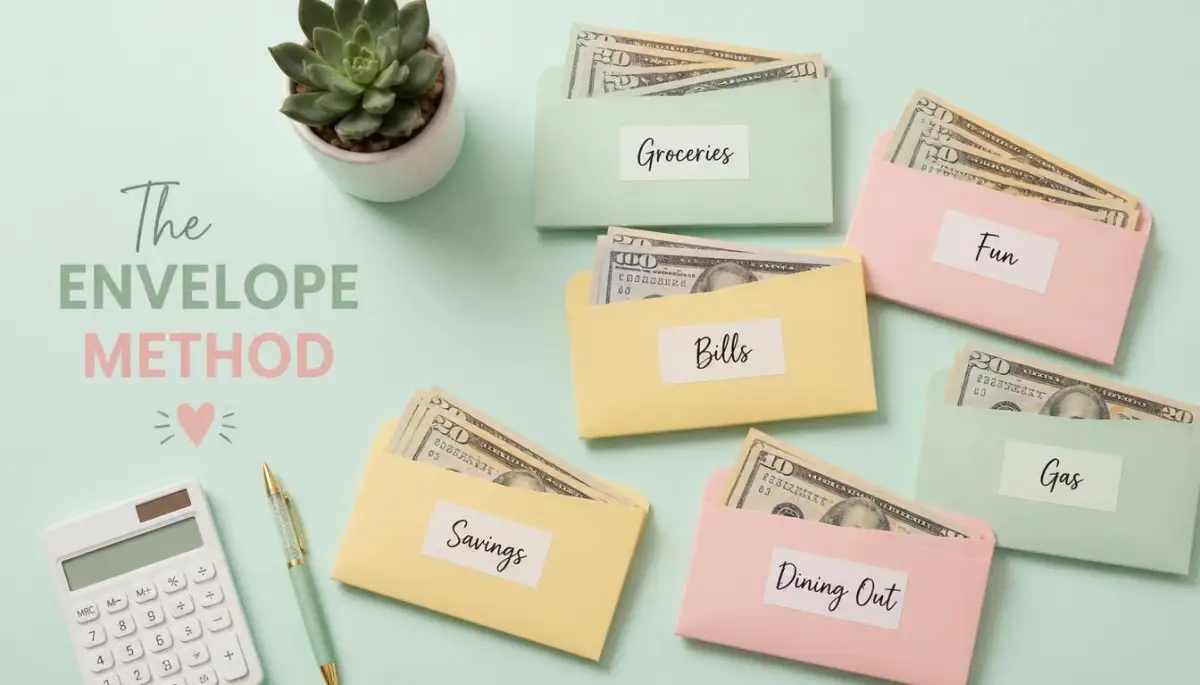
At the start of the month, you take physical cash out of the bank for your variable expenses. You create separate paper envelopes for different categories, like "Groceries," "Gas," "Eating Out," and "Entertainment."
You place the specific budgeted cash amount into each respective envelope. When you go to the supermarket, you only take the "Groceries" envelope with you.
Once the cash inside that specific envelope is gone, you are absolutely done spending in that category for the month. You cannot easily borrow from another envelope, and you certainly cannot swipe a credit card.
This physical limitation forces you to become incredibly creative and careful with your purchasing choices. It is a brilliant way to naturally train your brain to respect the actual value of a dollar.
Mastering the Supermarket Aisles
Food costs are often the second-largest expense for a normal family, right behind housing. Unfortunately, the grocery store is designed by experts to make you spend as much money as possible.
They place the most expensive items right at eye level and fill the checkout lanes with tempting candy and magazines. If you walk into a store without a solid plan, you will easily blow your entire week's allowance in twenty minutes.
Always, without fail, take a written shopping list with you. Plan out exactly what meals you are going to cook for the week before you even grab your car keys.
Once you are inside the store, treat that written list like it is the law. If a tasty snack is not written on that piece of paper, it does not go into your shopping cart.
Never Shop on an Empty Stomach
Here is a quick reality check about human biology. If you go to the supermarket when you are hungry, your brain will betray you entirely.
Everything in the snack aisle will suddenly look like a basic human necessity. You will end up buying expensive frozen pizzas, sugary drinks, and endless boxes of cookies simply because your stomach is growling.
Always eat a massive, filling meal before you go out to buy your weekly food. You will feel much more relaxed, clear-headed, and capable of sticking strictly to your planned list.
Building Your First Emergency Buffer
Life is completely unpredictable, and bad things happen to good people all the time. Your car tire might blow out on the highway, your refrigerator might suddenly stop working, or you might need a sudden trip to the dentist.
When these bad moments happen, people without savings are forced to use high-interest credit cards. This instantly pushes them deep into a pit of debt that is incredibly hard to escape.
Your very first goal on this journey should be to build a beginner emergency buffer. Try to save a fast one thousand dollars as quickly as humanly possible.
You can reach this goal by selling old clothes on the internet, picking up a few extra shifts at work, or completely cutting out all restaurant meals for a single month. This small pile of cash acts like a powerful shield between you and a disaster.
Once that beginner buffer is sitting safely in the bank, your daily stress levels will drop dramatically. You will no longer panic when you hear a strange noise coming from your car engine.
Audit Your Monthly Subscriptions
We live in an era where literally everything is a monthly subscription. We sign up for streaming movies, music apps, premium delivery services, and digital magazines.
Companies love this business model because they know you will probably forget to cancel. You sign up for a free seven-day trial to watch a specific movie, and suddenly you are paying fifteen dollars a month for the next three years.
Set aside one hour this coming weekend to perform a total subscription audit. Pull up your smart phone settings and your credit card statements.
Look closely at every single recurring charge that hits your account. Ask yourself honestly: "Have I used this service in the last two weeks?"
If the answer is no, hit the cancel button immediately. You can always sign up again later if you truly miss it, but for now, that money belongs back in your pocket.
Learn to Love the Word "No"
One of the hardest parts of taking control of your spending is dealing with social pressure. Friends and coworkers love to invite you to expensive weekend brunches, late-night drinks, and costly group trips.
It feels incredibly awkward to decline these fun invitations. We naturally fear missing out on great memories, or we worry that people will judge us for being tight with our cash.
You have to realize that your true friends will completely understand and support your new goals. You must get comfortable kindly saying "no" to things you cannot afford right now.
Instead of turning them down completely, offer a cheaper, fun alternative. Suggest hosting a fun game night at your house or going for a nice walk in the local park instead of hitting a loud, overpriced restaurant.
You will quickly discover that it is the company you keep, not the money you spend, that creates the best memories. You get to keep your friends while completely protecting your precious bank balance.
Tracking Every Penny with Precision
You cannot improve what you do not measure. Imagine trying to lose weight without ever stepping on a scale or looking in a mirror.
Managing your daily spending works exactly the same way. You need a clear, accurate picture of what is happening with your cash flow every single day.
You do not need to be a math genius to track things effectively. There are dozens of completely free mobile applications that will link safely to your bank and categorize everything automatically.
If you prefer a more private approach, simply carry a small notebook in your pocket. Every time you buy a coffee or pay a toll, write the amount down immediately.
At the end of the week, review your notes and see if you stayed within your targeted limits. This daily awareness completely changes how you view your casual spending habits.
You begin to naturally question every purchase because you know you will have to write it down later. This simple act of tracking holds you deeply accountable to your own goals.
Leveling Up Your Money Game: Beyond the Basics
Once you have stopped the immediate bleeding in your bank account, it is time to get highly strategic. We are going to move past simple survival mode and start building a system that actively grows your wealth.
You do not need to be a math genius to apply these pro-level secrets. You just need a bit of consistency and a willingness to look closely at your daily habits.
One of the most powerful concepts you can adopt right now is called zero-based budgeting. The concept is incredibly simple, yet it completely transforms how you view your paycheck.
When you use a zero-based budget, you assign a specific job to every single dollar you earn. If your monthly income is exactly three thousand dollars, your monthly plan must account for exactly three thousand dollars.
Nothing is left floating around randomly in your checking account. If you have a hundred dollars left after paying bills and funding your savings, you must assign that money a clear purpose.
You can put it towards extra debt payments, a future vacation, or even a guilt-free shopping trip. When every single dollar has a clear mission, you completely eliminate the mystery of where your cash went.
The Magic of Sinking Funds for Life's Surprises
We all have those annoying expenses that pop up out of nowhere and completely destroy our monthly plan. It could be new tires for your car, an annual property tax bill, or holiday gifts for your family.
These events are not actually emergencies because we know they are coming eventually. However, because they do not happen every single month, we completely forget to prepare for them.
This is exactly where sinking funds come in to save your sanity. A sinking fund is a dedicated savings pot for a specific, expected future expense.
Let us say you know your car insurance will cost six hundred dollars every six months. Instead of panicking when that massive bill arrives, you simply save one hundred dollars every single month in a specific account.
When the bill finally arrives in your mailbox, you pay it instantly with a giant smile on your face. You already have the cash sitting right there, completely ready to go.
You can set up multiple mini-accounts at your local bank specifically for these sinking funds. It creates an incredible sense of deep financial peace that completely changes your life.
Renegotiating Your Everyday Living Costs
Most people assume their monthly utility and service bills are entirely fixed. They just blindly pay whatever number is printed on the statement every single month.
The truth is, many of your recurring bills are highly negotiable if you simply ask. Companies are terrified of losing loyal customers to their competitors.
Set aside one hour on your next day off to call your car insurance agent, your cell phone provider, and your internet company. When the representative answers the phone, politely mention that you are trying to lower your monthly expenses.
Ask them directly if they have any current promotions or loyalty discounts available for your account. If they say no, calmly mention that you have been looking at cheaper rates from a competing company.
More often than not, they will suddenly find a hidden discount to keep you from leaving. Just as you might try to stop Wi-Fi drops to fix your slow internet connection to improve your daily workflow, fixing these expensive recurring bills dramatically improves your financial stability.
Implementing the "No-Spend" Weekend Challenge
If you want to rapidly increase your savings rate, you need to challenge your current spending habits. One of my favorite methods to achieve this is the completely free weekend challenge.
Pick one weekend out of every single month where you commit to spending absolutely zero dollars. You cannot buy coffee, order takeout, or pay for expensive entertainment.
Instead, you have to get completely creative with the resources you already own. You can cook meals using only the random ingredients left inside your pantry and freezer.
For entertainment, you can host a movie night at home, visit a local public park, or finally read that book sitting on your nightstand. You will be amazed to see how much fun you can actually have without opening your wallet once.
According to recent data from the Bureau of Labor Statistics on consumer spending, the average household wastes a massive portion of their income on weekend entertainment and dining out. Cutting this out just once a month leaves a huge chunk of cash right back in your pocket.
The Hidden Traps That Keep Your Bank Account Empty
Even with the best intentions, it is incredibly easy to fall back into toxic money habits. The modern world is literally designed to separate you from your hard-earned cash at every possible turn.
If you do not stay highly alert, you will slip right back into the painful paycheck-to-paycheck cycle. Let us break down the most dangerous pitfalls that secretly sabotage your financial growth.
The Silent Danger of Lifestyle Creep
This is easily the biggest mistake I see ordinary people make as they progress in their careers. You finally get that big promotion at work, or you start a side hustle that brings in extra cash.
Instead of saving that new money, you instantly upgrade your entire lifestyle. You trade in your perfectly good car for a newer model, you rent a much fancier apartment, and you start buying expensive designer clothes.
Before you even realize what happened, your new, higher expenses completely swallow your brand-new income. You are making way more money than you did five years ago, but you still feel totally broke.
To beat this trap, you must pretend your big raise never even happened. Every time your income goes up, send all of that new extra money directly into your savings or investment accounts.
You can continue living your normal, comfortable life while your hidden wealth grows massively in the background. It is the ultimate secret to building true long-term security.
The "Crash Diet" Approach to Budgeting
When people finally get tired of being broke, they often swing completely in the opposite direction. They create an incredibly strict, unrealistic budget that strips away every single drop of joy from their lives.
They vow to never eat at a restaurant again, they cancel all their streaming services, and they refuse to buy new clothes. This extreme restriction works exactly like a terrible crash diet.
You might survive for a few weeks through sheer willpower alone. However, the emotional deprivation will eventually break you down.
One bad day at work will trigger a massive emotional spending spree that completely destroys your entire month of hard work. Studies from the American Psychological Association regarding financial stress show that depriving yourself entirely actually increases your anxiety and leads to worse financial decisions later.
You have to build some fun money into your plan, even if it is just a small amount. Giving yourself permission to buy a guilt-free coffee on Friday mornings will keep you happily on track for the rest of the week.
Falling for the Credit Card Rewards Illusion
Credit card companies are not running charities; they are brilliant marketing machines. They offer you shiny points, free miles, and cash-back rewards to convince you to use their plastic cards for every single purchase.
Many people convince themselves they are actually beating the system by collecting these tiny rewards. The painful truth is that humans simply spend more money when they swipe a card compared to handing over physical cash.
You might end up spending an extra hundred dollars on random items just to earn two dollars in fake points. This is a terrible mathematical trade-off that only makes the banks richer.
If you know you struggle with impulse control, you need to leave those shiny reward cards locked away at home. Stick strictly to physical cash or a standard debit card until you completely master your daily impulses.
Creating a calm, organized financial life is very similar to designing a healthy living space. Just like you might thoughtfully maximize natural light to make a tiny room look huge, you need to remove the clutter of unnecessary credit cards to clearly see your true wealth.
Keeping Up With Fake Internet Lives
Social media is a massive highlight reel that heavily distorts our view of reality. We constantly scroll through pictures of our friends taking luxury vacations, driving brand-new cars, and eating at five-star restaurants.
It is incredibly easy to feel like you are falling behind in life when you see these posts. This heavy social pressure forces us to spend money we do not have, just to buy things we do not actually need, to impress people we barely even like.
You have to remember that many of those people posting luxury photos are drowning in silent credit card debt. They are trading their future financial peace for a few temporary online likes.
Stop comparing your realistic, responsible life to someone else's fake digital highlight reel. Focus entirely on your own goals, your own family, and your own bank account.
Your Roadmap to Permanent Financial Peace
Taking control of your cash flow is not a magical overnight process. It requires daily patience, a bit of trial and error, and the courage to honestly face your current habits.
Do not beat yourself up if you make a mistake and accidentally overspend next week. Budgeting is exactly like building a new muscle at the gym; it gets much stronger and easier the more you practice.
Start extremely small today. Print out your last bank statement, highlight your silly expenses, and set up your very first automatic savings transfer.
Once you get comfortable with the basics, you can start exploring deeper strategies to secure your future. Organizations focused on financial literacy and smart planning highly recommend revisiting your goals every few months to stay properly motivated.
When you combine this new financial clarity with other smart lifestyle choices, your overall stress drops significantly. You can find more helpful guides and practical life strategies over on our main topic36.com homepage.
Every single smart choice you make today is a massive gift to your future self. You are building a powerful safety net that will protect you and your loved ones from the unpredictable storms of life.
It takes deep understanding and empathy to create systems that truly work for everyday people. Just like learning the real secret to building products that people actually love, building a perfect budget requires matching your system to your actual human behavior.
Honest Answers to Your Biggest Money Questions
How do I manage my spending if my income changes every single month?
If you have an irregular income, you must calculate your baseline living expenses first. Always build your budget based on the absolute lowest amount of money you expect to make in a bad month. If you happen to earn more money than expected, send all the extra cash directly into your savings buffer.
Should I focus on paying off my debt or building my savings first?
You should always try to build a tiny beginner emergency fund of at least one thousand dollars first. Once you have that small cash shield in place, attack your high-interest credit card debt with every single extra penny you have. After the expensive debt is gone, you can go back to growing your savings account aggressively.
What is the absolute best mobile app for tracking my daily purchases?
The absolute best app is simply the one you will actually remember to use every day. Some people love complex, detailed apps that link directly to their bank accounts for automated tracking. However, many successful savers prefer just using a free basic spreadsheet or the simple notes app on their smart phone.
Is it actually safe to carry physical cash around for the envelope method?
It is completely fine as long as you use basic common sense and keep it secure. You do not need to carry your entire monthly grocery budget in your pocket all at once. Simply take out the exact amount of cash you need for that specific shopping trip and leave the rest safely hidden at home.
Disclaimer: The information provided in this article is for educational and informational purposes only and should not be construed as professional financial advice. Please consult with a certified financial planner or advisor before making any major financial decisions or major changes to your personal wealth strategy.
I remember exactly how helpless I felt when my bank account was constantly empty, but I promise you that feeling does not have to last forever. Take a deep breath, implement just one small change from this list today, and watch how quickly you regain complete control over your life. You absolutely have the power to turn your financial story around right now!