
The Heartbreak of a Denied Home Insurance Claim
Imagine this. You come home after a long day of work. You open your front door and hear a strange splashing sound. You walk into your living room and find two inches of water covering your expensive hardwood floors.
Your heart sinks. You think about the cost. You think about the stress. But then, you remember your insurance. You pay your premiums every month on time. You feel a small sense of relief knowing you are protected.
The next day, the adjuster arrives. They look at the damage and shake their head. A few days later, you get a letter. "Claim Denied."
The weight of that moment is heavy. It feels like a betrayal. You feel alone, frustrated, and scared about your finances. This is the reality for thousands of homeowners every year. They assume they are covered for everything, but the "fine print" says otherwise.
Why does this happen? Is the insurance company just being mean? Not exactly. Most policies have very specific rules about what they will and will not pay for.
I have seen families lose their savings because they didn't understand these exclusions. It’s not just about money. It’s about your peace of mind. Your home is your sanctuary. Seeing it damaged is hard enough. Finding out you have to pay for it all by yourself is a nightmare.
We need to talk about these hidden traps. We need to look at why insurance companies say "No" when you need them most. Understanding these exclusions is the only way to truly protect your future.
Why Most Water Damage Claims Get the "Cold Shoulder"
Many people think all water damage is the same. This is a big mistake. Most standard home insurance policies cover "sudden and accidental" water damage. This means things like a burst pipe.
However, gradual damage is a different story. If a pipe has been leaking slowly behind your wall for six months, the insurance company will likely deny your claim. They call this a "maintenance issue."
They expect you to take care of your home. If the damage happened because you didn't fix a small leak, they won't pay for the big repair. This feels unfair, but it is a standard rule.
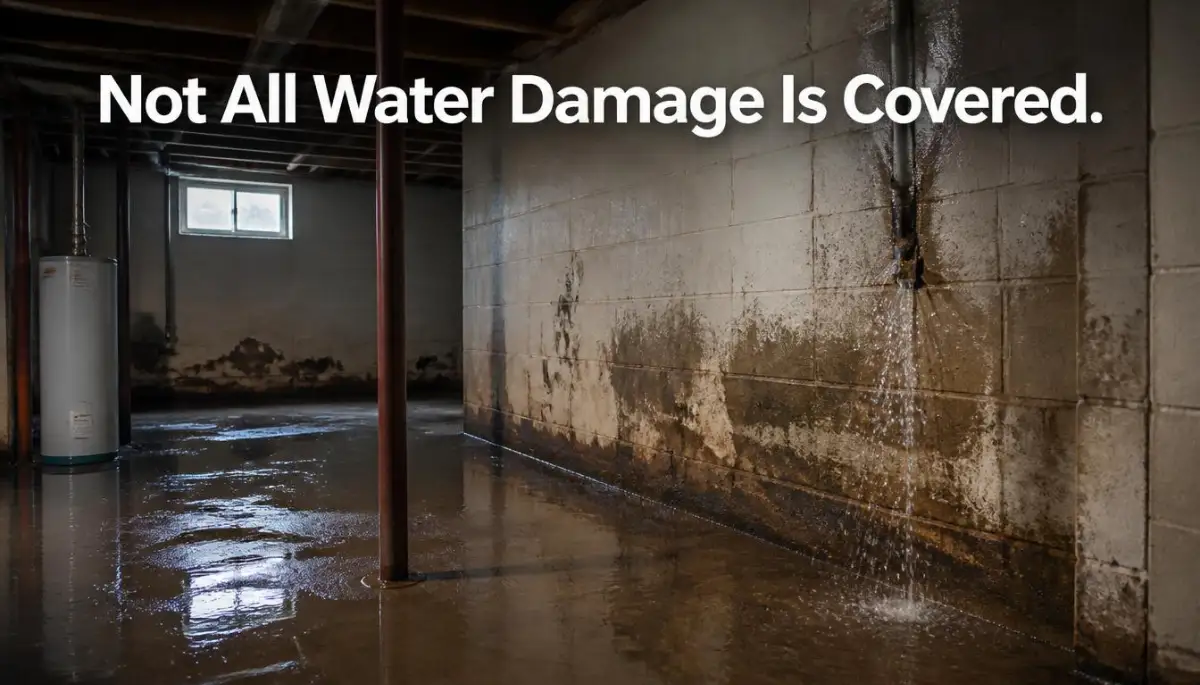
Flood damage is another major trap. Standard policies do not cover floods. This includes water that comes from the ground up, like a rising river or heavy rain that seeps into your basement.
You usually need a separate flood insurance policy for this. Many homeowners find this out only after their basement is underwater. Always check if you live in a high-risk area.
If you want protection for things like sewer backups, you often need to add a special "rider" or "endorsement" to your policy. Without it, you are on your own if your toilet overflows and ruins your carpet.
The Problem with "Acts of Nature" and Earth Movements
We like to think our insurance covers us against any disaster. But "earth movement" is almost always excluded. This includes earthquakes, landslides, and sinkholes.
If the ground shifts and your foundation cracks, a standard policy will not help you. This can be devastating because foundation repairs are very expensive.
If you live in an area prone to earthquakes, you must buy a separate earthquake policy. The same goes for areas with soft soil where sinkholes are common.
Wind and hail are usually covered, but there are exceptions. In some coastal areas, you might have a higher deductible for wind damage. This means you have to pay more out of your own pocket before the insurance kicks in.
It is important to know the specific risks in your area. Don't wait for a storm to read your policy. Read it now so you can prepare.
Wear and Tear: The Silent Claim Killer
Insurance is meant for sudden accidents, not for the natural aging of your home. This is a hard lesson for many.
If your roof is 25 years old and it starts leaking because the shingles are worn out, insurance will not pay for a new roof. They see this as normal wear and tear.
They expect you to replace your roof when it gets old. The same applies to old appliances or heating systems. If your water heater dies because it is old and rusty, don't expect a check from your insurance company.
Pest infestations are another common exclusion. If termites eat through your wooden beams, you are responsible for the repair. Insurance companies believe that regular inspections can prevent pest damage.
They view pests as a maintenance problem, not a sudden accident. This is why it is so important to have a professional check your home every year. Small costs now can save you thousands later.
Intentional Damage and the "Empty Home" Rule
This might seem obvious, but insurance will not cover damage you cause on purpose. If you get angry and break a window, you are paying for it.
But there is a more subtle rule called the "vacancy clause." If you leave your home empty for a long time—usually more than 30 or 60 days—your coverage might stop.
Insurance companies see empty homes as high risk. A small leak in an empty house can become a huge disaster because no one is there to stop it.
If you are going away for a long trip or moving out before your house is sold, tell your agent. You might need a "vacant home" policy. If you don't, and something happens, your claim will be denied instantly.
Why Your Business Equipment Might Not Be Safe
With more people working from home, this is a growing problem. Most home insurance policies have very low limits for business property.
If you have $10,000 worth of computer equipment for your business, your policy might only cover $2,500 of it. If your home office burns down, you could lose a lot of money.
If you run a business from your home, you need to tell your insurance provider. You might need a business owner's policy or a special add-on.
Also, if you have very expensive items like jewelry, fine art, or high-end bicycles, they are often capped at a low amount. A standard policy might only pay $1,500 for a stolen ring, even if it is worth $5,000.
To protect these items, you need to "schedule" them. This means listing them specifically in your policy for their full value. It costs a little more, but it is the only way to get full protection.
Myth vs. Reality: Understanding Your Coverage
It is easy to get confused by insurance jargon. Let's look at some common myths that lead to denied claims.
The Power of Documentation and Proof
When you file a claim, the burden of proof is on you. The insurance company needs to see what was damaged and why.
Keep a home inventory. This is a list of everything you own. Take photos and videos of every room. Open your drawers and closets.
If your house burns down, you won't remember every single item you owned. Having a video saved on the "cloud" (like Google Drive or iCloud) is a lifesaver.
Save your receipts. If you buy a new TV or a big appliance, keep the receipt. This proves the value of the item.
Also, keep records of your home maintenance. If you have your roof inspected or your plumbing checked, save those documents. If a claim arises, you can prove that you were not negligent. You can show that you took good care of your home.
How to Read Your Policy Without Getting a Headache
I know insurance documents are boring. They are full of legal words. But you don't have to read every single page at once.
Focus on the "Declarations Page." This is usually the first page. It shows your limits and your deductibles.
Next, look for the section called "Exclusions." This is the most important part for you. It will list exactly what is not covered.
If you see a word you don't understand, look it up or call your agent. Don't be afraid to ask "stupid" questions. It is their job to explain it to you.
Ask them specifically: "What happens if my basement floods?" or "Am I covered for mold?" Their answers will tell you exactly where your gaps are.
Pro Tip: Review Your Policy Every Year
Your life changes, and your home changes too. Maybe you finished your basement. Maybe you bought an expensive engagement ring.
If you don't update your policy, these new things might not be covered. I recommend a "Policy Check-up" every year.
Call your agent and tell them about any big changes. It only takes fifteen minutes. Those fifteen minutes could save you $50,000 in the future.
Insurance is not a "set it and forget it" thing. It is a living document that should grow with you. Being proactive is the best way to avoid the pain of a denied claim.
Final Thoughts for Part 1
We have covered a lot of ground today. We looked at water damage, earth movements, and the importance of maintenance.
The main takeaway is this: Do not assume you are covered.
Check your policy. Ask questions. Document your belongings. By taking these steps, you are putting a shield around your home and your wallet.
In the next part of this guide, we will look at more specific scenarios and how to fight a claim denial if it happens to you. Stay tuned and stay protected.
Remember, your home is your biggest investment. Treat your insurance policy with the same care you treat your home. It's the only thing standing between you and a financial disaster.
If you found this helpful, share it with a friend. Many people are living with "insurance gaps" and don't even know it. Let's help them stay safe too.
Strengthening Your Shield: Advanced Ways to Close Coverage Gaps
Now that we have explored the basics of what is usually left out, let’s look at how you can actually fight back. Most people think their policy is a finished product. They believe they have to accept whatever the insurance company offers.
In reality, a policy is more like a custom suit. You can add "patches" to cover the holes. These patches are called endorsements or riders. If you know your standard policy excludes floods or sewer backups, you can often pay a small extra fee to add that specific protection back in.
One of the smartest moves you can make is adding "Ordinance or Law" coverage. Think about this: if your older home suffers damage, you have to fix it according to current building codes. These new codes might require more expensive materials or safer electrical systems than what you had before.
A basic policy only pays to put things back the way they were. It won't pay for the extra cost of meeting new laws. This gap can leave you with a massive bill. Adding this rider ensures that the insurance company picks up the tab for those required upgrades. It's a small change that saves you from a giant financial headache later.
Another secret of the pros is "Service Line Coverage." Most homeowners don't realize they own the pipes running from the street to their house. If the main water line under your front yard leaks or breaks, the city won't fix it.
Standard home insurance usually stops at the walls of your house. Repairing these underground lines can cost thousands of dollars because of the digging and landscaping involved. By adding a specific service line endorsement, you protect yourself from these "invisible" disasters. It is one of the most affordable ways to gain true peace of mind.
When it comes to your belongings, don't rely on "Actual Cash Value." If your five-year-old laptop is stolen, the insurance company will look at how much it's worth today—which might be almost nothing. You want "Replacement Cost Coverage" instead.
This ensures you get enough money to buy a brand-new laptop of similar quality. This is especially helpful when you are is buying a home smarter than renting because your equity and your assets are tied together. Protecting those assets at their full value is a fundamental part of long-term wealth building.
Lastly, consider the "Appraisal Clause." If you and your insurance company can't agree on the cost of a repair, you don't have to just give up. You can invoke this clause to bring in independent experts. This is a powerful tool that levels the playing field. It forces a fair look at the damage and often results in a higher payout for the homeowner.

The Danger Zones: Mistakes That Leave Homeowners Penniless
I have seen it happen too many times. A homeowner thinks they are doing the right thing, but they make a small mistake that ruins their claim. One of the biggest blunders is waiting too long to report a problem.
If you see a small water stain on your ceiling, don't wait for it to get bigger. The longer you wait, the more likely the insurance company will claim it was a "maintenance issue." They will argue that if you had acted sooner, the damage would have been minor. By waiting, you are essentially giving them a reason to say no.
Another major pitfall is performing permanent repairs before the adjuster arrives. It’s okay to do "emergency repairs" like putting a tarp on a roof or stopping a leak. In fact, you are required to do this to prevent more damage.
However, if you rip out all the wet drywall and throw it away before the insurance company sees it, they can't verify your loss. They need to see the "evidence" of the damage. Always take hundreds of photos and keep every scrap of damaged material until the adjuster gives you the green light to toss it.
Many people also fail to disclose home renovations. If you spend $50,000 to upgrade your kitchen but don't tell your agent, your coverage limits remain the same. If a fire destroys that kitchen, your insurance will only pay for the old, cheap cabinets you had before.
This lack of communication is a recipe for disaster. Any time you make a change that adds value to your home, you must update your policy. If you find yourself struggling with money because of an under-insured loss, you might need to learn about how to rebuild your credit score after a major financial disaster. But you can avoid this pain entirely by staying in touch with your insurance provider.
We also need to talk about the "Honesty Trap." Never exaggerate the value of your items or the extent of the damage. Insurance companies have specialized software and investigators who can spot fraud from a mile away.
Even a small lie can lead to your entire claim being denied and your policy being canceled. It can even land you on a "blacklist" that makes it impossible to get insurance from any company in the future. Stick to the facts, provide your receipts, and let the process work honestly.
Finally, don't ignore the "Loss of Use" coverage. When a disaster hits, you might not be able to live in your home. This part of your policy pays for hotel stays and restaurant meals.
Many people forget to use this and end up draining their savings to pay for a place to stay. Keep every single receipt for meals and lodging while you are out of your home. These small expenses add up quickly, and your policy is designed to help you cover them.
Taking Control of Your Financial Safety Net
The world of insurance can feel like a maze designed to keep your money inside the company's pocket. But now you have the map. You know that "standard" doesn't mean "everything." You know that "maintenance" is your responsibility and "sudden" is the magic word for claims.
Don't let this information sit on a shelf. Action is the only thing that creates safety. Take an hour this weekend to pull out your policy. Look for the words we talked about. Look for the limits on your jewelry, your electronics, and your liability.
If you find a gap, call your agent on Monday. Ask them for a quote on a "Sewer Backup Rider" or "Flood Insurance." You will be surprised at how affordable some of these additions are. Often, for the price of one coffee a month, you can add $10,000 or more in protection.
You should also check the National Association of Insurance Commissioners website to understand your specific state rights. Every region has different rules that can help you if you feel you are being treated unfairly. Knowledge is your best defense against a denied claim.
Your home is more than just four walls and a roof. It is where your children grow up. It is where you feel safe. It is likely your most valuable asset. Treating your insurance policy with respect is the same as treating your home with respect.
Be the homeowner who is prepared. Be the one who has the inventory, the receipts, and the right riders. When the next storm comes—and it will—you won't have to worry about the "fine print." You will know that your shield is strong and your family is protected.
Start today. Walk through your home with your phone and record a quick video of everything you own. It takes five minutes. That one small act could be the difference between a denied claim and a full recovery. You have the power to secure your future. Use it.


![The Ultimate Guide to Winning Auto Insurance Claims [Stress-Free]](https://topic36.com/storage/uploads/blogs/1788793033_the-ultimate-guide-to-winning-auto-insurance-claims-stress-free.webp)