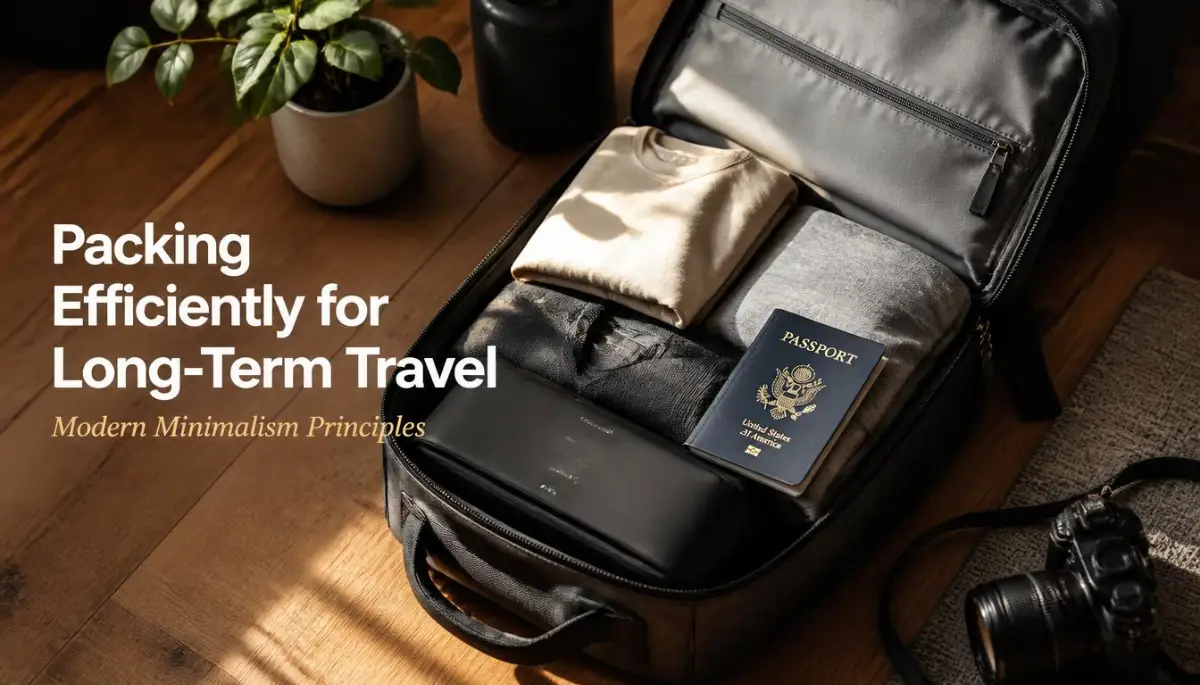
The Heavy Burden of Overpacking: My Exhausting Wake-Up Call
I remember standing right in the middle of a crowded, sweltering train station in Southeast Asia, feeling completely defeated. Sweat was pouring down my back while I desperately tried to drag a massive, broken suitcase over rough floor tiles. People were rushing past me, easily dodging my clumsy luggage, while I felt like a walking roadblock. My shoulders ached from a heavy daypack, and my mind was racing with anxiety about missing my train. Right then, I looked at my mountain of bags and realized I was carrying a bunch of things I hadn't even touched in weeks. It was a miserable moment, and I knew my obsession with packing "just in case" items was ruining my trip.
That exact moment changed how I look at traveling forever. Overpacking is a silent trip-killer that so many of us fall victim to.
We stuff our bags to the absolute limit because we are terrified of the unknown. We think having five extra shirts and three pairs of shoes will give us peace of mind. But the reality is the exact opposite.
Carrying heavy luggage drains your physical energy before your day even begins. You wake up dreading the transit days because you know you have to lug a monster suitcase up five flights of stairs in a building with no elevator.
It completely destroys your mental peace. You constantly worry about your bags getting lost by the airline, you pay ridiculous excess baggage fees, and you waste precious vacation time digging through a messy suitcase just to find a single clean pair of socks.
Every time you move to a new city, the anxiety starts all over again. Instead of enjoying the sights, you are trapped by the physical weight of your own belongings.
The things you packed to make your life easier end up becoming a literal chain around your ankle. Traveling should feel like freedom, but heavy luggage turns it into hard labor.
Mastering the Art of Traveling Light: A Practical Blueprint
Breaking free from the heavy luggage trap is easier than you might think. It just requires a simple shift in how you view your daily needs on the road.
Let me show you exactly how to transform your luggage from a chaotic mess into a clean, highly functional system. These practical steps will help you embrace minimalism without sacrificing comfort.
The 80/20 Rule for Choosing Your Gear
Have you ever noticed that you wear the same favorite clothes at home most of the time? This is the famous Pareto Principle in action, and it applies perfectly to packing.
You will likely wear 20 percent of the clothes you pack for 80 percent of your trip. The goal is to identify those favorite, comfortable items and leave the rest in your closet.
Stop packing clothes for imaginary scenarios. If you are going on a regular sightseeing trip, you probably do not need a formal evening gown or a heavy winter coat just because the temperature might drop for one night.
Pack for the reality of your itinerary. Think about the most common activities you will be doing and select items that directly support those plans.
Building a Truly Versatile Capsule Wardrobe
A capsule wardrobe is the secret weapon of every successful minimalist traveler. It means picking a small number of clothing items that all mix and match perfectly together.
Start by choosing a single base color palette. Navy, black, or olive green work wonderfully. If all your bottoms match all your tops, you suddenly have dozens of outfit combinations from just a few pieces.
Let us look at a quick visual comparison:
When everything matches, you never have to waste time figuring out what to wear in the morning. You just grab two items and you know they will look great together.
The Science of Travel Fabrics
Not all fabrics are created equal when you are living out of a bag. The material of your clothing makes a massive difference in how much space you need.
Cotton is incredibly comfortable at home, but it is a terrible travel fabric. It absorbs sweat, takes hours to dry, and holds onto bad odors very quickly.
Instead, look for smart fabrics like merino wool or high-quality synthetics. Merino wool is a total game-changer for long trips.
It naturally fights off odor-causing bacteria, meaning you can wear a merino shirt multiple times in hot weather without it smelling bad. It also dries remarkably fast if you need to wash it in a hotel sink.
By upgrading your fabrics, you can easily cut the number of shirts you pack in half. This frees up a surprising amount of space in your bag.
I remember my first time trying to pack light for a month in Europe, and I brought a heavy denim jacket because I thought it looked cool. It ended up taking up a quarter of my backpack, weighed a ton, and I only wore it twice because it was too stiff for long walking days! Now, I only pack a lightweight, packable windbreaker that squishes down to the size of an apple, and my shoulders thank me every single day.
The Magic of Compression Packing Cubes
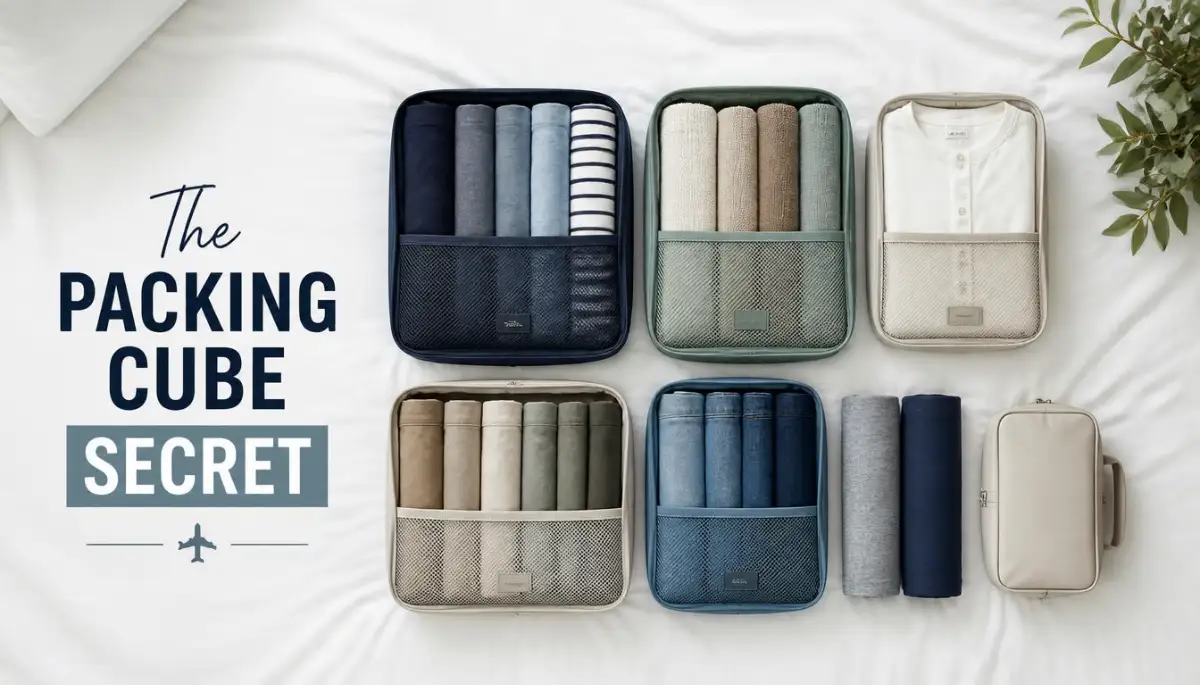
If you are just throwing loose clothes into a suitcase, you are wasting a lot of usable space. Packing cubes are small fabric containers that keep your clothes organized.
But if you want to take it to the next level, you need compression packing cubes. These have an extra zipper that squeezes the excess air out of your clothes.
Here is exactly how to use them effectively:
Roll your clothes tightly instead of folding them. Rolling prevents deep wrinkles and allows you to fit items together like puzzle pieces inside the cube.
Keep one cube strictly for tops and another for bottoms. This turns your backpack into a set of organized drawers.
When you arrive at your hotel, you do not have to explode your bag all over the floor. You just pull out the cube you need, leaving everything else tidy and compact.
Transform Your Luggage Game Today
If you have never seen how much space you can save with a good rolling technique, this quick visual guide will blow your mind. Watch this simple method to instantly shrink your clothing pile.
Managing Toiletries Like a Pro
The bathroom bag is usually where good packing intentions go to die. Full-sized shampoo bottles and giant tubes of toothpaste add unnecessary weight and take up prime real estate.
You need to ruthlessly downsize your toiletries. Most hotels provide soap and shampoo, so you might not even need to bring your own.
If you prefer your own brands, buy small, reusable silicone squeeze bottles. Only fill them with enough product to last until you reach a place where you can easily buy more.
Switching to solid toiletries is another brilliant move. Solid shampoo bars, solid perfume, and toothpaste tablets completely eliminate the worry of liquid spills in your bag.
Solid items also help you breeze through airport security without having to pull out a messy plastic bag of liquids. It is a tiny change that makes travel days much smoother.
Consolidating Your Tech Gear
In our modern world, electronics can quickly become the heaviest part of our luggage. Laptops, tablets, cameras, e-readers, and a massive web of charging cables add up fast.
Ask yourself honestly what you actually need to enjoy your trip. If you are not traveling for work, do you really need a heavy laptop?
Most daily tasks like checking emails, booking flights, and reading can be done perfectly well on your smartphone. Modern phones also have incredible cameras, making heavy DSLR setups unnecessary for casual travelers.
If you must bring multiple devices, invest in a single, high-quality universal wall charger with multiple ports. Bring one cable for each device type and leave the bulky original chargers at home.
The Secret of Sink Laundry
The biggest fear people have about packing light is running out of clean clothes. They think they need 14 pairs of underwear for a two-week trip.
The secret to traveling for months out of a small bag is doing your own laundry on the road. It is not as difficult or time-consuming as it sounds.
All you need is a travel-sized bottle of liquid detergent or a few laundry detergent sheets. Before you go to bed, spend five minutes washing your socks and underwear in the bathroom sink.
Roll the wet clothes tightly in a dry hotel towel and step on it to squeeze out the excess water. Hang them up, and with the right fabrics, they will be completely dry by morning.
If you do not want to wash things yourself, almost every city in the world has cheap, reliable local laundromats. Paying a few dollars to have someone wash and fold your clothes is entirely worth the freedom of a light bag.
Conquering Multiple Climates
Packing for a trip that covers both hot beaches and snowy mountains seems impossible with one small bag. The trick is to stop packing bulky items and start thinking in layers.
You do not need a massive parka that only serves one purpose. Instead, build a layering system that works together.
Start with a warm merino wool base layer to trap your body heat. Add a lightweight fleece or a packable down jacket for insulation.
Top it off with a thin, waterproof rain shell to block the wind and rain. When you wear these three thin layers together, you will be just as warm as if you had a giant winter coat.
When you travel back to a hot climate, you can easily separate the layers. The rain shell becomes your evening jacket, and the heavy winter coat issue completely disappears.
Changing the Way You Buy Souvenirs
A major reason bags get heavier as a trip goes on is the accumulation of random souvenirs. We buy heavy coffee mugs, fragile ornaments, and thick sweaters that we rarely look at again.
Minimalist travel changes how you collect memories. Instead of buying physical objects, focus on capturing the feeling of a place.
Take amazing photos, write in a digital journal, or collect very small, flat items like postcards or local recipes. These take up zero space but hold deep meaning.
If you find an item you absolutely must have, like a beautiful rug or a piece of art, do not carry it with you for the rest of your trip. Simply mail it back to your home address directly from the store.
The Ultimate Freedom of One-Bag Travel
When you fully embrace these modern packing principles, a magical shift happens. You suddenly realize that you are completely in control of your journey.
You can hop on and off local buses without hitting anyone with your bag. You can easily walk a mile from the train station to your hotel, enjoying the neighborhood instead of sweating and struggling.
You never have to wait at the luggage carousel at the airport again. You just walk off the plane and directly out the front door, beating the crowds to the best taxis.
This level of mobility gives you the confidence to say yes to spontaneous adventures. You are no longer tied down by the things you own.
Packing efficiently is not just about saving bag space. It is about creating more room in your mind to actually enjoy the beautiful world around you.
When you learn to let go of the extra baggage, you open yourself up to a much richer, more relaxed travel experience. Start small on your next weekend getaway, test these methods, and watch how quickly you fall in love with traveling light.
Next-Level Hacks for the Veteran Nomad
Once you master the basic rules of packing light, a whole new world of travel freedom opens up. But keeping your luggage weight down over several months or even years requires a specific mindset shift.
It is not just about what you pack on day one of your trip. It is about how you manage your belongings as you move from country to country.
Let us look at some highly effective strategies that long-term travelers use to stay light, mobile, and stress-free on the road. These are the daily habits that separate the struggling tourists from the seasoned explorers.
The "One-In, One-Out" Philosophy
When you travel for an extended period, you will inevitably buy things. Maybe your old shirt gets a hole in it, or you find a beautiful local jacket at a street market.
This is completely normal, but it is also how backpacks slowly become overstuffed. To prevent this, you must adopt the strict "one-in, one-out" rule.
Every time you buy a new physical item, an old item must be donated, thrown away, or given to a fellow traveler. If you buy a new pair of shoes, your old shoes cannot stay in your bag.
This forces you to think very carefully before buying anything new. It keeps your luggage weight perfectly balanced and stops you from mindlessly accumulating heavy clutter.
Renting Gear Instead of Hauling It
Many people ruin their minimalist packing goals because they plan to do one specific activity during a long trip. They pack heavy hiking boots for a single mountain trek, or bring snorkeling gear for just three days at the beach.
Carrying specialized equipment for weeks just to use it once is a massive drain on your physical energy. The smarter approach is to simply rent what you need when you arrive at your destination.
Almost every major tourist destination has affordable rental shops for outdoor gear. You can easily rent a thick winter coat, a surfboard, or even a camping tent.
Returning the gear at the end of the day feels incredibly liberating. You get all the fun of the activity without carrying the heavy burden to your next city.
Going Completely Paperless
Physical documents, guidebooks, and heavy novels add a shocking amount of hidden weight to your bag. In today's digital era, there is absolutely no reason to carry thick stacks of paper.
Take a few hours before your trip to scan everything. Your passport, travel insurance, vaccination records, and hotel bookings should all live safely in the cloud.
For international safety guidelines on digital backups, you can always check trusted government resources like the U.S. Department of State's travel preparation guides. Having a secure digital copy on your phone can save you endless headaches if your physical documents are ever lost.
Since you will rely on your phone for boarding passes and maps, maintaining a good connection is highly important. If you work while traveling, knowing simple ways to fix your slow internet connection will make accessing your digital documents entirely frustration-free.
You can also download dozens of audiobooks and travel guides onto your phone. This completely eliminates the need to carry heavy paperbacks, leaving more room for your essential items.
Investing in Purpose-Built Travel Gear
When you only own a few things on the road, those things need to function perfectly. Cheap, low-quality bags or thin zippers will eventually break under the constant stress of daily travel.
It is incredibly frustrating to have your backpack strap snap while you are running to catch a local bus. This is why investing in durable, high-quality gear is actually cheaper in the long run.
Look for brands that prioritize user experience and strong materials like ripstop nylon. When companies understand the real secret to building products that people actually love, they create bags that distribute weight properly across your hips rather than your shoulders.
A well-designed bag might cost a bit more upfront, but it acts like a trusted companion. It protects your belongings and saves your back from unnecessary pain.
Eliminating Liquid Anxiety
Carrying large bottles of liquid is one of the fastest ways to make a bag dangerously heavy. Furthermore, liquids are prone to exploding under airplane cabin pressure, ruining all your clothes.
The smartest travelers replace nearly all their liquids with solid alternatives. We briefly mentioned solid shampoo earlier, but you can take this much further.
You can now buy solid sunscreen sticks, solid insect repellent, and even solid laundry detergent. By removing liquids, you easily comply with the TSA liquids rule and breeze through airport security lines.
If you must carry a specific liquid medication or a special face serum, keep it strictly under 100 milliliters. Everything else can usually be bought at a local pharmacy when you reach your final stop.
The Psychology of Owning Less
Minimalist packing is not just a physical challenge; it is a mental exercise in letting go of control. We pack heavy bags because we are trying to control every single unknown variable of our trip.
But true travel is about embracing the unexpected. When you realize that people all over the world buy soap, wear clothes, and manage daily problems, your fear begins to fade.
If you spill coffee on your only good shirt, it is not an emergency. It is simply an opportunity to visit a local market and buy a new one, creating a fun memory in the process.
The Hidden Traps That Will Ruin Your Journey
Even with the best intentions, it is incredibly easy to fall back into bad packing habits. Our brains are hardwired to prepare for the worst-case scenario.
When you start ignoring the core rules of minimalism, your luggage quickly turns into a heavy, unmanageable monster. Let us look at the most common and painful mistakes that travelers make, so you can avoid them entirely.
The Trap of Imaginary Emergencies
This is the absolute biggest destroyer of a lightweight bag. You stare at your open backpack and think, "What if I get invited to a fancy gala? What if a massive snowstorm hits a tropical island?"
You start packing formal shoes, extra heavy sweaters, and a massive first aid kit that belongs in a hospital. You are packing for your fears, not your reality.
The damage here is twofold. First, your bag becomes painfully heavy, putting severe strain on your spine and knees. According to biomechanical studies on load carriage, carrying unnecessary weight directly increases the risk of chronic back pain and fatigue.
Second, you will carry these "emergency" items for six months and never use them once. Every time you dig past that heavy sweater to find your toothbrush, you will feel a deep sense of regret.
Ignoring Airline Size and Weight Limits
Many travelers buy a giant 65-liter backpack and assume they can just carry it onto the airplane. They think that because it is a backpack and not a hard suitcase, the airline staff will ignore it.
This is a very expensive mistake. Budget airlines across Europe and Asia are incredibly strict about carry-on dimensions and weight limits.
If your bag is bursting at the seams, you will be forced to check it at the gate. This instantly leads to massive penalty fees that can sometimes cost more than your actual flight ticket.
Worse than the money is the loss of your time. You now have to stand in long lines to drop the bag off, and wait around a crowded luggage carousel hoping your bag actually arrives. Always measure and weigh your fully packed bag before you leave for the airport.
Buying the Wrong Type of Luggage
Your choice of bag dictates how you will experience your entire trip. A common pitfall is buying a top-loading hiking backpack for city travel.
Hiking bags are designed for carrying tents in the wilderness, not for organizing clothes in a hotel room. Because they only open from the top, finding a pair of socks requires pulling every single item out onto the floor.
This creates a massive daily mess and wastes so much of your morning. You need a travel-specific backpack that opens flat like a suitcase.
A clamshell opening allows you to see all your packing cubes at once. You can grab exactly what you need in seconds without disturbing the rest of your perfectly organized items.
Over-Organizing with Too Many Pouches
While organization is highly beneficial, some people take it entirely too far. They buy a separate heavy-duty zippered pouch for their cables, another for their pens, another for their snacks, and another for their receipts.
Every single pouch adds a few ounces of weight and takes up physical space. When you have ten different heavy pouches inside your main bag, you are sacrificing valuable room for your actual clothes.
Keep it simple. Use a few lightweight packing cubes for clothes, one small minimalist toiletry bag, and one thin tech organizer. If you find yourself putting small bags inside of other small bags, you have officially over-organized.
Forgetting the Reality of Travel Fatigue
When you test your packed bag in your living room, it might feel perfectly fine on your shoulders for two minutes. But your living room is not a humid, 95-degree street in Bangkok.
People severely underestimate how heavy a bag feels after walking for three miles because the local taxi drivers went on strike. Travel fatigue slowly drains your physical strength day by day.
What feels like 15 pounds on day one will magically feel like 40 pounds by month three. If your bag feels even slightly heavy at home, it is guaranteed to cause you physical misery on the road. You must be ruthless and cut another 10 percent of the weight before you walk out your front door.
Your Blueprint for a Lighter Tomorrow
Embracing this highly efficient style of living out of a small bag will completely redefine how you experience the world. You are actively choosing freedom, mobility, and mental peace over physical possessions.
Think about how good it feels to clear out a messy closet at home. You can bring that exact same feeling of clarity and lightness to your global adventures.
Just as clever interior design tricks can maximize natural light to make a tiny room look huge, using smart packing techniques makes a small backpack feel incredibly spacious. It is all about efficiency and intention.
You no longer have to dread transit days or worry about airline luggage fees. You can seamlessly move through crowds, jump onto moving trains, and start exploring a new city the exact second you arrive.
For your next short trip, challenge yourself to take a bag that is half the size you normally use. Test out the rolling methods, try doing sink laundry once, and notice how amazingly free you feel when you are not dragging a heavy anchor behind you.
I remember the exact moment I finally zipped up a small 30-liter bag for a six-month trip, terrified I was leaving too much behind. But walking out of that airport with totally free hands and zero back pain was the most liberating feeling of my life, and I promise you will never want to go back to a giant suitcase again.
Common Questions About Minimalist Travel
How do you pack for a month in a carry-on bag?
The secret is realizing that packing for a month is exactly the same as packing for a week. You simply pack seven days' worth of highly versatile, matching clothes and plan to do laundry every weekend. Once you adopt this mindset, you can travel indefinitely out of the exact same small bag.
Does rolling clothes actually save more space than folding?
Yes, rolling clothes tightly squeezes out trapped air and allows items to compress against each other much better than flat folding. It also prevents hard creases and wrinkles in your shirts. When combined with compression packing cubes, rolling can easily save you up to 30 percent more space.
How many pairs of shoes should I bring for long-term travel?
You should aim for an absolute maximum of two pairs of shoes. Wear your heaviest, most comfortable walking shoes on the airplane to save bag space. Pack one lightweight pair of sandals or versatile flat shoes in your bag for warm weather or casual evenings out.
What is the best way to handle dirty laundry on the road?
The easiest method is keeping a lightweight, waterproof dry bag inside your backpack strictly for dirty clothes to separate odors. You can do quick washes in the hotel sink with travel detergent for daily items like socks. For larger loads, drop your clothes at a local wash-and-fold service while you go out exploring.
Will budget airlines weigh my carry-on backpack?
Yes, many low-cost airlines frequently weigh carry-on bags at the check-in desk or even right at the boarding gate. While they sometimes ignore small backpacks, it is always safest to keep your bag strictly under the standard 7-kilogram (15-pound) limit to avoid massive surprise fees.
Disclaimer: The information provided in this blog post is for general informational and educational purposes only. It is not intended as strict professional advice. Travel regulations, airline baggage limits, and security rules frequently change. Always verify current luggage policies directly with your chosen airline and check official government travel advisories before your departure. We are not liable for any extra fees or travel disruptions you may experience.