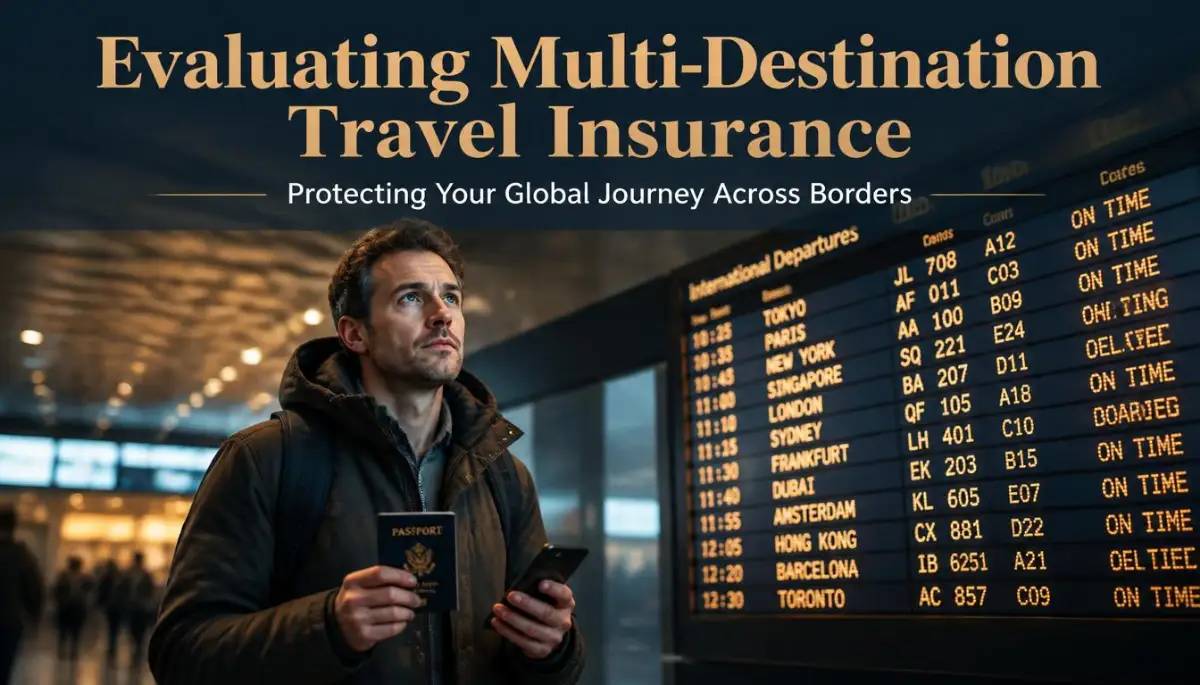
The Hidden Nightmare of Crossing Borders (And How I Learned My Lesson)
I still remember sitting on the cold floor of a train station in Europe, completely panicked and staring at my phone. My grand international trip was supposed to be a dream come true, connecting three different continents over four weeks. I had saved up for months, planned every single detail, and felt totally ready for the adventure of a lifetime. But right in the middle of crossing from my second country into my third, everything suddenly fell apart.
My connecting transport got canceled without warning, and my main luggage somehow vanished into thin air. To make things worse, the sudden change in weather gave me a severe chest infection that required immediate medical attention. I thought I was fully covered because I bought a basic travel protection plan before leaving home. But when I called the emergency assistance number, the operator told me something that made my heart drop.
My policy only covered the very first country on my itinerary. Because I had crossed a border and entered a different region, my coverage was completely void. I was totally alone, sick, and bleeding money out of my own pocket just to survive the week. That exact moment taught me a very painful lesson about how different a multi-destination trip is from a standard vacation.
Ordinary people face this exact same terrifying scenario every single day without even realizing the huge risks they are taking. You pack your bags, book a handful of flights, and assume a generic protection plan will act as a magic shield everywhere you go. But when an actual emergency strikes in a foreign land, that false sense of security shatters instantly.
Dealing with a crisis is hard enough when you are in your own country. Now, imagine trying to negotiate hospital bills in a language you do not speak, while dealing with canceled flights in a time zone that is twelve hours ahead of your family. The mental exhaustion and heavy anxiety completely destroy the peace of mind you are supposed to feel on a vacation.
Instead of making beautiful memories, you end up crying in hotel lobbies and draining your emergency savings just to get back home safely. Families are going into massive debt, and solo travelers are experiencing severe trauma simply because they did not understand the unique rules of moving between multiple countries. We work so hard to earn our time off, and it is truly heartbreaking to see that joy get erased by a simple paperwork misunderstanding.
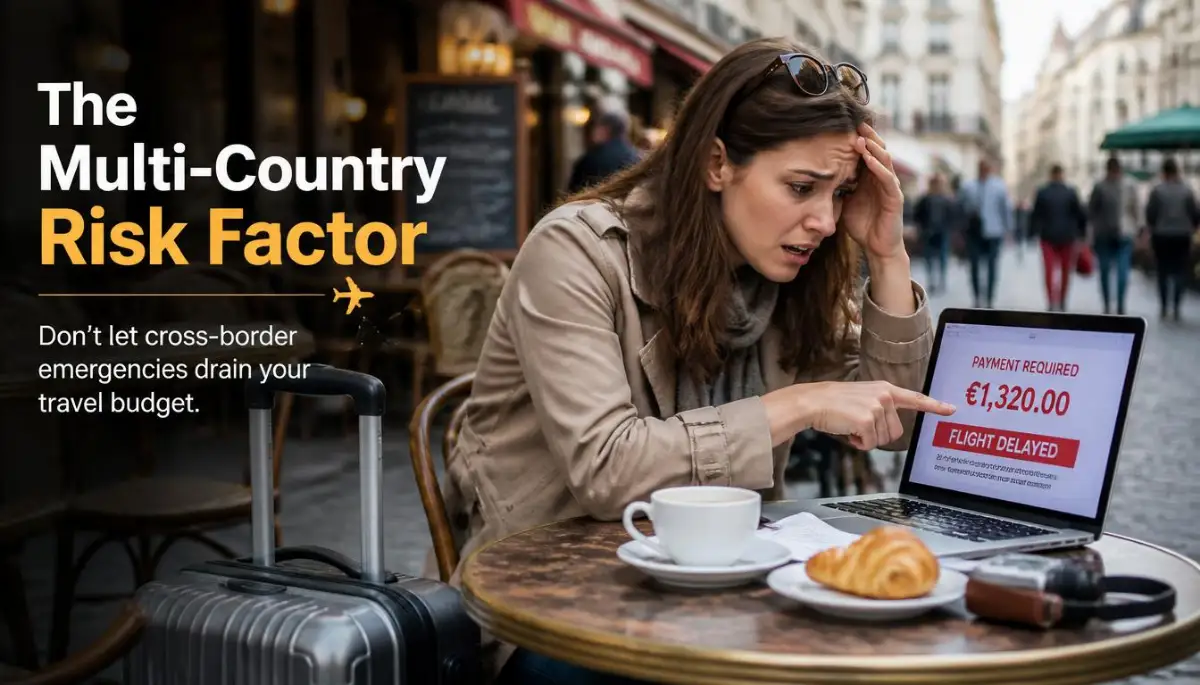
Building a Global Safety Net for Complex Itineraries
To truly protect yourself on a multi-country journey, you need to think differently about how risk works across borders. Standard single-trip policies are like a basic umbrella, meant to keep you dry in a light shower in your own backyard. But crossing into new territories with different healthcare systems, separate airlines, and varying weather patterns requires something much stronger.
You must look at your travel protection as a continuous, unbroken chain that links every single stop on your trip. If even one link in that chain breaks, the entire journey can collapse. Let us explore exactly how you can build this unbreakable safety net for your next big adventure.
The Geographical Reality Check
One of the biggest traps you can fall into is ignoring how insurance companies define geographical regions. When you buy a policy, providers usually group countries into specific zones, like Europe, Asia, or Worldwide. If you buy a plan meant for Europe, and your flight has a long layover in the Middle East where you decide to leave the airport, you might suddenly step outside your coverage zone.
Always map out every single physical location your feet will touch. This includes transit countries where you might only stay for a few hours. I learned this the hard way when a delayed connecting flight forced me to stay overnight in a city I never planned to visit. Because I was outside my designated zone, a simple trip to the clinic for food poisoning was entirely out of pocket.
If your itinerary includes stops across multiple regions, a strict "Worldwide" policy is usually your safest bet. However, you must carefully read the fine print because many Worldwide plans specifically exclude certain high-cost countries unless you pay an extra premium. For instance, stopping in North America for just two days can require a completely different tier of protection due to their highly expensive medical systems.
Pro Tip: I always keep a digital folder on my phone with screenshots of my coverage zones and emergency numbers. My biggest mistake in the past was assuming "Worldwide" meant every single country on earth, until I realized my specific plan excluded extreme altitude destinations where I planned to hike. Always double-check the exclusions list before you pay.
Understanding the Domino Effect of Missed Connections
A multi-destination trip is basically a very fragile house of cards. If your first flight is delayed by just three hours, you might miss your train in the second country, which means you lose your non-refundable hotel booking in the third country. This chain reaction of financial loss is exactly why standard trip cancellation coverage is never enough for complex itineraries.
You need a policy that specifically highlights strong trip interruption and connection protection. This ensures that if one leg of your journey fails, the provider will help cover the sudden costs of rebuking the rest of your trip to get you back on track.
When you evaluate a plan, look closely at their daily allowance for unexpected delays. Will they pay for a decent hotel and warm meals while you wait for a replacement flight 48 hours later? Some cheap policies only offer a tiny fixed amount that barely covers a sandwich at an expensive international airport.
Here is exactly what to look out for to keep your trip moving:
To really grasp how this works, think about the logistics of moving luggage across three different airlines in one week. If your bags are lost by the first carrier, you will likely be in a completely different country by the time they find them. A robust multi-destination plan will offer a generous baggage delay benefit, giving you enough cash to buy essential clothes and toiletries while they track down your suitcase across international borders.
Navigating Medical Emergencies Across Different Healthcare Systems
Getting sick away from home is scary, but getting sick while moving between multiple foreign countries is a totally different level of stress. Every country has its own unique rules about hospital admissions, emergency treatments, and prescription medications. Some hospitals will refuse to treat you unless you can provide an upfront cash deposit or show immediate proof of a globally recognized medical guarantee.
This is why having a 24/7 global assistance hotline is non-negotiable. You do not just need financial coverage; you need a dedicated medical team that can speak the local language and negotiate with the hospital on your behalf. They act as a bridge between you and a confusing foreign medical system.
When comparing options, pay close attention to the medical evacuation limits. If you suffer a severe injury on a remote island in Southeast Asia, the local clinic might not have the right equipment to save you. You will need a private medical flight to a major city or even back to your home country.
These emergency flights can easily cost tens of thousands of dollars. Without proper multi-destination coverage, a single medical flight can wipe out your life savings and put your family in massive debt. Always ensure your medical evacuation limit is high enough to cover an international air ambulance.
Pre-Existing Conditions and Changing Environments
Moving rapidly across different climates, altitudes, and time zones puts a tremendous amount of physical stress on your body. If you have a sensitive stomach, asthma, or a heart condition, these rapid environmental changes can easily trigger a flare-up. Standard travel protection often denies claims related to conditions you already had before the trip started.
If you take any daily medications or have a medical history, you must look for a policy that offers a pre-existing condition waiver. This special clause basically promises that they will still cover you if an old illness acts up during your travels.
However, getting this waiver usually requires you to purchase the policy within a very tight window, often just two weeks after making your first trip deposit. Do not wait until the week before you fly to start shopping for protection. Secure your plan the moment you book your first flight or hotel to lock in that essential medical waiver.
Myth vs Reality: The Credit Card Illusion
Many travelers confidently believe they do not need to buy anything extra because they booked their flights with a premium travel credit card. Let us clear up this dangerous misunderstanding right now.
Myth: My premium credit card gives me all the protection I need for my month-long global tour.
Reality: Credit card coverage is usually highly restricted. It often caps out at a very low limit, limits coverage to a maximum number of days (usually 15 to 30), and rarely provides enough direct medical coverage for serious emergencies across borders.
To make this perfectly clear, let us look at a simple comparison:
Relying solely on a piece of plastic in your wallet might work for a quick weekend getaway. But when you are hopping between trains in Asia and connecting flights in Europe, you need a dedicated safety net built by professionals whose only job is to get you home safely.
Managing the Logistics of Extended Travel
Multi-destination trips naturally last longer than a typical single-city vacation. You might be on the road for three weeks, a month, or even longer. As your trip extends, the statistical probability of something going wrong increases significantly.
You must ensure that your chosen plan covers the entire duration of your trip, from the moment you step out of your front door until the exact minute you return home. If your flight back is delayed and your policy expires at midnight while you are still in the air, any lost luggage or medical issues that happen after midnight will be completely your responsibility.
Some providers offer amazing flexibility by allowing you to extend your coverage online while you are already traveling. If you fall in love with a city and decide to stay an extra week, having an app that lets you click a button to add seven more days of protection is incredibly valuable. Always check if a provider allows mid-trip extensions, as many strict companies force you to buy a whole new policy instead.
We also need to talk about the activities you plan to do while moving around the world. Riding a scooter in a bustling Asian city carries a very different risk profile than visiting museums in Europe. If your global tour involves any kind of physical adventure, from scuba diving to zip-lining, you must declare these activities upfront. Standard plans regularly deny claims if you get hurt doing something they consider an "extreme sport." Adding a simple adventure sports rider to your base plan ensures you can enjoy every experience without worrying about unpaid hospital bills.
Ultimately, building this global safety net is about securing your own peace of mind. When you know every flight, every border crossing, and every sudden change of plans is backed by a solid guarantee, you can actually relax. You stop worrying about the "what ifs" and start focusing entirely on the amazing cultures, foods, and people you came to experience. Taking the time to properly evaluate and secure the right protection transforms a stressful, high-risk journey into a beautifully safe adventure.
Mastering the Art of Cross-Border Protection
When you move between multiple nations, standard rules simply stop working. You are dealing with different currencies, varying legal systems, and totally unique healthcare networks. To keep your global journey smooth, you must learn to think like a professional traveler.
I want to share some incredibly practical secrets that can save you thousands of dollars when navigating these complex international trips. These are not basic tips you find in a standard brochure. These are the deep, practical strategies I use every single time I pack my bags for a multi-country adventure.
The Magic of "Primary" Medical Coverage
Most average travelers never look at whether their medical policy is considered primary or secondary. This single detail can completely change your experience during a hospital visit. If you buy a secondary plan, the provider will force you to file a claim with your regular home health insurance first.
This creates an absolute nightmare of paperwork while you are trying to recover from an illness abroad. Your home provider will likely deny the claim because you are out of the country, but they will take weeks to send you that official denial letter. Only then will your travel protection step in to help.
Always insist on primary medical coverage for your international trips. With a primary plan, the travel protection company takes full responsibility right away. They step up immediately, handle the bills, and save you from dealing with months of frustrating back-and-forth emails.
Mastering the Time Zone Trap
Booking a continuous safety net sounds easy until you realize time zones exist. Imagine you fly out of Tokyo on a Tuesday night and land in Los Angeles on a Tuesday morning. The massive shift in time zones easily confuses automated booking systems.
Many people accidentally leave a 24-hour gap in their coverage simply because they miscalculated their exact arrival time back home. If your luggage gets lost during that specific gap window, you get absolutely nothing. Always extend your policy a full 48 hours past your scheduled arrival date.
This tiny extension costs almost nothing extra. However, it gives you a massive buffer if your final flight gets pushed to the next day due to a bad storm. Having that extra day of protection keeps you safe while you sleep on an airport bench waiting for a rebuking.
Leveraging the "Cancel For Any Reason" Upgrade
Sometimes, life just throws a totally unpredictable curve ball. Maybe a global health concern suddenly appears in your destination, or maybe you just get a terrible gut feeling about your upcoming trip. Standard policies will never let you cancel just because you are scared or changed your mind.
They strictly require a doctor’s note or proof of a major disaster. This is where the Cancel For Any Reason (CFAR) upgrade becomes your best friend. It is an optional add-on that costs a bit more, but it gives you ultimate freedom.
With CFAR, you can literally cancel your entire multi-destination trip a few days before you leave and still get a large portion of your money back. When you are spending heavy amounts on diverse flights and hotels, having the power to just say "no" without losing everything is incredibly liberating.
Aligning Protection with Your Travel Lifestyle
If you work remotely while exploring the globe, your travel style is very different from a casual tourist. Digital nomads carry expensive laptops, cameras, and hard drives across multiple borders. Standard baggage loss limits usually cap electronics at a very low payout, leaving you stranded without your tools.
You must look for specific add-ons that cover high-value electronics. Speaking of remote work, when you are stressed trying to stop Wi-Fi drops and fix your slow internet connection to meet a deadline in a foreign cafe, the last thing you want is the fear of someone stealing your laptop. Choosing a policy that heavily protects your digital gear takes a massive weight off your shoulders.
I always tell people to find an insurance provider that prioritizes a seamless user experience. You want a company that understands the real secret to building products that people actually love—which means they offer an easy-to-use mobile app for filing claims instantly. When you are moving between borders, nobody wants to print out physical claim forms and mail them internationally.
The Financial Traps Travelers Fall Into
Even smart people make terrible decisions when they rush their travel planning. A multi-country journey amplifies every small mistake because one error impacts the rest of the trip. I have seen families ruin their entire savings because they fell into these common, avoidable traps.
Let us walk through the most dangerous mistakes people make when bouncing between different nations. Recognizing these pitfalls ahead of time will keep your bank account safe and your mind at peace.
Hiding Your Past Medical History
This is easily the biggest mistake I see older travelers make. They think they can simply hide a minor heart flutter or a past knee surgery from the insurance company to get a cheaper rate. But these companies employ massive teams of professional investigators.
If you collapse in a European train station and need emergency surgery, the provider will demand your medical records from back home. When they discover you lied on your application, they will instantly deny your claim. Never lie on a medical questionnaire.
Pay the slightly higher premium for a pre-existing condition waiver. It is infinitely cheaper to pay an extra fifty dollars upfront than to owe a foreign hospital eighty thousand dollars because your claim was rejected for dishonesty. Honesty is your absolute best protection here.
Ignoring Regional Travel Advisories
People often book a massive trip through multiple regions without checking official safety guidelines. This is a massive financial risk. Most generic policies have strict clauses stating they will drop your coverage if you travel to a country with an active travel warning.
For example, if you decide to take a quick side trip to a region facing civil unrest, your entire safety net vanishes the moment you cross that border. If you get injured there, you are completely on your own. Always cross-reference your itinerary with the latest international travel advisories from the U.S. Department of State or your local government equivalent.
If your government says a country is unsafe, your insurance company will almost always agree. Keeping an eye on these alerts ensures you never accidentally step into a danger zone without financial backing.
Assuming Local Healthcare is Cheap
There is a strange rumor in the travel community that medical care in certain parts of Asia or South America is practically free. While basic checkups might cost less than back home, emergency trauma care for foreigners is never cheap. Many private hospitals in developing nations specifically target tourists with heavily inflated prices.
They know you are desperate, and they will demand thousands of dollars on a credit card before they even put you in a hospital bed. I once met a traveler who thought a minor scooter accident in Southeast Asia would cost pennies to fix. He ended up stuck in the country for a month because the hospital held his passport until he paid a massive bill out of pocket.
Do not gamble your health on internet rumors. Always rely on trusted health resources like the traveler’s health guidelines from the CDC to understand the medical realities of your specific destinations. A strong policy protects you from getting exploited by private international clinics.
Failing to Document the Journey
When a crisis happens, documentation is your only weapon. Many people lose their luggage on a connecting flight and simply assume the airline and insurance company will handle everything automatically. This is a fast way to get your claim denied.
You must act like an investigator. Take photos of your packed suitcase before you leave for the airport. Keep every single boarding pass, baggage tag, and police report in a safe waterproof folder.
When you file a claim for a disrupted multi-destination trip, the claims adjuster wants hard proof of exactly where the breakdown happened. Without physical or digital receipts showing you actually took the first flight, they will not pay for your missed second flight. Staying organized takes five minutes but saves you months of headache.
Sacrificing Coverage for Cheap Accommodations
Sometimes travelers spend so much money on their flights that they try to aggressively cut costs everywhere else. They book the cheapest possible protection plan and decide to stay in poorly rated, unsafe hostels. When you are trying to maximize natural light and make a tiny budget room look huge just to save twenty dollars, you are missing the bigger picture.
Choosing a cut-rate policy leaves you heavily exposed to theft and medical ruin. The few dollars you save on a cheap policy will never cover the massive cost of an international emergency. Invest in a premium plan, even if it means eating cheap street food for a few days to balance your budget.
If you are looking for smart ways to balance your travel budgets without risking your safety, exploring general smart financial habits and lifestyle choices can help you plan better. Always prioritize your physical and financial safety over small cosmetic savings.
Packing Confidence for Your Global Adventure
Preparing for a complex journey across multiple borders should feel exciting, not terrifying. The sheer logistics of moving bags, navigating new languages, and catching connecting flights naturally brings a bit of stress. But that stress completely disappears when you know you have an iron-clad safety net catching you if you fall.
Taking the time to read the fine print and choosing a robust multi-country policy is the greatest gift you can give yourself. It changes the way you travel. Instead of worrying about every delayed train or unexpected storm, you simply sit back and enjoy the adventure.
You handle the minor bumps in the road with a smile, knowing a dedicated global team is ready to step in at a moment's notice. The money spent on premium protection is basically an investment in your own happiness. You are buying the freedom to explore the world without fear.
Every single time I finalize my plans for a massive international trip, buying that comprehensive policy is my favorite part of the process. My biggest realization over the years is that true freedom abroad comes entirely from knowing I am protected from the unknown. Do yourself a favor, lock in your protection early, and go create those unforgettable memories without looking back.
Frequent Questions About Multi-Country Protection
Do I need to buy a separate policy for every single country I visit?
No, you definitely do not need to buy separate plans for each border you cross. A strong multi-destination or "Worldwide" policy acts as a continuous blanket that covers your entire journey. You simply list all the countries you plan to visit when buying the plan, and the provider will calculate one single rate for the whole trip.
What happens if my first flight gets delayed and I miss my connection in another country?
This is exactly why you need a policy with strong trip interruption coverage. If a covered reason like a severe storm causes the delay, the provider will reimburse you for the missed connections. They will actually help pay the sudden costs of rebuking new flights to catch up with your original itinerary.
Can I buy travel protection after my trip has already started?
Technically yes, a few specialized companies allow you to buy coverage mid-trip, but it is highly risky. Most standard providers completely block you from buying a policy once you have left your home country. Even if you find one that allows it, they will enforce a waiting period where you cannot claim any immediate illnesses.
Does a standard "Worldwide" plan actually cover every country on earth?
Absolutely not, and this catches many travelers off guard. Most standard worldwide plans heavily exclude high-risk conflict zones or sanctioned nations. Furthermore, many affordable worldwide plans specifically exclude expensive medical regions like the United States unless you pay an extra premium fee.
Will my policy cover me if I get injured while riding a rented scooter in Asia?
Most basic plans automatically classify riding a scooter or motorcycle as a high-risk activity and will easily deny your claim. To stay protected, you must make sure you have an active license in your home country and wear a helmet. You also usually need to add a specific "adventure sports" or "vehicle" rider to your policy before you leave.
Disclaimer: The information provided in this article is for educational and informational purposes only. It does not constitute professional financial, medical, or legal advice. Travel protection policies vary widely by provider, region, and individual circumstances. Always read the specific terms, conditions, and exclusions of any contract before making a purchase. We strongly recommend consulting with a licensed insurance agent to find the best plan for your personal travel needs.