
The Crushing Reality of a Blank Screen
I remember sitting in front of my laptop for three straight hours, staring blindly at a blinking cursor that seemed to be mocking me. My hands hovered over the keyboard, but my brain felt completely hollow, like someone had drained every single thought from my head. I needed to deliver a massive project the next morning, and the pressure was physically making my chest tight. No matter how hard I tried to force a brilliant concept, my mind kept hitting a massive, unbreakable brick wall. I felt entirely useless, questioning if I had simply lost my touch forever. This wasn't just a minor bump in the road; it was a severe mental shutdown that made me want to throw my computer out the nearest window.
When you make a living or pursue a passion that depends on fresh thoughts, losing that ability feels terrifying. Everyday people all over the world face this exact nightmare, and it completely ruins their daily peace of mind. You wake up feeling heavy, knowing you have tasks to complete, but zero motivation to start them.
The anxiety bleeds into your personal life, making you irritable with your friends and family. You start doubting your skills, wondering if you are actually an imposter who just got lucky a few times.
Instead of enjoying your evenings, you spend hours mindlessly scrolling on your phone, feeling guilty because you know you should be working. This toxic cycle of procrastination and guilt creates a massive storm of stress that completely destroys your mental health.
You desperately search for a spark, but the harder you look, the further away it seems to hide. The truth is, relying purely on random flashes of inspiration is a terrible strategy that only sets you up for emotional exhaustion.

Escaping the Mental Prison: Actionable Methods That Actually Work
Waiting for inspiration to randomly strike is like waiting for rain in a desert. You need to build your own well instead. The good news is that you can actively rewire your brain to start producing amazing concepts on demand.
We are going to walk through some highly practical, science-backed habits that you can start using right this minute. These are not vague motivational quotes; these are direct actions designed to jumpstart your engine.
Start with the "Ugly Draft" Technique
One of the biggest reasons we freeze up is the intense fear of not being perfect on the first try. Your brain actively tries to protect you from failure by stopping you from starting at all.
To trick your brain, give yourself complete permission to create absolute garbage. Open a fresh document and tell yourself, "I am going to write the worst possible version of this project."
When you remove the pressure to be good, the heavy mental block instantly vanishes. You will naturally start typing, drawing, or planning because the stakes are completely gone.
Watch exactly how the "Ugly Draft" can completely transform your daily workflow and destroy perfectionism forever.
Once you have a messy, terrible page full of random thoughts, you are no longer staring at a blank screen. You now have something physical to edit, twist, and improve upon. Editing bad work is always a hundred times easier than creating perfect work from thin air.
Change Your Physical Geometry
Your physical environment is deeply connected to your mental state. If you sit in the exact same chair, looking at the exact same wall every single day, your brain goes into autopilot mode.
Autopilot is great for doing repetitive chores, but it is the ultimate enemy of fresh thinking. To shake things up, you need to radically change your surroundings to force your brain to process new visual data.
Grab your laptop or notebook and move to a completely different room, a balcony, or a noisy local cafe. Sometimes simply standing up and working from a kitchen counter can send a sudden shock of energy to your nervous system.
My Personal Reality Check: I used to force myself to sit at my expensive office desk for 10 hours a day, thinking that discipline alone would fix my writer's block. I finally realized that my brain associated that specific desk with immense stress and failure. The simple act of moving to my dining table with a hot cup of tea instantly cleared my mind and saved my projects.
When you expose yourself to different lighting, different background noises, and different temperatures, your senses wake up. This sensory shift naturally breaks the rigid thinking patterns that were holding you back.
The Concept of Input vs. Output
You cannot pour fresh water from an empty jug. If you are struggling to output good work, you need to take a serious look at what you are inputting into your brain.
Many of us consume hours of short-form social media videos, which gives us cheap dopamine but provides zero intellectual value. This leaves your mind completely exhausted and incapable of deep, meaningful thought.
You need to completely change your content diet for a few days to feed your subconscious mind. Read an engaging fiction book, watch a highly detailed documentary on a random subject, or listen to a science podcast.
When you absorb high-quality, complex information, your brain naturally starts drawing invisible connections between different topics. This is the exact moment when truly unique and original thoughts are born.
The 15-Minute Micro-Tasking Strategy
Massive projects always feel incredibly intimidating, which triggers severe anxiety and procrastination. When you look at a goal like "Write a 5,000-word guide" or "Design a complete website," your brain panics.
You must break these giant mountains down into tiny, ridiculous pebbles. Tell yourself that you are only going to work on the project for exactly 15 minutes, and then you will stop.
Set a physical timer on your phone and start doing the smallest, easiest part of the task. Maybe you just write the title, or maybe you just organize your project folders.
Because the time limit is so short, your brain does not feel threatened by the workload. However, once the timer goes off, you will likely realize that you have built up enough momentum to keep going for another hour.
Myth vs. Reality: The Truth About Inspiration
There are countless rumors and misunderstandings about how highly successful creators actually work. Let us clear up some of the biggest lies that might be holding you back right now.
The Myth: Great artists and thinkers only work when they feel a sudden, magical burst of passion.
The Reality: Professionals show up to their desks every single day, regardless of their mood. They use strict routines to trigger their focus, rather than waiting for feelings to guide them.
The Myth: Original ideas come from completely empty, quiet minds.
The Reality: Originality is usually just two old, unrelated concepts smashed together to create something fresh. You need to actively collect different experiences to have things to smash together.
Understanding these realities takes the heavy burden off your shoulders. You do not need to be a magical genius; you just need a solid, repeatable system.
The Power of Intentional Disconnection
Sometimes, staring at your problem for hours only makes the mental knot tighter and more confusing. When your computer freezes, clicking the mouse a hundred times does not help; you have to restart the machine.
Your brain works exactly the same way when it becomes overloaded with information and stress. You need to step completely away from the screen and do something highly physical and unrelated.
Go for a brisk walk without listening to music, wash a massive pile of dishes, or take a long shower. These low-level physical activities occupy your body while letting your subconscious mind roam freely in the background.
It is incredibly common to suddenly figure out a complex problem right in the middle of washing your hair. This happens because you finally stopped actively forcing the thought, allowing your brain to naturally connect the missing pieces.
Comparing Mindsets: The Blockage vs. The Breakthrough
To truly understand how to pivot your daily habits, you need to see the difference in mindsets clearly. Small shifts in how you view your daily tasks can completely alter your output.
When you actively practice the breakthrough mindset, you slowly remove the heavy emotional baggage attached to your work. You begin to treat your work as an interesting experiment rather than a life-or-death test.
Embrace the "Idea Dump" Journal
Our minds are terrible places to store information long-term. When you try to hold onto a dozen different thoughts at once, you create a massive traffic jam in your head.
This traffic jam prevents any new, helpful concepts from moving forward into your conscious mind. To clear the road, you need to build a daily habit of emptying your brain onto a physical piece of paper.
Keep a cheap, messy notebook right next to your bed or your primary workspace. Every morning, or whenever you feel overwhelmed, spend five minutes writing down every single random thought crossing your mind.
Write down your worries, your random passing thoughts, your grocery list, and your half-baked project concepts. Getting these things out of your head and onto paper instantly creates mental space for deep, focused creativity.
Engage in Reverse Engineering
When you cannot figure out how to start something new, try looking closely at something that is already finished. Find a piece of work in your industry that you deeply admire and respect.
Do not just look at it; actively break it down into tiny, individual pieces to see how it was built. If it is an article, look at how the author structured their headings and where they placed their images.
If it is a design, analyze the exact color hex codes and the specific fonts they chose to blend together. By studying the skeleton of someone else's successful project, your brain starts to recognize hidden patterns.
You can then take those underlying patterns and apply them to your own unique topic. You are not stealing their work; you are simply borrowing their structural blueprint to help construct your own original house.
Talk It Out with a Non-Expert
When we are deeply stuck on a problem, we usually try to solve it alone or ask colleagues in our specific field. The problem is that experts often share the exact same blind spots and rigid thinking patterns that you do.
Instead, try explaining your current struggle to someone who knows absolutely nothing about your industry. Talk to your mother, your childhood friend, or a neighbor about what you are trying to achieve.
Because they do not understand the complicated jargon, you are forced to explain the problem in the simplest, most basic terms. This process of simplifying your own thoughts often reveals the obvious solution you were missing all along.
Furthermore, a complete beginner will often ask very basic, naive questions that experts completely overlook. These simple questions can easily spark a totally unexpected and brilliant direction for your project.
Gamify Your Creative Process
Sometimes the pressure of being a serious professional makes the actual work incredibly boring and dry. If you are not having any fun, your brain will naturally resist doing the heavy lifting.
You can instantly fix this by turning your daily tasks into a silly, engaging game. Challenge yourself to write a complete page without using the letter "E," or try to design a logo using only three shapes.
Adding weird, artificial limits to your project forces your brain to think outside its comfortable, lazy boxes. These fun little constraints act like a puzzle, which naturally wakes up your inner problem-solving skills.
Even if the outcome of the game is completely unusable, the mental exercise itself will destroy your creative block. You will return to your actual project with a lighter mood and a much sharper, more agile mind.
The "Worst Idea First" Exercise
When you are desperately trying to find the best possible solution, you often freeze up entirely. You judge every single thought before it even has a chance to fully develop in your mind.
Try flipping this destructive habit completely upside down by intentionally looking for failure. Sit down with a pen and ask yourself, "What is the absolute worst, most ridiculous way to handle this project?"
List out ten incredibly terrible ideas that would guarantee you lose your job or ruin your project. You will find yourself laughing at how stupid the concepts are, which instantly lowers your high-stress levels.
Ironically, looking closely at terrible ideas often highlights exactly what you actually need to do to succeed. Once you know exactly what the wrong path looks like, finding the right path becomes incredibly obvious and simple.
Build a "Swipe File" for Future Emergencies
You should never wait until you are starving to start looking for seeds to plant in a garden. You need to gather inspiration continuously, long before a severe mental block ever actually hits you.
Start building a digital or physical folder where you save everything that naturally catches your attention. Save brilliant advertisements, funny quotes, beautiful color palettes, or interesting articles you find during your week.
Do not worry about organizing it perfectly; just throw interesting things into the folder as you live your life. When a bad day inevitably arrives and your brain goes totally blank, you will not have to panic.
You simply open up your swipe file and spend twenty minutes browsing through your own personal museum of cool things. Within minutes, one of those saved items will spark a fresh connection, completely destroying your temporary mental block.
Sustaining Your Creative Engine for the Long Haul
Finding a great concept today is wonderful, but keeping your mind sharp for the next month is the real challenge. You need to build a mental environment where fresh thoughts naturally want to live.
Most people treat their imagination like a battery that they only recharge when it completely dies. Instead, you need to view your mind as a garden that requires daily watering and maintenance.
We are going to look at some advanced, professional-level habits that top thinkers use to maintain their momentum. These are not quick fixes, but rather deep lifestyle adjustments that completely protect your brain from future burnout.
Master the Art of Active Observation
The best writers, designers, and problem-solvers do not just look at the world; they actively observe it. When you walk down the street, stop looking at your phone and start noticing the small details around you.
Notice how a local coffee shop arranges its seating, or pay attention to the specific words a salesperson uses. You can actively collect these tiny fragments of everyday life and store them in your memory bank.
When you sit down to work, your brain will subconsciously pull from this massive library of real-world experiences. Interestingly, a famous study by Stanford University researchers proved that the simple act of walking significantly increases your creative output compared to sitting down.
Redesign Your Physical Workspace
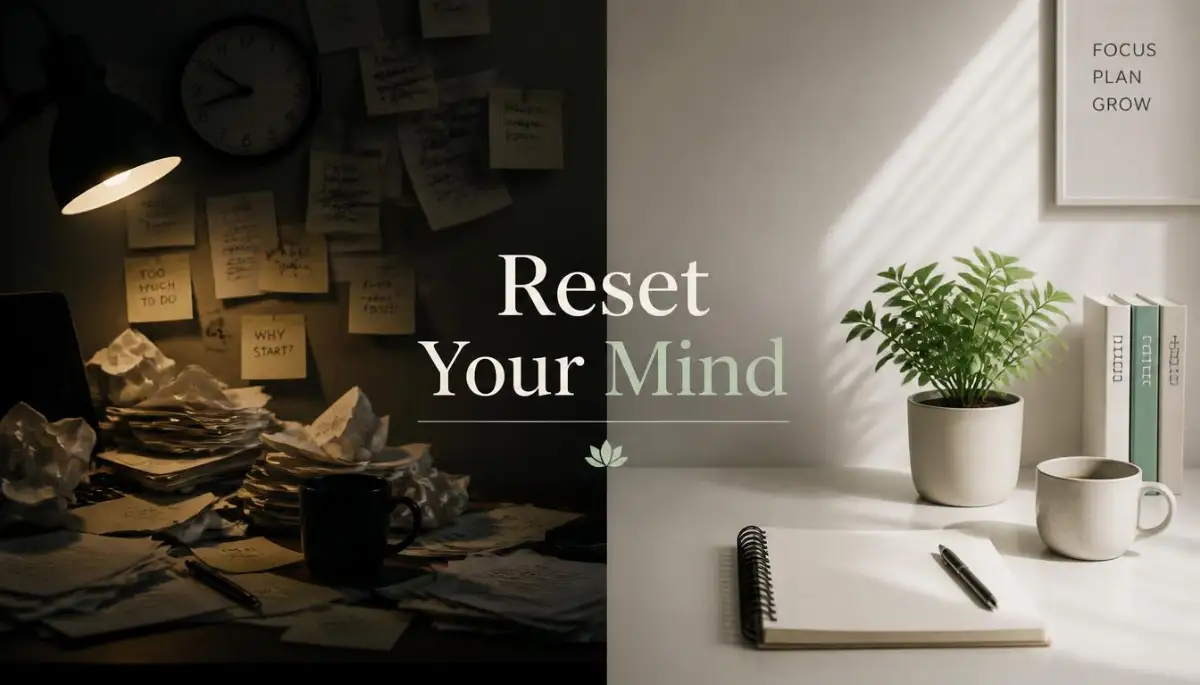
Your brain heavily relies on visual cues to understand what kind of mood it should be in. If your desk is covered in old coffee cups, bills, and random papers, your mind will feel equally chaotic.
Take an entire afternoon to completely clear out your workspace and start from absolute scratch. Keep only the items that directly help you focus, and remove anything that causes visual stress.
If you are working in a tight, dark space, it can actually make you feel claustrophobic and mentally trapped. You can completely transform your mood if you maximize natural light to make your tiny room look huge and inviting.
The Environment Hack: Adding a small indoor plant or simply keeping a window open for fresh air can dramatically lower your blood pressure. When your body feels physically relaxed, your mind opens up to take bigger, bolder risks.
Eliminate Hidden Technical Friction
Nothing destroys a beautiful state of flow faster than annoying technical problems. You finally get a brilliant thought, you go to research it, and your browser suddenly freezes.
These tiny moments of friction might seem harmless, but they completely shatter your deep focus. You end up spending twenty minutes trying to fix a problem instead of actually working on your project.
It is incredibly important to maintain your digital tools so they do not interrupt your thinking process. Take the time to stop Wi-Fi drops and fix your slow internet connection before you start a heavy work session.
When your tools work silently in the background, your brain has the freedom to focus purely on the art of creation.
Understand Your End User deeply
Sometimes we get stuck because we are focusing entirely on ourselves instead of the people we are trying to help. We worry so much about sounding smart that we completely forget the actual purpose of our work.
To break this cycle, you need to shift your focus directly onto your audience and their specific daily struggles. Ask yourself what exact problem they are facing and how you can make their lives slightly easier today.
When you stop trying to be a genius and start trying to be genuinely helpful, the ideas flow naturally. This is the real secret to building products that people actually love and want to share with others.
You become a problem solver rather than just a content creator, which takes a massive amount of pressure off your shoulders.
Protect Your Deep Sleep Schedule
We often brag about staying up all night to finish a project, wearing our exhaustion like a badge of honor. However, sleep deprivation is the absolute fastest way to destroy your imagination and kill your focus.
During deep sleep, your brain actively cleans out toxins and organizes the information you learned during the day. If you cut this process short, you wake up with a foggy, confused mind that simply cannot connect complex thoughts.
According to the American Psychological Association's research on flow and focus, getting adequate rest is a primary requirement for entering a deep state of concentration. You must treat your sleep schedule with the exact same respect you give to a highly paid client meeting.
The Hidden Traps That Destroy Fresh Thinking
When you are desperately trying to solve a mental block, it is incredibly easy to accidentally make the situation much worse. We often panic and rely on bad habits that actually push our best thoughts further away.
Understanding these common pitfalls is just as important as knowing the right strategies. If you can identify these toxic behaviors early, you can stop them before they completely derail your entire week.
Falling into the Toxic Comparison Trap
The absolute worst thing you can do when you are feeling uninspired is open up a social media app. You instantly see hundreds of other people who seem to be succeeding effortlessly while you are struggling just to write a single sentence.
Your brain automatically compares your messy, confusing behind-the-scenes reality with their perfectly polished final results. This unfair comparison creates a deep sense of shame and completely destroys whatever tiny bit of motivation you had left.
You must remember that people only post their absolute best moments online, completely hiding their own failures and mental breakdowns. Turn off your phone entirely and remember that every great creator has experienced the exact same empty feeling you are having right now.
Relying on Artificial Energy
When we hit a wall, our first instinct is usually to make a massive cup of dark coffee or grab an energy drink. We falsely believe that if we just force enough caffeine into our system, our brain will magically wake up and start working.
While caffeine might give you a temporary burst of physical energy, it does absolutely nothing to generate original thoughts. In fact, drinking too much caffeine simply makes you feel anxious, jittery, and entirely unable to sit still.
You end up staring at your blank screen with a racing heart, feeling even more stressed than before. Instead of artificial energy, try drinking a large glass of plain water and stretching your tired muscles for a few minutes.
Ignoring the Weight of Financial Stress
Sometimes a creative block is not actually about the project itself; it is about the heavy life pressures hiding in the background. If you are deeply worried about paying your rent, your brain goes into survival mode.
Survival mode is excellent for running away from danger, but it completely shuts down the parts of your brain responsible for playful imagination. You simply cannot dream up beautiful, abstract concepts when you are terrified about your bank account.
It is incredibly helpful to face these fears logically and start taking control of your financial future with a clear, basic plan. When you know your basic needs are met and organized, your mind finally feels safe enough to take imaginative risks again.
The Danger of Forcing the Process
There is a popular toxic hustle culture that tells you to simply sit in your chair until the work is done, no matter how much it hurts. They treat the human mind like a machine that can just be forced to produce on command.
If you sit at a desk for six hours feeling completely miserable, you are actually training your brain to hate your work. You are building a deeply negative emotional association with your workspace.
Recent studies published in peer-reviewed science journals like Nature show that high stress actively blocks the neural pathways needed for fresh problem-solving. When you feel that dark, heavy frustration building up in your chest, the smartest professional move is to immediately walk away.
Do not view taking a break as a failure or a sign of weakness. Stepping back is actually a highly strategic move that gives your subconscious mind the time it needs to find the answer quietly.
Waiting for the Perfect Moment
You tell yourself that you will start writing as soon as the house is perfectly quiet and your coffee is the exact right temperature. You spend an hour adjusting your chair, checking your emails, and waiting for the stars to align.
This is simply fear wearing a mask of preparation. The perfect moment does not exist, and waiting for it is just an advanced form of procrastination that completely wastes your day.
You have to learn to work in the noise, in the mess, and in the absolute chaos of normal daily life. The professionals just open their laptops and start typing, fully accepting that the first ten minutes are going to feel terrible.
Your Blueprint for Endless Inspiration
We have covered a massive amount of ground today, and you now possess a complete toolkit to fight back against the blank page. You understand why your brain freezes up, and you have exactly the right strategies to thaw it out.
Remember that hitting a wall does not mean you lack talent; it simply means your mind is asking for a different approach. The most successful people on earth face this exact same struggle on a regular basis.
The only difference is that they do not let the frustration stop them entirely. They use the mental tricks we discussed to gently guide their brains back onto the right path.
The Action Plan for Tomorrow Morning
Instead of trying to remember every single tip from this guide, try focusing on just a few small habits starting tomorrow. Small, consistent actions will always beat massive, sudden bursts of effort.
- Hydrate First: Drink a full glass of water before you even look at a digital screen.
- Dump the Clutter: Spend just five minutes writing down your random worries on a cheap piece of paper to clear your mental traffic jam.
- Set a Tiny Timer: Promise yourself you will only work on the scariest part of your project for exactly fifteen minutes.
- Embrace the Mess: Give yourself full permission to write the ugliest, most embarrassing first draft possible.
You can always explore more helpful resources and guides by visiting our main platform whenever you need a fresh perspective.
You possess a completely unique voice and a perspective that nobody else in the world can copy. The world genuinely needs the concepts you are hiding in your head, so do not let a temporary roadblock keep you quiet.
Treat yourself with kindness today, take a deep breath, and just type the very first messy word. The rest of the sentence will naturally follow, and before you know it, you will be back in the driver's seat.
My Personal Note to You: I used to let a blank screen absolutely ruin my self-esteem for days at a time. Once I finally accepted that bad first drafts are just a normal part of the journey, all my anxiety faded away. I promise that if you just start moving without judging yourself, your natural brilliance will show up to do the rest.
Common Questions About Finding Your Flow
How long does a severe mental block usually last?
A mental block can last anywhere from a few hours to several weeks, depending entirely on your stress levels. If you actively use strategies like taking a walk or writing an ugly draft, you can usually break the cycle within a single afternoon.
Can burnout permanently ruin my imagination?
No, burnout will never permanently destroy your skills or your imagination. It is simply your brain's emergency brake pulling up because you are running on empty. Once you get proper sleep and change your environment, your abilities will completely return.
Should I force myself to work when I feel completely empty?
You should never aggressively force yourself to produce a final, perfect product when you are exhausted. Instead, you should gently trick yourself into doing low-effort micro-tasks for just ten minutes. If the block still feels unbearable after ten minutes, it is time to step away and rest.
Does changing my daily routine actually help generate concepts?
Yes, shifting your routine completely shocks your brain out of its lazy autopilot mode. When you sit in a new room or listen to a different genre of music, your senses wake up. This fresh sensory input directly leads to fresh, original thoughts.
Disclaimer: The information provided in this article is for educational and informational purposes only. It is not intended as substitute for professional mental health advice. Always consult with a qualified professional regarding any psychological distress or severe anxiety related to your work.

![The Secret Morning Framework of Highly Calm People [Step-by-Step]](https://topic36.com/storage/uploads/blogs/1787309605_the-secret-morning-framework-of-highly-calm-people-step-by-step.webp)