
The Nightmare I Never Saw Coming: A Personal Wake-Up Call
I still remember the exact sinking feeling in my stomach when the claims adjuster handed me that piece of paper. My house had suffered severe roof and structural damage from a massive, unexpected storm system that swept through our quiet neighborhood. For months, I had confidently paid my premiums on time, thinking my primary residence was completely protected against anything nature could throw at it.
But looking at the estimated rebuilding costs versus my actual coverage limit, a cold panic washed over me. I realized I was severely underinsured, leaving me entirely responsible for tens of thousands of dollars I simply did not have in my bank account. That single moment completely shattered my peace of mind and forced me into a financial nightmare I am still recovering from today.
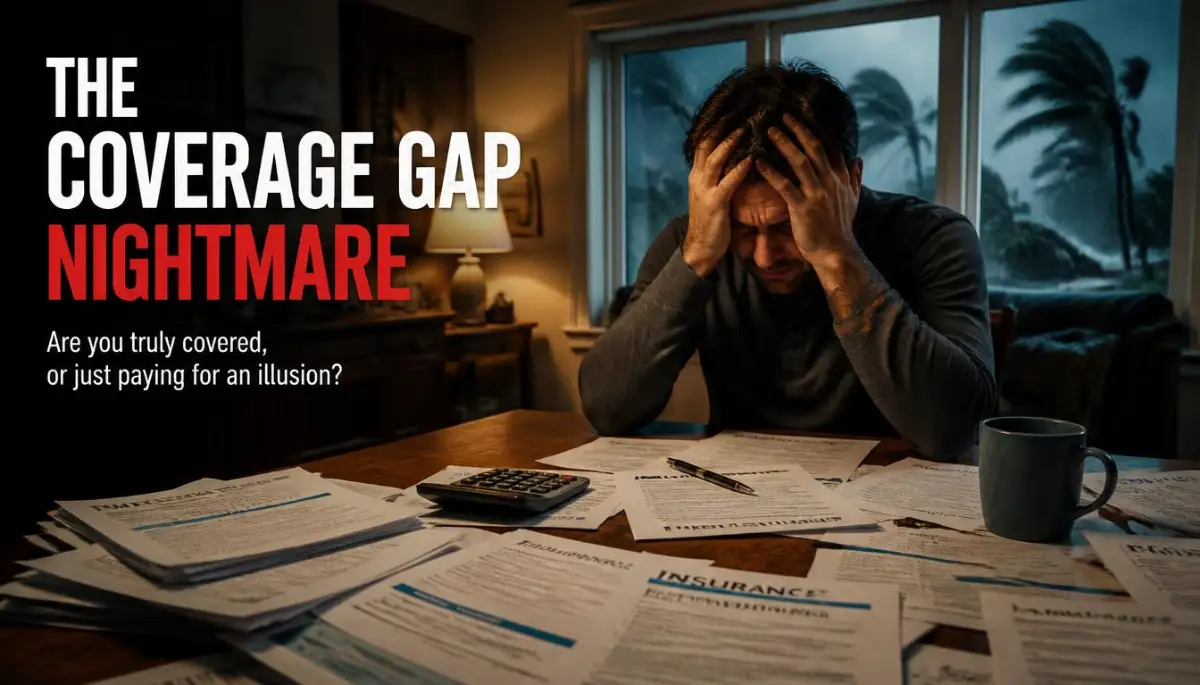
Every single day, ordinary families go to sleep in their primary residences, feeling a false sense of absolute security. They lock their doors, set their alarms, and trust that their monthly insurance payments act as an invisible shield around their most valuable asset. But the silent reality is entirely different for millions of homeowners.
When an extreme weather event actually strikes, this illusion of safety is ripped away in an instant. The emotional toll of losing a home is devastating enough, but finding out your insurance provider will only cover a fraction of the rebuilding costs creates a completely different kind of trauma. People find themselves draining their retirement savings, taking out massive high-interest loans, or even facing total bankruptcy.
The mental peace you thought you purchased with your policy simply vanishes. You are left staring at a ruined property, fighting through endless phone calls with adjusters, and wondering how you will ever provide a safe shelter for your family again. The stress bleeds into your work life, ruins your sleep, and creates deep anxiety that lingers long after the storm has passed. This happens because most people never learn the hidden traps buried in the fine print of their standard policies.
Exposing the Silent Coverage Gaps
To truly protect your family and your financial future, you need to understand exactly how under insurance happens. It rarely happens on purpose. Most homeowners simply trust the initial numbers their agent sets up when they first buy the house.
But a policy that covered your home perfectly on the day you bought it might be dangerously inadequate today. The costs of everything around us constantly change, and if your policy does not change with them, you are walking on very thin ice. Let us break down exactly where these dangerous gaps hide and how you can fix them immediately.
The Illusion of Market Value
One of the most dangerous myths in real estate protection is confusing what your house would sell for with what it would cost to rebuild. Market value is the price someone is willing to pay to buy your home and the land it sits on. Replacement cost, on the other hand, is the actual price of the raw materials and labor needed to rebuild the exact same house from the ground up after a total loss.
When a disaster flattens a neighborhood, the demand for local contractors, wood, roofing materials, and cement skyrockets. This sudden demand pushes rebuilding costs way beyond normal levels. If your policy is only based on your home's market value, or an outdated estimate from when you first bought the property, you will hit your coverage limit long before the new roof is even finished.
The Hidden Threat of Material Inflation
Think about the price of basic groceries today compared to just a few months ago. Now, apply that same logic to heavy construction materials like lumber, copper wiring, and concrete. Supply chain issues and natural inflation can double the cost of building materials in a surprisingly short amount of time.
If your policy features a fixed dwelling coverage limit, you are entirely responsible for the difference when prices go up. This is the exact trap that catches thousands of families off guard after massive storms or wildfires. They assume their fixed limit is a safe number, not realizing that modern construction costs have left that number far behind.
The "Named Peril" Trap and What It Really Means
Many standard homeowner policies operate on a specific list of covered disasters, often called "named perils." This means if a specific type of natural disaster is not explicitly named on that list, you have zero protection. People often assume that "weather damage" is a blanket term that covers everything from wind to water.
This is a massive misconception. For example, standard policies almost never cover damage caused by rising groundwater or floods. If a massive storm blows your roof off and rain ruins your living room, you might be covered. But if that same storm causes the nearby river to overflow and flood your living room from the bottom up, you might get absolutely nothing.
Understanding the Reality of Earth Movements
Similar to floods, earth movements like earthquakes, mudslides, and sinkholes are typically excluded from basic policies. If you live in an area prone to dry seasons followed by heavy rains, mudslides are a very real threat to your foundation. Many homeowners only discover this exclusion when they are standing in their cracked living room waiting for an adjuster who will ultimately deny the claim.
You must ask your provider exactly what natural events are excluded from your specific contract. You can usually purchase separate, specialized policies or endorsements to cover these specific regional threats. Do not wait for the ground to shift before having this conversation with your agent.
Decoding the Difference: Coverage Types Explained
To make things perfectly clear, let us look at a simple comparison of how different coverage types react to a major disaster. This is where you can easily spot the hidden dangers in your own paperwork.
The Overlooked Cost of Debris Removal
When a severe storm destroys a property, the rebuilding process cannot simply start the next day. The entire site is usually covered in massive fallen trees, shattered glass, ruined drywall, and dangerous electrical hazards. Clearing this hazardous mess requires heavy machinery, specialized crews, and permits.
Many people are shocked to discover that debris removal alone can cost thousands, or even tens of thousands of dollars. Standard policies usually cap debris removal at a very low percentage of your total dwelling coverage. If your limit is already too low to rebuild the house, spending a huge chunk of it just to clean up the yard will leave you in a terrible financial position.
The Real Impact of Changing Building Codes
Building codes are safety regulations created by local governments, and they change constantly to reflect new safety standards. If your older home is destroyed by a natural disaster, the city will force you to rebuild it according to the newest, strictest building codes. This might mean upgrading your entire electrical system, installing stronger structural supports, or adding specific fire-resistant materials.
Standard policies generally promise to return your home to its original state, not to upgrade it to modern legal standards. These mandatory upgrades can easily add twenty to thirty percent to your total construction bill. Unless you specifically have "Ordinance or Law Coverage" attached to your policy, those expensive legal upgrades will come straight out of your own wallet.
Protecting Your Family's Immediate Needs
If your primary residence is severely damaged, you cannot safely live there while it is being rebuilt. You will need to rent another house, stay in a hotel, and possibly eat out at restaurants while your kitchen is gone. These daily expenses add up incredibly fast, draining your emergency savings in a matter of weeks.
This is where "Additional Living Expenses" (ALE) or "Loss of Use" coverage becomes your lifeline. However, underinsured homeowners often find that their ALE limit is far too low to sustain their family during a six-month or twelve-month rebuild. Always check the time limit and the dollar limit on your ALE coverage to ensure your family won't be left scrambling for a place to sleep.
Here is a quick YouTube video that brilliantly explains exactly how to read your insurance declarations page. Take a few minutes to watch this, as it will perfectly set you up to audit your own coverage without feeling completely overwhelmed by the legal jargon.
My Personal Realization on Extended Limits
I used to think that adding extra endorsements to my policy was just a sneaky way for the insurance company to squeeze more money out of my monthly budget. My mindset completely flipped when I finally did the math on what a total loss would actually cost my family in today's economy. I realized that paying a few extra dollars a month for an 'Extended Replacement Cost' rider was not a scam, but the absolute cheapest way to buy guaranteed peace of mind.
The Truth About Home Improvements and Renovations
Homeowners love upgrading their primary residences. You might install a beautiful new modular kitchen, upgrade to luxury hardwood floors, or finally finish that basement to create a family entertainment room. These improvements significantly increase the cost to rebuild your home if a disaster strikes.
The danger here is a lack of communication. If you spend major money renovating your house but never inform your insurance provider, your policy still reflects the old, cheaper version of your home. If a fire or storm destroys your brand new kitchen, the insurance company will only pay to replace the basic, outdated kitchen they had on file.
How to Take Immediate Action Today
You do not need to be a financial expert to fix these hidden dangers. You simply need to be proactive and ask the right questions. The very first thing you should do is locate your current "Declarations Page." This is the summary document that clearly lists all your current coverage limits and deductibles on a single page.
Once you have that document in your hands, call a trusted local building contractor. Ask them for a rough estimate of the current per-square-foot building costs in your specific zip code. Multiply that current cost by the total square footage of your home, and compare that final number to the "Dwelling Coverage" limit on your declarations page.
Bridging the Knowledge Gap with Your Agent
Do not be afraid to aggressively question your insurance agent. It is their job to explain these complicated details to you in plain English. Call them and explicitly ask, "If my home is completely leveled by a natural disaster tomorrow, will this exact policy cover every single penny of the rebuild without me reaching into my savings?"
Listen very carefully to their answer. If they hesitate, use vague language, or mention specific exclusions, it is time to upgrade your policy immediately. Ask them to price out an extended replacement cost endorsement, ordinance and law coverage, and a separate flood policy if you live anywhere near a body of water.
The Psychology of Avoiding the Uncomfortable
Human beings naturally want to avoid thinking about worst-case scenarios. We would much rather spend our weekend planning a fun family vacation than sitting at the dining table reading boring insurance documents. But ignoring this critical task is a massive gamble with your family's safety net.
Taking one hour out of your weekend to review your policy can literally save you from decades of crushing debt. Think of this review process as a necessary chore, exactly like changing the oil in your car or checking the batteries in your smoke detectors. It is a small, temporary inconvenience that prevents catastrophic failure when you need protection the most.
Separating the Myths from the Reality
To wrap up this section, let us destroy a few common myths that constantly trap innocent homeowners.
Myth: The bank that holds my mortgage makes sure I have enough insurance.
Reality: Your mortgage lender only requires enough insurance to cover their loan balance, not the total cost to rebuild your home and replace your belongings.
Myth: The government will bail me out if a massive natural disaster hits my town.
Reality: Government assistance programs usually offer low-interest loans, not free grants, which means you will still have to pay back every single dollar you borrow to rebuild.
Myth: I do not need flood insurance because I do not live in a designated high-risk flood zone.
Reality: A massive percentage of flood claims come from homes located outside of high-risk zones, simply because extreme weather patterns are becoming highly unpredictable.
By understanding these dangerous hidden gaps, you are already miles ahead of the average homeowner. You now have the knowledge to look at your policy critically and spot the exact places where your financial safety net is tearing. Protecting your primary residence requires constant vigilance, but the ultimate reward is knowing your family will always have a roof over their heads, no matter what nature brings.
Pro-Level Strategies to Bulletproof Your Home
Once you understand how easily a standard policy can leave you exposed, the next step is taking total control of your financial safety net. You do not have to just accept whatever basic package your agent hands you. There are highly specific, advanced ways to customize your coverage so that a natural disaster does not ruin your life.
Most people treat their home insurance like a "set it and forget it" subscription. This is exactly how they get trapped. You need to treat your policy like a living document that grows and changes alongside your property.
Let us explore some powerful, lesser-known strategies that smart homeowners use to stay completely protected. These are the secrets insurance companies rarely offer upfront unless you specifically ask for them.
Demand the "Ordinance or Law" Upgrade
I mentioned building codes earlier, but this point requires a much deeper explanation. Local building laws become stricter every single day. If your house was built ten or twenty years ago, it probably does not meet today's safety standards.
If a massive storm destroys your roof, the city will not let you rebuild the old version. They will force you to install modern, storm-resistant trusses and energy-efficient materials. Your basic insurance policy will absolutely refuse to pay for these legally required upgrades.
This is where you must ask your agent to add an Ordinance or Law endorsement. This simple addition forces the insurance company to pay for any mandatory legal upgrades during the rebuilding process. It is generally very affordable and saves you from paying tens of thousands of dollars out of your own pocket.
Master the Art of the Digital Home Inventory
Imagine trying to remember every single item in your living room right now from memory. Now imagine trying to do that while standing in the burned wreckage of your house. It is completely impossible.
Insurance claims adjusters require hard proof of what you owned before they write you a check. If you cannot prove you owned a high-end television or custom furniture, they will simply pay you for the cheapest generic versions available. You must create a bulletproof digital inventory of your home today.
Take your smartphone and walk through every single room in your house. Open drawers, pan across your electronics, and verbally describe the expensive items as you record. Upload this video directly to a secure cloud drive so it survives even if your phone does not.
You can also use this same video to document recent renovations. For instance, if you recently knocked down a wall to maximize natural light and make a tiny room look huge, you need visual proof of those expensive new windows. The adjuster cannot dispute video evidence, and it speeds up your payout process massively.
Ask for an "Inflation Guard" Endorsement
The cost of construction materials like wood, steel, and concrete changes every single day based on global markets. If a massive hurricane hits a coastal state, the sudden demand for wood will make prices skyrocket across the entire country. Your standard fixed coverage limit will not stretch far enough to cover these sudden price spikes.
Smart homeowners protect themselves by adding an Inflation Guard to their policy. This automatically increases your dwelling coverage limit by a small percentage every year to keep up with the rising cost of local construction. It completely removes the guesswork from renewing your policy.
You will never have to worry about manually recalculating your home's rebuilding value. The insurance company handles the math, ensuring your safety net naturally expands as the economy changes. It is one of the easiest ways to secure long-term peace of mind.
Understand High-Value Item Scheduling
Your policy has a hidden internal limit for certain categories of personal property. For example, even if you have fifty thousand dollars in overall personal property coverage, the company might cap jewelry payouts at just one thousand dollars. This shocks families who lose expensive engagement rings or family heirlooms in a fire.
You must look at your policy and find the specific sub-limits for electronics, art, firearms, and jewelry. If the value of your items exceeds those tiny limits, you need to "schedule" them separately. This means listing them individually on your policy for an exact appraised amount.
Scheduling items guarantees that you get the full value back without any arguments or depreciation deductions. It is a small extra cost that provides massive security for the things you care about the most.

The Devastating Financial Traps to Avoid
Protecting your home is not just about adding the right coverage. It is also about avoiding the massive, unseen pitfalls that trap ordinary people during their worst moments. When you are dealing with the trauma of a natural disaster, the last thing you need is a rejected claim because of a technicality.
These mistakes happen because insurance contracts are incredibly confusing by design. Companies use complicated language to limit their own financial risk. Let us break down the most dangerous mistakes you need to avoid at all costs.
The Percentage Deductible Surprise
Everyone knows what a standard flat deductible is. If you have a one thousand dollar deductible, you pay that amount first, and the insurance covers the rest. But when it comes to extreme weather like hurricanes, windstorms, or hail, many companies sneak in a Percentage Deductible.
This means your deductible is not a flat fee, but a percentage of your total home value. If your home is insured for four hundred thousand dollars and you have a 3% windstorm deductible, you have to pay twelve thousand dollars out of pocket before the insurance kicks in. Most families do not have twelve thousand dollars sitting in a checking account.
You must read your declarations page right now and check for any percentage symbols next to your deductible amounts. If you see one, contact your agent and ask how much it would cost to switch back to a standard flat-rate deductible. It might raise your monthly premium slightly, but it will save you from absolute financial ruin.
Trusting Online Real Estate Estimators
One of the biggest mistakes people make is looking at popular real estate websites to figure out how much insurance they need. Those websites only tell you what the land and the structure might sell for on the open market. They have absolutely nothing to do with the real cost of raw materials and professional labor.
You must separate real estate market value from raw construction costs in your mind. If you base your coverage on a website estimate, you will likely be drastically underinsured. Always talk to a local contractor to get a realistic, per-square-foot building cost for your specific neighborhood.
For a completely independent and professional perspective on how standard policies operate, you can review the educational resources provided by the National Association of Insurance Commissioners. They offer unbiased guidance that helps you understand how insurance companies actually calculate your risk.
Ignoring the Hidden Flood Threat
I briefly touched on this earlier, but it is the single most common reason families go bankrupt after a storm. Basic home policies do not cover water that enters your home from the ground up. If a massive rainstorm causes the street drains to back up and flood your first floor, your standard policy will pay you zero dollars.
People wrongly assume that because they do not live near a beach or a river, they do not need flood insurance. This is incredibly dangerous thinking. Extreme weather patterns are changing, and heavy localized rainfall can cause flash flooding in neighborhoods that have never seen water before.
You can easily check your neighborhood's official risk level by looking at the official FEMA flood maps online. Even if you are in a low-risk zone, buying a separate, highly affordable flood policy is one of the smartest financial moves you can make. It covers the exact disaster that your main policy specifically excludes.
Staying Silent About Major Renovations
When you upgrade your home, you make it a better place to live. Maybe you completely remodeled your bathrooms or turned your dark basement into an amazing home theater. These upgrades increase the physical value and the rebuilding cost of your property.
If you forget to tell your insurance agent about these upgrades, you are making a massive mistake. Your policy is still legally tied to the older, cheaper version of your house. If a fire destroys your brand new luxury kitchen, they will only pay to replace the cheap, outdated cabinets you had ten years ago.
You must notify your provider the moment you finish any major project. It is similar to understanding what people actually want and love—insurance companies can only give you the protection you need if you clearly communicate what you have built. Keep them updated every single year.
Underestimating Temporary Living Expenses
When a tornado or fire makes your home unlivable, you still have to go to work, feed your family, and pay your original mortgage. On top of that, you now have to pay rent for a temporary house and eat out at restaurants because you have no kitchen. These extra costs are covered under your "Loss of Use" or "Additional Living Expenses" clause.
The fatal mistake is accepting a policy with a low limit or a short time frame for these expenses. Rebuilding a destroyed home takes much longer than you think, often stretching past twelve or eighteen months. If your temporary living coverage runs out after six months, you will have to pay two housing bills at the same time.
Make sure your policy offers at least twelve to twenty-four months of continuous living expenses. When you are forced into a temporary rental, you will already be dealing with massive headaches, like trying to fix a dropping Wi-Fi connection just so you can work remotely while handling adjusters. You do not want the added stress of running out of rent money.
If you are ever confused about the claims process while living in temporary housing, non-profit organizations like United Policyholders offer completely free, expert advice to help disaster victims navigate their rights. Use these independent resources to your advantage.
Your Roadmap to Unshakable Peace of Mind
Protecting your most valuable asset from extreme weather is not about living in fear. It is about taking highly calculated, smart actions today so you can sleep perfectly well tonight. The confusing language in your policy is designed to intimidate you, but you now have the exact knowledge to cut through the jargon.
Start by grabbing your current declarations page and looking for those dangerous percentage deductibles. Call your agent this week and ask them directly about "Extended Replacement Cost" and "Ordinance or Law" coverage. Force them to explain exactly what happens if your local rebuilding costs suddenly spike after a neighborhood-wide disaster.
Remember to take thirty minutes this weekend to film a complete video inventory of your belongings. Upload it to a secure cloud server. This one simple action can literally speed up a future payout by months and guarantee you get every single dollar you deserve.
Always keep an eye on your home's changing value, and never rely on generic online estimates. When in doubt, seek out helpful home advice and always consult with local building professionals to understand the true cost of construction in your specific area. You are the only person who can truly advocate for your family's financial safety.
I know exactly how overwhelming and boring it feels to stare at endless pages of insurance paperwork. But taking just a few hours to fix these hidden gaps was the best financial decision I ever made for my family. My greatest hope is that you take these steps today, so if the sky ever turns dark and the worst happens, your only focus will be keeping your loved ones safe, knowing your home is completely protected.
Common Questions About Home Disaster Coverage
Does my basic home insurance cover all natural disasters automatically?
No, standard policies usually only cover specific "named perils" like wind, hail, and fire. Major disasters like floods, earthquakes, and mudslides are almost always excluded from basic contracts. You have to purchase separate policies or specific endorsements to get coverage for those specific events.
How often should I realistically review and update my property coverage?
You should review your policy every single year right before your renewal date. You also need to contact your agent immediately after completing any major home renovations, like a kitchen remodel or adding a new roof. This ensures your coverage limit always matches the current rebuilding value of your upgraded home.
What actually happens if the cost to rebuild my house exceeds my coverage limit?
If you only have a standard fixed policy, you will have to pay the remaining balance entirely out of your own pocket. This often forces families to take out massive bank loans or downgrade to a much smaller house. This is exactly why adding an "Extended Replacement Cost" rider is so highly recommended by experts.
Is buying separate flood insurance worth it if I do not live near the water?
Yes, it is absolutely worth it for your financial protection. More than twenty percent of all flood insurance claims come from homes located in low-to-moderate risk zones. Extreme, unpredictable rainfall can cause flash flooding in any neighborhood, and a basic policy will not cover a single penny of the water damage.
Can my insurance company force me to pay for legal building code upgrades?
The city government forces the legal building code upgrades, but your standard insurance policy will refuse to pay for them. Without an "Ordinance or Law" endorsement, the insurance company only pays to rebuild the old version of your home. You will be held personally responsible for paying the massive difference to bring the house up to modern legal standards.
Disclaimer: The information provided in this article is for educational and informational purposes only and does not constitute licensed financial, legal, or professional insurance advice. Insurance policies vary heavily by state, provider, and individual circumstances. Always consult directly with a licensed insurance agent or legal professional in your area to thoroughly review and customize your specific coverage needs before making any binding financial decisions.