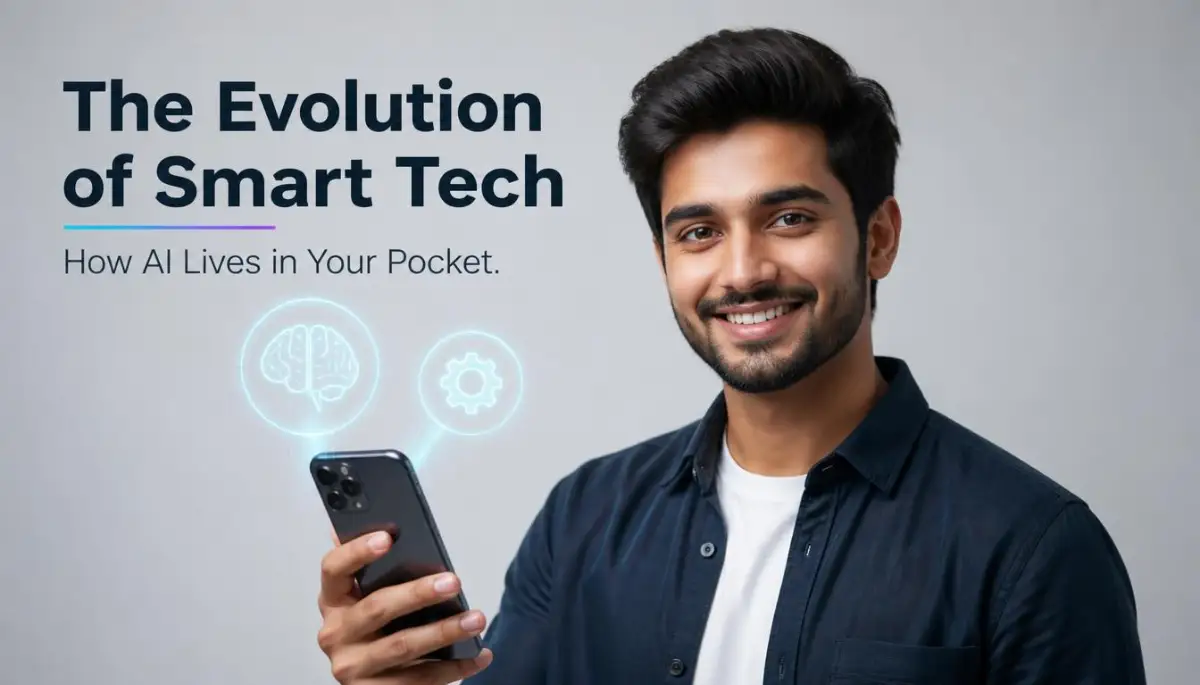
The Frustrating Gap Between Us and Our Old Devices
Do you remember the days when technology felt like a stubborn brick? We used to spend hours trying to figure out why a computer wouldn't connect or why a phone couldn't understand a simple command. It was a time of endless manuals and clicking the same button ten times, hoping for a different result.
Those moments were more than just small annoyances. They were truly exhausting for our minds. We felt a deep sense of disconnect from the tools that were supposed to help us. Instead of making life easier, our gadgets often added another layer of stress to an already busy day.
Think about the struggle of searching for a photo in a gallery of thousands. Or the pain of typing out every single word on a tiny keyboard without any help. It felt like we were working for our machines, rather than the machines working for us. This reality left many of us feeling left behind or simply tired of "smart" things that weren't actually smart.
We wanted gadgets that could see what we see and hear what we hear. We craved a world where our devices could predict what we needed before we even asked. For a long time, that felt like a dream from a movie. But slowly, that gap started to close.
The shift didn't happen overnight. It was a quiet change that started with small features. But the emotional relief of finally having a device that "gets you" is something we all feel now. It is the difference between a tool and a true partner.
How Your Gadgets Started Thinking for Themselves
The change we see today is all about how machines learn from us. In the past, a programmer had to tell a computer exactly what to do for every single situation. If the situation changed even a little bit, the computer would fail.
Now, we use something called machine learning. Instead of following strict rules, our gadgets look at patterns. They watch how we use them and adjust their behavior to match our lives. This makes the technology feel more human and much more helpful.
The Invisible Magic in Your Pocket
Your smartphone is likely the most advanced piece of tech you own. But most of the amazing things it does are hidden from your eyes. When you take a photo, the camera isn't just capturing light. It is making thousands of decisions in a split second.
It identifies faces, adjusts the colors of the sky, and even fixes the blur from your shaky hands. This is not just a lens working; it is a brain thinking. It knows that a person’s face should be bright while the background can stay soft.
Smart photography has changed how we keep memories. We no longer need to be expert photographers to get a beautiful shot. The phone does the hard work, allowing us to just focus on the moment. This is a huge step in how tech helps us express ourselves.
Predicting Your Next Move
Have you ever noticed how your phone suggests the right app at the right time? Or how your keyboard seems to know exactly what word you want to type next? This is not luck. It is the result of your device learning your habits.
Your gadgets keep track of your routine. If you always check the weather at 7 AM, your phone learns to have that info ready for you. If you often text your mom after work, it might suggest her name as soon as you open your messages.
Predictive text and app suggestions save us time and mental energy. We don't have to hunt for things anymore. The tech brings the information to us. It feels like having a personal assistant who is always one step ahead.
Making Voice Talk More Natural
Talking to a machine used to be a joke. You would shout at a speaker, and it would give you a completely wrong answer. It was frustrating and made us feel silly. But that has changed significantly.
Today, voice assistants can understand different accents and even the context of a conversation. If you ask about the weather and then ask "How about tomorrow?", the device knows you are still talking about the weather. It remembers the previous sentence.
This context-awareness makes tech more accessible for everyone. It is especially helpful for people who might find typing difficult. Being able to just speak and get a helpful response makes technology feel like a part of the family.
The Secret to Longer Battery Life
One of the biggest pains in tech is a dead battery. For a long time, batteries just got bigger to last longer. But now, they are getting smarter. AI helps manage how power is used throughout the day.
Your phone learns which apps you use the most and which ones you rarely touch. It puts the "quiet" apps to sleep so they don't drain your power in the background. It also learns your charging habits to protect the health of the battery over time.
Smart power management means we worry less about finding a charger. It gives us the freedom to use our devices all day without constant anxiety. This is a perfect example of tech solving a physical problem with a digital brain.
How Smart Homes Watch Over Us
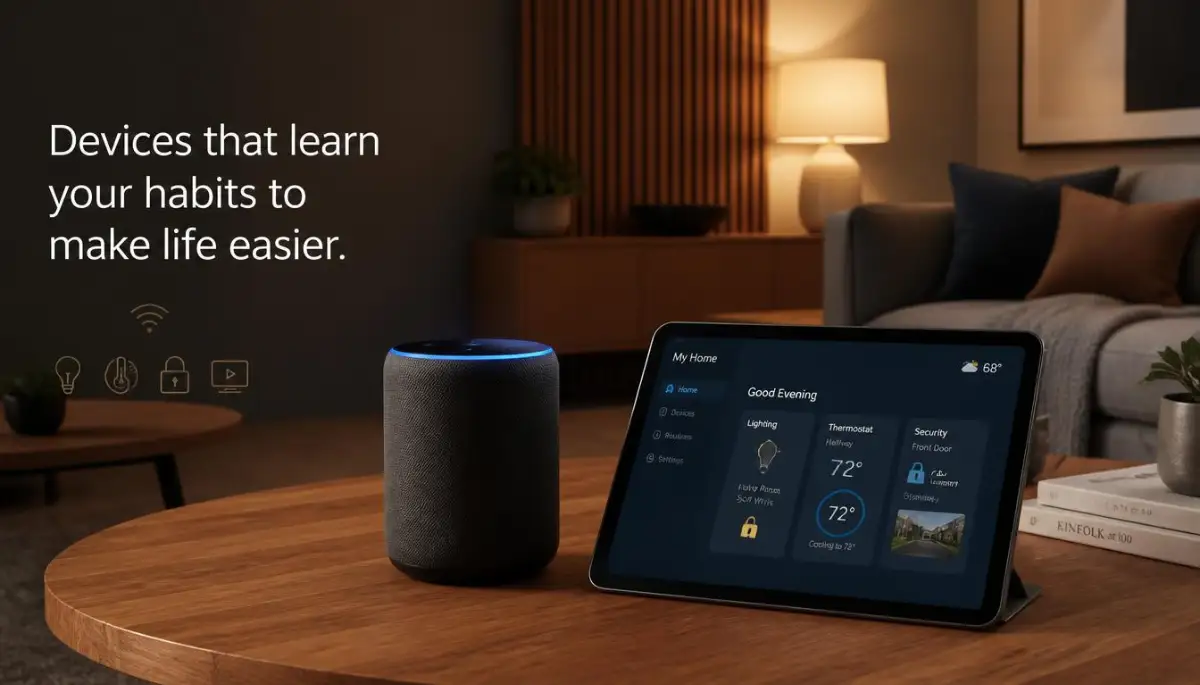
Our houses are also becoming more aware of our presence. Smart thermostats don't just follow a schedule; they learn when you are home and what temperature you like. They can even save you money by turning down the heat when the house is empty.
Smart lights can change their brightness based on the time of day to help you sleep better. Even your fridge can now tell you if you are running low on milk. These small things add up to a much smoother daily life.
A smart home reduces the "mental load" of managing a household. We have fewer chores to remember and more time to relax. The home starts to feel like an environment that cares for its residents.
Security That Recognizes You
Old security was all about passwords and PINs. They were easy to forget and easy for others to guess. Now, we use our faces and fingerprints to unlock our lives. This is made possible by advanced recognition systems.
These systems don't just look at a picture of you. They look at the depth of your face and the unique patterns of your skin. They can even tell if it is a real person or just a photo being held up to the sensor.
Biometric security is both faster and safer than old methods. It allows us to access our data instantly while keeping strangers out. It is a seamless way to stay safe in a digital world.
Filtering the Noise of the Internet
The world is full of too much information. We get hundreds of emails and see thousands of posts every day. It can be overwhelming. AI helps us by acting as a filter.
Your email inbox knows which messages are junk and which ones are important. Your social media feed shows you things you actually care about instead of random noise. This helps us focus on what matters.
Smart filtering protects our attention and time. Without it, we would be lost in a sea of data. It helps us find the "signal" in the middle of all the "noise."
The Joy of Better Entertainment
Even the way we relax has changed. When you watch a movie or listen to music, AI is working behind the scenes. It looks at what you enjoyed in the past to suggest something new you might love.
Streaming services have become very good at this. They help us discover artists and stories we would have never found on our own. It makes our free time more enjoyable and personalized.
Personalized recommendations turn a huge library into a curated experience. We spend less time searching and more time enjoying. It makes the world of art and music feel much more personal to us.
A Friendlier Path Forward
The story of tech is no longer about "faster" or "bigger." It is about "smarter" and "kinder." We are moving toward a world where gadgets understand human needs. They are becoming more empathetic to our struggles.
This evolution is making the world more inclusive. People with disabilities can use their voices to control their environment. Those in remote areas can get instant translations to talk to the world.
Technology is finally starting to speak our language. It is breaking down barriers and building bridges. As we move forward, the line between "us" and "our tech" will continue to soften in the best way possible.
Mastering the Digital Brain in Your Pocket
Moving beyond the basic features of your phone, let's talk about how to actually live better with this tech. Most people use maybe ten percent of what their smart devices can actually do. If you want to get the most value, you need to understand how to "train" your tools.
Your gadgets are like a digital garden. If you don't tend to them, they grow wild and messy. But if you guide them, they become a source of peace and efficiency. The first secret is to stop treating your AI like a search engine.
Instead of just asking for facts, start asking for help with your routine. For example, your phone can learn the exact time you leave for work. It can then automatically check traffic and suggest the best route without you even asking. This is not just a feature; it is a way to reduce your morning stress.
Another expert tip is to look into on-device processing. Many modern gadgets now try to keep your data local. This means the "thinking" happens on your phone, not in some far-away cloud. Understanding this helps you stay safe and keeps your private life private.
Shaping Your Personal Tech Experience
To keep your tech running smoothly for a long time, you should treat it like a high-performance machine. Just as you might study simple habits to protect your electric vehicle battery life, you must manage your digital power. AI is very energy-heavy, so knowing which smart features to leave on is a skill.
You can also use your smart home to manage your health. Many people don't realize that smart lights can be set to "Circadian Mode." This means the lights slowly change color and brightness to match the sun. This simple setting helps your brain produce the right sleep hormones at night.
Consistency is the key to a smart life. If you keep your habits steady, the AI becomes more accurate. If you are constantly changing settings, the machine gets confused. Give your devices time to learn who you are, and they will serve you much better.
Using Smart Filters for Peace of Mind
The internet is a very noisy place. One of the best ways to use AI is to act as a shield for your mind. Most email apps have smart categories that separate "Updates" from "Social" and "Primary" mail. Take ten minutes today to teach your email which senders are actually important.
You can do the same with your phone notifications. Many devices now have a "Work Mode" or a "Sleep Mode" that uses AI to filter calls. It knows that a call from your boss is important at 10 AM but can wait at 10 PM. By setting these boundaries, you take back control of your time.
This type of proactive management is how you stay ahead. It is very similar to how car owners look for the ultimate guide to hybrid engine care and longevity to ensure their vehicle lasts. When you take care of the software side of your tech, the hardware feels new for much longer.
Protecting Your Privacy While Staying Smart
A big secret that experts know is how to manage "permissions." Every time an app asks to use your microphone or location, think twice. Does a calculator app really need to know where you are? Probably not.
You should regularly check your "Privacy Dashboard" on your phone. This shows you exactly which apps have been using your data in the last 24 hours. Being mindful of your digital footprint is a pro-level move. It ensures that you get the benefits of AI without giving away too much of yourself.
Research from organizations like the Stanford Institute for Human-Centered AI shows that people feel better when they understand how their data is used. Knowledge is power, especially when it comes to the tiny computers in our pockets. By staying informed, you turn from a passive user into a confident owner.

The Hidden Traps of Smart Living
While technology is helpful, many of us fall into dangerous patterns without even knowing it. One of the most common mistakes is over-reliance on algorithms. We often stop making our own choices because the computer tells us what to watch, what to buy, or where to eat.
This can lead to a "bubble" where we never see new ideas or try different things. It limits our world and makes our lives feel repetitive. If you always follow the "Recommended for You" list, you might miss out on the joy of discovery. This is a subtle but real way that AI can take away our sense of wonder.
Another big mistake is ignoring software updates. Many people see that little notification and click "Remind Me Later" for weeks. This is a huge risk because updates often contain security patches. Without these, your smart home or phone is open to digital intruders.
The Danger of "Notification Fatigue"
We also tend to let our gadgets talk to us too much. If your wrist is buzzing every five minutes, you aren't being productive; you are being interrupted. This leads to a state of constant "Micro-Stress" that wears down your mental health.
We feel like we have to answer every ping and pop-up immediately. This breaks our focus and makes it hard to do deep work or enjoy a conversation with a friend. Letting your devices dictate your attention is a recipe for burnout. It turns your helpful tools into digital leashes.
Many people also forget to clean their digital space. Just like a house, a phone gets cluttered with old apps and data. This slows down the AI and makes your device feel "laggy." If you don't clear the cache and delete unused apps, your expensive tech will start to feel like trash.
Falling for the "Free" Data Trap
A very emotional struggle many face is the loss of privacy. We often sign up for "free" smart services without reading the terms. In reality, we are paying with our personal stories, our locations, and our habits.
This data is then used to target us with ads that play on our emotions. It can make us feel like we aren't good enough or that we need to buy more things to be happy. The price of "free" is often our mental peace. Being aware of this trade-off is the first step to staying safe.
If you are struggling with technology and money, it is a good idea to look at how to rebuild your credit score after a major financial disaster. Often, our digital habits and our financial habits are linked. Taking control of one helps you take control of the other.
Your Roadmap to a Smarter Life
We are living in an amazing time where our tools finally understand us. The evolution of AI in our gadgets is not about robots taking over. It is about making the human experience better, smoother, and more fun.
You don't need to be a scientist to enjoy these benefits. You just need to be a little bit curious and a little bit careful. Start by changing one small setting today. Maybe it’s turning on "Blue Light Filter" or setting up a "Do Not Disturb" schedule.
These small wins add up over time. They turn your phone from a source of stress into a helpful partner. You are the master of your digital world. The tech is here to serve you, not the other way around.
A Fresh Start with Your Tech
Think of your gadgets as a blank canvas. Every day is a chance to make your relationship with technology a little bit healthier. Don't be afraid to experiment with new smart features, but always keep your privacy in mind.
If you are thinking about upgrading your life in other ways, like moving to a new house, consider if buying a home is smarter than renting. Just like with tech, the big decisions in life require looking at the facts and the long-term benefits. Smart living is about making choices that give you more freedom in the future.
The journey of technology is always moving forward. We will see even more incredible changes in the coming months. But the core goal will always be the same: making your day a little bit brighter. Stay curious, stay safe, and enjoy the incredible power at your fingertips.
Your Action Plan for Today
To get started right now, follow this simple checklist:
- Check your permissions and turn off any app that doesn't need your location.
- Set a sleep schedule for your phone so it stops buzzing after 9 PM.
- Explore your camera settings to see how the AI is helping your photos.
- Delete three apps that you haven't opened in the last month.
![7 Hidden Ways Your Smartphone Ruins Your Sleep [Fix It Tonight]](https://topic36.com/storage/uploads/blogs/1787199601_7-hidden-ways-your-smartphone-ruins-your-sleep-fix-it-tonight.webp)