The Invisible Wall: Why Hard Work Isn't Always Enough in Freelancing
Imagine waking up every morning, grabbing your coffee, and opening your laptop with a sense of hope. You spend hours refreshing job boards. You send out dozens of proposals. You even offer to work for lower rates just to get your foot in the door.
But then, silence. Or worse, a polite "no" because someone else had a more specific set of tools. It feels like you are shouting into a void. This constant rejection starts to eat away at your confidence and your peace of mind.
You start to wonder if the "make money online" dream is just a myth. You see others posting about their $5,000 months while you are struggling to land a $50 project. The stress of unpaid bills and the uncertainty of your future can be overwhelming.
The truth is, the freelance market has changed. It is no longer enough to be "good with computers" or a "general assistant." The world is crowded with generalists. When you offer everything to everyone, you become a commodity. And commodities are always bought at the lowest price.
I have spoken to many people who feel stuck in this cycle. They have the passion. They have the work ethic. But they are missing the one thing that opens the doors to high-paying clients: Specialized, high-demand digital skills.
Think of it like this. If you need heart surgery, do you go to a general doctor or a heart specialist? You go to the specialist, and you pay them whatever they ask. Freelancing works exactly the same way. Businesses are not looking for "help"; they are looking for "solutions" to specific problems.
When you stop being a "jack of all trades" and start being a master of a specific high-demand skill, the dynamic shifts. You stop chasing clients. Instead, clients start looking for you. The anxiety of where the next paycheck is coming from slowly turns into the excitement of choosing which project to work on next.
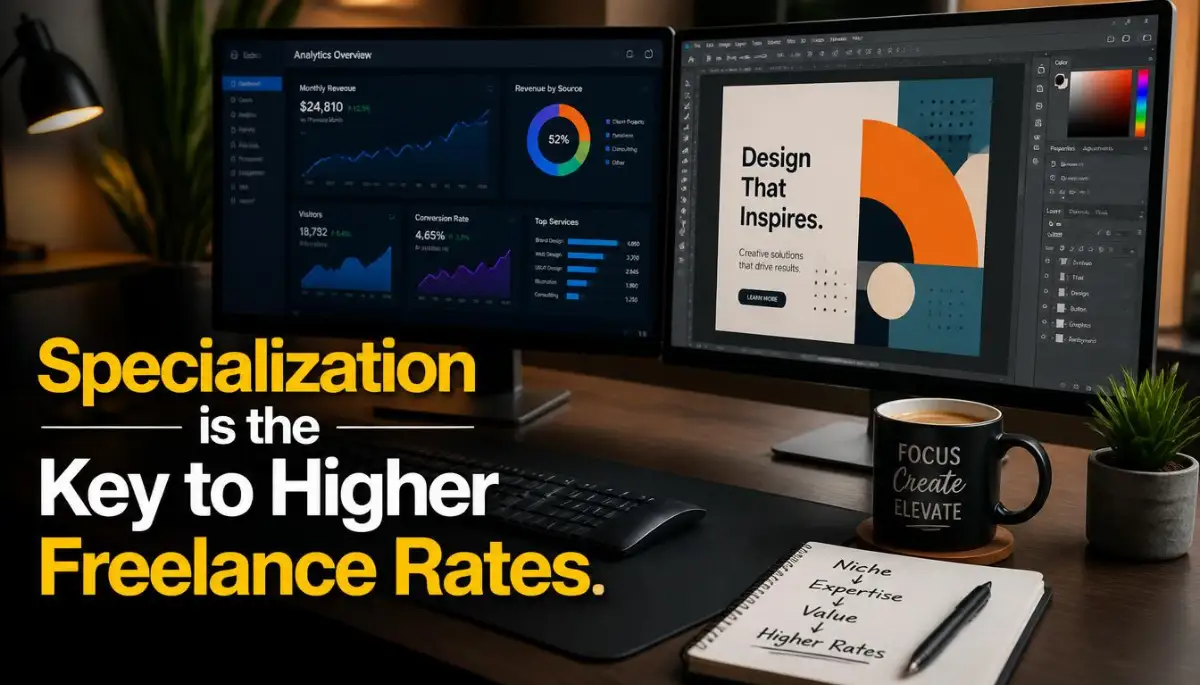
Moving Beyond the Basics: The Path to Market Authority
The first step in changing your freelance trajectory is understanding what the market actually needs. Many beginners make the mistake of learning skills that are easy to pick up. The problem is, if a skill is easy to learn, the market is usually flooded with people who can do it.
To stand out, you need to look for skills that sit at the intersection of "Hard to Master" and "High Business Value." These are the skills that help companies make more money or save more time. When you impact a company's bottom line, your value skyrockets.
1. Mastering the Architecture of Content (Technical SEO)
Most people think SEO is just about writing a few keywords in a blog post. That is only the surface. High-level Technical SEO is about understanding how search engines crawl and index information.
Businesses are desperate for experts who can fix site speed issues, manage schema markup, and handle site migrations. This isn't just about writing; it is about the "skeleton" of a website. When you can show a business owner how to rank on the first page of search results, you are not just a freelancer. You are a growth partner.
Think of a local business that is losing customers to a big franchise. If you can use technical SEO to put that local business at the top of Google, you have saved their livelihood. That is a high-value skill that commands premium rates.
2. The Language of Data and Analytics
We live in an age of information overload. Every click, every scroll, and every purchase creates data. However, most business owners have no idea what to do with that data. They see numbers but don't see the story behind them.
This is where Data Visualization and Analytics come in. If you can take raw data and turn it into a clear, actionable report, you are incredibly valuable. You help CEOs decide where to spend their marketing budget. You help them see which products are failing and which are winning.
You don't need to be a math genius. You just need to learn how to use tools like Google Looker Studio or Power BI. By translating "data" into "decisions," you position yourself as an essential part of a company’s leadership team.
3. User Experience (UX) Design: Solving Problems with Visuals
Many people confuse graphic design with UX design. Graphic design is about how something looks. UX Design is about how something works and how the user feels while using it.
A beautiful website that is hard to navigate is a failure. It loses money. Companies are willing to pay a lot for experts who can simplify the user journey. If you can make an app easier to use, you increase the "conversion rate."
This means more sales for the client without them spending more on ads. When you can prove that your design choices led to a 10% increase in sales, your fee becomes an investment rather than an expense.
4. The Power of Direct Response Copywriting
Writing is a common skill, but Direct Response Copywriting is a specialized craft. This is the art of writing words that make people take immediate action. Whether it is signing up for a newsletter or clicking the "Buy" button, this skill is the engine of the digital economy.
Most writers focus on "branding" or "awareness." Direct response writers focus on "results." They understand human psychology, triggers, and the "Pain-Agitate-Solve" formula. If you can write an email sequence that generates $10,000 in sales for a client, they will happily pay you $2,000 for that work.
5. No-Code Development and Automation
The demand for software is higher than the number of available developers. This has led to the rise of No-Code Development. Tools like Bubble, Webflow, and Zapier allow you to build complex websites and automate business workflows without writing code.
Small businesses need automation to survive. They need their CRM to talk to their email marketing tool. They need their sales leads to automatically go into a spreadsheet. If you can build these "bridges" for them, you save them hundreds of hours of manual work.
Automation is a "set it and forget it" service that provides massive long-term value. You are essentially selling "time" back to the business owner. And time is the most expensive resource they have.
Why Science Supports Skill Specialization
There is a psychological concept called the "Expert Effect." When we perceive someone as an expert, we naturally trust them more. We also stop questioning their prices. This is why a specialist surgeon can charge ten times more than a general practitioner.
By focusing on one high-demand skill, you trigger this Expert Effect. You are no longer competing with millions of generalists on a global scale. You are competing with a small group of specialists.
Furthermore, Cognitive Load Theory suggests that our brains can only handle so much new information. When you try to learn ten different skills at once, you become mediocre at all of them. But when you focus your energy on one area, you achieve "deep mastery" much faster.
The Realistic Timeline for Skill Acquisition
I want to be honest with you. You cannot master these skills overnight. Anyone telling you otherwise is selling a dream. However, you don't need a four-year degree either.
With a focused approach, you can gain a "functional" level of expertise in 3 to 6 months. This is the level where you know enough to deliver real value to a client. As you work on real projects, your skills will sharpen, and your rates will naturally rise.
The key is to start small but think big. Don't wait until you are a "master" to start freelancing. Start as soon as you can solve a small, specific problem for someone. That first $100 you earn from a specialized skill will feel better than $1,000 earned from general labor.
Creating a Sustainable Learning Habit
To succeed in the digital world, you must become a lifelong learner. The tools will change. The algorithms will update. But the core principles of human psychology and business value remain the same.
Set aside one hour every day for "Deep Learning." Turn off your phone. Close your social media tabs. Focus entirely on your chosen skill. This consistency is what separates the successful freelancers from the ones who quit after a month.
We are living in an era of unprecedented opportunity. You have access to the same information as people in Silicon Valley. The only thing standing between you and a successful freelancing career is the choice to pick a skill and stay committed to it.
Remember, the goal is not just to "make money." The goal is to build a career that gives you freedom, security, and a sense of pride. By identifying and mastering high-demand digital skills, you are taking the first step toward that reality.
Identifying Your Unique Path
Not every high-demand skill is right for every person. You must align your chosen skill with your natural interests. If you love logic and puzzles, Technical SEO or Data Analytics might be for you. If you have a creative flair and enjoy storytelling, Copy writing or UX Design is a better fit.
Ask yourself: "What kind of problems do I enjoy solving?" When you enjoy the process, the "hard work" doesn't feel like a struggle. It feels like a challenge. And that is the secret to staying in the game long enough to win.
In the next part of this guide, we will look at how to build a portfolio that proves your expertise, even if you have no previous clients. We will also discuss how to find the right platforms to showcase your new high-demand skills.
Success is not about luck. It is about being prepared when the right opportunity comes. By choosing the right skill today, you are preparing yourself for the opportunities of tomorrow. Stay focused, stay curious, and keep building. Your future self will thank you for the work you are doing right now.
Strategies for Transforming Basic Knowledge into Market Mastery
Learning a skill is just the beginning of your journey. To truly thrive, you must move beyond the basics and learn how to position yourself as an authority. Most people stop once they learn how to use a tool, but the real money is made by those who understand the strategy behind the tool.
One of the most effective ways to increase your value is through a concept called Skill Stacking. This means combining two or more high-demand skills to create a unique service that few others can provide. For example, if you know how to write copy and you also understand how to build landing pages, you are much more valuable than a person who only does one.
You are no longer just a writer; you are a conversion specialist. You don't just provide words; you provide a finished product that generates leads. This kind of specialized service allows you to charge based on the value you bring, not just the hours you spend working.
Many freelancers struggle because they focus only on the technical side of their work. They forget that how generative AI is changing the way developers write code is a sign that tools are always evolving. If you only focus on the tool, you might be replaced. If you focus on the logic and the strategy, you become irreplaceable.
Building Your Authority through Social Proof
You don't need a hundred clients to look like an expert. You just need three or four high-quality case studies that show real results. Instead of just saying "I am a web designer," show a "before and after" of a site you improved. Explain how your changes helped the business owner achieve their goals.
People buy results, not services. When you talk about your work, focus on the "Why" and the "Result." Did you help a client save five hours a week? Did you help them get more calls from their website? These are the details that convince high-paying clients to hire you over someone cheaper.
Another expert secret is to narrow your niche. Instead of being a "Digital Marketer," try being a "Digital Marketer for Solar Energy Companies." When you specialize in one industry, you learn their specific language and their unique problems. This makes you the obvious choice for anyone in that field.
The Psychology of Value-Based Pricing
Stop selling your time by the hour. When you charge by the hour, you are actually punished for being fast and efficient. If you become twice as good and finish a task in half the time, you earn less money. This makes no sense for a professional.
Instead, try to implement project-based pricing. If a project will help a company make $5,000, charging $1,000 for that project is a great deal for them. It doesn't matter if it takes you ten hours or two hours. You are being paid for the outcome you deliver.
This shift in mindset is what separates the people struggling to make ends meet from those who have built a stable, high-income career. It takes courage to ask for higher rates, but it is the only way to avoid burnout and long-term exhaustion.
Maintaining Long-Term Professional Growth
The digital market moves fast, but you don't have to be overwhelmed by it. Focus on "Just-in-Time Learning" instead of "Just-in-Case Learning." Don't try to learn every new tool that comes out. Only learn a new tool when you have a project that requires it or when you see a clear demand in the market.
Spend time networking with other professionals in your field. Often, the best projects come from referrals, not from bidding sites. If you are a designer, make friends with developers. They often have clients who need design work, and you can refer clients to each other.
To stay mentally sharp, you must also manage your finances and your health. Many freelancers neglect their personal stability while chasing the next gig. If you have recently faced a tough patch, learning how to rebuild your credit score after a major financial disaster can give you the peace of mind needed to focus on your career.

Hidden Traps That Can Sink Your Freelance Career
Even the most talented people can fail if they fall into common traps. One of the most dangerous mistakes is the "Yes-Man" trap. This happens when you are so afraid of losing a client that you say yes to every request, even if it is outside your skill set or your agreed-upon work.
This leads to "scope creep," where a small project turns into a massive one without any extra pay. It drains your energy and prevents you from doing your best work for other clients. You must learn to set clear boundaries from the very first day. A professional client will respect you more if you have clear rules for how you work.
Another major mistake is ignoring your personal brand. Many freelancers rely entirely on platforms like Up work or Fiverr. While these are great places to start, you don't own those platforms. If they change their rules or ban your account, your business could disappear overnight.
The Danger of Undercharging for Your Work
When you charge very low prices, you often attract the most difficult clients. These are usually the people who demand the most time and give the most stress. By pricing yourself too low, you are telling the market that your work isn't very valuable.
Low rates also lead to a cycle of constant work with no time for rest or learning. You become a "gig worker" instead of a business owner. This is a recipe for physical and mental health issues. Research from organizations like the National Institute for Occupational Safety and Health shows that job insecurity and overwork are leading causes of chronic stress.
Don't wait until you are exhausted to raise your prices. Small, incremental increases are easier for you and your clients to handle. If you are providing real value, your best clients will stay with you because they trust you and they don't want to go through the trouble of finding someone new.
The Communication Gap: Why Talent Isn't Enough
You can be the best coder or designer in the world, but if you are bad at communication, you will lose clients. Clients hate being left in the dark. If you are going to be late with a project, tell them as soon as possible. Don't wait until the deadline has passed.
Many freelancers "ghost" their clients when they run into a problem because they feel ashamed. This is the fastest way to ruin your reputation. Most clients are understanding if you are honest and proactive. Good communication builds trust, and trust is the foundation of long-term contracts.
Also, avoid using too much technical jargon when talking to business owners. They don't care about the technical details of a database; they care about how that database helps their business. Talk to them in terms of benefits and solutions, not just features and tools.
Your Immediate Action Plan for a Brighter Future
The transition from a struggling freelancer to a successful professional doesn't happen by accident. It is the result of intentional choices. Today, you have a choice. You can continue doing what everyone else is doing, or you can decide to become a specialist.
Start by looking at your current skills. Which one has the most potential to solve a big problem for a business? Focus all your learning energy on that one area for the next thirty days. Build a small project, even if it is for yourself, to prove you can do the work.
Remember that every expert you admire started exactly where you are right now. They felt the same uncertainty and the same fear of failure. The difference is that they kept going. They treated their freelancing as a real business, not just a side hobby.
A Simple Checklist for Your Next Steps:
- Identify one high-demand skill to master deeply.
- Create a simple portfolio website to showcase your results.
- Set a fixed schedule for learning and stick to it every day.
- Reach out to one potential client or collaborator every week.
- Review your pricing and ensure it reflects the value you provide.
If you are worried about the risks of working for yourself, remember that traditional jobs are not as safe as they used to be. Building your own set of high-demand skills is the best insurance policy you can have. Whether you are wondering is buying a home smarter than renting or trying to plan for your future, having a high-income skill gives you the freedom to make the best choices for your life.
You have the power to change your story. The digital world is waiting for people who are willing to put in the effort to become truly great at what they do. Don't let another month go by just "wishing" for things to get better. Take that first step today, and keep moving forward one day at a time.
Your journey toward a successful, high-demand freelancing career starts with the decision to be different. It starts with the decision to be a master of your craft. You have the tools, you have the knowledge, and now you have the plan. Now, it is time to get to work and build the life you deserve.

![Proven Effective Communication Strategies for Remote Clients [Step-by-Step]](https://topic36.com/storage/uploads/blogs/1787879183_proven-effective-communication-strategies-for-remote-clients-step-by-step.webp)