
The Invisible Wall: Why Your Proffered Skills Are Being Ignored
Have you ever spent hours crafting what you thought was the perfect proposal? You hit the "submit" button with a heart full of hope. Then, you wait.
The silence that follows is often louder than any rejection letter could ever be. You check your inbox every ten minutes, but there is nothing. This cycle repeats for days, then weeks.
It feels like you are shouting into a deep, dark well. You know you have the skills. You know you can do the work better than most.
Yet, the platforms seem to favor everyone but you. This constant rejection starts to eat away at your confidence. You begin to wonder if the "make money online" dream is just a myth.
I have seen so many talented people quit before they even get started. They feel like the market is too crowded. They think clients only want people with five-star ratings.
This leads to a state of mental exhaustion. You feel stuck in a loop of "no experience, no job; no job, no experience." It is a heavy weight to carry when you just want a chance to prove yourself.
The truth is, the wall is not invisible. It is built by a lack of strategy. You are likely doing what 99% of others are doing.
To break through, you need to stop acting like a job seeker. You need to start acting like a solution provider. Let's look at how we can change your story today.
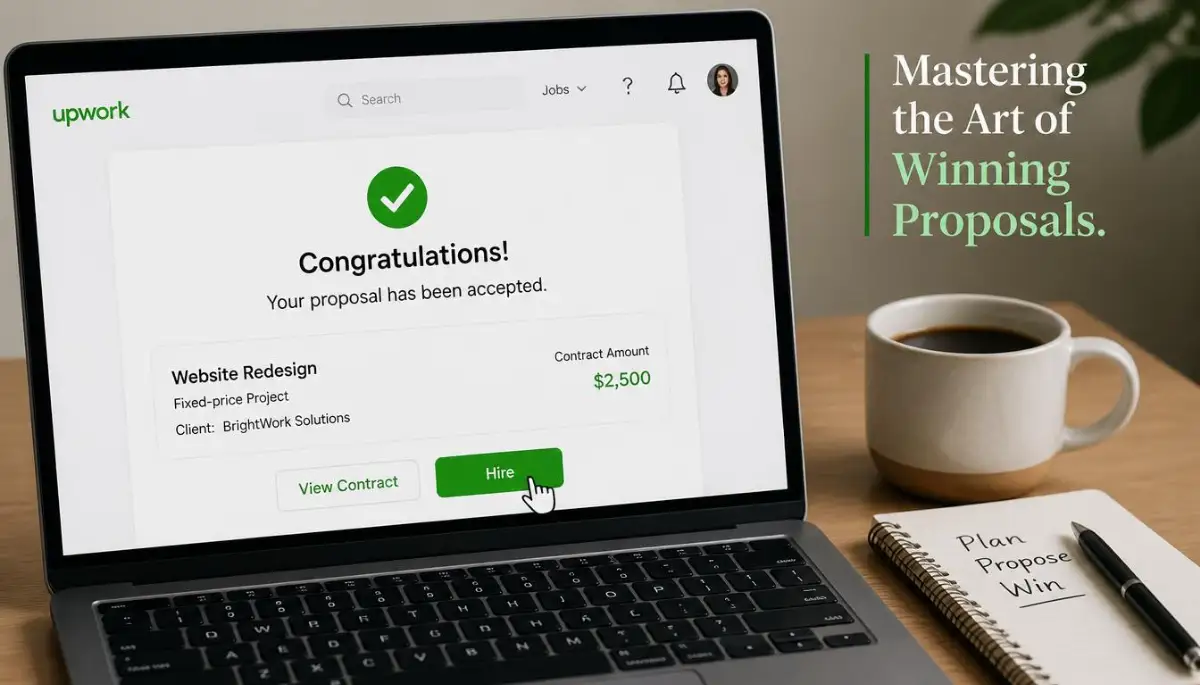
Transforming Your Digital Identity into a Client Magnet
Your profile is not just a resume. It is your shop window. If a customer walks past a dusty, messy window, they will never walk into the store.
Many new freelancers make the mistake of making their profile all about them. They list their degrees and their hobbies. They talk about what they want from the platform.
Clients do not care about what you want. They care about their own problems. They have a deadline, a bug to fix, or a brand to build.
Your profile must scream, "I understand your problem, and I can fix it." This is the first step to building trust.
Start with a clear, professional headshot. You do not need a fancy camera. A simple photo with good natural light and a friendly smile works best. Avoid busy backgrounds or group photos.
Write a headline that focuses on results. Instead of saying "Graphic Designer," try "Visual Storyteller Helping Small Businesses Boost Sales." This tells the client exactly what they get.
The Secret of the "Low-Hanging Fruit" Strategy
When you are starting from zero, you cannot compete for the biggest jobs right away. You need to build a foundation of trust.
Think of it like a staircase. You cannot jump to the top step from the ground. You have to take the first small step.
Look for smaller, quick-turnaround tasks. These are jobs that might only take an hour or two. They may not pay a lot of money, but they are worth their weight in gold.
Why? Because they lead to reviews. On freelance platforms, reviews are the primary currency.
A profile with five small, five-star reviews looks much better than a profile with zero. Once you have those first few stars, the algorithm starts to work for you.
I often suggest looking for jobs that have been posted for less than an hour. Be the first to respond. Clients often hire the first qualified person they talk to.
Crafting Proposals That Demand Attention
Most proposals are boring. They start with "Dear Hiring Manager" and end with a list of skills. This is a surefire way to get ignored.
To win your first client, you must be different. You must be human.
Read the job description three times. Most people skim it and send a template. If the client mentioned a specific tool or a problem, mention it in your first sentence.
For example, if they say they are struggling with website speed, start your proposal with: "I noticed your site is taking 8 seconds to load, and I know exactly how to fix that for you."
This shows you actually care. It shows you are not a bot or someone sending a hundred generic messages.
Keep your proposal short and punchy. Clients are busy. They want to know three things:
- Do you understand the job?
- Can you do it?
- When can you start?
If you can answer those three questions in four sentences, you are ahead of the crowd. Use bold text to highlight your most important points.
Building a "Silent Portfolio" to Prove Your Worth
The biggest hurdle for new freelancers is the lack of a portfolio. How do you show work if no one has hired you yet?
The answer is simple: Create your own work.
If you are a writer, write three high-quality blog posts on trending topics. If you are a web designer, build a landing page for a fictional brand.
Put these in your portfolio section. A client does not care if you were paid for the work. They only care if the work is good.
I call this the "Silent Portfolio." It speaks for you when you don't have client testimonials yet. It proves your technical skill and your initiative.
Pro Tip: Try to solve a real-world problem in your portfolio pieces. Show the "Before" and "After." This demonstrates your thought process, which is very attractive to high-paying clients.
Mastering the Art of Micro-Communication
Once a client replies to your proposal, the "real" job begins. This is where most beginners lose the deal.
They take too long to reply. Or, they give one-word answers.
Speed is your best friend. If a client messages you, try to reply within five minutes. Most platforms show how fast you respond. A fast response time signals that you are professional and reliable.
When you talk to a client, ask questions. Don't just say "I can do it." Ask, "What is the main goal of this project?" or "Who is your target audience?"
Asking smart questions makes you look like an expert. It shifts the power dynamic. You are no longer just a worker; you are a consultant.
Clients love consultants. They feel safe giving their money to someone who takes the time to understand their vision.
Handling the "No Experience" Objection with Confidence
Sometimes, a client will ask, "I see you are new here. Why should I hire you?"
Do not apologize for being new. Do not say, "I am looking for my first chance." This sounds desperate.
Instead, pivot to your dedication. Say something like: "Because I am building my reputation on this platform, I am 100% focused on making your project a huge success. You will get my full attention and my best work."
This turns a weakness into a strength. It tells the client they are getting a great deal. They are getting an expert who is highly motivated to earn a five-star review.
Focus on the value, not the history. People buy the future, not the past. If you can convince them that their future looks better with your help, the job is yours.
Setting Your Price: The Balancing Act
Pricing is tricky for beginners. If you charge too much, you get no jobs. If you charge too little, you look like an amateur.
Avoid the "Race to the Bottom." Never try to be the cheapest person on the platform. There will always be someone willing to work for less.
Instead, look at the average price for your service. Start slightly below that average for your first two or three jobs.
Once you have those first few reviews, raise your rates immediately.
Think of the lower price as a marketing cost. You are "buying" those first reviews with your time. But don't stay there. You are a professional, and your time has value.
The Power of a Follow-Up (Without Being Annoying)
Did you know that many jobs are won in the follow-up?
If you sent a proposal two days ago and haven't heard back, send a short, friendly note.
"Hi [Client Name], I was thinking about your project today and had a quick idea about [specific detail]. Just wanted to check if you are still looking for help!"
This shows you are proactive. It puts your name back at the top of their list. Sometimes, a client just gets busy and forgets to reply. A gentle nudge can be the difference between a "no" and a "yes."
Creating a Daily Routine for Success
Freelancing is a numbers game, but it is also a skill game. You need to improve both every day.
Set a goal to send five high-quality proposals every morning. Do not just send them to any job. Choose jobs where you are a perfect fit.
Spend the rest of your day improving your skills. Take a free course. Practice your craft. Update one small thing on your profile.
Success on these platforms does not happen overnight. It is the result of small, consistent actions.
By following these steps, you are not just looking for a job. You are building a business. You are moving from the "struggling beginner" phase to the "professional freelancer" phase.
Your first client is out there right now, looking for exactly what you offer. You just need to show them that you are the right person for the task.
Stay patient. Stay professional. The first "Hire" button click is just around the corner.
Moving Beyond the Basics to Dominate the Freelance Market
Getting your foot in the door is just the beginning of your journey. Once you understand how to set up a profile, you need to think like a top-tier professional. The difference between a freelancer who struggles for years and one who succeeds in weeks is their mindset.
Most people approach platforms like Upwork or Fiverr as if they are applying for a typical office job. They wait for permission to be successful. You have to realize that you are now a business owner. Your services are your products.
I have spent a long time watching how the top 1% of freelancers operate. They don't just "bid" on jobs. They position themselves as the only logical choice for a client. This is how you move from a $10 hourly rate to a $50 or $100 hourly rate.
To stay ahead, you need to understand the psychology of the person on the other side of the screen. Clients are often overwhelmed. They might have fifty people messaging them at once. Your goal is to be the person who makes their life easier the moment they read your message.
The Secret of High-Value Niche Specialization
One of the biggest secrets to long-term success is narrowing your focus. If you try to help everyone, you end up helping no one. Many beginners think that being a "Generalist" gives them more chances to win jobs. This is a trap.
Think about it like this. If you have a leaky pipe in your kitchen, do you want a general handyman or a specialist plumber? You want the plumber. You are willing to pay the plumber more because they know exactly how to fix that specific leak.
Freelancing works the same way. Instead of being a "Content Writer," become a "B2B SaaS Content Writer for Fintech." This makes you an expert in a specific field. When a Fintech company sees your profile, they won't even look at the general writers.
When you specialize, you can charge premium prices. You also spend less time learning about new topics because you already know your niche inside and out. This saves you mental energy and keeps you focused on growth.
Mastering the "Free Video" Advantage
If you want to blow your competition out of the water, start using video. Most freelancers are too shy to show their faces. They send text-based proposals that all look the same.
Imagine a client opens their inbox. They see ten text messages and one 60-second video. Which one do you think they will click first? The video allows them to see your personality, hear your voice, and feel your confidence.
You don't need a professional studio. Just use your phone or a screen recorder like Loom. Introduce yourself and mention the client's project by name. Tell them one specific thing you would do to improve their current situation.
This builds trust faster than a thousand words of text ever could. It shows you are a real person who is willing to go the extra mile. In a world of AI-generated messages, a human video is a breath of fresh air.
Leveraging Psychology to Win the Negotiation
Negotiation is not about fighting over money. It is about reaching an agreement that makes both people happy. Many new freelancers are afraid to talk about money. They take whatever the client offers because they are scared of losing the job.
You have to remember that your time is your most valuable asset. If you undercharge, you will eventually burn out. You will start to resent your work and your clients. This is a bad way to build a long-term career.
Instead of talking about price, talk about value. If a client says your price is too high, don't just lower it. Ask them what part of the project they want to remove to fit their budget. This keeps your hourly rate the same while adjusting the workload.
While you are building your income, it is also smart to think about your personal finances. For example, how to rebuild your credit score after a major financial disaster is a topic that helps many new entrepreneurs manage their money better as they grow.
Creating a "Feedback Loop" for Infinite Growth
Once you finish a project, the work is not over. You need to turn that one job into more jobs. The easiest way to do this is through testimonials and referrals.
Always ask your client for a review. But don't just ask for "a good review." Ask them to mention a specific thing you did well. This makes your profile look much more authentic to future clients.
If the client was happy, ask them if they know anyone else who needs help. Word-of-mouth is still the most powerful marketing tool in the world. A referral from a happy client is worth ten cold proposals.
Also, try to offer a "follow-up" service. If you built a website, offer a monthly maintenance package. This creates recurring income. Recurring income is the "holy grail" of freelancing because it means you don't have to hunt for new clients every single month.

The Invisible Traps That Destroy New Freelance Careers
Even with a great strategy, many people fail because they walk straight into common traps. These mistakes are often emotional rather than technical. They come from a place of fear or a lack of planning.
One of the most dangerous mistakes is "The Desperation Trap." This is when you take a job from a client who seems difficult or rude just because you need the money. These clients usually end up being a nightmare. They ask for endless revisions and give bad reviews despite your hard work.
Learning to say "no" is a superpower. If a client doesn't respect your boundaries during the interview, they won't respect them during the project. A bad review on a new profile can be a permanent scar. It is better to wait for a good client than to suffer with a bad one.
Another big mistake is "Ghosting." This happens when a freelancer gets overwhelmed and stops replying to messages. It sounds simple, but it happens all the time. If you are going to be late with a deadline, tell the client immediately. Most people are understanding if you are honest.
Avoiding the "Quantity Over Quality" Delusion
I often see people sending fifty proposals a day. They use a copy-paste template and hope for the best. This is a waste of time. The algorithms on major platforms can actually track this behavior and might flag your account as spam.
It is much better to send three amazing, personalized proposals than fifty generic ones. Spend time researching the client. Look at their past hiring history. See what other freelancers said about them.
When you rush, you make mistakes. You might miss a small detail in the job description that the client used as a "test." Many clients put a secret word in the middle of their post to see if you are actually reading. If you miss that word, your proposal goes straight into the trash.
Poor communication is the silent killer of freelance careers. Always use clear, simple language. Don't use heavy jargon to try and sound smart. Real experts know how to explain complex things in a way that anyone can understand.
Protecting Your Mental Health in the Digital World
Freelancing can be lonely. Sitting in a room alone staring at a screen for ten hours a day is not healthy. Many people start to feel depressed or anxious when they don't get an immediate response from a client.
You have to separate your self-worth from your freelance profile. A rejected proposal does not mean you are a bad person or a bad worker. It just means that specific project wasn't a match.
Make sure you set "office hours." Just because you can work at 2 AM doesn't mean you should. Give yourself time to rest, exercise, and spend time with family. A healthy mind produces better work, which leads to better clients.
Long-term success is a marathon, not a sprint. If you push too hard in the first month, you will quit by the third month. Find a pace that you can maintain for years. This is how you build a stable and happy life through online work.
Your 24-Hour Action Plan for Success
Now that you have the knowledge, it is time to act. Don't wait until tomorrow. Don't wait until you feel "ready." The only way to learn is by doing.
First, go to your profile and delete any sentence that starts with "I want" or "I am looking for." Change them to sentences that start with "I will help you" or "I can solve." This small shift in language changes everything.
Second, pick one niche. Even if it feels scary to limit yourself, do it for one week. See how much easier it is to write proposals when you are only looking at one type of job. You can always change your niche later if it doesn't work.
Third, send one proposal today that includes a specific suggestion for the client's problem. Don't just say you can do the job. Prove it by giving them a small piece of advice for free. This shows your value immediately.
Building a Future of Freedom and Choice
Freelancing is about more than just money. It is about having the freedom to choose who you work with and when you work. It allows you to build a life that fits your needs, rather than fitting your life into a 9-to-5 box.
Whether your goal is to travel the world or just spend more time at home, the freelance path can get you there. It takes work, patience, and a lot of learning. But the reward is worth every second of the struggle.
Think about the long-term facts of your journey. Many people use their freelance income to reach major life goals. For example, some wonder is buying a home smarter than renting once they have a stable income. These are the real-world decisions you will get to make once you master this craft.

![Proven Effective Communication Strategies for Remote Clients [Step-by-Step]](https://topic36.com/storage/uploads/blogs/1787879183_proven-effective-communication-strategies-for-remote-clients-step-by-step.webp)