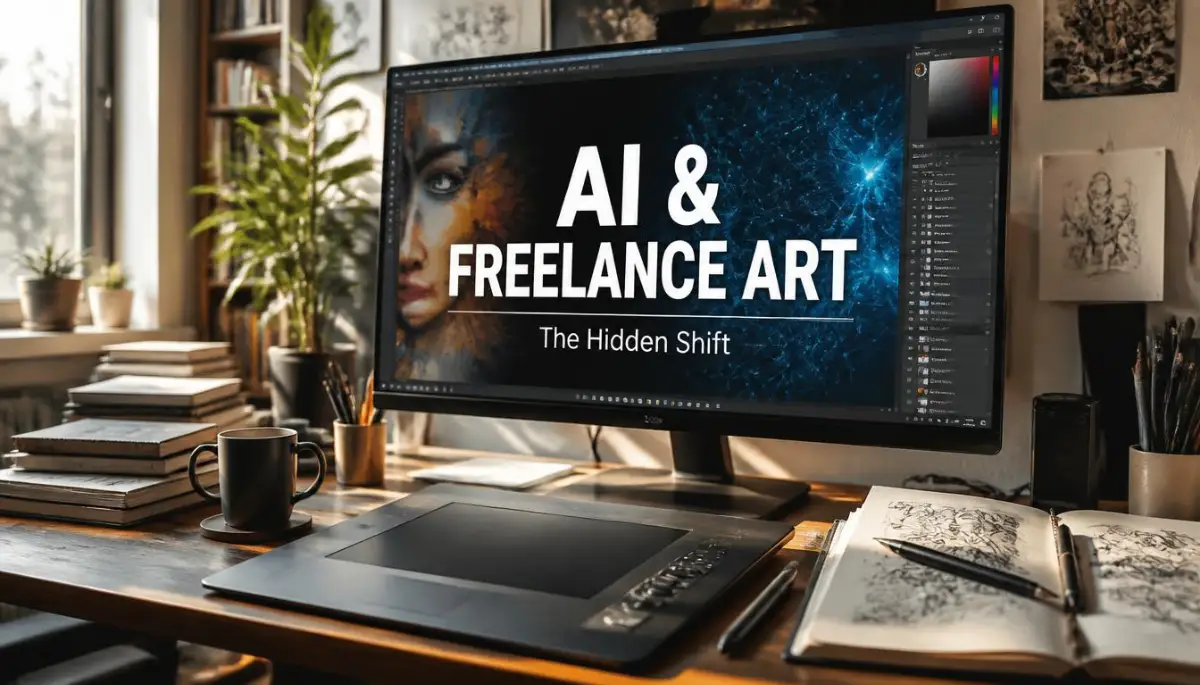
The Silent Panic Among Independent Creators
I remember sitting at my desk late one Tuesday night, staring blankly at my email inbox. A major client, someone I had worked with for months, sent a very polite but devastating message. They decided to stop ordering my custom illustrations for their upcoming project.
Instead, they found a software tool that generates decent images in seconds for absolute pennies. My stomach dropped instantly. I felt completely lost and wondered if my entire creative career was suddenly over.
All those late nights practicing shading and anatomy felt like a complete waste of time. The skill I spent my whole life building was suddenly being done by a machine.
That cold, sinking feeling is something so many independent creators are experiencing right now. The mental toll is incredibly heavy, and it slowly destroys your daily peace of mind. You wake up every morning wondering if today is the day your remaining clients will replace you.
Every time you log onto social media, you see perfect, mathematically generated images getting thousands of likes. Meanwhile, your hand-drawn piece, which took weeks to finish, barely gets any attention at all. This constant comparison kills your creative spirit.
You start second-guessing your talent and your actual worth. Financial anxiety makes this entire situation even worse. When you rely on art to buy groceries and pay the electricity bill, losing projects is not just disappointing.
It is absolutely terrifying, and it leaves you feeling totally helpless. You find yourself lying awake at 3 AM, doing the math in your head, trying to figure out how to survive the month. Friends and family might not fully understand this silent pressure.
They might tell you to just get a different job, which only adds to the heartbreak. The passion that used to bring you so much joy now brings you nothing but stress and worry. It feels like the entire industry shifted secretly, leaving hard-working people behind in the dust.
Turning the Machine Threat Into Your Biggest Advantage
When something completely changes your industry, the worst thing you can do is freeze in fear. The smartest independent creators are not running away from these new tools. Instead, they are learning how to secretly use them to speed up their work and make more money.
If you want to protect your income, you need to change the way you think about your job. You are no longer just a person who holds a digital pen. You have to become a thinker, a problem solver, and a director of ideas.
Below, we will explore exactly how you can adapt to this massive shift. These are highly practical, real-world strategies you can start applying to your daily routine right now.
Myth vs. Reality: The Truth About Automated Art
Before we look at the exact steps, we need to clear up a massive misunderstanding in the creative community. Panic usually comes from a lack of true information. Let us look at what is actually happening behind the scenes.
- The Myth: Machines will completely replace human imagination, and clients will never hire a real person again.
- The Reality: Machines only follow basic instructions and lack true emotional depth. Clients still desperately need a human director to fix mistakes, add real feeling, and make the final product make sense.
Software cannot talk to a client, understand their brand values, or feel the emotion behind a marketing campaign. The machine is just an advanced paintbrush. The person holding the brush still holds all the real power.
Shifting from Pure Illustrator to Creative Director
The days of simply drawing exactly what a client asks for are slowly disappearing. To stay relevant, you must offer something the machine absolutely cannot offer. You need to offer strategic thinking.
When a client comes to you with an idea, do not just give them a drawing. Ask them deep questions about their target audience, their brand message, and their business goals. Become a trusted advisor, not just an order taker.
If a client tries to use automated software on their own, they usually end up with a messy, disconnected image. They do not know how to fix strange extra fingers, weird lighting, or broken backgrounds. This is exactly where you step in as the expert.
You can charge clients a premium fee to direct, fix, and polish their machine-generated concepts. You take their messy ideas and use your trained human eye to turn them into professional masterpieces. This keeps you in control of the final creative process.
Pro Tip: I used to hide the fact that I used software helpers because I was afraid clients would judge me. My biggest realization was that clients only care about the final result and the speed of delivery. Once I openly shared my hybrid process, my confidence grew, and my clients trusted me even more because I was totally honest with them.
Building a Bulletproof Hybrid Workflow
If you want to survive, you need to mix your traditional skills with modern speed. A hybrid workflow simply means using the computer for the boring parts and your human hands for the special details. This saves you hours of exhausting work.
Phase 1: Rapid Idea Generation
Instead of staring at a blank canvas for three hours, use text-based generators to create ten different mood boards in five minutes. This helps you figure out the best colors, lighting, and composition without wasting any energy.
Phase 2: Human Selection and Sketching
Pick the best elements from those generated ideas. Now, turn off the software and start sketching your own unique version on your drawing tablet. You are using the machine for inspiration, but the actual drawing is 100% your own human effort.
Phase 3: The Final Polish
Once your base drawing is done, you can use smart tools to quickly fill in flat colors or generate complex background textures. Finally, you go back in with your digital pen to add the final highlights, emotional expressions, and tiny details that only a human can feel.
Why Your Unique Artistic Voice is More Valuable Than Ever
Right now, the internet is slowly filling up with millions of images that all look exactly the same. They all have that shiny, plastic, robotic look. Because of this, pure, messy, human creativity is actually becoming more valuable.
People naturally crave real connection. They want to see the slight imperfections of a human hand. They want to know there is a real heartbeat behind the image they are looking at.
You need to lean into your personal style harder than you ever have before. Stop trying to be perfectly realistic. The software can already do perfect realism. Instead, focus on extreme stylization, messy brush strokes, and deeply emotional storytelling.
Here is exactly why you need to adapt your creative workflow today if you want to stay ahead of the competition. Watch this quick video to see how smart artists are blending human emotion with automated tools.
Smart Pricing Strategies for the Modern Era
One of the biggest fears is that clients will expect cheaper prices because you can finish work faster. This is a trap you must avoid at all costs. You are not charging for your time; you are charging for your expert taste and guaranteed quality.
Never lower your prices just because a tool helped you finish a day early. The client is paying for a problem to be solved perfectly. If you solve it faster, that makes your service better, not cheaper.
If a client says, "I can just generate this for free," you need a strong, polite response ready. You can say, "You absolutely can use free tools to get a basic concept. However, if you want a custom, brand-safe image with perfect copyright protection and guaranteed consistency, that requires my professional expertise."
Protecting Your Mental Health in a Digital World
We cannot ignore the emotional side of this major career shift. It is completely normal to feel angry, sad, or overwhelmed when you see the industry changing so quickly. However, scrolling through social media and looking at automated art will only ruin your mood.
You need to strictly limit how much time you spend looking at other people's work online. Build a tight circle of real-life creative friends who understand your daily struggles. Talk to them honestly about your fears and your wins.
Remember that tools change, but human storytelling remains exactly the same. Hundreds of years ago, portrait painters panicked when the camera was invented. They thought art was completely dead.
Instead, the camera simply pushed painters to invent new styles like Impressionism and abstract art. We are standing in that exact same historical moment right now. The artists who survive will be the ones who focus on human connection rather than just technical perfection.
Expanding Your Services Beyond Just Drawing
Since basic drawing can be sped up, you now have extra time to learn new, highly profitable skills. The most successful independent creators are bundling their services to offer more value to big businesses.
For example, do not just offer an illustration for a children's book. Offer to design the entire book layout, pick the typography, and format it for publishing. You suddenly turn a small drawing gig into a massive, high-paying design contract.
Businesses do not want to hire five different people for one project. If you can use smart tools to speed up your drawing, you can use that saved time to learn basic graphic design or video editing. Becoming a multi-skilled problem solver makes you completely irreplaceable.
Here is a quick look at how you can upgrade your daily service offerings:
As you can see, you are moving away from just selling a single image. You are selling a complete, stress-free experience to your clients.
Communicating Your Value to Difficult Clients
Sometimes, you will meet clients who are obsessed with cutting costs. They will try to pressure you by comparing your rates to cheap, automated generators. The secret is to remain completely calm and professional.
Do not get defensive or angry. Simply explain the hidden risks of using raw, unedited machine outputs for professional business. Mention the risks of weird visual errors, inconsistent branding, and the total lack of original copyright protection.
When you calmly explain these massive business risks, the client usually realizes that saving a few dollars is not worth the danger. They will gladly pay your premium rate because you offer safety, quality, and peace of mind.
By taking charge of the conversation, you position yourself as a highly intelligent professional. You are no longer fighting against the machine. You are standing above it, managing it, and using it to build a stronger, more profitable creative business.
Master-Level Strategies for Long-Term Artistic Success
Once you accept that automated tools are here to stay, you need a solid plan to protect your career. Surviving the initial shock is only the first part of the journey. The next step is building a business model that practically runs itself and brings in high-paying clients consistently.
I learned very quickly that relying on just one type of service is incredibly dangerous. If you only offer basic character sketches, you are competing with thousands of cheap generators online. You must evolve your offerings to become a premium service provider.
One amazing way to do this is by creating your own unique digital assets. You can design custom brush packs, texture libraries, or even guidebooks on how to blend traditional art with modern software. If you focus on building products that people actually love, you instantly create a secondary income stream that pays you while you sleep.
Other creators are always looking for high-quality resources to speed up their own workflows. By selling your custom tools, you position yourself as an industry expert rather than just another competing artist. This totally changes how clients view your personal brand.
You also need to think about your physical working environment. When you spend ten hours a day staring at a glowing screen, a dark and depressing room will completely drain your creative energy. You must optimize your workspace and find ways to make your tiny room look huge using natural sunlight and smart desk placement.
A bright, well-organized studio not only boosts your mood but also makes you look incredibly professional during client video calls. Speaking of professionalism, working digitally means you rely heavily on cloud storage and live collaboration tools. You simply cannot afford to have your software crash while downloading heavy client files.
Taking the time to fix your slow internet connection ensures you never miss a tight project deadline. Small technical delays might seem minor, but they can easily ruin your reputation with high-end corporate clients. They expect smooth, uninterrupted communication at all times.
Developing a "Director’s Mindset" to Charge Premium Rates
Let us talk about exactly how you can double your current rates without feeling guilty. High-paying clients do not just want a pretty picture; they want a complete marketing solution. They want to know that the image you create will actually help them sell their products or grow their audience.
To provide this, you must adopt a director’s mindset. Research from the American Marketing Association clearly shows that modern consumers deeply value the authentic, human story behind a brand's visuals. Your job is to help your clients tell that genuine story.
Before you even touch your drawing tablet or open a software generator, schedule a deep strategy call with your client. Ask them about their target audience, their biggest fears, and their ultimate business goals. Show them that you care about their success, not just their money.
When you offer this level of deep strategic thinking, you are no longer just a freelancer. You become a trusted business consultant who happens to be amazing at art. This is exactly how you justify charging thousands of dollars instead of just fifty bucks.
Navigating the Financial Rollercoaster of Modern Freelancing
We need to have a very honest conversation about money. The transition period into this new tech-driven art world can be financially bumpy. You might lose a few old-school clients before you find the new, higher-paying ones.
Because of this, managing your money smartly is non-negotiable. You cannot just hope for the best and live from project to project. You must start taking control of your financial future by setting up a strict personal budget and an emergency savings fund.
I always recommend having at least three months of living expenses saved up in a separate bank account. This gives you the mental freedom to say "no" to terrible, low-paying clients. When you are not desperate for rent money, you can hold out for the premium projects that actually respect your talent.
Remember, surviving in this new era requires treating your creative skills like a serious business. You can find more expert strategies on managing an independent career on our main resources page.
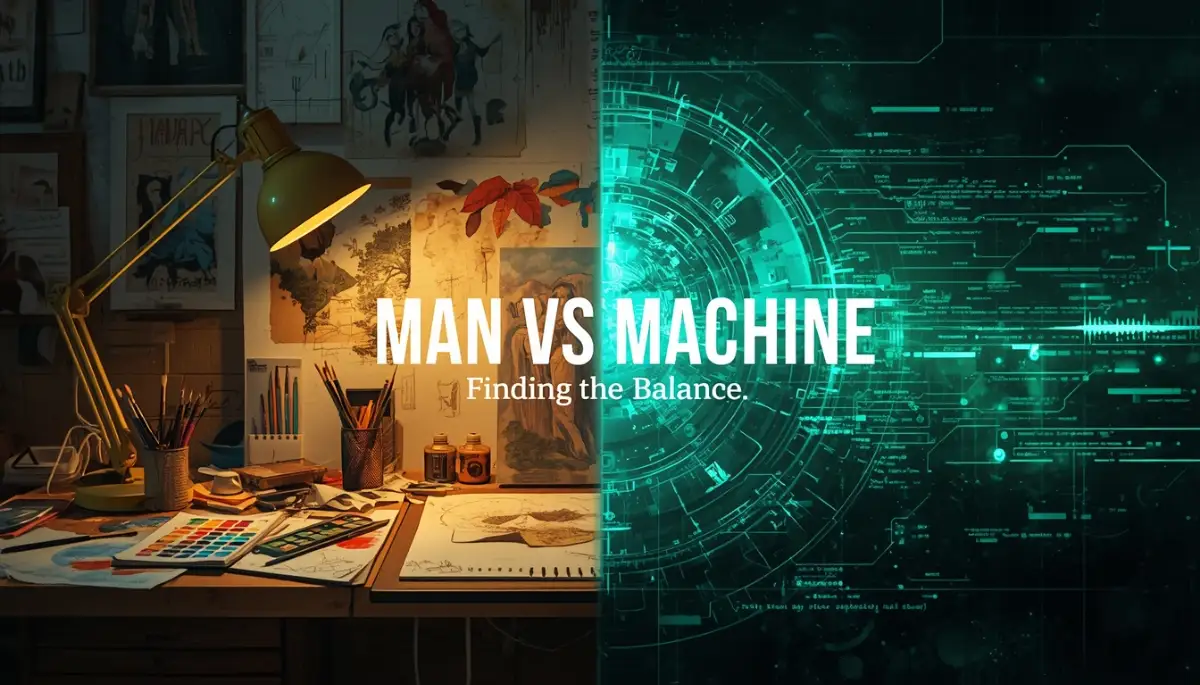
The Dangerous Traps That Ruin Creative Careers Today
Even the most talented independent creators can easily ruin their careers if they fall into some very common traps. The sudden rise of automated software has created a lot of confusion, leading people to make terrible business decisions out of pure panic. I have seen brilliant artists destroy their hard-earned reputations in a matter of weeks by making these exact mistakes.
The biggest danger is assuming that these new tools are a magical replacement for actual hard work. They are not. If you want to protect your career, you must avoid these massive pitfalls at all costs.
Trap 1: Getting Lazy and Losing Your Foundational Skills
The most heartbreaking mistake I see right now is creators entirely giving up on their traditional practice. Because a machine can generate perfect lighting and anatomy in seconds, some artists completely stop sketching on paper. They stop studying color theory and they stop observing the real world.
This is a massive career killer. If you lose your foundational skills, your artistic eye becomes lazy and weak. You will no longer be able to tell the difference between a genuinely emotional image and a flat, mathematically generated piece of plastic.
According to experts at the Stanford Institute for Human-Centered Artificial Intelligence, heavy human oversight and strong foundational knowledge are required to make automated outputs actually useful. The machine is only as smart as the person typing the instructions. If you do not understand basic art rules, you cannot fix the mistakes the software constantly makes.
Trap 2: Engaging in a Race to the Bottom with Pricing
When clients mention that they can get things done cheaper with software, many freelancers panic and instantly drop their rates. This is the absolute worst thing you can possibly do for your business. Dropping your prices sends a clear message that your work is not actually valuable.
Imagine two different freelancers trying to win the same job. Artist A drops their price to ten dollars just to compete with the free tools. Artist A will have to work twenty hours a day, completely burn out, and still struggle to pay their rent.
Artist B keeps their price at five hundred dollars but adds a custom branding guide and free revisions to the package. The client will almost always choose Artist B because high pricing implies high quality and safety. Never cheapen your brand just because the industry is changing.
Trap 3: Ignoring Severe Copyright and Legal Risks
Many independent creators are blindly using generated images in commercial client work without understanding the heavy legal dangers. This can literally get you and your clients sued for massive amounts of money. You cannot just generate a random image and slap a corporate logo on it.
According to the current guidelines from the U.S. Copyright Office, completely machine-generated works usually cannot be copyrighted by a human. This means your client might not actually own the image you just sold them. If their competitor steals that image, your client might have zero legal protection.
You must be completely transparent with your clients about your workflow. Explain exactly which parts are hand-drawn and which parts are machine-assisted. Honesty protects you from legal trouble and builds deep trust with your buyers.
Trap 4: Hiding Behind a Fake Digital Persona
Because the internet is flooded with robotic, soul-less content, people are actively hunting for genuine human connection. One of the biggest mistakes you can make right now is hiding your face and your personality behind a generic logo. You need to step out of the shadows and show the world who you really are.
Start recording short videos showing your messy desk, your sketchbooks, and your actual creative process. Let people hear your voice and see your frustrations when a drawing does not go as planned. Your human flaws are actually your biggest selling point right now.
When a client hires you, they are not just buying a digital file. They are buying your unique taste, your life experiences, and your friendly personality. A machine can never replicate the joy of working with an enthusiastic, passionate human being.
Your Next Steps to Building an unstoppable Creative Business
The digital art industry is going through a massive, chaotic transformation, but it is certainly not the end of human creativity. It is simply an invitation to level up and become a smarter, more efficient business owner. You have to let go of the old ways of working and embrace these new tools as your personal assistants.
Instead of feeling threatened, you should feel incredibly empowered. You now have access to technology that can speed up your boring tasks, leaving you more time to actually dream and invent. The future belongs to the creators who are brave enough to adapt without losing their human soul.
By upgrading your business model, protecting your foundational skills, and strictly avoiding the common pricing traps, you can easily secure your financial future. You are fully capable of turning this industry shift into the most profitable season of your entire career.
I know exactly how scary it feels to watch everything change right before your eyes. However, I promise you that your unique voice, your messy sketches, and your personal story are exactly what the world needs right now. Take a deep breath, pick up your favorite digital pen, and start building the creative career you actually deserve.
Real Questions Creators Ask About Machine-Assisted Art
Will traditional hand-drawn skills become completely useless soon?
Absolutely not. Traditional skills like understanding lighting, anatomy, and composition are exactly what you need to direct and fix automated outputs. Without these human skills, machine-generated images look flat, lifeless, and highly unprofessional.
How do I explain my hybrid workflow to an old-school client?
Be completely honest and focus on the amazing benefits for them. Explain that using smart software helps you deliver their projects much faster while keeping the final quality incredibly high. Clients always love hearing that you are using modern techniques to save them time.
Can I actually copyright the hybrid art I create for businesses?
The rules are constantly updating, but generally, you need to show significant human effort. If you generate a basic background but hand-draw the main characters and details, that heavy human input usually qualifies for protection. Always check your local official guidelines to stay totally safe.
Should I create a separate portfolio for my purely human art?
Yes, this is an incredibly smart marketing move. Having one portfolio for fast, hybrid commercial work and another for pure, traditional human art allows you to attract two entirely different types of high-paying clients.
Is it too late to start a freelance art career today?
It is actually the perfect time to start because the rules are being completely rewritten. If you learn how to blend smart software with strong human storytelling right from the beginning, you will easily outsmart older creators who refuse to adapt.
Disclaimer: The information provided in this blog post is for educational and informational purposes only and does not constitute formal legal, financial, or professional business advice. Earning potential as a freelance creator varies heavily based on individual effort, market conditions, and personal skill levels. Always consult with a qualified legal professional regarding copyright laws and commercial licensing in your specific region before delivering commercial projects.

![7 Hidden Ways AI is Changing Freelance Digital Art guide[Step-by-Step]](https://topic36.com/storage/uploads/blogs/1787370950_7-hidden-ways-ai-is-changing-freelance-digital-art-step-by-step.webp)
![The Ultimate Guide to Surviving Modern Corporate Culture [Step-by-Step]](https://topic36.com/storage/uploads/blogs/1787132262_the-ultimate-guide-to-surviving-modern-corporate-culture-step-by-step.webp)