The Hidden Weight That Sinks New Businesses
Have you ever felt like you are running as fast as you can, but your business is just staying in the same place? It is a heavy feeling. You wake up early, you work late, and you pour every bit of your energy into your startup. Yet, at the end of the month, the bank account looks thinner, and your "to-do" list looks longer.
I have talked to so many founders who are on the edge of burning out. They started with a beautiful dream. They wanted to build something that changes lives. But now, they spend all their time fixing small mistakes, chasing features no one wants, and watching money disappear.
It feels like trying to fill a bucket that has ten small holes in the bottom. No matter how much water you pour in, the bucket stays empty. This is the reality of operational waste. It is not just about losing money. It is about losing your passion and your mental peace.
Is this happening to you right now?
- Do you feel like your team is busy but nothing is actually getting finished?
- Are you worried that you are building a product that nobody will actually pay for?
- Does it feel like every small task takes five times longer than it should?
If you said "yes," you are not alone. Most startups do not fail because they have a bad idea. They fail because they waste their limited energy on things that do not matter. This is where the Lean Methodology becomes your best friend. It is not just a business buzzword. It is a way to stop the bleeding and start growing with clarity.
What Exactly is "Waste" in a Startup?
When we hear the word "waste," we often think of trash cans or old food. In a startup, waste is much more silent. It hides in your daily routines.
Think of it like this. If you spend three weeks building a "dark mode" for your app, but your users can’t even figure out how to sign up, those three weeks were waste. You spent time, money, and brainpower on something that added zero value to the customer.
In the lean world, we call this "Non-Value-Add" work. Anything that does not directly help your customer solve a problem is a target for removal. Let’s look at how you can start identifying these invisible profit-killers.
The Eight Types of Startup Waste
To fix the problem, we need to know what to look for. Lean experts often use the acronym DOWNTIME. Here is how it looks for a new business:
1. Defects (Mistakes)
Every time you have to fix a bug or redo a report, you are paying for it twice. Mistakes happen, but a system that allows the same mistake over and over is a waste machine.
2. Overproduction
This is the biggest trap. It means building features or services before you have proof that people want them. Why build a 10-step checkout process if you haven't sold one item yet?
3. Waiting
This is the "dead time." It happens when a designer is waiting for feedback, or a developer is waiting for a server to update. If your team is standing still, your money is burning.
4. Non-Utilized Talent
Are you asking a genius coder to spend three hours a day manual-sorting emails? If you don't use the unique skills of your team, you are wasting their potential.
5. Transportation
In the digital world, this means moving files around too much or having too many unnecessary meetings. Every time information jumps from one person to another, a little bit of it gets lost or slowed down.
6. Inventory
For a startup, inventory is "unfinished work." If you have ten half-finished blog posts or five half-coded features, you have "sitting" value. It is not doing anything for you until it is finished.
7. Motion
This is about the "mental toggle." If you have to switch between 20 different apps to do one task, your brain gets tired. That extra effort is waste.
8. Extra-Processing
Do you spend hours making a PowerPoint presentation look "perfect" for an internal meeting of three people? That is extra-processing. Good enough is often better than perfect if it saves time.
Shifting Your Mindset: The Build-Measure-Learn Loop
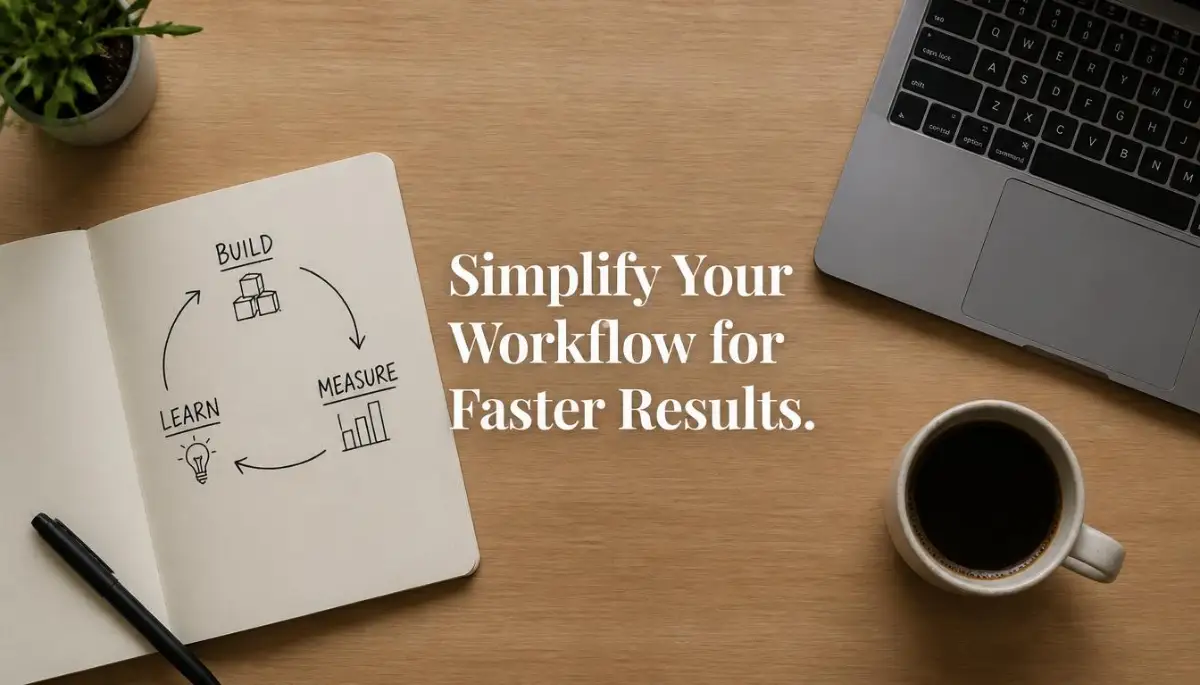
The heart of lean thinking is a simple circle. Instead of planning for six months and then launching, you work in tiny bits.
Build a Small Version
Don't build the whole car. Build a skateboard first. It solves the problem of getting from point A to point B.
Measure the Reaction
Give that skateboard to a customer. Do they like it? Do they fall off? Do they wish it had a handle?
Learn and Change
Take that feedback and decide what to do next. Maybe you add a handle. Now you have a scooter. You didn't waste money building a car engine that nobody wanted.
How to Start "Measuring" Today
You don't need fancy software to start measuring. Ask yourself: What is the one thing we did today that a customer would actually pay for?
If you can't answer that, your day was likely filled with waste. That is okay! The goal is not to be perfect on day one. The goal is to see the waste so you can stop it tomorrow.
Simple Steps to Clear the Operational Fog
Now that we know what waste looks like, let’s talk about how to clear it out. You don't need a degree in business to do this. You just need to be honest about your daily habits.
Audit Your Meetings
Meetings are often where productivity goes to die. Have you ever been in a one-hour meeting that could have been a three-sentence email?
Try this rule: No meeting should happen without a clear "output" goal. Before you click "Join," ask yourself what decision needs to be made. If there is no decision, cancel the meeting.
Keep it short. Many successful startups use "Stand-up" meetings. Everyone stays standing up. It keeps things fast. If people get too comfortable in chairs, they talk too much.
Use the "Five Whys" Technique
When a problem happens, don't just fix the surface. Ask "Why?" five times.
- Problem: The website crashed.
- Why? Because the server was overloaded.
- Why? Because we didn't expect so much traffic.
- Why? Because we didn't test the new marketing campaign.
- Why? Because we don't have a checklist for campaign launches.
- Why? Because we are rushing and don't have a standard process.
Now you know the real problem isn't the server. The problem is the lack of a checklist. Fixing the checklist saves you from every future crash. That is lean thinking.
Focus on the "Minimum Viable" Everything
We often hear about the Minimum Viable Product (MVP). But you can apply this to your whole operation.
Minimum Viable Marketing: Don't hire an agency and spend $5,000. Post on social media yourself. See which posts get likes. Spend $50 on an ad. See if anyone clicks.
Minimum Viable Hiring: Before you hire a full-time person, can you use a freelancer for 5 hours? Test the need before you commit to a big salary.
Minimum Viable Tools: You don't need the "Enterprise" version of every software. Start with the free version. Only upgrade when the free version literally stops you from working.
Myth: Lean Means "Cheap"
Some people think being lean means being a "cheapskate." That is not true. Being lean means being resourceful.
It means you value your money so much that you refuse to spend it on things that don't help your dream grow. I would rather spend $1,000 on talking to customers than $1,000 on fancy office chairs. One builds a business; the other just makes your back feel nice.
Creating a Culture of Efficiency
You cannot do this alone. If you have a team, they need to see waste too.
Celebrate "Caught" Waste
When an employee says, "Hey, I noticed we are doing this task twice, so I combined them," celebrate that! Make it a win to find ways to work less but achieve more.
Transparency is Key
Show your team the numbers. If they know that saving $500 on a useless tool means the company has more runway, they will help you find more ways to save.
Avoid the "Feature Factory"
It is easy to think that adding more features makes your product better. Often, it just makes the product more confusing. Every new feature adds "maintenance debt." You have to fix it, update it, and explain it forever.
Before adding anything new, ask: "Will this help 80% of our users, or just 2%?" If it's only 2%, put it in the trash for now.
The Power of Saying "No"
The most important tool for a lean founder is the word "No."
- No to "cool" ideas that don't solve the core problem.
- No to partnerships that take months to set up but offer little reward.
- No to social media platforms where your customers don't hang out.
When you say "No" to the wrong things, you finally have the space to say "Yes" to the right things. You get your time back. You get your focus back.
I want you to try a small experiment today. Look at your calendar for the next three days. Find one task or one meeting that feels like "waste" based on what we talked about.
Delete it.
See what happens. Usually, nothing bad happens. Instead, you find yourself with an extra hour of peace. You can use that hour to talk to a real customer or just take a breath.
Moving Forward with Less
Lean methodology is a journey, not a destination. You won't be perfectly efficient by tomorrow morning. But you can be better than you were yesterday.
Stop looking at what the giant companies are doing. They have billions to waste. You have a dream to protect. By cutting the "fat" from your operations, you give your startup the best chance to survive and thrive.
We are just getting started with these strategies. In the next part of this guide, we will look at specific tools you can use to automate your workflow. We will also talk about how to scale your business without scaling your waste.
Remember, a small, fast boat can outrun a giant ship if the ship is full of holes. Let's make your boat the fastest one on the water. Stay focused on what truly matters to your users, and the growth will follow naturally.
Taking Lean Thinking to the Next Level
Now that you understand the basics of waste, we need to talk about how to actually remove it. It is one thing to see the mess, but it is another thing to clean it up while running a business. Most founders get stuck here because they try to change everything at once.
One of the best secrets I have learned is to focus on Quality at the Source. In the lean world, this is often called Jidoka. It means that you don't wait for a product to be finished to check for mistakes. You build a system that stops the moment something goes wrong.
Imagine you are writing a weekly newsletter for your customers. Instead of waiting until Sunday night to proofread everything, you use a shared document where your teammate checks each section as you finish it. If there is a mistake in the first paragraph, you stop and fix the process right then. This keeps the mistake from traveling all the way to the end.
This approach saves you hours of rework later. It also keeps your brain fresh. You are not trying to find tiny errors in a 2,000-word document all at once. You are solving small problems before they grow into big disasters.
Putting Your Work on a Visual Map
If you can't see your work, you can't see the waste. I highly recommend using a Visual Workflow. Many people call this a Kan ban board. It is a simple way to move tasks from "To-Do" to "Doing" and then to "Done."
The magic happens when you limit your "Doing" column. If you have ten tasks in the "Doing" pile, you are not actually working on any of them well. You are just jumping between them. This is a huge waste of mental energy.
Try limiting your active tasks to just two or three. You will notice that you finish things much faster. When you finish one thing, the feeling of "Done" gives you a small hit of dopamine. That keeps you motivated to start the next task.
Automating the Boring Parts
Many early-stage founders spend half their day on tasks that a machine could do. This is where modern technology becomes a literal lifesaver. If you find yourself doing the same mouse clicks three times a day, it is time to automate.
For example, many developers are now using generative AI to write code much faster than before. They don't let the AI do everything, but they use it to handle the repetitive parts. This allows them to focus on the big-picture logic that actually builds the business.
You can do this with your email, your social media posts, and even your customer support. Use tools that connect your apps together. If a customer fills out a form, have that info automatically go into your database. Don't waste twenty minutes typing it in yourself.
Walking the "Real Floor"
There is a concept in lean called Gemba. It basically means "the real place." For a startup founder, this means going where the work is actually happening.
If you have a customer support person, sit with them for an hour. Watch how they use your software. You might see them struggling with a button that is hard to find. That struggle is waste.
By seeing the problem with your own eyes, you can fix it in minutes. If you just look at a spreadsheet of data, you might miss the human frustration that is slowing your company down. According to the Lean Enterprise Institute, this type of direct observation is what separates successful leaders from those who just manage from a distance.
Investing in Your Financial Foundation
Sometimes, operational waste comes from poor personal habits that bleed into the business. If you are stressed about your own money, you won't make good decisions for your startup. I have seen founders make desperate choices because their personal finances were a mess.
It is important to keep your personal health and business health separate. If you have had setbacks in the past, learning how to rebuild your credit score can give you the peace of mind needed to lead a company. When you feel secure, you are less likely to rush into "wasteful" business deals just to get quick cash.

Why Smart Founders Still Fall into the Waste Trap
It is easy to look at a list of rules and say, "I will never do that." But in the heat of building a startup, even the smartest people make big mistakes. One of the most painful ones is The Perfectionism Trap.
You might think that making something perfect is a good thing. In a startup, it is often a death sentence. When you spend months polishing a feature that no one has asked for, you are gambling with your company's life.
It hurts to release something that feels "unfinished." But if you wait until it is perfect, you have waited too long. The waste here isn't just the time; it is the missed opportunity to learn what your customers actually want.
Ignoring the "Ugly" Feedback
Another mistake is only listening to people who say nice things. We all love praise. It makes us feel like our hard work is paying off. But "nice" feedback doesn't help you remove waste.
The person who complains that your app is too slow is actually giving you a gift. They are pointing directly at the waste in your system. If you ignore them because their tone is mean, you are throwing away the best data you have.
I have seen founders get defensive and argue with customers. That is a massive waste of time and energy. Instead, thank them for finding a flaw you missed. Use that negative energy to fuel your next improvement.
The Danger of "Hiring to Solve Problems"
Many founders think that if a process is broken, they should just hire someone to fix it. This is usually a mistake. If you hire a person to manage a messy process, you now have a person and a mess.
You have just increased your monthly costs without fixing the root cause. You should always try to simplify the process yourself first. Once it is clean and working well, then you can bring in someone else to run it.
Hiring too early is one of the fastest ways to run out of money. The U.S. Small Business Administration often points out that managing overhead costs is a top challenge for new owners. Don't add a salary until you are 100% sure the work they will do is not just "managing waste."
Thinking "More" Equals "Better"
We live in a world that tells us to always want more. More features, more employees, more office space. In a lean startup, less is usually better.
Every new thing you add creates a new way for things to break. If you have ten features, you have ten things that need updates. If you have five employees, you have five people who need your time for meetings.
Before you add anything new, ask yourself if you can get the same result by improving something you already have. Sometimes, removing a confusing feature is more valuable than adding a new one.
Your 24-Hour Lean Action Plan
I don't want you to just read this and go back to your old habits. I want you to feel the excitement of making your business cleaner and faster today. You don't need a big budget to start. You just need a change in perspective.
Start by picking one small area. Maybe it is your morning routine or the way you handle customer emails. Look for one of the eight wastes we talked about. Is there "Waiting" involved? Is there "Over-processing"?
Once you find it, try a small fix. Don't spend a week planning the fix. Just try it for one day. If it works, keep it. If it doesn't, try something else. This is the "Build-Measure-Learn" cycle in action.
Building a Legacy of Efficiency
When you run a lean startup, you are doing more than just saving money. You are building a culture where everyone feels like their time is respected. Your employees will be happier because they aren't stuck in useless meetings. Your customers will be happier because you are solving their problems faster.
You will also find that you have more energy for your life outside of work. When your business isn't a chaotic mess, you can actually turn your phone off at dinner. You can sleep better knowing that your systems are working for you, not against you.
A Final Word of Encouragement
You have the power to change how your business runs. It doesn't matter if you have ten dollars or ten million dollars in the bank. Lean thinking is a mindset that stays with you forever.
Every time you choose to focus on value instead of waste, you are moving one step closer to success. It might feel slow at first. You might feel like you are doing less. But in reality, you are doing the things that actually count.
Stop trying to fill the bucket with more water. Fix the holes first. Once the holes are gone, you will be surprised at how quickly the bucket fills up. You have the dream, you have the tools, and now you have the plan. Go out there and build something amazing, one lean step at a time.
![The Ultimate Guide to Managing Startup Cash Flow [Step-by-Step]](https://topic36.com/storage/uploads/blogs/1787642049_the-ultimate-guide-to-managing-startup-cash-flow-step-by-step.webp)