
The Silent Struggle Behind the Startup Dream
I remember sitting in my tiny home office at 2 AM, staring blankly at a spreadsheet that simply refused to balance. My new business was technically making a profit on paper, yet my bank account was completely empty. I had vendors demanding their money, rent due in exactly three days, and zero cash on hand to cover any of it. Panic set in quickly, making my chest feel incredibly tight.
I started questioning if leaving my safe job to build this company was a massive mistake. The stress of knowing I could not pay myself, let alone my basic bills, made it impossible to sleep. I realized then that surviving the early days of a startup was not about how much profit you show, but about the actual money in your hands.
This is a quiet, lonely reality that almost every new business owner faces. You pour your heart, soul, and savings into a dream, expecting the money to naturally follow your hard work. You land your first few clients, deliver amazing results, and send out your invoices with a huge smile.
But then, the waiting game begins. Days turn into weeks, and those clients do not pay on time. Your daily life becomes a constant math equation, calculating exactly which bills can be pushed back and which ones will trigger a service shut-off.
It ruins your peace of mind entirely. You start snapping at your family because your brain is constantly running numbers in the background. Going out for a simple dinner feels like a luxury you cannot afford, even though your sales dashboard says you are doing great.
This financial anxiety makes you feel like a complete failure, hiding behind a mask of success when talking to friends. The fear of running out of money before your next big check arrives is terrifying.
How to Keep the Money Moving in Your Early Days
When you are just getting off the ground, money acts like the oxygen for your business. If the flow stops, everything else shuts down very quickly. You cannot just wait and hope that clients will suddenly start paying early.
You need a solid, logical system to protect your money right now. I am going to share some deeply practical methods that you can apply today to stop the bleeding. These steps are based on actual financial logic, not just vague motivational advice.
Stop Acting Like a Free Bank for Your Clients
One of the biggest traps new entrepreneurs fall into is offering incredibly generous payment terms. We are so eager to win a new client that we gladly accept "Net-30" or even "Net-60" terms. This basically means you are doing the work today and waiting one or two whole months to get paid.
Think about how absurd this is in any other scenario. Imagine walking into a grocery store, taking a cart full of food, and telling the cashier you will pay them in 45 days. They would laugh and call security immediately.
Yet, as service providers or new vendors, we accept this as normal behavior. When you delay your own payments to win a job, you are effectively giving your client a zero-percent interest loan. You take on all the risk while they hold onto their cash.
Actionable Advice for Invoicing:
To fix this, you must completely change how you structure your deals. Always ask for a deposit upfront before you even lift a finger to start the work. If a project costs a thousand dollars, demand at least fifty percent the moment they sign the contract.
For the remaining balance, change your invoice terms to "Due Upon Receipt" instead of giving them weeks to pay. If a client pushes back, politely explain that as a growing company, this is your standard operating procedure. Most reasonable clients will respect your boundaries and pay without a fuss.
The Illusion of Profit vs. Real Money in the Bank
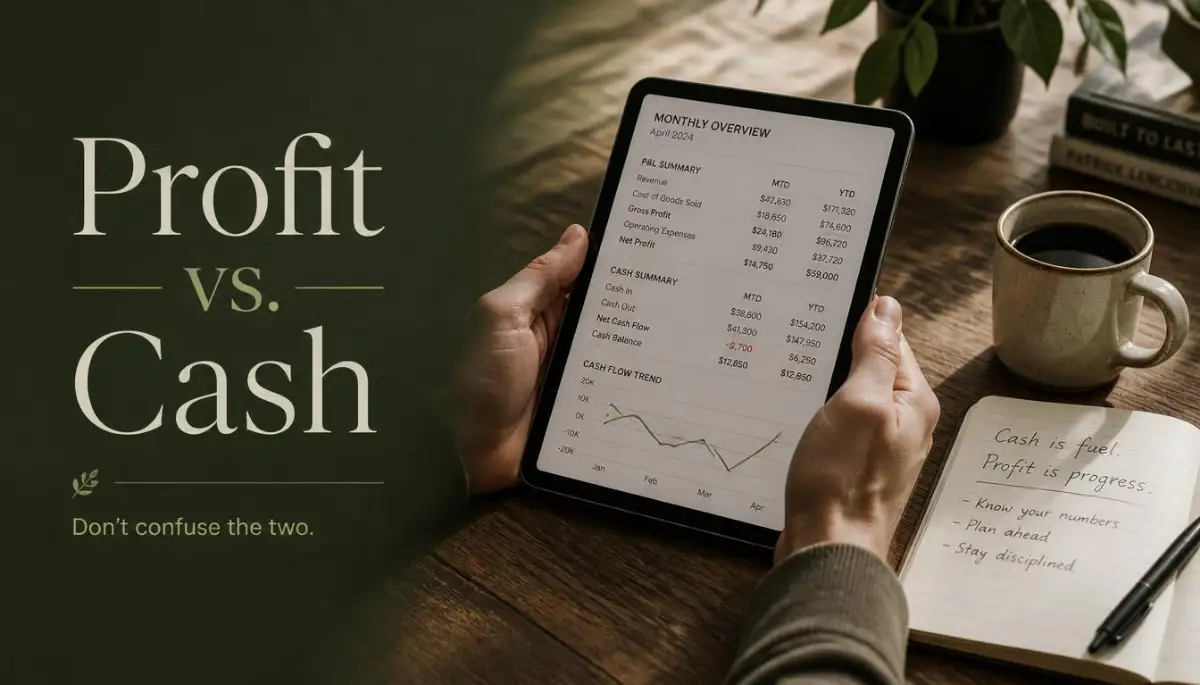
Let us clear up a massive misunderstanding that hurts many smart people. Profit is just a theory written on a piece of paper, while cash is the physical reality you can spend. You can have a highly profitable month and still go completely bankrupt.
Here is a simple scenario to explain this clearly. Imagine you sell handmade furniture and you secure a massive order worth ten thousand dollars. The materials cost you three thousand dollars, which means your profit is a handsome seven thousand dollars.
However, you had to spend that three thousand dollars in cash today to buy the wood. If the buyer does not pay you for thirty days, your bank account is negative three thousand dollars right now. You are highly profitable, but you are completely broke today.
Here is exactly why managing this gap matters so much.
If your equipment suddenly breaks tomorrow, you cannot fix it using your "paper profit." You need actual cash. Therefore, you must track when the money is actually scheduled to hit your account, not just when you make the sale.
A quick intro to building a cash flow forecast:
Creating a visual map of your money can save you from a disaster. You should use a simple spreadsheet to track money coming in versus money going out over the next 13 weeks. This allows you to spot a completely empty bank account weeks before it actually happens.
Watch this breakdown to master your business numbers:
If you want to never worry about running out of money again, you need to understand exactly how cash cycles work in real time. The video below explains this concept brilliantly and gives you a visual guide to follow.
Trimming the Fat Before It Drains Your Account
When the money first starts rolling in, it is very easy to get excited and start buying things you do not really need. You might sign up for premium software, rent a fancy office space, or hire an assistant before you have a steady workload. These fixed costs will quietly drain your reserves.
Every single dollar that leaves your business needs to justify its existence. If an expense does not directly help you make more money or save a massive amount of time, cut it out immediately.
I used to think buying software in bulk was a smart move for my growing team. I quickly realized tying up thousands of dollars in yearly subscriptions nearly bankrupted me during a slow month. Now, I strictly pay monthly for everything until my cash reserves are overflowing.
You have to operate incredibly lean during the first few phases of your journey. Try using free versions of tools until they physically break or stop you from delivering work. Work from your kitchen table or a cheap local cafe instead of signing a scary commercial lease.
Mastering the Art of Vendor Negotiation
While you want your clients to pay you as fast as possible, you want to do the exact opposite with your own bills. Keeping money in your account for as long as possible is a very smart financial strategy. This does not mean paying late and ruining your relationships.
It simply means having honest conversations with the people you buy from. If your supplier normally wants payment in 15 days, call them and ask if you can push it to 30 days. Explain that you are building a long-term business and want to ensure steady, reliable payments.
Proving your reliability:
To get these better terms, you need to build trust first. Pay your first three or four invoices exactly on time, or even a day early. Once they see you are a reliable partner, they will be much more willing to give you breathing room.
A quick Myth vs Reality check on Vendor Payments:
Building an Unbreakable Safety Buffer
No matter how well you plan, things will eventually go wrong. A client might go bankrupt and default on a big payment, or a global event might slow down your entire industry. If you are living month-to-month, one bad week can destroy your dream.
You must build an emergency fund specifically for your business. This is not money to buy new laptops or run marketing campaigns. This is purely survival money designed to help you sleep at night.
Start by taking just five or ten percent of every single payment you receive and moving it to a completely separate, hard-to-reach bank account. Do this immediately before you pay any bills or take a salary. Over time, these small amounts will grow into a massive safety net.
Your ultimate goal should be to save up enough money to run your business for three full months with zero income. Once you hit that specific number, the desperation completely disappears from your daily life. You will find yourself making much better, calmer decisions because the fear of immediate failure is finally gone.
Next-Level Strategies to Bulletproof Your Bank Account
Once you have stopped the immediate bleeding, you need to play a much smarter game. Surviving month to month is exhausting, and your ultimate goal is to build a machine that runs smoothly without your constant worry. I want to share a few high-level tactics that experienced founders use to keep their bank accounts healthy.
These are not tricks or shortcuts, but deeply practical shifts in how you handle incoming and outgoing funds. Most new owners never learn these methods until it is far too late. By applying these today, you will put yourself years ahead of your competitors.
Get an Umbrella While the Sun is Shining
One of the smartest financial moves you can make is applying for a business line of credit long before you actually need one. This sounds completely backward to most people. We usually wait until our bank account is near zero before we go begging for a loan.
Here is the harsh reality about banking: financial institutions love lending money to people who already have plenty of it. If you walk into a bank desperate, showing them a terrifyingly low account balance, they will reject you instantly. They view desperation as a massive risk.
Instead, you should set up a credit line right after you land a big client or have a highly profitable month. Think of this credit line as an emergency water tank attached to your house. You might not turn the valve on for months, but knowing it is there gives you incredible peace of mind. You only pay interest if you actually draw money from it.
Learning how to leverage this kind of tool is a big part of taking control of your financial future. It gives you the power to cover payroll during a slow week without losing sleep.
The Magic of Dynamic Discounting
Waiting thirty or sixty days for a payment can slowly suffocate your daily operations. You might have ten thousand dollars sitting in pending invoices, but you cannot use that imaginary money to buy groceries. You need a way to motivate your clients to pay you the very same day you send the bill.
This is where dynamic discounting comes into play. You simply offer your clients a small financial reward for settling their bill immediately. A common industry standard is offering a two percent discount if they pay within ten days, rather than waiting the full thirty days.
For a thousand-dollar invoice, you are basically giving up twenty dollars to get your hands on nine hundred and eighty dollars instantly. Some owners hate the idea of losing that twenty dollars. However, having that cash in your hands today allows you to buy more materials and take on another job immediately.
Keeping your money moving quickly is always better than waiting for the full amount while your business stalls. The Small Business Administration explains how managing cash cycles effectively is often the dividing line between companies that survive and those that fail.
Shift to a Retainer or Subscription Model
Constantly hunting for new clients every single month creates wild swings in your income. You might have a fantastic January, followed by a completely dead February. This "feast or famine" cycle makes it completely impossible to plan your budget accurately.
The ultimate fix for this is transitioning your services into a retainer or subscription format. Instead of charging a client five thousand dollars for a massive one-time project, break it down. Ask them to pay you a thousand dollars a month for ongoing support and continuous updates.
This changes everything about how you run your day. On the first of every month, you know exactly how much money will automatically hit your account. You no longer have to guess if you can afford your rent or basic software tools.
Building a predictable income stream reduces your mental burden significantly. It frees up your brain to focus on creating products that people actually love, rather than constantly worrying about your next paycheck.

Hidden Traps That Destroy New Businesses
Even with the best strategies in place, it is incredibly easy to make a wrong turn when you are stressed. I have seen brilliant people with amazing ideas completely destroy their companies because of a few predictable errors. These traps look completely harmless at first glance, but they carry devastating consequences.
Understanding these common pitfalls will save you from painful lessons down the road. You must protect your foundation fiercely if you want to survive the tough early days.
The Nightmare of Blending Your Money
When you first start out, opening a separate bank account feels like an annoying chore. You just use your personal checking account to buy a website domain, pay for ads, and collect client payments. You tell yourself that you will organize it all later when you are more successful.
This is arguably the most dangerous habit you can form as a founder. When your rent money and your business money live in the exact same place, you lose all visibility into your actual financial health. You might look at your balance and think you are rich, completely forgetting that half of that money belongs to your suppliers.
Come tax season, this messy habit turns into a complete nightmare. You will spend dozens of hours digging through old receipts, trying to remember if a specific dinner was a personal date or a client meeting. The IRS does not accept guesswork, and a simple audit could end up costing you thousands in penalties.
Go to a local bank today and open a dedicated checking account just for your company. Never, under any circumstances, use your personal debit card to pay for a company expense again. Keeping a strict wall between your two worlds is a non-negotiable rule for success.
Borrowing from the Tax Man
As money flows into your accounts, it is very tempting to look at your total balance and assume it is all yours to spend. You might land a massive project and immediately go out to buy a new computer or upgrade your workspace. You convince yourself that you will just save up for taxes later in the year.
The money you owe the government is not yours, not even for a single day. When you spend tax money to fund your daily operations, you are essentially taking out a high-interest loan with the worst possible collector. The government does not care if you had a slow month; they will freeze your accounts without hesitation.
A realistic scenario of how this plays out:
Imagine you collect twenty thousand dollars in a great quarter, but you spend all of it on marketing and living expenses. When April arrives, you suddenly realize you owe four thousand dollars in income tax, but your account is completely empty. The sheer panic of this moment has driven many founders to max out high-interest credit cards just to survive.
To avoid this terrible fate, create a strict habit of moving twenty-five percent of every single payment into a separate tax savings account. Pretend this account does not even exist until tax day arrives. You can learn more about proper tax planning through trusted resources like SCORE's guide to small business accounting.
The Deadly Trap of Growing Too Fast
We are all taught that rapid expansion is the ultimate sign of a successful startup. When you suddenly get flooded with new orders, your natural reaction is to celebrate. You immediately start hiring more staff, buying more raw materials, and upgrading your software to handle the load.
However, explosive growth is incredibly expensive. You have to pay your new employees and buy extra supplies weeks or even months before those new clients actually pay your invoices. This massive gap between spending money to grow and actually collecting the cash is where most dreams die.
This is a well-documented phenomenon known in the corporate world as the "growth trap." According to experts analyzing financial failures, companies can literally grow themselves into bankruptcy if their sales outpace their cash reserves. You are spending your safety net to service clients who haven't paid you yet.
You have to learn how to say no to new business if you do not have the liquid cash to support the work. Sometimes, intentionally slowing down your sales is the bravest and smartest thing you can do. Sustainable, boring growth is always better than a bright flash that burns your entire company to the ground.
Letting Distractions Drain Your Energy
When money is incredibly tight, your mental energy is your most valuable asset. If you are constantly distracted by chaotic environments or bad setups, your decision-making will suffer terribly. You will start making desperate choices simply because you are too exhausted to think clearly.
I remember wasting entire afternoons fighting with my tech setup instead of following up on overdue invoices. Simple annoyances like constantly dropping video calls make you look unprofessional to clients who already owe you money. Taking an hour to fix slow internet connection issues can actually save your business by reducing your daily frustration.
The same rule applies to your physical workspace. You do not need to rent a premium corner office to feel like a real CEO. Simple adjustments, like learning to maximize natural light in a small room, can dramatically boost your mood and productivity for free. Keep your environment clean, keep your tools working, and focus all your energy on bringing money through the front door.
Your Action Plan for Immediate Relief
Managing your numbers does not have to be a terrifying mystery that keeps you awake at night. You now understand that profit is just a theory, but physical money in the bank is what actually keeps your lights on. You know exactly why you need to ask for deposits, shorten your invoice terms, and build a dedicated safety buffer.
The most important step you can take right now is to stop ignoring the math. Open your spreadsheets today, look at the exact numbers, and accept reality for what it is. It might be scary to see how tight things really are, but facing the truth is the only way to fix it.
You have the power to change how you operate by simply having honest, firm conversations with your clients and vendors. Do not let the fear of rejection stop you from protecting your livelihood. Your business deserves to survive, and you deserve to finally experience the freedom you originally set out to find.
I remember the exact moment I finally saved up enough cash to cover three months of my expenses. The heavy, suffocating weight on my chest vanished overnight, and I actually started enjoying my work again. My advice to you is to take just one small step from this guide tomorrow morning, because that tiny bit of momentum will absolutely change your life.
Common Questions About Managing Startup Money
How much cash should I ideally keep in reserve?
You should aim to save enough money to cover at least three to six months of your bare-minimum operating expenses. This means if you make zero sales for a whole quarter, you can still pay your rent, software bills, and feed yourself. Start small by saving just five percent of your income until you slowly reach this goal.
Should I use my personal credit cards to fund my business?
You should avoid this at all costs because it puts your personal financial future at extreme risk. If the business fails, you are personally stuck with high-interest debt that can ruin your family's stability. Always try to secure a proper business credit line or keep expenses low instead of risking your personal credit score.
What do I do if a client simply refuses to pay their invoice?
Start by sending polite but firm reminders, followed by a phone call to understand if they are facing their own financial trouble. If they completely ignore you, you can hire a collection agency or take them to small claims court for a minimal fee. In the future, always require a deposit upfront to reduce the sting of non-payment.
Does being highly profitable mean my business is totally safe?
Not at all, and this is a very dangerous assumption to make. You can sell thousands of dollars worth of products on paper and be incredibly profitable, but if customers delay paying you, your bank account will hit zero. Real safety comes from having liquid cash available today, not just impressive numbers on a profit report.
How often should I realistically review my business numbers?
During your first year, you should look at your incoming and outgoing money at least once a week. Pick a quiet morning, grab a coffee, and spend twenty minutes updating your simple tracking sheet. This weekly habit ensures you are never surprised by an empty account when bills are suddenly due.
Disclaimer: The information provided in this article is for educational and informational purposes only and does not constitute financial, legal, or tax advice. Every business situation is unique, and you should always consult with a certified financial planner or professional accountant before making any major financial decisions