
The Scary Truth About Owning a Business Without a Shield
Imagine you have worked for years to build your dream. You finally bought a house, saved for your kids' college, and have a little cushion in the bank. Then, one day, a simple mistake happens at work. A client slips, a contract is misinterpreted, or a debt goes unpaid.
Suddenly, you aren't just losing your business profits. You are looking at a lawsuit that targets your personal bank account. You might lose the very house your family sleeps in. This is the reality many small business owners face because they skipped a few pieces of paper.
It is a heavy weight to carry. I have spoken to so many people who stay awake at night worrying about "what if." They feel like they are walking on a tightrope without a net. It is not just about money; it is about the safety of your family and your future.
You shouldn't have to live in fear. The law actually provides a way to build a wall between your business risks and your personal life. But that wall is only built with specific, correctly drafted documents. Without them, that wall is full of holes.
Let’s talk about how we can plug those holes today. You deserve to run your business with a sense of security. You deserve to know that your personal world is safe, no matter what happens in the marketplace.
Building Your Fortress: The Legal Foundation
The first thing we need to discuss is how the law sees you. In the eyes of a court, are you and your business the same person? If you haven't set up the right structure, the answer is "yes."
When the law sees no difference between you and your company, you have "unlimited liability." This means any business debt is your personal debt. To fix this, you need to create a separate legal entity.
The Magic of the Articles of Organization
If you want to protect your house, you likely need an LLC (Limited Liability Company) or a Corporation. The "Articles of Organization" is the document you file with your state to make this real.
This document is like a birth certificate for your business. It tells the world that the business is its own "person." When this "person" gets sued, you usually do not get sued personally.
Always keep a certified copy of this document. It is the very first brick in your wall of protection. Without it, you are just an individual doing business, and your assets are wide open to risk.
Why an Operating Agreement Is Your Best Friend
Many people form an LLC but never write an Operating Agreement. This is a huge mistake. An Operating Agreement is a private document that outlines how your business is run.
Think of it as the rulebook for your business. If a judge ever looks at your company, they want to see that you are following real rules. If you don't have this document, a lawyer might argue your business is just a "sham."
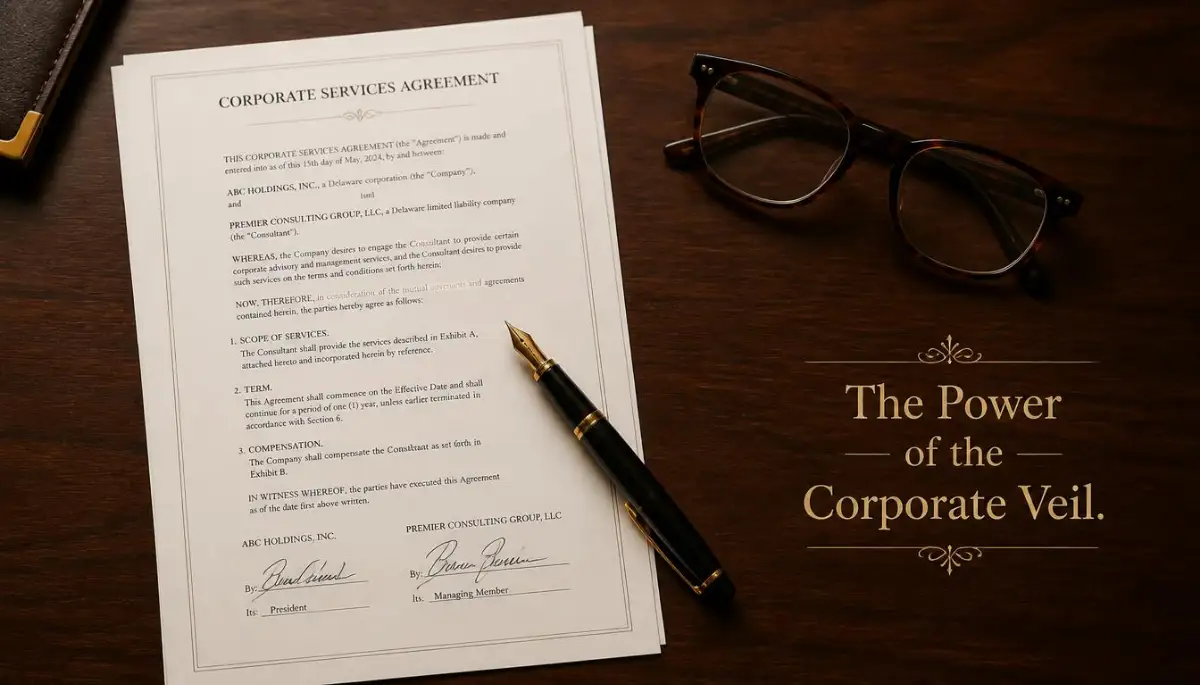
They call this "piercing the corporate veil." If the veil is pierced, your personal assets are no longer safe. A solid Operating Agreement proves that your business is a serious, independent entity.
The "No-Mixing" Rule: Keeping Finances Separate
I cannot stress this enough: Never use your business bank account for personal groceries. This might seem like a small thing, but it is a legal nightmare.
If you mix your money, you are telling the court that the business and you are the same. This destroys your asset protection instantly. You need a document called a Banking Resolution.
This document authorizes you to open a business-only account. It keeps a clear line between "your money" and "the business's money." Strictly following this line is how you keep your home safe from business creditors.
Myth vs. Reality: Asset Protection
The Power of Solid Service Agreements
Every time you work with a client, you need a Service Agreement or Contract. This isn't just about getting paid. It is about limiting what you are responsible for.
A good contract will have a "Limitation of Liability" clause. This clause says, "Even if I make a mistake, you can only sue me for a certain amount." Usually, this is the amount they paid you.
Without this document, a client could sue you for millions in "consequential damages." Imagine losing your retirement fund because a client claimed your late delivery caused them to lose a huge deal. A simple contract prevents this.
Employee Handbooks: Your Shield Against Internal Risks
If you have even one employee, you have a new set of risks. Employees can sue for many reasons, from harassment claims to wage disputes.
An Employee Handbook acts as a legal shield. It clearly states your policies and the rules your staff must follow. It proves that you have taken steps to be a fair and legal employer.
When you have these policies in written form, it is much harder for a disgruntled worker to target you personally. It shows you are a professional organization, not just a person with some helpers.
Keeping the "Corporate Veil" Strong
You have built the wall, but now you must maintain it. This requires Meeting Minutes. Even if you are the only person in the company, you should hold an "annual meeting."
Write down the big decisions you made for the year. Sign it. Put it in a folder. This might feel silly when you are talking to yourself, but it is pure gold in a courtroom.
It shows that you respect the formality of the business. Consistent record-keeping is the best way to prove that the business is separate from your personal life. It keeps the "veil" thick and unbreakable.
Professional Liability Insurance: The Final Layer
While not a "document" you write, your Insurance Policy is a document you must keep. It works alongside your legal papers to provide a safety net.
Think of legal documents as the walls of your fort and insurance as the guards. If someone manages to climb the wall, the insurance is there to fight the battle.
Always read the exclusions in your policy. You need to know exactly what is covered. Combining great insurance with the right legal documents makes you nearly untouchable.
The Danger of General Partnerships
If you are working with a friend without a legal entity, you are likely in a General Partnership. This is the most dangerous way to run a business.
In a partnership, you are responsible for your partner's mistakes. If they take out a loan and disappear, the bank comes after your personal car and house.
To stop this, you need a Partnership Agreement that limits your liability. Better yet, convert the partnership into an LLC. Don't let someone else's bad choice ruin your family's financial future.
A Quick Checklist for Peace of Mind
- Articles of Organization: Filed and saved?
- Operating Agreement: Signed and dated?
- EIN Confirmation Letter: From the IRS?
- Banking Resolution: Separate accounts only?
- Client Contracts: With liability limits?
- Meeting Minutes: Updated every year?
Why "Simple" Paperwork is Often the Most Important
We often think that legal stuff has to be complicated. In truth, the simplest documents are often the most powerful. Just having a clear Buy-Sell Agreement can save your assets if a business partner wants to leave.
These documents act like a prenuptial agreement for your business. They decide how things end before they even start. Planning for the end is the best way to protect your beginning.
When you have these papers in a safe place, you breathe differently. You walk into your office with a straight back. You know that no matter what the world throws at your business, your home remains a sanctuary.
Taking Action Today
You don't need to do everything in one hour. Start with the most important one: your entity formation and operating agreement. Once those are done, move to your client contracts.
Each document you sign is a lock on your front door. The more locks you have, the safer your family is. Your hard work deserves to be protected. Don't wait for a crisis to start looking for these papers.
Start today. Organize your files. Set up that separate bank account. Your future self will thank you for the peace of mind you created today.
Advanced Tactics to Keep Your Wealth Locked and Safe
Moving beyond the basic paperwork, we need to look at how successful owners keep their protection strong over many years. It is one thing to set up a business, but it is another thing to keep it from leaking into your personal life. Think of your legal structure like a high-end security system that needs regular updates to stay effective.
One of the most powerful secrets used by experts is the "Holding Company" model. Instead of owning all your business equipment, property, and cash in one single company, you split them up. You might have one company that does the risky work and another company that simply owns the expensive machinery or the building.
This way, if the "active" company gets sued, the "holding" company keeps the assets safe. It creates a physical and legal gap that is very hard for lawyers to cross. Many people find this helpful when they start growing and buying more tools or vehicles.
Another hidden gem is the way you sign your name on every single document. This sounds simple, but it is a major legal trap. If you sign a contract with your name only, you might be giving away your personal protection.
You should always sign as an official representative of your business. For example, instead of just writing "John Smith," you should write "John Smith, Manager of JS Logistics LLC." This small change tells the world that the business is taking the risk, not you.
If you ever find yourself facing a tough time after a business struggle, you should look into how to rebuild your credit score. Protecting your assets is the first step, but knowing how to recover is just as important for your long-term wealth.
You should also think about your Intellectual Property (IP). Things like your brand name, logos, and special software are valuable assets. Sometimes, it is smarter to own these personally and "rent" them to your business.
This creates a clear separation between what you own and what the business uses. If the business fails, you still own the brand. You can then start again or sell the brand name without losing it to business creditors.
To understand more about which structure fits your specific needs, the U.S. Small Business Administration (SBA) provides great details on different entity types. Choosing the right one early on saves thousands of dollars later.
Finally, always keep a "Legal Logbook." This is a simple folder where you track every major decision, new contract, or change in ownership. If a court ever questions your business, this logbook acts as your best witness. It proves that you have been professional and organized from the very beginning.

The Invisible Mistakes That Could Cost You Everything
Even with the best intentions, many owners make small errors that open the door for personal loss. It is heartbreaking to see someone work for ten years only to lose their savings because of a missing signature or a late filing.
One of the biggest traps is the "Automatic Renewal" failure. Every state requires you to file a report every year or two to keep your LLC or Corporation active. If you forget to file this and pay the small fee, the state can "dissolve" your company.
When a company is dissolved, your asset protection disappears instantly. You become a "sole proprietor" in the eyes of the law. This means every business risk you take is now a personal risk until you fix the filing.
Another emotional and financial blow comes from Personal Guarantees. Many landlords and banks will ask you to sign a personal guarantee for a business loan or a lease. When you do this, you are voluntarily throwing away your legal shield.
You are saying, "I promise to pay this with my personal bank account if the business cannot." While sometimes you have no choice, you should always try to negotiate these out. Once you sign a guarantee, no amount of legal documents can protect that specific debt from your personal life.
We also see many owners who forget to update their Operating Agreement as they grow. If you started your business alone but later added a partner, your old rules might not work anymore. This confusion creates a "gap" that lawyers use to attack your personal wealth.
Mixing money is still the most common way people lose their protection. It starts with one small "emergency" where you use the business card for a personal medical bill or a car repair. This creates a "commingled" account that a judge will hate to see.
If you are looking at your overall financial situation, you might wonder if your home is part of this risk. Learning about whether is buying a home smarter than renting can help you decide how much of your wealth is tied up in property and how to shield it.
The Internal Revenue Service (IRS) has very strict rules about how business owners handle their taxes and documents. If you ignore these rules, you risk more than just a fine; you risk your entire legal defense.
Lastly, some owners think that having Insurance alone is enough. Insurance is wonderful, but it has limits and fine print. If your insurance company finds a reason not to pay a claim, your legal documents are the only thing left standing between a lawsuit and your home.
Your Roadmap to Permanent Financial Safety
You have taken a big step by learning how to lock your personal life away from business risks. This is not just about being "clever" with the law. it is about being a responsible owner who cares about their family’s future.
Building this wall takes some work at the start, but it becomes a simple habit over time. Once your documents are signed and your bank accounts are separate, you can focus on what you do best: growing your business and serving your customers.
The peace of mind you get from knowing your house is safe is worth every minute of paperwork. You no longer have to worry when a difficult client calls or a bill comes due. You have a system in place that works even when things get messy.
Start by checking your current documents tonight. Make sure your business is in "Good Standing" with your state. Check your bank statements to ensure no personal bills are being paid from the business account.
Small steps lead to huge results. You have the power to protect what you have built. Take that power and use it to build a future that is safe, secure, and full of potential.
Your journey as an entrepreneur should be one of excitement, not constant fear. By putting these papers in place, you are giving yourself the gift of freedom. Now, go out there and build something great, knowing that your foundation is made of solid rock.
Important Legal Disclaimer
The information provided in this article is for educational and informational purposes only. It does not constitute legal, financial, or professional advice. Laws regarding business structures and asset protection vary significantly by location and change over time. Always consult with a qualified attorney or a certified legal professional in your area before making major business decisions or signing legal documents. We do not guarantee any specific legal outcome or protection based on the general tips provided here. Using this information is at your own risk.
![Decoding Complex Legal Terminology in Your Job Offer [Step-by-Step]](https://topic36.com/storage/uploads/blogs/1788064638_decoding-complex-legal-terminology-in-your-job-offer-step-by-step.webp)
![Warning: Are You Missing Out on These 3 Employee Protections? [Blueprint]](https://topic36.com/storage/uploads/blogs/1787202538_warning-are-you-missing-out-on-these-3-employee-protections-blueprint.webp)