
The Invisible Weight of the Digital Classroom
Imagine sitting down at your desk at 9:00 AM. You have one goal: finish that one difficult module. You open your laptop, and suddenly, you are hit with a wall of notifications. There are three unread emails from your instructor. There is a ping from your class group chat.
Before you know it, two hours have passed. You have seventeen tabs open, your coffee is cold, and you haven't written a single word. This is the silent struggle of the online learner. You are not alone in this. Millions of students feel like they are drowning in a sea of digital noise.
The mental toll is real. You feel a constant sense of guilt. When you are resting, you feel like you should be studying. When you are studying, you are too tired to focus. This cycle ruins your sleep and kills your motivation. It makes you feel like you are just not "cut out" for online education.
But the truth is much simpler. The problem isn't you. The problem is that the traditional rules of school don't work in a digital world. You are fighting a war against distractions, and you need a better set of tools to win.
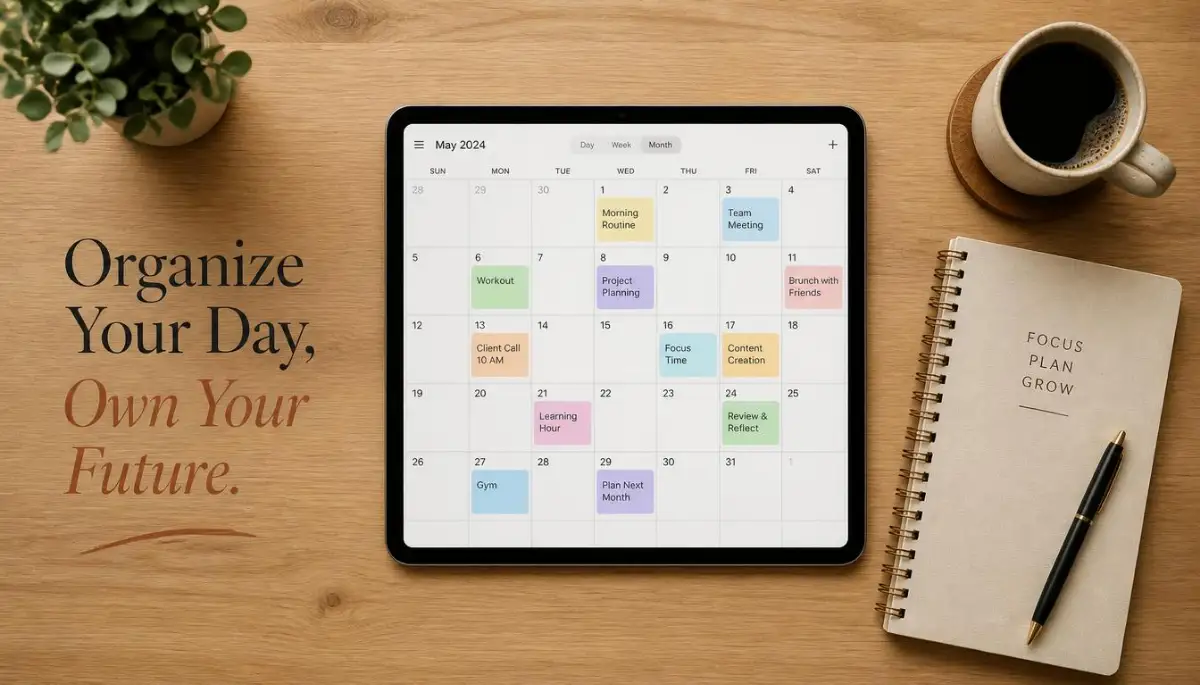
Creating Your Digital Fortress
If you want to win back your time, you must first control your environment. In a physical classroom, the walls keep the world out. In online learning, your screen lets the whole world in. You need to build a Digital Fortress that protects your focus.
Start by auditing your notifications. Every "ding" on your phone is a thief. It steals your concentration. It takes about 23 minutes to get back into a deep state of focus after an interruption. If your phone buzzes four times an hour, you never actually start learning.
Turn off everything. Put your phone in another room. If you must use your computer, use "Focus Mode" settings. These settings block social media and news sites during your study hours. You are not missing out on anything. The world can wait for two hours.
Designate a "Study-Only" zone. Your brain is a master of association. If you study in bed, your brain thinks it is time to sleep. If you study on the couch where you watch movies, your brain wants to relax. Find a specific chair or a corner of a table. Use it only for learning. Soon, just sitting there will trigger your brain to focus.
The Power of the "Single-Task" Mindset
We have been told that multitasking is a skill. It is actually a lie. The human brain cannot focus on two complex tasks at once. It simply switches between them very fast. This switching causes "brain fog" and leads to mistakes.
Commit to one task at a time. If you are reading a textbook, don't check your grades. If you are watching a lecture video, don't reply to a text message. Give 100% of your energy to the task in front of you. You will finish it in half the time.
Use the 50/10 Rule. Instead of trying to study for four hours straight, break it up. Work with high intensity for 50 minutes. Then, walk away for 10 minutes. Do not look at a screen during your break. Stretch, drink water, or look out a window. This allows your brain to "save" the information you just learned.
Mapping Your Weekly Energy Peaks
Time management is actually energy management. Not all hours are created equal. Some people are sharpest at 6:00 AM. Others don't feel awake until the sun goes down.
Track your energy levels for three days. Note down when you feel most alert and when you feel like taking a nap. Once you know your "Peak Hours," guard them. Use your highest energy times for the hardest subjects.
Save the "Easy Stuff" for your low-energy gaps. If you feel tired in the afternoon, use that time for administrative tasks. This might include checking your syllabus, organizing your files, or cleaning your desk. Don't waste your best brainpower on things that don't require deep thought.
The Science of "Micro-Learning" Sessions
One of the biggest mistakes online students make is waiting for a "big block" of time to study. You might think, "I'll wait until Saturday when I have five hours." But Saturday comes, and you are too overwhelmed to start.
Break your syllabus into tiny pieces. If you have a 40-page chapter to read, don't look at it as 40 pages. Look at it as eight sections of five pages. It is much easier to find 20 minutes to read five pages than it is to find two hours for the whole thing.
Use the "Just Five Minutes" trick. When you feel a lot of resistance to starting, tell yourself you will only work for five minutes. Just five. Usually, the hardest part is the start. Once you get moving, the momentum will keep you going.
Eliminating the "Decision Fatigue"
Every choice you make during the day uses up mental energy. What should I study first? Should I use a pen or a laptop? Should I listen to music? By the time you actually start studying, you are already tired from making choices.
Plan your day the night before. Before you go to bed, write down the three most important things you need to do tomorrow. When you wake up, you don't have to think. You just look at your list and start with item number one.
Keep your materials ready. If you have to spend ten minutes looking for your notebook or your charger, you will lose your motivation. Set your "Digital Fortress" up the evening before. This makes the transition into "Learning Mode" seamless.
Understanding the "Why" to Stay Driven
Online learning can be lonely. You don't have a teacher looking over your shoulder. You don't have classmates sitting next to you. This makes it very easy to quit when things get hard.
Connect your study sessions to your big goal. Why are you taking this course? Is it for a better job? Is it to prove something to yourself? Write this reason on a piece of paper and tape it to your monitor.
Celebrate small wins. If you finish a difficult quiz, acknowledge it. Treat yourself to a walk or a favorite snack. Positive reinforcement trains your brain to enjoy the process of learning.
Master Your Digital Filing System
A messy computer is just as bad as a messy desk. If your "Downloads" folder is full of unnamed PDFs, you are wasting time. Every minute you spend searching for a file is a minute of lost learning.
Create a folder for every course. Inside that folder, create sub-folders for "Lectures," "Assignments," and "Readings." Name your files clearly. Instead of "Notes1.pdf," use "Week1-Biology-CellStructure.pdf."
Use a simple naming convention. This allows you to use the "Search" bar on your computer to find anything in seconds. This small habit saves hours of frustration over a semester.
The Myth of Perfectionism
Many students waste time because they want everything to be perfect. They spend three hours making a study schedule look pretty but zero hours actually studying.
Focus on "Done," not "Perfect." A messy set of notes that you understand is better than a beautiful set of notes that you never finished. Your goal is to learn the material, not to create a work of art.
Accept that some days will be bad. You will have days where you get nothing done. That is okay. Don't let one bad day turn into a bad week. Forgive yourself and start fresh the next morning.
Why Sleep is Your Secret Study Weapon
Many students pull "all-nighters" to get things done. This is actually the worst thing you can do for your grades. Your brain needs sleep to turn short-term memories into long-term knowledge.
Think of sleep as part of your study plan. If you study for four hours and sleep for eight, you will remember more than if you study for eight hours and sleep for four. A rested brain is a fast brain.
Create a "Digital Sunset." Stop looking at blue light screens at least 30 minutes before bed. This helps your body produce melatonin, which ensures a deeper sleep. When you wake up, you will be ready to tackle your online modules with a clear mind.
Comparison of Learning Methods
Expert Insight: The Power of Social Accountability
Even though you are learning online, you don't have to learn alone. Tell a friend or a family member about your goals for the week.
Ask them to check in on you. Just knowing that someone will ask, "Did you finish that module?" can give you the extra push you need to stay on track. This simple act of social accountability bridges the gap between the physical and digital worlds.
By applying these strategies, you are not just managing your time. You are managing your life. You are moving from a state of constant stress to a state of calm, controlled progress. Online learning is a superpower if you know how to use it. Start with one small change today, and watch your success grow.
t you have a basic handle on your schedule, it is time to move into the advanced systems used by the most successful digital students. Managing time is one thing, but mastering your "mental bandwidth" is another. This is where you separate yourself from the average learner who just scrapes by.
One of the most effective secrets is a method called "Task Batching." Most people jump from writing an essay to checking an email and then back to reading a textbook. This constant switching drains your brain’s energy. Instead, try to group similar tasks together.
For example, set aside one hour purely for administrative work. In this hour, you answer emails, check your grades, and organize your digital folders. Once that hour is done, you shut those tabs and move into "Deep Work" for your core subjects. By doing this, your brain stays in one "mode" longer, which makes you much faster and more accurate.
Another pro-level secret is the "Brain Dump" technique. Many online learners feel anxious because they are trying to remember a hundred small things at once. Before you start a study session, take a blank piece of paper and write down every single thing on your mind.
It doesn't matter if it's "Buy milk" or "Email professor." Just get it out of your head and onto the paper. This clears your "mental RAM." When your brain knows the information is safe on paper, it stops wasting energy trying to remember it. This leaves you with a sharp, clear mind for your actual learning.
To keep your results high over several months, you should also look into "Interleaving." This is a scientific approach to learning where you mix different topics in one study session. Instead of studying Biology for five hours, you might do two hours of Biology and then switch to Math.
This forces your brain to stay alert. When you switch topics, your brain has to work harder to "reload" the new information. Research from The American Psychological Association suggests that this challenge actually makes your long-term memory much stronger. It feels harder at first, but the results are much better.
Consistency is the most important part of any long-term plan. Think of your study habits like any other form of maintenance. Just as you follow simple habits to protect your electric vehicle battery life to make it last for years, you must protect your mental energy every single day. You cannot work at 100% speed every day, but you can always do something small to keep the momentum going.
Finally, learn to use "The Two-Minute Rule" for your digital life. If a task takes less than two minutes, like downloading a syllabus or replying to a quick forum post, do it immediately. This prevents a "mountain" of tiny tasks from building up and causing you stress later in the week.

The Invisible Traps That Lead to Burnout
Even with the best tools, many students fall into common traps that ruin their progress. One of the biggest mistakes is the "Passive Learning Illusion." You might spend three hours highlighting a textbook in bright colors. You feel like you are working hard.
But at the end of the day, you haven't actually learned anything. You have just colored in a book. This is a trap. Highlighting is passive. To really learn, you must be active. This means testing yourself, writing summaries in your own words, or explaining a concept to a friend.
If you find yourself stuck in a cycle of "fake work," you might feel like your life is out of control. It feels similar to the stress of trying to rebuild your credit score after a major financial disaster. You feel like you are digging yourself out of a deep hole. The key is to stop digging and start using methods that actually move the needle.
Another dangerous mistake is the "All-or-Nothing" mindset. A student might think, "I missed my 9:00 AM start time, so the whole day is ruined." They then spend the rest of the day watching videos or scrolling social media. This is a mistake that causes massive guilt and leads to failing grades.
One bad hour does not have to mean a bad day. If you get off track, simply acknowledge it and start again at the next hour. You don't need a perfect start to have a productive finish. Perfectionism is the enemy of progress.
We also see many students falling for "Social Media Lurking" disguised as research. You go on YouTube to find a tutorial, but thirty minutes later, you are watching a video about cooking or travel. The digital world is designed to steal your attention.
If you don't set strict boundaries, you will lose your most valuable asset: your time. This loss of time often leads to a loss of money and missed opportunities. It is like the debate of whether buying a home is smarter than renting; you have to look at the long-term cost of your choices today. Wasting an hour today might cost you a better career in five years.
Lastly, do not ignore your physical health. Many online students stop moving their bodies. They sit in a chair for ten hours and wonder why they feel sad and tired. Your brain is part of your body. If your body is stiff and dehydrated, your brain will be slow.
Standing up and walking for five minutes every hour is not a waste of time. It is an investment in your brain's ability to process information. Without physical movement, your productivity will eventually crash, no matter how good your calendar looks.
Your Seven-Day Roadmap to Success
You have the information you need to change your life. But knowledge without action is useless. You must take what you have learned and put it into practice starting right now. Don't try to change everything at once. Pick one or two things and master them first.
Day 1 to 3: Focus on the Environment. Clean your desk. Turn off your phone notifications. Set up your folders on your computer. Get your "Digital Fortress" ready. This creates a foundation for everything else.
Day 4 to 5: Focus on the Schedule. Start using the 50/10 rule. Use your high-energy hours for your hardest task. Don't worry about being perfect. Just try to stick to your blocks of time.
Day 6 to 7: Focus on Active Learning. Stop just reading. Start quizzing yourself. Use the "Brain Dump" before you start. You will notice that you feel more confident and less stressed by the end of the week.
You are capable of amazing things. Online learning gives you the freedom to study from anywhere in the world. It is a gift, but it requires a high level of self-discipline. You are the CEO of your own education. No one is going to force you to sit down and do the work.
But when you do, the rewards are worth it. You will gain skills that will help you for the rest of your life. You will prove to yourself that you can handle a challenge. The feeling of finishing a course with an "A" because you managed your time well is one of the best feelings in the world.
Take a deep breath. Close the extra tabs you don't need. Pick your most important task for today. You have the tools, the plan, and the power to succeed. Now, go and make it happen. Your future self is waiting for you to take this first step.
Disclaimer: The information provided in this guide is for educational purposes only. Results may vary based on individual learning styles and effort. Always follow the specific guidelines and deadlines provided by your educational institution. This blog does not guarantee specific grades or academic outcomes.
![Write Perfect Academic Papers Every Time [Secret Method]](https://topic36.com/storage/uploads/blogs/1788070619_write-perfect-academic-papers-every-time-secret-method.webp)